Why Lynchburg Chemicals Plants Are Re-evaluating CAS in 2026
Chemicals plants along the James River Basin discharge to a receiving water that drives one of the more conservative permitting environments in Virginia, and a process engineer weighing MBR vs conventional activated sludge for chemicals wastewater in Lynchburg, United States is usually making the call against that regulatory backdrop. The plants in question rarely run a single, steady influent stream. Batch reactor washouts, surfactant-bearing cleaning lines, and occasional solvent or pH excursions all hit the secondary system at once, and a conventional activated sludge clarifier will respond to those upsets by losing floc, drifting effluent total suspended solids, and forcing operations to throttle feed until the biomass recovers.
The academic source "Study of activated sludge viability and reactivity in membrane bioreactor (MBR)" frames the move toward membrane bioreactors as a response to stricter discharge rules and to sites where reuse or downstream sensitivity is a concern. Tighter discharge rules push operators toward systems that physically retain biomass and produce a tighter effluent, and MBR is the technology that has repeatedly answered that need in the industrial wastewater literature.
Most Lynchburg-area chemicals sites are not greenfield. The decision is almost always retrofit-or-stay, and that means the dominant trade-off is whether the existing aeration basin can be reused as a membrane tank, not whether to pour new concrete. Brownfield space, electrical capacity for scour air, and the cost of equalisation upstream all become part of the same decision, and this article compares MBR and CAS on each of those points.
How MBR and CAS Actually Differ at the Process Level
Conventional activated sludge separates biomass from treated water by gravity settling in a secondary clarifier, whereas membrane bioreactor replaces that clarifier with a submerged membrane. That single change is what drives every downstream difference between the two systems, and a direct footprint, energy, and operating-cost comparison is the right way to frame a retrofit decision.
Because an MBR retains essentially all of the biomass inside the reactor, mixed liquor suspended solids can be operated at concentrations well above what a clarifier can tolerate. The academic source on MBR biomass viability frames the advantage as a decoupling of hydraulic retention time from sludge retention time: the operator can run a long SRT to grow slow-growing, toxicity-tolerant organisms while keeping the HRT short enough to handle hydraulic peaks. Stricter reuse and discharge rules are the principal driver for MBR adoption, which is consistent with the requirements for a James River Basin chemicals site.
For chemicals wastewater specifically, that decoupling is the practical reason MBR tolerates toxic slug loads better than CAS. A solvent or surfactant pulse that would strip floc and carry solids over the clarifier weir in a CAS plant simply does not have a weir to fail in an MBR — the membrane holds the biomass, and the recovery question becomes how fast the biomass rebounds. Membrane integrity is a failure mode that CAS does not have, and any MBR case must account for membrane fouling, chemical clean-in-place, and module replacement. The trade is between a moving clarifier and a fixed membrane cassette, and the cassette is the part that ages. For a deeper look at how the membrane side is specified and what 2026 cost data looks like, the MBR cost-per-m³ and 2026 cost data page walks through the numbers.
Side-by-Side: MBR vs CAS for Chemicals Effluent

The table below pulls the numeric points that are supported by the supplied research and treats other factors as qualitative mechanisms the engineer must confirm with the supplier. The HydropureWater integrated MBR system is cited in the product catalog at a 60% smaller footprint than conventional systems, and the DF-series flat-sheet MBR module is cited at 0.1 μm PVDF membrane area of 80–225 m² per module producing 32–135 m³/day; the product literature states that DF modules use 10–20× less energy than external cross-flow systems.
| Parameter | MBR (HydropureWater DF / integrated system) | Conventional Activated Sludge |
|---|---|---|
| Solids separation mechanism | Physical size exclusion through 0.1 μm PVDF membrane | Gravity settling in secondary clarifier |
| Footprint vs conventional (HydropureWater integrated system) | Cited at 60% smaller in product catalog | Reference baseline |
| Module capacity (DF-series flat-sheet) | 32–135 m³/day per 80–225 m² module (product catalog) | Not applicable — clarifier sized by hydraulic and solids loading rate |
| System capacity envelope (integrated MBR) | 10–2,000 m³/day (product catalog) | Set by existing aeration basin and clarifier |
| MLSS operating range | Higher than CAS because all biomass is retained by the membrane | Limited by clarifier solids loading rate and settling behaviour |
| HRT / SRT relationship | Decoupled — long SRT possible at short HRT (academic source, S4) | Coupled through sludge return and wasting |
| New failure modes | Membrane fouling, CIP chemical handling, scour air supply | Clarifier blanket loss, RAS/WAS pumping, scum control |
| Energy profile | DF modules cited at 10–20× lower energy than external cross-flow MBR (product catalog) | No direct kWh/m³ comparison supplied in the research |
| Effluent suspended solids | Mechanistically tied to <1 μm physical barrier; no specific TSS value supplied in research | Set by clarifier overflow rate and floc condition |
The 60% footprint figure and the DF module capacity ranges are the only numbers a procurement engineer can write into a capital request without a vendor quote, and the rest of the comparison must be built up from influent characterisation, equalisation tank sizing, and a CIP regime that the membrane supplier will specify once the wastewater envelope is shared. For chemicals sites with intermittent loads, the HRT/SRT decoupling is the mechanism by which MBR earns its keep when the influent is not steady.
When CAS Still Wins in a Chemicals Plant
There are real Lynchburg-area cases where the right answer is to stay with conventional activated sludge, and these must be examined before the engineer defends a retrofit. The first is the brownfield case where the existing aeration basin and clarifier have spare hydraulic capacity and the discharge permit's total suspended solids limit is not approaching the operating point — under those conditions the capital case for MBR is weak because the only thing being bought is a margin the permit does not require.
The second case is electrical and mechanical capacity. MBR modules need continuous coarse-bubble scour air underneath the cassettes, which is a sustained blower load on top of the process aeration that an existing CAS basin was not designed to deliver. If the site lacks the electrical headroom, the blower redundancy, or the maintenance coverage to keep scour air online, retrofitting forces parallel infrastructure investment that erodes the footprint advantage.
The third case is the wastewater envelope itself. When a chemicals plant runs a steady, well-buffered influent — low diurnal swing, low solvent or surfactant slug frequency, predictable pH — the operational advantage of MBR's higher mixed liquor suspended solids and decoupled sludge age is not fully realised. In that case, the budget is better spent on equalisation and on toxicity monitoring upstream of the aeration basin than on a membrane retrofit. The MBR vs CAS for chemicals wastewater in Cleburne, TX article covers the same stay-with-CAS logic for a different municipal/industrial context, confirming that with a stable envelope, paid-for basin, and no binding permit driver, CAS is the preferred choice.
Retrofit Options for Lynchburg Brownfield Sites
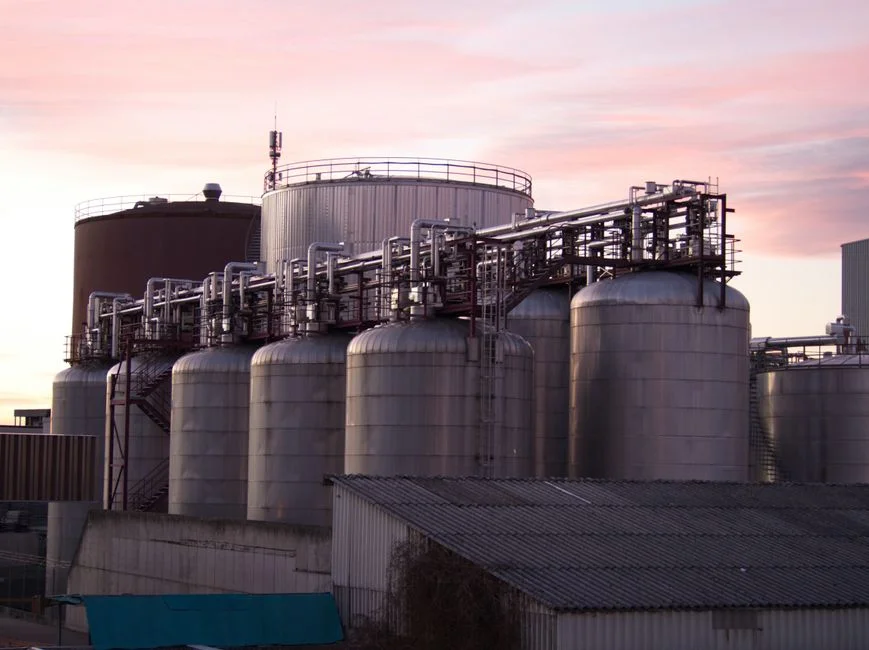
The most common retrofit path for a Lynchburg chemicals site is to drop submerged membrane cassettes into the existing aeration basin to avoid pouring new concrete. Flat-sheet and hollow-fibre cassettes both install in this way, and the brownfield advantage is that the civil works, the aeration header, and the mixed liquor pumping are already in place. For sites evaluating MBR vs conventional activated sludge for chemicals wastewater in Lynchburg, United States, this configuration typically makes the capital case viable.
Two equipment packages cover most of that retrofit. The integrated MBR membrane bioreactor system is sized for 10–2,000 m³/day and is the right reference when the existing basin is being repurposed as a complete membrane bioreactor train. The DF-series flat-sheet MBR module is the cassette-level component — 0.1 μm PVDF, 80–225 m² per module, 32–135 m³/day per module — and is used when the existing tank volume is the constraint.
Two ancillary systems need to be planned alongside the cassette retrofit, and both are documented in the HydropureWater catalog. The first is membrane scour aeration, which is integrated into the DF module design and must be tied back to the existing blower header with redundancy. The second is chemical clean-in-place, where the automatic chemical dosing system handles the periodic CIP chemistry and recovery cleans. Skipping these in the scope is the most common reason a membrane retrofit underperforms: the cassettes go in, the scour air is undersized, and fouling accelerates within the first quarter.
Decision Framework: Choosing MBR or CAS for a Lynchburg Chemicals Site
The decision framework below provides an auditable map of the three load conditions an engineer is likely to face, tying each choice back to numeric points from the research or site-specific conditions. The goal is to ensure the choice is defensible and clear to operations and compliance teams.
| If the site condition is… | Then the defensible choice is… | And the supporting evidence is… |
|---|---|---|
| Footprint is binding, discharge or reuse limits are tightening, influent is variable | Retrofit to MBR using submerged cassettes in the existing aeration basin | 60% smaller footprint cited for the integrated MBR system; HRT/SRT decoupling cited as MBR advantage in academic source (S4) |
| Footprint is not binding, effluent TSS is comfortably below permit, influent is steady, existing CAS is paid for | Stay with CAS; spend the budget on equalisation and toxicity monitoring upstream | No binding driver in research; CAPEX case for MBR weakens when neither footprint nor effluent quality is the constraint |
| Partial retrofit is possible, basin volume is adequate, blower capacity is borderline | Run a pilot MBR cassette in the existing aeration basin before committing to a full train; size the blower upgrade from the pilot | DF-series modules and integrated system are sized in 32–135 m³/day increments, so a pilot fits inside the existing tank volume |
| Site lacks electrical headroom for continuous scour air and CIP dosing | Stay with CAS or address the electrical constraint first; do not retrofit the membranes into an under-serviced tank | DF modules require continuous scour air; no specific kWh/m³ figure in research, so the blower upgrade must be sized from the supplier's data sheet |
The first row is used most often in practice, as chemicals plants in Lynchburg re-evaluating CAS in 2026 generally face binding footprint and reuse constraints. The second row protects the engineer's credibility when the answer is to stay with CAS and use the budget upstream. For a broader view of how the same logic plays out on COD and BOD removal across industrial wastewater, the best COD/BOD removal technologies for industrial wastewater buyer guide is the right adjacent reference.
Frequently Asked Questions
How should a Lynchburg chemicals plant size an MBR retrofit against an existing CAS basin?
The starting point is the existing aeration basin volume, because the retrofit is a cassette-in-tank configuration rather than a new tank build. The DF-series flat-sheet MBR module is specified at 80–225 m² of 0.1 μm PVDF area per module and 32–135 m³/day per module, so the cassette count and the scour air requirement are derived from the basin volume and the target daily flow. A pilot cassette in the existing tank, run for one or two diurnal cycles on the real chemicals wastewater, is the most reliable way to confirm the cassette count and the CIP interval before the full order is placed.
What CAPEX and OPEX inputs should we request from the membrane supplier before committing?
Request a per-module price for the DF-series cassettes, the integrated MBR system price for the matched 10–2,000 m³/day envelope, and a separate line for the automatic chemical dosing system used for clean-in-place. On the operating side, request the supplier's expected chemical consumption
Frequently Asked Questions
Is MBR better than conventional activated sludge for chemicals wastewater in Lynchburg?
For chemical wastewater applications in Lynchburg, Membrane Bioreactors (MBR) are generally superior to Conventional Activated Sludge (CAS) due to their ability to handle complex, recalcitrant organic loads and achieve higher sludge retention times (SRT). While CAS systems often struggle with biomass settleability issues caused by filamentous bacteria common in chemical waste, MBRs use physical membrane separation (typically 0.04 to 0.4 microns) to ensure a consistent, high-quality effluent that meets stringent local discharge permits regardless of sludge volume index (SVI) fluctuations.
How much smaller is an MBR footprint compared to a CAS plant for a chemicals facility?
An MBR system typically requires 50% to 70% less footprint than a comparable CAS plant. This reduction is primarily driven by the elimination of secondary clarifiers and the ability to operate at much higher Mixed Liquor Suspended Solids (MLSS) concentrations, typically ranging from 8,000 to 15,000 mg/L in MBRs versus 2,500 to 4,000 mg/L in conventional systems, allowing for significantly smaller aeration tank volumes.
Can an existing activated sludge basin at a Lynchburg chemicals plant be retrofitted with MBR modules?
Yes, existing CAS basins are excellent candidates for retrofitting because the high MLSS capability of MBR technology allows for increased hydraulic capacity within the same tank volume. By installing membrane cassettes directly into the existing aeration tanks or adjacent membrane tanks, facilities can often double their treatment capacity without the need for additional land acquisition or new civil construction.
What is the CAPEX and OPEX difference between MBR and CAS for a 500 m³/day chemicals wastewater plant?
For a 500 m³/day facility, the CAPEX for an MBR system is typically 20% to 40% higher than CAS due to membrane module costs and sophisticated control instrumentation. OPEX for MBR is also higher, generally by 15% to 25%, driven by increased energy consumption for membrane scouring (air demand) and the necessity for regular chemical clean-in-place (CIP) procedures to mitigate membrane fouling, though these costs are often offset by lower sludge disposal volumes and higher effluent compliance reliability.
How do I choose a reliable MBR system supplier for an industrial chemicals plant in the US?
When selecting a supplier for an industrial chemicals plant, prioritize vendors that provide pilot-scale testing data specific to your chemical wastewater matrix to determine membrane fouling rates and flux sustainability. Ensure the supplier offers local US-based technical support, a proven track record of installations in the chemical sector rather than just municipal projects, and transparency regarding membrane replacement lifecycles, which typically range from 5 to 8 years in industrial service.