What an Effluent Treatment Plant in Jubail Has to Deliver in 2026
An effluent treatment plant in Jubail is an engineered system that brings industrial wastewater from petrochemical, chemical, food, and metal-finishing facilities up to the discharge and reuse limits enforced by the National Center for Environmental Compliance (NCEC) and the Royal Commission. A 2026-spec ETP for Jubail typically chains screening, DAF or lamella primary separation, a biological stage, tertiary polishing such as membrane filtration, and disinfection. Supplier research from Optima Water Solutions confirms NCEC is the active enforcement body around Jubail Industrial City. Equipment selection should be driven by influent characterisation, peak ambient temperature, and the reuse-versus-discharge target.
Almasa's published ETP description frames the system as a fully automated, compact unit that reduces high COD and BOD and produces reusable water meeting discharge standards, naming food processing, pharmaceuticals, textiles, chemicals, and metals as the relevant industries. That industry mix maps directly onto the Jubail Industrial City tenant base, where a single catchment can deliver petrochemical hydrocarbons, refinery desalter brine, chemical process washwater, food-processing organic load, and metal-finishing heavy metals in the same day. Before a vendor is invited to quote, the buyer must lock four design drivers in writing: the chosen discharge-versus-reuse target, the peak diurnal flow envelope, the peak ambient temperature at the specific Jubail plot, and the destination for the dewatered sludge cake.
On the reuse side, peer-reviewed research supports a high-end polishing ambition. The University of Twente PhD thesis "Direct nanofiltration of wastewater treatment plant effluent" (Schrader, 2016, DOI 10.3990/1.9789036523325) concludes that membrane technology, especially nanofiltration, is suitable to polish WWTP effluent to EU WFD standards and produce an effluent quality suitable for agricultural or indirect potable usage. That academic benchmark gives a 2026 Jubail buyer a defensible reuse ceiling to cite in design review, even if the immediate discharge target is only NCEC-compliant.
Mapping the Process Stages a Jubail ETP Needs
Every Jubail ETP, regardless of which biological core is selected, is structured as a fixed sequence of stages to prevent recurring operating problems that downstream units cannot fix.
| Stage | Function | Key Equipment |
|---|---|---|
| 1. Screening | Remove rags, plastics, fibrous debris from mixed industrial catchments | Rotary mechanical bar screen (continuous duty) |
| 2. Primary separation | Remove FOG, oil, grease from petrochemical and metalworking flows | Dissolved Air Flotation (DAF) |
| 3. Primary clarification | Reduce suspended solids and colloidal load ahead of biology | Lamella / high-rate sedimentation tank |
| 4. Biological treatment | Degrade dissolved organics (BOD/COD) and nitrify if required | MBR, MBBR, SBR, or conventional activated sludge |
| 5. Polishing | Bring effluent to reuse or tight discharge quality | MBR flat-sheet membrane or nanofiltration |
| 6. Disinfection | Hit final microbial limits before discharge or reuse | Chlorine dioxide generation or UV |
| 7. Sludge handling | Dewater and volume-reduce biosolids and chemical sludge | Plate-and-frame filter press with chemical dosing |
At the headworks, a rotary bar screen for headworks protection shields downstream pumps from the fibrous debris typical of mixed industrial catchments. Immediately downstream, a DAF system for oil and FOG removal is the workhorse for petrochemical, refinery, and metalworking loads where free and emulsified oil would otherwise destroy biomass. A lamella clarifier for primary settling then drops suspended solids into a small footprint before the biological stage. Polishing uses flat-sheet MBR cassettes or, when reuse-grade quality is the target, nanofiltration. Disinfection closes the liquid line, and a filter press for sludge dewatering anchored by PLC-controlled chemical dosing closes the solids line. Optima Water Solutions explicitly lists MBBR, MBR, SBR, and conventional activated sludge as the four modern architectures exported to KSA, which is why all four appear in the process map above.
Choosing the Right Biological Stage: MBR vs MBBR vs SBR vs CAS
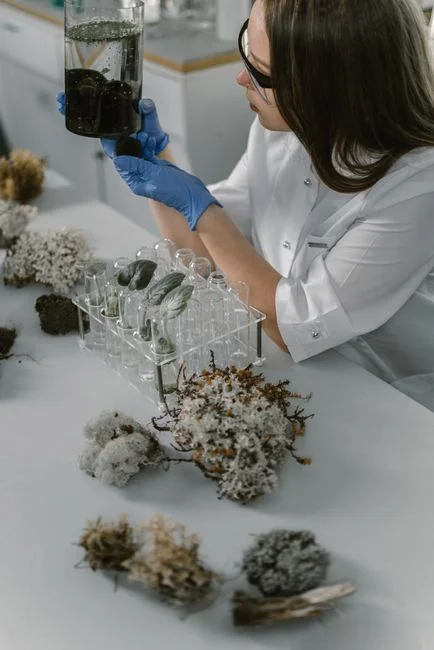
The biological reactor is the single highest-impact decision in a 2026 Jubail ETP spec, as it sets the effluent quality, the reuse readiness, the footprint, and the operator-skill requirement for the next fifteen years. The trade-off between MBR, MBBR, SBR, and conventional activated sludge is best read across four axes.
| Architecture | Effluent quality | Footprint | Operator skill | Reuse readiness |
|---|---|---|---|---|
| MBR | Reuse-grade; near-zero suspended solids via membrane separation | Smallest for the same loading | Moderate (membrane cleaning discipline) | High — direct feed to RO or cooling-tower make-up |
| MBBR | Good conventional discharge quality | Moderate; retrofits existing basins | Low–moderate | Moderate — usually needs a downstream polishing step |
| SBR | Good conventional discharge quality | Moderate; batch layout needs buffer volume | Moderate (timer / PLC discipline) | Moderate — needs downstream filtration for reuse |
| Conventional activated sludge | Lowest of the four | Largest | Lowest at greenfield, fragile under shock load | Low — significant downstream work to reach reuse |
For a Jubail site where reuse to cooling-tower or boiler-feed make-up is on the 2026 roadmap, an MBR system for reuse-quality effluent is the default starting point, with replaceable flat-sheet MBR cassettes sized to the design flow. MBBR is the right call when the existing basin must be retrofitted, when operator skill is limited, or when load swings from batch discharges would otherwise wash out a suspended-growth system. SBR is the most flexible batch option and fits smaller plants or plants that need buffer capacity against diurnal flow peaks. Conventional activated sludge still has the lowest CAPEX but the largest footprint and the weakest effluent of the four, and it is rarely preferred for 2026 Jubail greenfield unless land is unconstrained. The University of Twente thesis (DOI 10.3990/1.9789036523325) provides the peer-reviewed evidence that membrane polishing is the documented route to WFD-quality reuse, which supports an MBR-centric design whenever reuse is in scope.
Designing for Jubail's Climate and Industrial Mix
Specific climate and industry drivers must be designed into the ETP from the start to avoid summer-specific failure modes. Four primary factors dictate the design requirements for the Jubail region.
First, peak ambient temperature and humidity affect biological kinetics and aeration efficiency. Covered or shaded MBR tanks reduce evaporation losses and protect polymer dosing lines from UV degradation, and the cover also limits salt-crust formation on electrical cabinets. Second, high-TDS and chloride-rich streams from petrochemical and refinery catchments push the designer toward corrosion-resistant materials (FRP, duplex stainless) and away from carbon-steel biological tanks, which is a procurement decision the buyer must lock in writing before RFQ. Third, hydrocarbon spikes from upstream separators demand DAF pre-treatment with adequate skimmer capacity before any biological stage; otherwise biomass washout becomes a recurring incident. A DAF system for oil and FOG removal with automatic skimming is the engineering answer to this specific risk. Fourth, heavy-metal batches from metal-finishing tenants in the catchment require pH/oxidation adjustment and dedicated sludge handling, which is why PLC-controlled chemical dosing for pH adjusters and precipitants is necessary. For plants that also need trace-organic removal beyond conventional parameters, the Wageningen University PhD by Lei Y. (2022, DOI 10.18174/575408) on removal of micropollutants from WWTP effluent by constructed wetlands is the published evidence base the buyer can cite in the design basis.
Sizing, Layout, and Delivery Model for a Jubail ETP
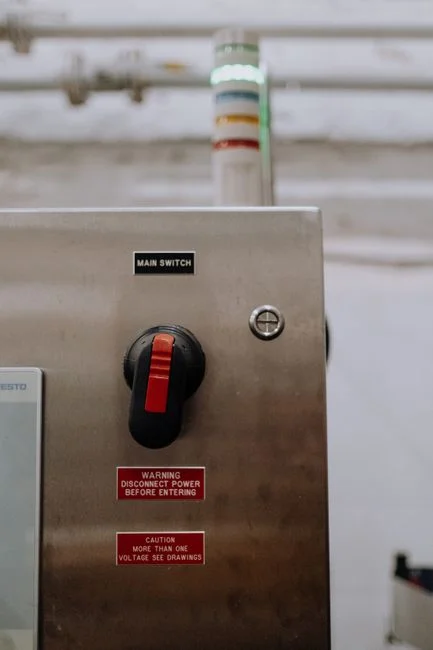
The right sizing approach involves requesting vendor equipment specifications against measured flow, BOD, COD, FOG, TDS, and heavy-metal profiles rather than relying on standard catalogue assumptions. The equipment envelope for the Jubail industrial mix is well-defined by current best practices.
An MBR system for reuse-quality effluent covers the mid-range industrial plant, and a replaceable flat-sheet MBR cassette scales that core in modular steps. The DAF system for oil and FOG removal covers pre-treatment across the typical industrial flow band, and a lamella clarifier for primary settling handles primary sedimentation in a small footprint. For larger plants, especially multi-tenant industrial city clients, modular skid-mounted ETP trains are preferred over a single container, matching Optima's documented practice for Saudi export projects. Containerised units are a valid choice when a Jubail plant needs fast compliance remediation, because Optima notes a containerised unit can be operational within days of arrival rather than the weeks a site-built system typically requires. The sludge line must be sized in parallel: a filter press for sludge dewatering with chemical dosing closes the mass balance. Buyers who also need a high-purity reuse stream after MBR polishing should evaluate an RO polishing train to reach the WFD-class quality the University of Twente thesis benchmarks against. The same logic used in the ETP design in Dammam guide applies to Jubail, since the NCEC framework and the industrial mix are closely related.
Building the 2026 RFQ: What to Ask the Supplier Before You Sign
Most tender problems in Jubail ETPs trace back to five questions the buyer should address before signing. Pin these into the RFQ and the shortlist cleans itself up.
Request influent characterisation (BOD, COD, TSS, FOG, heavy metals, TDS) and a written process guarantee tied to NCEC discharge limits. Ask for ISO 9001:2015 or equivalent quality-system certification and a project reference list for Saudi industrial work; Optima cites ISO 9001:2015 with 158+ delivered projects as the public benchmark. Confirm the supplier's after-sales model: remote versus on-site commissioning, operator training, and 24/7 emergency support, which is critical for clients without in-house ETP staff. Clarify the delivery format (containerised, modular skid, or fully site-built) and the implications for civil scope, freight, and timeline. Finally, request a sludge-handling plan, not just a liquid-side process guarantee, because this is where many Jubail tenders break down at commissioning. For buyers comparing dewatering options, the filter press vs screw press comparison is a useful tiebreaker document to attach to the RFQ.
Frequently Asked Questions
What budget should a 2026 Jubail ETP buyer plan for?
The supplied research does not publish a price for a complete Jubail ETP, so a CAPEX figure cannot be quoted here. A buyer should request from each shortlisted vendor a written process guarantee tied to NCEC discharge limits, a bill of materials broken down by stage, and a separate freight and commissioning line, because containerised units and fully site-built systems do not share a cost basis. Treat any single number from an online catalogue as indicative only, and benchmark three independent vendor proposals against the same influent characterisation before locking the budget.
How do I shortlist ETP suppliers for a
Frequently Asked Questions
What is the typical cost of an effluent treatment plant in Jubail in 2026?
The capital expenditure for an ETP in Jubail typically ranges from $1,500 to $3,500 per cubic meter of daily capacity, depending on the complexity of the influent wastewater and the required effluent quality. For small-scale containerized systems (up to 500 m³/day), costs are generally higher per unit due to integrated automation and modular assembly, while large-scale bespoke industrial plants benefit from economies of scale.
Which ETP technology — MBR, MBBR, SBR, or conventional activated sludge — is best for a Jubail industrial facility?
Membrane Bioreactor (MBR) technology is currently the preferred standard for Jubail industrial facilities due to its superior footprint efficiency and high-quality permeate suitable for direct reuse. While MBBR and SBR are effective for organic load reduction, MBR is specifically recommended for facilities aiming to meet stringent NCEC standards or recycle water for cooling towers or irrigation without additional tertiary filtration.
What are the NCEC discharge limits that a Jubail ETP must meet in 2026?
In 2026, all ETPs operating in Jubail must comply with the National Center for Environmental Compliance (NCEC) standards, which generally mandate a Biological Oxygen Demand (BOD) below 20 mg/L, Chemical Oxygen Demand (COD) below 150 mg/L, and Total Suspended Solids (TSS) below 20 mg/L for non-sensitive marine discharge. Facilities discharging into specific industrial drainage networks or sensitive coastal zones may face stricter limits, requiring nitrogen and phosphorus removal to levels below 10 mg/L and 1 mg/L respectively.
How long does it take to deliver and commission a containerised ETP in Saudi Arabia?
For standard containerized ETP units, the typical lead time from order confirmation to final commissioning ranges from 16 to 24 weeks. This timeframe includes 10–14 weeks for fabrication and factory acceptance testing (FAT), followed by 4–6 weeks for logistics, site preparation, installation, and final performance testing under local Jubail environmental conditions.
Can a Jubail ETP be designed for water reuse instead of discharge, and what polishing is required?
Yes, ETPs in Jubail can be designed for 100% water recovery, which is increasingly common to align with Saudi Vision 2030 water sustainability goals. To achieve reuse quality, the plant must integrate advanced polishing stages, typically consisting of ultrafiltration (UF) for pathogen removal, followed by reverse osmosis (RO) to manage total dissolved solids (TDS) and ultraviolet (UV) or chemical disinfection to ensure the water meets safety requirements for industrial process reuse or landscape irrigation.