Why Cooling Blowdown Is the Single Biggest Water Lever for a Rasapudipalem Data Center
Cooling tower blowdown (CTBD) is the purge stream an operator dumps from the recirculating loop to stop dissolved solids, corrosion byproducts and biological growth from accumulating past scaling limits, and the volume it takes is set directly by the cooling-tower cycles of concentration (COC) the plant runs at. At 4 COC, a typical data center cooling tower loses approximately 25–30% of its makeup water to blowdown, and for a facility using 10 million gallons monthly, that translates to 2.5–3 million gallons of water discharged or wasted (genesiswatertech.com, 2026). Per-megawatt consumption at a 100 MW site is on the order of 2 million litres per day, with cooling accounting for roughly 80–90% of that demand (ide-tech.com, 2026; genesiswatertech.com, 2026), which is why a Rasapudipalem project's first freshwater-withdrawal target is almost always the blowdown stream rather than the chiller, the humidification line, or the make-up plant.
Brackish coastal source water around Rasapudipalem raises inlet TDS and shortens the cycle at which calcium, magnesium and silica start to precipitate, so the same hyperscale campus that inland India could run at 6–8 COC often has to dump at 3–4 COC to stay inside scaling limits, mechanically increasing blowdown volume. Because the Andhra Pradesh State Pollution Control Board consent regime and water-stress realities around the Visakhapatnam industrial belt mean end-of-pipe discharge is rarely cheap or uncontested, recovering blowdown as cooling-tower makeup is usually the single largest available lever to cut freshwater withdrawal, reduce discharge volumes, and protect operating permits. For an EPC or facility manager, framing the sizing conversation around CTBD first, then everything else, avoids the common mistake of oversizing raw-water pretreatment while the real loss stream goes untreated; for a wider view on industrial water use in water-stressed regions, see this industrial water use in water-stressed regions guide.
What Blowdown Looks Like at the Inlet of the Treatment Train
CTBD is essentially makeup water with everything concentration has amplified, and that has to be quantified before any membrane or thermal train is sized. Total dissolved solids in the blowdown are typically 4–8 times higher than the makeup water, ranging from 1,200 to 6,000 mg/L depending on cycles of concentration and source water quality (genesiswatertech.com, 2026), so even a plant pulling 600 mg/L TDS makeup can be pushing 3,000–4,800 mg/L at the blowdown outlet. The scaling species that drive membrane recovery limits are the same ones that complicate cooling chemistry: calcium, magnesium, silica and alkalinity are concentrated, which is why conventional brackish water reverse osmosis typically plateaus at 75–80% recovery on CTBD before scaling risk escalates (ide-tech.com, 2026).
On top of the dissolved load, the engineer has to budget for chemistry that does not appear in a TDS reading: biocides, corrosion and scale inhibitors, dispersants, and legacy chromate or high-phosphate programs that can block reuse or discharge (genesiswatertech.com, 2026). Suspended solids from corrosion products, biofilm fragments and airborne dust typically run 10–50 mg/L, and biological content — planktonic bacteria, algae, and biofilm-forming organisms — has to be addressed in any recovery system (genesiswatertech.com, 2026). The buyer should treat the table below as a parameter checklist to take into a site water audit; if the right-hand column is empty, the train cannot be sized defensibly.
| Parameter | Expected Range at CTBD Inlet | Site-Specific Value (to fill) |
|---|---|---|
| Total dissolved solids (TDS) | 1,200–6,000 mg/L (genesiswatertech.com, 2026) | |
| Source water TDS (makeup) | Site-specific; brackish around Visakhapatnam is typically higher than inland baseline | |
| Current cycles of concentration | 3–6 COC typical, limited by scaling chemistry | |
| Silica, calcium, magnesium, alkalinity | Concentrated proportionally to COC; controls RO recovery ceiling (ide-tech.com, 2026) | |
| Suspended solids | 10–50 mg/L (genesiswatertech.com, 2026) | |
| Treatment chemicals present | Biocides, corrosion/scale inhibitors, dispersants; legacy chromate or high-phosphate programs block reuse (genesiswatertech.com, 2026) | |
| Biological content | Planktonic bacteria, algae, biofilm-formers; must be controlled before membranes (genesiswatertech.com, 2026) | |
| Discharge destination and limit | Local Andhra Pradesh PCB consent TDS/chloride ceiling; NPDES-equivalent sewer or surface water |
Inputs the buyer must collect on-site and supply to shortlisted bidders: source water TDS, pH, silica, conductivity, the specific biocide and inhibitor chemistry currently in use, the current cycles of concentration, and any historical scaling or biofouling incidents. Without that pack, a supplier is quoting blind and the resulting CAPEX/OPEX envelope is not defensible to management.
Treatment Train Options for Rasapudipalem Sites
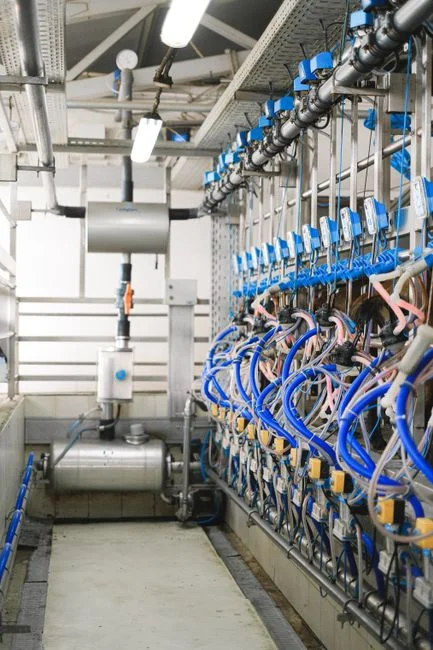
The technology menu for blowdown recovery breaks into four building blocks that get stacked to hit the target recovery and the discharge rule, and the decision is really about how far up the recovery curve the project has to climb. Side-stream self-cleaning spiral filtration, sized at 1–5% of circulation flow with a 10–25 micron cut and $50,000–200,000 CAPEX, lets the plant run higher cycles of concentration and sends cleaner water downstream, which protects every membrane that follows (genesiswatertech.com, 2026). A hollow-fibre ultrafiltration system ahead of the RO acts as a 0.01–0.1 micron barrier against particulates, bacteria and most organics, operates at 10–30 psi, recovers 90–95% of feed, tolerates feedwater up to roughly 300 ppm turbidity, and needs only a periodic chemical clean every 1–3 months (genesiswatertech.com, 2026).
Reverse osmosis is the workhorse for cooling-tower makeup reuse on CTBD: it removes 95–99% of dissolved solids with permeate typically 10–50 mg/L TDS, runs at 150–400 psi, achieves 50–85% recovery on blowdown (limited by scaling), and carries an installed cost of $250,000–500,000 for a 50,000 GPD system with $1.50–3.00 per kgal OPEX covering energy, chemicals, membrane replacement and maintenance (genesiswatertech.com, 2026); a packaged industrial RO system on this duty typically recovers 75–80% in conventional BWRO mode (ide-tech.com, 2026). Where hardness rather than TDS is the binding constraint, nanofiltration runs at lower pressure (75–150 psi) and reaches 70–85% recovery with permeate TDS at roughly 30–50% of feed, offering a 30–40% energy reduction versus RO where full demineralization is not required (genesiswatertech.com, 2026). For a 5–50 MW Andhra Pradesh site that needs to push past the 75–80% BWRO ceiling, a high-recovery train combining RO at conservative local recovery with a fluidized-bed precipitation step to drop silica, calcium carbonate and other sparingly soluble salts out as dense solids, plus dynamic RO cycling, reaches about 95% overall recovery (ide-tech.com, 2026). The full zero liquid discharge envelope stacks RO at 70–80% recovery with a mechanical vapor compression brine concentrator at 95–98% recovery producing distillate below 10 mg/L TDS, then a crystallizer for the final 20–30% solids brine, hitting 95–99% overall water recovery at $3–8 million CAPEX and $5–15 per kgal OPEX (genesiswatertech.com, 2026).
| Train Block | Function | Indicative Recovery / Output | Operating Pressure | Cost Band (CAPEX / OPEX) | Source |
|---|---|---|---|---|---|
| Side-stream self-cleaning spiral filtration | Cuts particulates, biofouling potential; enables higher COC | 1–5% of circulation flow, 10–25 µm cut | Low | $50,000–200,000 CAPEX; minimal OPEX | genesiswatertech.com, 2026 |
| Ultrafiltration (UF) | 0.01–0.1 µm barrier ahead of RO; bacteria, virus, TSS removal | 90–95% recovery | 10–30 psi | Site-specific; low chemical OPEX | genesiswatertech.com, 2026 |
| Reverse osmosis (RO) on CTBD | Dissolved solids, hardness, silica removal; permeate to cooling tower | 50–85% recovery; permeate 10–50 mg/L TDS | 150–400 psi | $250,000–500,000 for 50,000 GPD; $1.50–3.00/kgal OPEX | genesiswatertech.com, 2026; ide-tech.com, 2026 |
| Nanofiltration (NF) | Selective hardness, sulfate, multivalent ion removal; partial TDS cut | 70–85% recovery; permeate ~30–50% of feed TDS | 75–150 psi | Lower energy than RO; site-specific CAPEX | genesiswatertech.com, 2026 |
| High-recovery train (RO + fluidized-bed salt precipitation + dynamic RO cycling) | Pushes past 75–80% BWRO ceiling on scale-prone CTBD | ~95% overall recovery | Conventional RO pressures with controlled chemistry | Higher than single-stage RO; site-specific | ide-tech.com, 2026 |
| MVC brine concentrator | Thermal concentration of RO reject | 95–98% recovery; distillate <10 mg/L TDS | 15–25 kWh per 1,000 US gal distillate | $1–3 million for 10,000–30,000 GPD | genesiswatertech.com, 2026 |
| Full ZLD (RO + MVC + crystallizer) | No liquid discharge; solid salt cake only | 95–99% overall water recovery | Combined membrane + thermal | $3–8 million CAPEX; $5–15/kgal OPEX | genesiswatertech.com, 2026 |
Matching the Train to Andhra Pradesh Discharge and Reuse Rules
The treatment train is ultimately a function of what the regulator and the hyperscale customer will accept, not just what is technically possible. Direct discharge fees in water-stressed regions are now in the $5–15 per thousand gallons range, and some jurisdictions have implemented total dissolved solids limits below 1,500 mg/L, which together make end-of-pipe discharge of concentrated blowdown either uneconomic or non-compliant (genesiswatertech.com, 2026). That combination is what forces the choice away from a simple compliance scrubber and toward either cooling-tower makeup reuse, which typically achieves 60–85% recovery and directly cuts both freshwater intake and discharge volumes, or full zero liquid discharge (genesiswatertech.com, 2026).
For a hyperscale campus with a water-positive or water-neutral target, the higher CAPEX of an RO + MVC or full ZLD train is recovered through avoided freshwater, avoided discharge fees, and the permit security that comes with effectively zero liquid waste to surface water or sewer. The Indian-side inputs the buyer must confirm before locking the train are: the specific Andhra Pradesh State Pollution Control Board consent conditions for the site (TDS ceiling, chloride, residual chlorine, biocide carryover, monitoring cadence), the local Central Ground Water Authority NOC status if any groundwater is in the blend, and the hyperscale customer's site-specific water-stewardship KPIs, which often differ from headline ESG targets. For a comparable South Asian reference on how a CTBD reuse train gets built into the EPC scope, the data center CTBD treatment in Karachi guide walks through a similar coastal, discharge-fee-exposed context.
Capital and Operating Cost Envelope for a 5–20 MW Rasapudipalem Site
Procurement needs a defensible cost band before going to market, and the data centers that get clean bids are the ones that anchor the RFQ to a reference size and a cost envelope. A 50,000 GPD blowdown RO system installed runs $250,000–500,000 with $1.50–3.00 per kgal OPEX including energy, chemicals, membrane replacement and maintenance (genesiswatertech.com, 2026). Side-stream spiral filtration, which most projects need first to enable higher cycles of concentration and protect the downstream RO, sits at $50,000–200,000 CAPEX with minimal ongoing cost beyond solids handling (genesiswatertech.com, 2026). PLC-controlled antiscalant and biocide dosing and a packaged multi-media filter ahead of the UF/RO train are the other two small CAPEX line items the EPC should carry explicitly in the bill of materials rather than rolling into a contractor markup.
Full ZLD is a different conversation: $3–8 million CAPEX and $5–15 per kgal OPEX, and it is justified only where discharge is effectively prohibited, alternative supply is unavailable, or the hyperscale customer's water-neutrality commitment is binding (genesiswatertech.com, 2026). Most 5–20 MW Rasapudipalem sites will sit in the middle band: side-stream filtration plus UF plus RO, with a 10,000–30,000 GPD MVC block held as a contingent capex line if consent conditions tighten. Indian-fabricated UF, RO and dosing skids typically undercut the imported CAPEX bands above, and the 50,000 GPD as well as 10,000–30,000 GPD reference sizes (genesiswatertech.com, 2026) are useful anchor points to send to shortlisted bidders so quotes are like-for-like rather than scoped to different bases.
Sizing Checklist to Send to Your Shortlisted Supplier
Send the same checklist to two or three bidders with the same reference size, the same feedwater envelope, and the same target recovery; the differences in their quotes will then be technical, not scoping. The pack should confirm blowdown TDS, pH, silica, hardness, suspended solids, the specific biocide and inhibitor chemistry in use, and the current cycles of concentration. It should state the target cycles of concentration, the target recovery percentage, and whether the permeate feeds the cooling tower, a chiller, or a separate reuse line, all of which change the antiscalant programme and the post-treatment trim (genesiswatertech.com, 2026). The pack should also specify the discharge route (NPDES-equivalent sewer, surface water, ZLD), the TDS and chloride limit the train must hit, and ask for UF/RO membrane area, the antiscalant programme, the RO recovery and concentrate strategy, a CAPEX split, and a 5-year OPEX including membrane replacement and energy (genesiswatertech.com, 2026).
Local constraints to flag on the datasheet: coastal-corrosion rating for outdoor skids, monsoon humidity window for outdoor control panels and MCC rooms, and the Andhra Pradesh PCB reporting cadence the bidder has to design into the instrumentation scope. Asking bidders to quote RO and UF membrane spares with their recommended replacement interval and unit cost gives procurement a defensible spare-parts number to put on the indent rather than a placeholder.
Frequently Asked Questions
What CAPEX and OPEX should we budget for a 5–20 MW data center CTBD treatment train in Rasapudipalem?
For a side-stream filtration plus UF plus RO train anchored on a 50,000 GPD RO block, expect roughly $250,000–500,000 installed for the RO plus $50,000–200,000 for the side-stream spiral filtration, with combined OPEX around $1.50–3.00 per kgal including energy, chemicals, membrane replacement and maintenance (genesiswatertech.com, 2026). Full ZLD jumps to $3–8 million CAPEX and $5–15 per kgal OPEX and is only justified where discharge is effectively prohibited or a hyperscale customer's water-neutrality commitment is binding (genesiswatertech.com, 2026). Request a CAPEX split and a 5-year OPEX from each bidder, with the antiscalant programme, membrane replacement cadence and energy line itemised, so quotes are comparable.
How do we choose between RO reuse and a full ZLD train for an Andhra Pradesh site?
The decision is driven by three numbers the buyer has to obtain: the actual Andhra Pradesh State Pollution Control Board consent TDS and chloride limit for the site, the local discharge fee in $ per kgal, and the hyperscale customer's water-stewardship KPI. If discharge fees are in the $5–15 per kgal band and consent conditions force a TDS limit below 1,500 mg/L on the discharge stream, reuse-as-makeup becomes the default because it directly cuts both freshwater intake and discharge volumes at 60–85% recovery (genesiswatertech.com, 2026). Full ZLD only enters the frame if discharge is effectively prohibited, freshwater cost is structurally very high, or the customer's commitment is binding. Ask shortlisted suppliers to model both trains against the same site water audit and the same consent envelope, with concentrate volume and quality as the comparison output.
What site data do we need before we can size a CTBD RO or ZLD system?
Minimum pack: makeup water TDS, blowdown TDS at current cycles of concentration, pH, silica, calcium, magnesium, alkalinity, suspended solids, conductivity, the specific biocide and corrosion/scale inhibitor chemistry in use, and the current cycles of concentration. Without silica and alkalinity the supplier cannot set an antiscalant programme or a recovery ceiling, and without the biocide/inhibitor chemistry they cannot confirm compatibility with the downstream RO membrane and any tablet-based program like Genclean-S (genesiswatertech.com, 2026). Treat the parameter table in section 2 as the data request form to send to the site water audit team before the RFQ goes out.
How do we reduce freshwater withdrawal on a Rasapudipalem site without going to full ZLD?
Push cycles of concentration up by installing side-stream self-cleaning spiral filtration sized at 1–5% of circulation flow, then add a UF plus RO block that returns permeate to the cooling tower as high-quality makeup (genesiswatertech.com, 2026). On scale-prone brackish CTBD, the practical ceiling for a conventional BWRO is 75–80% recovery, so a high-recovery train that pairs conservative-recovery RO with controlled precipitation of silica, calcium carbonate and other sparingly soluble salts can reach about 95% overall recovery without the full ZLD cost stack (ide-tech.com, 2026). The freshwater reduction shows up directly in the consent-to-operate numbers and the ESG water-intensity KPI, which is usually the figure the hyperscale customer is buying.
Related Equipment
- industrial RO system — specifications, capacity range, and technical data