Why Karachi is a special case for data center water in 2026
Karachi compresses three constraints onto one site that no off-the-shelf Middle East design brief covers together. K-Electric's B-3 industrial tariff band (2026) makes on-site reuse 1.5-3x more attractive than lower-tariff markets, mirroring the Iraq benchmark (HydropureWater 2026). Coastal-ambient design temperatures of 35-45 °C derate biological oxygen transfer and membrane flux, so aeration equipment must be oversized 12-18% or specified with high-efficiency disc diffusers carrying a guaranteed SOTE above 6.5 kg O₂/kWh at design temperature. K-Electric industrial parks report 4-8 h planned outage per week plus 2-4 h unscheduled faults, so a 7-day chemical autonomy buffer and a 2-year critical spares kit are mandatory before commissioning.
Lyari and Malir are closed-basin river-receivers where large-volume surface discharge is a permit liability even where SEQS numeric limits are met — the same closed-basin logic that drives Bahr Al-Najaf design decisions (HydropureWater Najaf 2026). Pakistan is the 8th biggest textile exporter in Asia, and Karachi hosts roughly 1.5-2.7 million m³/yr of industrial water demand across comparable SMEs — a regional discharge context the 2026 design must sit inside (Frontiers 2022).
The three wastewater streams every Karachi data center produces
Segregation drives equipment sizing. The engineer who treats all flows as one bulk stream ends up with a membrane oversized for SS and undersized for silica. Karachi sites produce four distinct streams, not one.
- Data-hall humidification drain: TDS 500-1,500 mg/L, silica 5-30 mg/L, SS 10-50 mg/L, mostly corrosion products and biofilm fragments. 60-70% of total site volume (HydropureWater 2026, transferred from Najaf reference).
- Cooling-tower blowdown (CTBD): brackish concentrate enriched with silica, CaCO₃ and CaSO₄. At 4 CoC, 25% of make-up water is lost to blowdown — roughly 3.75 million gal/month for a 10 MW site (Genesis Water Tech 2026).
- RO reject and UPW-loop blowdown: low-TDS, high-purity stream; prime reuse candidate back to boiler feed or process wash (HydropureWater 2026).
- Ammonia wet-scrubber blowdown from standby generators: 50-500 mg/L NH₃-N, must be nitrified or air-stripped separately before the main biological train (HydropureWater 2026).
Sanitary and cafeteria flows are handled by a buried A/O package plant and are excluded from the industrial train.
| Stream | Typical TDS (mg/L) | SS (mg/L) | Volume share | Treatment target |
|---|---|---|---|---|
| Humidification drain | 500-1,500 | 10-50 | 60-70% | RO polish to cooling make-up |
| CTBD at 4 CoC | 1,200-6,000 | 20-80 | 25-35% | Side-stream + RO + crystallizer |
| RO reject / UPW blowdown | <50 | <5 | 5-10% | Boiler feed / process wash |
| NH₃ scrubber blowdown | 500-2,000 | 10-30 | <5% | Nitrification / air-strip |
Sindh EPA / SEQS discharge envelope for 2026
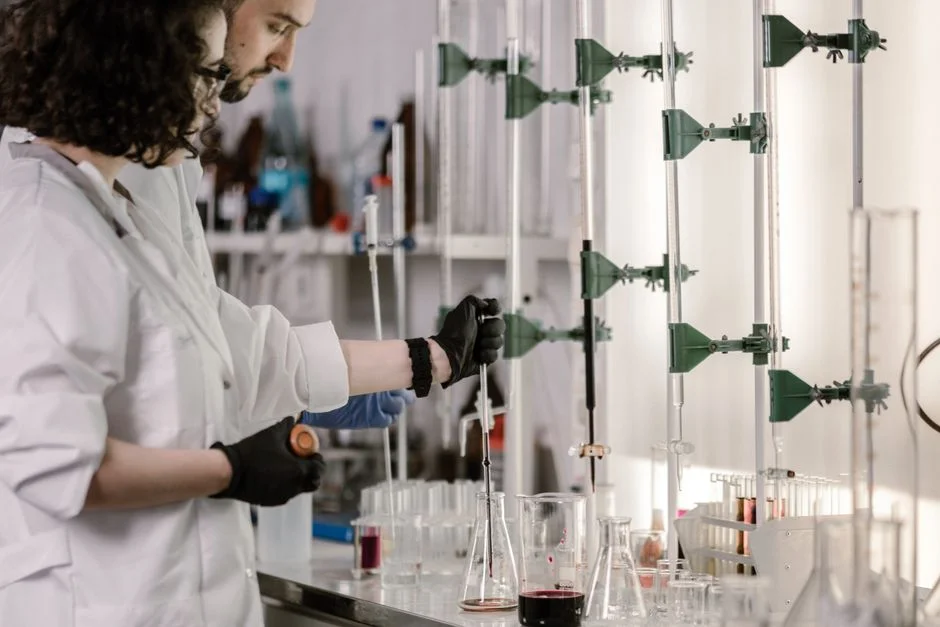
The SEQS-aligned working floor for 2026 is BOD₅ ≤50 mg/L, COD ≤200 mg/L, TSS ≤50 mg/L, free Cl <1 mg/L, total Cr ≤0.5 mg/L (HydropureWater Najaf 2026, cross-walked to Pakistan SEQS schedule). Sindh EPA enforces via 24-hour composite sampling on the discharge line, with administrative penalties and operational suspension as the default response to failed composites (HydropureWater 2026).
On a USD 5M/yr line at typical 8-12% margin, a two-week stoppage from non-compliance exceeds USD 75,000 in lost contribution — the compliance anchor alone justifies dual MBR trains and an on-line ClO₂ generator at the discharge point. Lyari/Malir permit liability persists even where numeric limits pass, so redundancy at the composite-sampling point is not optional; a refrigerated auto-sampler with dual pumps and a 7-day autonomy buffer is the minimum.
The 2026 Karachi train: DAF → MBR → multimedia filter → RO
Stage 1 is a dissolved air flotation system removing the 10-50 mg/L SS load of corrosion products and biofilm fragments, while buffering hydraulic surges from humidification drain cycles (HydropureWater 2026). Stage 2 is a containerized MBR running at MLSS 8,000-12,000 mg/L with HRT 8-14 h, delivering BOD <10 mg/L, COD <60 mg/L and TSS <5 mg/L in roughly 60% smaller footprint than conventional activated sludge. At Karachi ambient 35-45 °C, biological kinetics derate, so aeration is oversized 12-18% or specified at SOTE >6.5 kg O₂/kWh (HydropureWater 2026).
Stage 3 is a multi-media filter holding SDI below 5 to protect the downstream RO from biocides and corrosion inhibitors that concentrate in the circulating water. Stage 4 is an industrial RO polishing system for cooling-tower blowdown at 65-75% recovery, returning polished flow to cooling-tower make-up or UPW make-up; design target is 85-90% overall site recovery once CTBD is folded in. Final disinfection uses an on-site chlorine dioxide generator holding free Cl <1 mg/L without the THM formation risk of chlorine, skid-mounted for K-Electric outage resilience. If total flow stays below 200 m³/day and reuse economics are weakest, drop the RO and discharge DAF + MBR + ClO₂ to sewer — the S2 decision rule for low-flow back-end rinse streams (HydropureWater 2026).
| Stage | Function | Design parameter | Output spec |
|---|---|---|---|
| DAF | SS removal, surge buffer | 10-30 m³/m²·h | SS <20 mg/L |
| Containerized MBR | BOD/COD reduction | MLSS 8,000-12,000 mg/L, HRT 8-14 h | BOD <10, COD <60, TSS <5 mg/L |
| Multi-media filter | RO protection | SDI <5 | Turbidity <1 NTU |
| Industrial RO | CTBD polish / reuse | 65-75% recovery | Permeate 10-50 mg/L TDS |
| ClO₂ generator | Disinfection | 0.5-1.0 mg/L dose | Free Cl <1 mg/L |
Cooling-tower blowdown reuse: the 75-80% recovery ceiling and how to break it
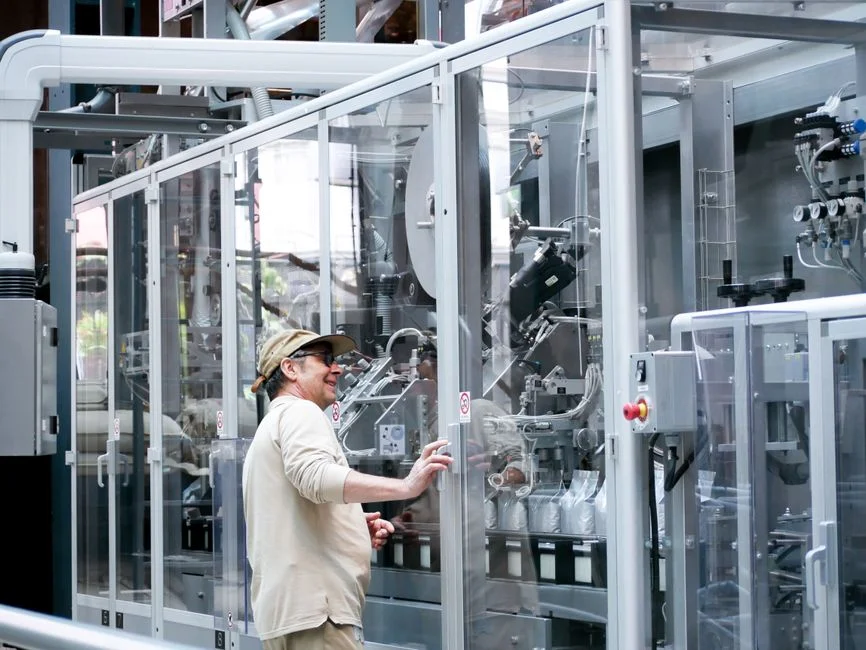
CTBD reuse is a stepped technology ladder, not a single membrane decision. Step 1 is side-stream filtration at 1-5% of circulation flow, 10-25 µm self-cleaning screens, CAPEX USD 50,000-200,000 (Genesis Water Tech 2026). Step 2 is ultrafiltration pretreatment ahead of the blowdown RO at 0.01-0.1 µm, 10-30 psi, 90-95% recovery, chemical cleaning every 1-3 months. Step 3 is the industrial RO at 50-85% recovery, 150-400 psi, permeate 10-50 mg/L TDS, 95-99% salt rejection; a 50,000 GPD unit carries CAPEX USD 250,000-500,000 and OPEX USD 1.50-3.00/kgal (Genesis Water Tech 2026).
Where partial softening is the goal, nanofiltration at 70-85% recovery and 75-150 psi produces permeate at 30-50% of feed TDS; an industrial water softener train ahead of the RO lifts recovery further by stripping hardness before the membrane (HydropureWater product reference). To break the 75-80% BWRO ceiling, route the RO concentrate to a fluidized-bed crystallizer: the IDE MAXH₂O reference shows silica, CaCO₃ and CaSO₄ precipitating as compact pellets while the remaining NaCl brine is re-RO'd at ~95% overall recovery, permeate silica near 1 mg/L (IDE 2026). For ZLD finish, an MVC evaporator at 95-98% recovery produces distillate below 10 mg/L TDS at 15-25 kWh per 1,000 USG, with CAPEX USD 1-3M for 10,000-30,000 GPD; full ZLD runs USD 3-8M CAPEX (Genesis Water Tech 2026).
| Step | Technology | Recovery / spec | CAPEX (USD) |
|---|---|---|---|
| 1 | Side-stream filtration (10-25 µm) | 1-5% circ. bleed | 50,000-200,000 |
| 2 | UF pretreatment | 90-95% recovery, 0.01-0.1 µm | 80,000-150,000 |
| 3 | Industrial RO (50,000 GPD) | 50-85% recovery, 95-99% rejection | 250,000-500,000 |
| 4 | NF / softener ahead of RO | NF permeate 30-50% feed TDS | 100,000-250,000 |
| 5 | Fluidized-bed crystallizer | Compact pellet precipitation | 1-2M |
| 6 | MVC evaporator (ZLD finish) | 95-98% recovery, <10 mg/L TDS distillate | 1-3M (ZLD total 3-8M) |
Reuse vs sewer: the 200 m³/day rule for Karachi sites
The decision rule fits on one slide. Reuse when site water intensity exceeds 200 m³/day or the SEPA renewal audit flags non-revenue water; discharge when project flow is below 200 m³/day and on-site operators are limited (HydropureWater 2026). For a data center, the 200 m³/day threshold is almost always tripped once the site passes roughly 5 MW of IT load, because humidification and CTBD together exceed that volume.
Reuse wins on three grounds in Karachi: K-Electric B-3 tariff math, Lyari/Malir permit liability, and the 30-50% make-up water cut from pushing cycles from 4 to 6-8 (Genesis Water Tech 2026). ZLD-mandated sites — closed-basin receiver, zero-discharge industrial-park covenant, or hyperscale ESG mandate — must go to the full 95-99% recovery train with MVC finish. The same logic is applied in the 2026 Najaf data center wastewater guide for Bahr Al-Najaf, and mirrored in the 2026 Jakarta data center cooling blowdown guide.
2026 Karachi CAPEX/OPEX envelope by IT load
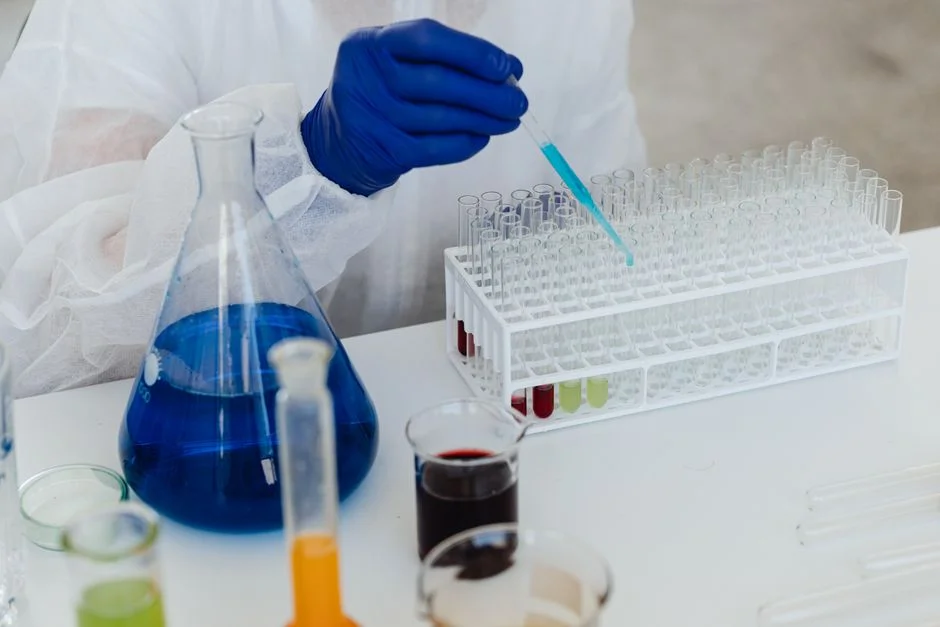
Budgeting a 2026 Karachi data-center WWTP starts with the membrane CAPEX line, but three Pakistan-specific layers stack on top: K-Electric industrial tariff (1.5-3x lower-tariff-market energy), 35-45 °C ambient derating (12-18% aeration oversize), and Lyari/Malir permit redundancy (dual MBR + on-line ClO₂).
Small data hall (≈5 MW IT, ≈200 m³/day): DAF + containerized MBR + ClO₂ to sewer, no RO CAPEX; lower end of the 50,000 GPD RO range where RO is included (HydropureWater Najaf 2026 cost basis). Mid-scale (≈20 MW IT, ≈800 m³/day): DAF + containerized MBR + multi-media filter + RO polishing, directional CAPEX USD 250,000-500,000 and OPEX USD 1.50-3.00/kgal for the RO train (Genesis Water Tech 2026). Hyperscale (≈50 MW IT, ≈2,000 m³/day): same train plus fluidized-bed crystallizer or MVC evaporator; full ZLD adds USD 3-8M CAPEX and USD 5-15/kgal OPEX (Genesis Water Tech 2026).
Logistics uplift: containerized WWTP skids clear Karachi Port in 7-14 days for standard ISO containers, then 1-3 days overland to SITE, Korangi or Port Qasim industrial zones — much shorter than the 10-16 week Najaf baseline (HydropureWater 2026). A mechanical bar screen at the head of the train is mandatory to protect membranes during the overland transport debris window. A chemical dosing system and a 2-year consumables + critical spares kit must ship in the same logistics window to avoid 6-10 week replacement-part waits from China or Europe. Sludge dewatering for the MBR waste stream is best handled by a plate-and-frame filter press reaching 22-28% dry-solids cake for off-site disposal.
| IT load | Daily flow | Train scope | CAPEX (USD) | OPEX (USD/kgal) |
|---|---|---|---|---|
| ≈5 MW | ≈200 m³/day | DAF + MBR + ClO₂ (sewer) | 150,000-300,000 | 0.80-1.50 |
| ≈20 MW | ≈800 m³/day | DAF + MBR + MMF + RO | 400,000-800,000 | 1.50-3.00 |
| ≈50 MW | ≈2,000 m³/day | Add crystallizer / MVC (ZLD) | 3,000,000-8,000,000 | 5.00-15.00 |
Frequently Asked Questions
What is the minimum discharge spec a Karachi data center must hit in 2026?
SEQS-aligned working floor is BOD₅ ≤50 mg/L, COD ≤200 mg/L, TSS ≤50 mg/L, free Cl <1 mg/L and total Cr ≤0.5 mg/L, verified by 24-hour composite sampling on the Sindh EPA-permitted outfall (HydropureWater Najaf 2026, cross-walked to SEQS). On a USD 5M/yr line, a two-week stoppage exceeds USD 75,000 in lost margin. Specify dual MBR trains and an on-line ClO₂ generator at the discharge point.
When does on-site reuse beat sewer discharge for a Karachi hyperscale site?
Reuse wins once site flow exceeds 200 m³/day, which most data centers hit by 5 MW IT load (HydropureWater 2026). The K-Electric B-3 industrial tariff math, Lyari/Malir permit liability, and 30-50% make-up water cut from pushing cycles 4 → 6-8 stack in favour of reuse (Genesis Water Tech 2026). Below 200 m³/day, DAF + MBR + ClO₂ to sewer is the defensible decision.
How do you break the 75-80% recovery ceiling on cooling-tower blowdown RO?
Route RO concentrate to a fluidized-bed crystallizer that precipitates silica, CaCO₃ and CaSO₄ as compact pellets, then re-RO the NaCl brine at ~95% overall recovery with permeate silica near 1 mg/L (IDE 2026). For ZLD finish, add an MVC evaporator at 95-98% recovery producing distillate below 10 mg/L TDS at 15-25 kWh per 1,000 USG (Genesis Water Tech 2026). Total full-ZLD CAPEX sits at USD 3-8M for a 10,000-30,000 GPD envelope.
How long does it take to deliver a containerized WWTP to a Karachi industrial park?
Standard ISO containerized skids clear Karachi Port in 7-14 days, then 1-3 days overland to SITE, Korangi or Port Qasim — far shorter than the 10-16 week Najaf baseline (HydropureWater 2026). Ship the 2-year consumables and critical spares kit in the same logistics window to avoid 6-10 week replacement-part waits from China or Europe. The same hyperscale logic is detailed in the 2026 Port Harcourt data center wastewater guide for comparable coastal-ambient sites.