Why Industrial Water Consumption Is a 2026 Strategic Risk in Water-Stressed Regions
Nearly two-thirds of the world's population experience water stress for at least one month each year, and roughly half a billion people face severe water shortage on a daily basis, according to the 2023 MDPI Lake Nasser FPV study. Industrial supply in many basins sits behind agricultural irrigation, which the same study identifies as the largest single consumer of global freshwater at about 70%. The exposure for a plant is not abstract: when basin allocations tighten, industrial withdrawal permits are usually the first to be curtailed, and rising ESG disclosure obligations are forcing water use into the same reporting line as energy and emissions.
Evaporation is the loss vector most engineers underestimate. Lake Nasser, a roughly 5,250 km² reservoir on the Nile, loses water to surface evaporation at a scale large enough to justify a floating-photovoltaic study in its own right (MDPI, 2023). On industrial sites the analogous problem is smaller in absolute volume but identical in physics: open clarifiers, equalization basins, and on-site raw-water reservoirs evaporate clean water that the plant paid to treat. The 2026 question for an engineering team is no longer "do we meet our discharge limit" but "how do we cut net withdrawal, prove it with KPIs, and do it without blowing the site's energy budget."
Three forces converge in 2026: tighter withdrawal allocations, mandatory water-risk disclosure under most major ESG frameworks, and energy cost volatility that penalises any reuse train which treats water inefficiently. Designing for compliance alone is no longer defensible to a board. Designing for freshwater reduction, reuse depth, and kWh per cubic metre treated is.
Step 1 — Run a Site Water Risk Assessment Before Choosing Equipment
The most common failure mode in industrial water reduction is buying a treatment technology before understanding the loss streams it is meant to fix. The ESG Sustainability Directory frames the correct order of operations: conduct a water risk assessment first, then move to closed-loop recycling, water-efficient technology adoption, and watershed collaboration (ESG Sustainability Directory, 2024). A 2026 assessment should produce three layers of evidence.
Layer one is basin-level stress: seasonal scarcity patterns, current and projected allocation rules, and whether the plant's intake competes with agricultural demand in the same watershed. Layer two is plant-level mass balance — total freshwater withdrawal, total discharge, and the ratio between them, broken down by unit operation. Layer three is process-level loss accounting across cooling, boiler feed, rinsing, clean-in-place (CIP), and wash streams, because each stream has a different water-quality profile and therefore a different reuse pathway.
Influent variability has to be quantified with measured data, not assumed ranges. For a difficult mixed industrial matrix, the 2026 MDPI Lake Mariut study reported the following hypereutrophic influent characteristics: TOC 326 ±15 mg/L, COD 420 ±20 mg/L, BOD5 220 ±10 mg/L, TSS 350 ±15 mg/L, conductivity 2.1 ±0.1 mS/cm, and pH 7.8 ±0.1 (MDPI Water, published 17 July 2026). Any plant whose streams approach this profile needs to design its reuse train for shock loading, not steady-state textbook values. The assessment should also define the KPIs the plant will be judged on: m³ freshwater withdrawn per unit product, % closed-loop recirculation, % liquid discharge recovered, kWh per m³ treated, and m³ evaporated per year on site basins.
Step 2 — Reduce Freshwater Demand at the Source
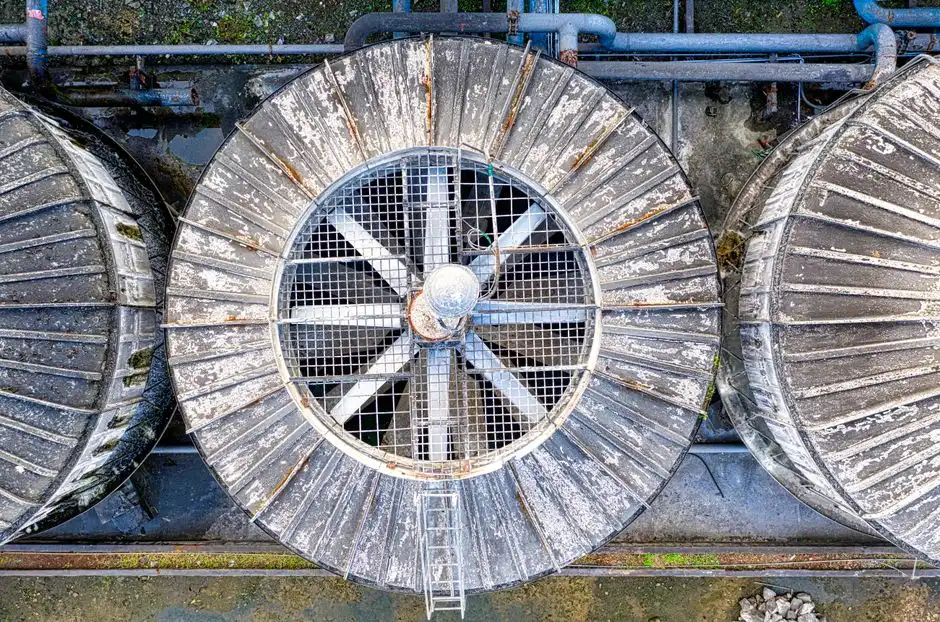
The cheapest cubic metre of water is the one the plant never takes. The ESG Sustainability Directory lists closed-loop recycling and water-efficient technology adoption as first-line strategies before any capital-intensive end-of-pipe solution (ESG Sustainability Directory, 2024). The engineering translation of that guidance is a source-reduction checklist.
Replace once-through cooling and rinse streams with cascade counter-current rinsing, where downstream rinses feed upstream cleaner stages, and recover the overflow for boiler or cooling-tower makeup. Upgrade to high-recovery reverse osmosis so reject flow is minimised; industrial RO systems with up to 95% recovery cut raw-water intake directly and feed stable-quality water into a closed loop. Pretreat the boiler and cooling loop with twin-tank industrial water softeners sized 1–45 T/h to prevent scale-driven blowdown, which is one of the largest hidden freshwater sinks in any steam-and-cooling plant.
Where the plant draws from or sits next to a reservoir, surface evaporation is a controllable loss. The 2023 MDPI Lake Nasser study modelled partial floating-photovoltaic coverage and reported evaporation savings of 27.49% at 20% coverage, 39.83% at 30%, 51.24% at 40%, and 61.71% (≈9,074,081,000 m³/year) at 50% coverage (MDPI, 6 February 2023). FPV is not a universal solution — it is site-specific — but for a plant with a meaningful on-site water footprint it converts an evaporative loss into a productive asset and, in most climates, a net-positive energy balance. The source-reduction step is the right place to evaluate it, before downstream treatment is sized.
Step 3 — Reuse Wastewater With Closed-Loop and ZLD-Ready Trains
Once source reduction is exhausted, the next lever is reuse depth. The hierarchy is straightforward: closed-loop recycling where the receiving process can tolerate the recycled water quality, cascade reuse across multiple unit operations, near-ZLD where brine volume is reduced but a small purge remains, and full ZLD where zero liquid discharge is mandated by the regulator or by basin stress. The right depth depends on water-stress severity, influent variability, energy cost, and the local discharge limit.
The treatment train has to match the water it actually receives, not the water the textbook assumes. For suspended solids, oil, FOG, and colloids, a DAF pre-treatment for suspended solids and FOG stage sized 4–300 m³/h is the workhorse across food, paper, textile, metalworking, and petrochemical duty. For high-organic streams that need to feed a reuse loop, MBR systems for reuse-grade effluent deliver sub-micron filtration with roughly 60% smaller footprint than conventional activated sludge. RO at up to 95% recovery is the reuse-grade barrier for salt and dissolved-solid reduction. A PLC-controlled automatic chemical dosing stage is what keeps pH and coagulant dose stable across the variable loads that any real closed loop will see; without it, downstream membranes and reuse-quality sensors drift, and the loop either fails or fails expensively.
| Reuse depth | Typical treatment train | Freshwater reduction lever | Operational caveat |
|---|---|---|---|
| Closed-loop recycling | DAF → MBR → RO → dosing | Highest withdrawal cut where reuse water matches the receiving process | Requires stable influent and disciplined housekeeping |
| Cascade reuse | DAF → MBR, partial RO polishing | Medium withdrawal cut across multiple unit operations | Cross-stream quality must be mapped and controlled |
| Near-ZLD | RO concentrate → brine concentrator | Most water recovered, small liquid purge remains | Energy cost per m³ rises sharply at higher recovery |
| Full ZLD | RO → evaporator/crystallizer | Zero liquid discharge to environment | High OPEX; justified only at very high stress or strict discharge limits |
The table is a selection aid, not a recipe. A plant's actual train should be sized against the measured influent variability from Step 1, not a generic duty point.
Step 4 — Cut the Energy Cost of Treatment So Reuse Stays Viable
Reuse is only as defensible as its energy footprint. The 2026 MDPI study on Lake Mariut wastewater reports that conventional electrocoagulation specific energy consumption (SEC) varies from under 4.5 kWh/m³ to as high as 360 kWh/m³ depending on matrix complexity — a two-order-of-magnitude spread that any vendor quotation should be able to bound (MDPI Water, 17 July 2026). That spread is the engineering argument for treating electrode and process design as a first-class decision, not an afterthought.
The same study's modified reactor used two complementary innovations: a graphene oxide–phosphomolybdate (GO–POM) composite cathode that lowers cathodic charge-transfer resistance, and an asymmetric anode-to-cathode area ratio of 1:10 that decouples the anode current density (which controls coagulant dose via Faraday's law) from the cathode current density (which governs the energy-dissipating hydrogen evolution reaction). The combined result was a 37% reduction in SEC on the hypereutrophic Lake Mariut matrix (MDPI Water, 17 July 2026). A separate lever flagged in the same paper, pulsed-current electrocoagulation, mitigates anode passivation and reduces SEC by roughly 24%, and is complementary to the cathode-side work.
For procurement, the practical translation is: ask every treatment vendor for SEC in kWh/m³ at design load and at peak load, and ask how their electrode or cathode design achieves it. A vendor who quotes only % removal efficiency, without an energy number, is not equipped to defend a reuse train on a water-stressed, energy-cost-exposed site. This is the step that determines whether a closed-loop project pays back or quietly becomes the plant's largest electrical load.
Matching the Solution to the Site: A 2026 Selection Matrix
Engineers do not need another abstract framework; they need a side-by-side view that maps each solution to the constraint it actually solves. The matrix below uses evidence already cited in this article to anchor each row. Where a number is well established, the table carries it. Where a number depends on the site, the table is left qualitative and the engineering input is named.
| Solution | Freshwater reduction lever | Indicative quantified benefit | Energy impact | Typical fit |
|---|---|---|---|---|
| Source reduction (cascade rinse, high-recovery RO, softener-protected cooling) | Cuts raw-water intake at unit-operation level | Up to 95% RO recovery on the streams it applies to (product specification, not field measurement) | Modest increase; mainly pumping duty | All sites; first step regardless of stress level |
| Closed-loop reuse (DAF + MBR + RO + dosing) | Recycles treated effluent back into the process | Strategy framing per ESG Sustainability Directory, 2024; quantified % depends on influent and reuse target | Moderate; dominated by RO and biological stage | High water stress with moderate-to-low energy cost |
| Near-ZLD / ZLD | Eliminates or minimizes liquid discharge | Brine volume and energy cost depend on recovery target; no site-independent % applies | High; evaporator duty dominates OPEX | Very high stress sites or zero-discharge regulators |
| Reservoir-surface evaporation control (FPV) | Cuts evaporative loss from on-site or supply-basin reservoirs | 27.49%–61.71% evaporation savings at 20%–50% coverage, 9,074,081,000 m³/year at 50% (MDPI, 6 Feb 2023) | Net electricity producer at the coverage levels modelled | Large open-water surface area; tropical/arid sites |
| Energy-efficient treatment (GO–POM cathode, asymmetric geometry, pulsed-current EC) | Lowers kWh per m³ of any reuse train it is fitted to | 37% SEC reduction on hypereutrophic mixed industrial matrix; conventional EC range 4.5–360 kWh/m³ (MDPI Water, 17 July 2026) | Reduces net energy draw of the train | Energy-constrained reuse trains; sites with high-cost or carbon-intensive grid |
The decision rule that emerges is simple: a plant in a high-stress basin with low-cost grid power should push closed-loop reuse as far as influent quality allows; a plant facing zero-discharge limits or extremely severe stress must evaluate ZLD economics against brine disposal and energy cost; a plant with a large on-site or supply-basin reservoir should evaluate FPV independently of its treatment capex; and any plant that commits to a reuse train should require an SEC number from the vendor, not a removal-efficiency number alone.
2026 Procurement Checklist: What to Ask Your Water-Treatment Supplier
A defensible RFQ in 2026 has to convert the engineering framework into measurable vendor commitments. The following five questions cover the gaps that most often show up as post-award change orders.
First, ask for guaranteed m³ of freshwater saved per day at design load, not just a % recovery figure, because % recovery without an absolute number does not constrain vendor performance under variable influent. Second, ask for SEC in kWh/m³ at design load and at peak load, and ask the vendor to demonstrate that their design sits inside, not at the top of, the 4.5–360 kWh/m³ range reported in the 2026 electrocoagulation literature (MDPI Water, 17 July 2026). Third, ask for influent tolerance — TSS, COD, BOD, conductivity — and how the train handles variability; the Lake Mariut influent (TOC 326 ±15, COD 420 ±20, TSS 350 ±15 mg/L) is a useful reference point for a difficult mixed industrial matrix that the vendor should be able to discuss (MDPI Water, 17 July 2026). Fourth, ask for a closed-loop versus ZLD economic comparison, including brine disposal, energy cost, and OPEX per m³ reused; suppliers who cannot produce both options are not equipped to advise on reuse depth. Fifth, ask for compliance mapping against the 2026 local discharge and reuse limits, including pretreatment-permit transfer conditions, because the gap between equipment specification and permitted discharge condition is a routine source of project delay.
These five questions are the minimum that converts a vendor quotation into an engineering commitment the project team can defend to operations, finance, and the regulator.
Frequently Asked Questions
What is the most effective way for an industrial plant in a water-stressed region to cut freshwater withdrawal in 2026?
The 2023 MDPI Lake Nasser FPV study found that partial coverage of a large open reservoir with floating photovoltaic panels reduced surface evaporation by 27.49% at 20% coverage up to 61.71% (≈9,074,081,000 m³/year) at 50% coverage (MDPI, 6 February 2023). For most plants without a large reservoir, the equivalent first move is source reduction (cascade rinsing, high-recovery RO, softener-protected cooling and boiler loops) followed by closed-loop reuse, with FPV evaluated separately where open water is significant.
How much can energy-efficient treatment cut the operating cost of a reuse train?
The 2026 MDPI Lake Mariut study reported that a modified electrocoagulation reactor with a GO–POM composite cathode and a 1:10 asymmetric electrode geometry cut specific energy consumption by 37% on hypereutrophic industrial-influenced wastewater; the same paper notes that conventional EC SEC varies from under 4.5 kWh/m³ to as high as 360 kWh/m³ depending on matrix complexity (MDPI Water, 17 July 2026). A complementary pulsed-current approach was reported to reduce SEC by about 24% by mitigating anode passivation. Any reuse-train RFQ should ask the vendor to bound where their design sits inside that range.
What is the correct order of operations when designing a 2026 industrial water-reduction plan?
The ESG Sustainability Directory frames it as: water risk assessment first, then closed-loop recycling, then water-efficient technology adoption, and finally watershed collaboration (ESG Sustainability Directory, 2024). The engineering translation is a measured assessment of basin stress, plant mass balance, and influent variability, followed by source reduction, reuse train design, and energy optimization of the chosen train.
How do I size a closed-loop reuse train for my plant and compare vendor proposals on cost?
Size the train against measured influent variability from Step 1 of the framework, not against a generic duty point, and ask each vendor for guaranteed m³ freshwater saved per day at design load, SEC in kWh/m³ at both design and peak load, and an OPEX figure expressed as cost per m³ reused that includes brine disposal and energy (MDPI Water, 17 July 2026). Without these three numbers, quotations cannot be compared on like-for-like economic terms, and the project will rely on a list price instead of a defended cost per cubic metre. Request site-specific references from each vendor covering influent ranges similar to yours, and require influent-tolerance data in writing.