What "MBR Membrane Module Design Criteria" Actually Means in 2026
MBR membrane module design criteria are the engineering parameters that govern how a membrane cassette is selected, sized, and operated inside a membrane bioreactor — not the full plant's hydraulic, civil, or BOD design. The governing variables are membrane configuration (immersed hollow-fiber or flat-plate versus side-stream tubular), nominal pore size, sustainable flux, mixed liquor suspended solids (MLSS), aeration rate for scouring, fine screening cutoff, solids retention time (SRT), hydraulic retention time (HRT), and the redundancy scheme.
The MDPI 2023 review (Tetteh et al., 1 February 2023) lists membrane surface properties, permeate flux, retention time, pH, alkalinity, temperature, and cleaning frequency as the parameters that "highly influence the efficiency of the MBR process." Module-level criteria matter commercially because, per the same MDPI 2023 review, more than 5,000 MBR plants operate worldwide and the global MBR market is USD 3.35 billion, expected to reach USD 8.78 billion at a 7.6% CAGR — meaning engineers are specifying these modules at scale in 2026.
Three scope decisions follow from that definition. First, the focus is the membrane cassette and its immediate envelope (pretreatment screen, scour blower, permeate pump, redundant unit) — not the bioreactor basin sizing, aeration tank volume, or nutrient-removal targets, which are separate design exercises. Second, the criteria are written so a vendor datasheet query can be issued in one pass: pore size, panel area, MLSS window, aeration rate, and screening cutoff go directly onto the RFQ. Third, the criteria feed two configuration choices — submerged versus side-stream, and hollow-fiber versus flat-plate — that lock in footprint, energy, and replacement strategy for the next 10 to 20 years of plant life.
Module-Level Design Parameters Engineers Must Set
The table below consolidates the module-level parameters a process engineer must lock in before requesting quotes. Each row carries the unit and the source it is drawn from so the datasheet query is traceable. The pore size row reflects the dominant 2026 practice: sub-micron PVDF ultrafiltration, with a flat-sheet module example rated at 0.1 μm per the HydropureWater DF series PVDF flat-sheet MBR module product catalog. Screening cutoffs and peak-flow limits come from the EPA Wastewater Management Fact Sheet on Membrane Bioreactors (Wallis-Lage et al. 2006, cited in the EPA fact sheet). The SRT/HRT and energy relationships come from the MDPI 2023 review.
| Parameter | Module-level value or window | Source |
|---|---|---|
| Nominal pore size | 0.1 μm (sub-micron UF, PVDF standard in 2026) | HydropureWater DF series product catalog (0.1 μm PVDF flat sheet) |
| Fine screening cutoff — hollow fiber | 1–2 mm immediately before membranes | EPA MBR fact sheet, citing Wallis-Lage et al. 2006 |
| Fine screening cutoff — flat plate | 2–3 mm immediately before membranes | EPA MBR fact sheet, citing Wallis-Lage et al. 2006 |
| Peak-to-average flow ratio | ≤ 1.5–2× average design flow; above that, equalization or extra membrane area required | EPA MBR fact sheet |
| SRT vs. conventional activated sludge | Higher SRT in MBR than CAS | MDPI 2023 review (Tetteh et al., 1 Feb 2023) |
| HRT vs. conventional activated sludge | Lower HRT in MBR than CAS | MDPI 2023 review (Tetteh et al., 1 Feb 2023) |
| Submerged MBR flux / energy | Lower flux, lower power demand | MDPI 2023 review (Tetteh et al., 1 Feb 2023) |
| Side-stream MBR flux / energy | Higher flux, higher power demand | MDPI 2023 review (Tetteh et al., 1 Feb 2023) |
| Membrane area per DF series unit | 80–225 m² per unit | HydropureWater DF series product catalog |
| Permeate per DF series unit | 32–135 m³/day per unit | HydropureWater DF series product catalog |
Three cautions on using this table. First, the screening-cutoff split (1–2 mm hollow fiber, 2–3 mm flat plate) is the EPA's general rule — vendors can demand tighter cutoffs for warranty purposes, and the EPA fact sheet explicitly notes that longer membrane warranties are granted when smaller screens are used. Second, the peak-to-average ratio of 1.5–2× is a hard envelope: above 2×, the EPA requires either additional membrane area sized for the peak or an equalization basin. Third, the MDPI 2023 review states the flux/energy relationship qualitatively — submerged is lower-flux/lower-energy, side-stream is higher-flux/higher-energy — without publishing a numeric flux range, so engineers must request vendor-specific sustainable flux (LMH) at the design MLSS and temperature for their project. Treat that request as a mandatory line item on the datasheet query.
Submerged vs Side-Stream: Choosing the Configuration
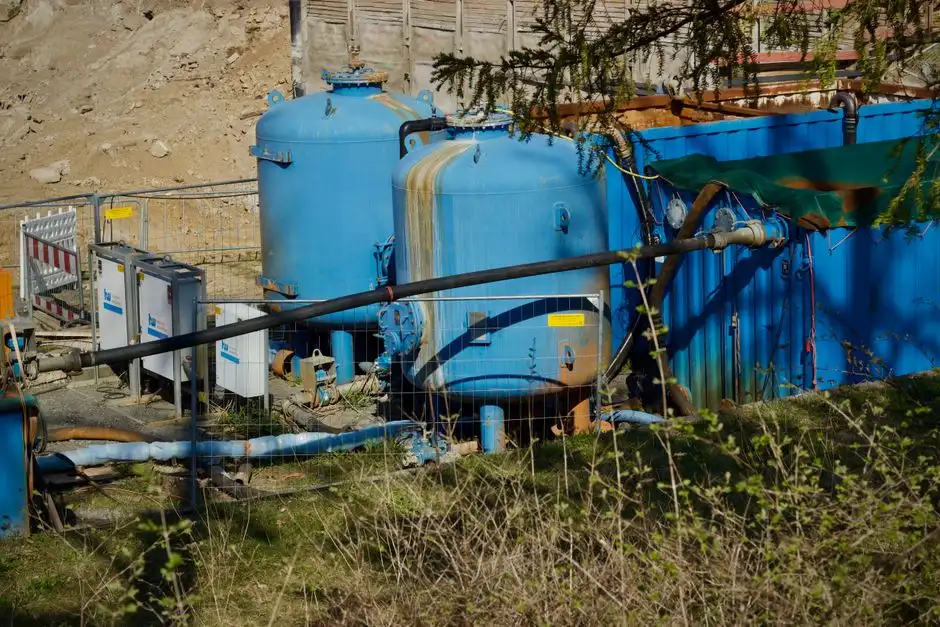
The first configuration choice is whether the membrane cassette sits inside the aeration tank (submerged or immersed) or in a separate external skid fed by a recirculation pump (side-stream). The MDPI 2023 review is direct: "The submerged MBR can handle lower permeate flux (requires less power), whereas the side-stream MBR can handle higher permeate flux (requires more power)." The same review records the historical anchors — the side-stream arrangement was used at the General Motors plant in Ohio in the 1990s, and the first full-scale submerged MBR plant in North America was commissioned in 1998 — meaning both configurations have matured in parallel over roughly three decades.
| Selection criterion | Submerged (immersed) MBR | Side-stream MBR |
|---|---|---|
| Membrane location | Inside the aeration/bioreactor tank | External membrane skid fed by mixed-liquor recirculation pump |
| Permeate flux | Lower flux (MDPI 2023) | Higher flux (MDPI 2023) |
| Energy demand | Lower power (MDPI 2023) | Higher power due to recirculation pumping (MDPI 2023) |
| Footprint | Smaller — fits retrofit and footprint-limited sites (MDPI 2023) | Larger — separate skid and pump room |
| Best-fit influent profile | Lower-strength, municipal-style streams; sites where energy and footprint dominate | Higher-strength or more fouling-prone streams where flux throughput per m² dominates and pumping cost is acceptable (MDPI 2023) |
| Historical anchor | First full-scale submerged plant in North America, 1998 (MDPI 2023) | General Motors Ohio plant, 1990s (MDPI 2023) |
Use this table as a decision lens, not a ranking. If the binding constraint is energy cost or available footprint, submerged wins by default — and integrated systems such as the HydropureWater integrated MBR wastewater treatment system are designed around that envelope. If the binding constraint is flux per square meter of membrane and the project can absorb the pumping energy, side-stream is the right answer. The MDPI 2023 review does not publish a quantitative crossover, so the engineer must price energy at their local kWh rate and footprint at their site value to make the call — both numbers belong in the project basis-of-design document, not in the MBR datasheet.
Hollow Fiber vs Flat Plate Membrane Modules
Once the configuration (submerged or side-stream) is fixed, the second decision is the membrane element geometry: hollow-fiber bundles or flat-plate panels. The EPA fact sheet describes both: hollow fibers are configured in bundles connected by manifolds into units designed for easy changing and servicing — examples include Siemens/U.S. Filter's Memjet and Memcor systems and GE/Zenon's ZeeWeed and ZenoGem systems. Flat-plate membranes, exemplified by Kubota-style systems, use manifold-connected panels in the same swappable-unit architecture. The two geometries also demand different upstream screening: 1–2 mm for hollow fiber and 2–3 mm for flat plate, per the EPA fact sheet (Wallis-Lage et al. 2006).
Flat-sheet PVDF designs add specific mechanical features that matter for module selection. The HydropureWater DF series PVDF flat-sheet MBR module product catalog describes an integrated aeration box for continuous scouring, a stainless frame, and individually replaceable elements — useful when consistent air-scour energy and element-level replacement (rather than full cassette swap) are design priorities. The decision lens is straightforward: hollow fiber favors higher packing density per cassette and full cassette swap-out, while flat plate favors mechanical robustness, simple individual-element replacement, and tolerance of coarser upstream screening. The EPA's screening cutoffs (1–2 mm vs. 2–3 mm) are the easiest single-variable test of which geometry a given pretreatment train can support.
Pretreatment, Redundancy, and Lifecycle Rules That Decide the Design
Several lifecycle rules are non-negotiable and belong in every datasheet query, not just the headline parameters. The EPA fact sheet requires 1- to 3-mm cutoff fine screens immediately before the membranes, regardless of manufacturer. Pretreatment is non-optional because debris removal is what protects the membrane from physical damage — the same rule the EPA ties directly to membrane life. Screen sizing is a procurement decision, not an operating decision, and is often paired with a HydropureWater GX rotary mechanical bar screen or comparable step to keep the screen itself maintainable.
Redundancy is the second non-negotiable. The EPA's "N plus 1" concept — install one additional membrane tank or unit beyond the nominal design — gives operators the flexibility to take a unit offline for service while keeping design capacity available (Wallis-Lage et al. 2006, cited in the EPA fact sheet). The EPA also notes that bioreactor sizing is often limited by oxygen transfer rather than by SRT volume, which is why the redundant-unit decision belongs with the membrane supplier, not the biological-process designer. Aeration for scouring is continuous on all major MBR systems; GE/Zenon systems add timed back-pulsing for 1–5% of operating time, per the EPA fact sheet. Cleaning uses mild reagents — sodium hypochlorite and citric acid are the most common — and membrane life is the single biggest driver of MBR cost-effectiveness, per the EPA fact sheet. Guarantees vary: the EPA fact sheet reports a 10-year municipal guarantee from Zenon and 3–5 years for industrial systems, with longer warranties tied to smaller upstream screens. Waste sludge from MBRs can show poorer settling due to colloidal and filamentous content (Hermanowicz et al. 2006, cited in the EPA fact sheet), and chemical conditioning plus standard thickening and dewatering unit operations are applied; engineers handling the biosolids side of the design should also review the poor sludge settling field guide for MBR biosolids.
Vendor Selection Checklist for an MBR Module in 2026
- Confirm configuration. Submerged or side-stream, with a written flux and energy budget aligned to the MDPI 2023 comparison (submerged = lower flux / lower energy; side-stream = higher flux / higher energy).
- Confirm module type. Hollow fiber or flat plate, with the screening cutoff the vendor requires — 1–2 mm for hollow fiber and 2–3 mm for flat plate, per the EPA fact sheet (Wallis-Lage et al. 2006).
- Confirm membrane specification. Nominal pore size, polymer (PVDF is the dominant 2026 polymer), panel area per unit, and daily permeate per unit — for example, the HydropureWater DF series specifies 0.1 μm PVDF, 80–225 m² per unit, and 32–135 m³/day per unit.
- Confirm redundancy and hydraulics. N+1 spare module or unit; peak flow no more than 1.5–2× the average design flow, with an equalization strategy defined for anything above that envelope, per the EPA fact sheet.
- Confirm guarantee and service. Membrane life guarantee length (up to 10 years for municipal, 3–5 years for industrial per the EPA fact sheet), cleaning chemical protocol, and replacement-element availability — including compatible HydropureWater RO and UF replacement membrane elements if the plant already runs downstream membrane polishing.
For context on how the resulting design compares against conventional activated sludge in an industrial setting, the MBR vs conventional activated sludge comparison for industrial wastewater walkthrough applies the same configuration logic to a pulp-and-paper case.
Frequently Asked Questions
What pore size do MBR membrane modules use?
Sub-micron ultrafiltration is the standard, and 0.1 μm is the current norm for PVDF flat-sheet modules such as the HydropureWater DF series (0.1 μm PVDF per the product catalog). Hollow-fiber modules from the major EPA-cited suppliers (GE/Zenon ZeeWeed, Siemens Memcor/Memjet) operate in the same sub-micron UF range.
Submerged vs side-stream MBR — which is cheaper to run?
Submerged MBR is lower-energy at lower flux, and side-stream MBR is higher-flux at higher energy, per the MDPI 2023 review. To convert that into a project-specific number, request each shortlisted vendor's sustainable flux (LMH) at your design MLSS and temperature, price energy at your local kWh rate, and compare annualized pumping and blower cost — the MDPI 2023 review intentionally does not publish a numeric crossover.
How many spare MBR modules should a design include?
EPA's N+1 concept adds one redundant membrane tank or unit beyond the nominal design so capacity stays available during maintenance (Wallis-Lage et al. 2006, cited in the EPA fact sheet). On multi-train plants the same rule is often satisfied train-by-train; confirm the exact interpretation with each vendor during proposal review.
What screen size is required before an MBR module?
1- to 3-mm fine screens immediately before the membranes, per the EPA fact sheet: 1–2 mm for hollow-fiber modules and 2–3 mm for flat-plate modules (Wallis-Lage et al. 2006). The EPA also notes that longer membrane warranties are typically granted when smaller screens are used, so a tighter cutoff can buy warranty length as well as membrane protection.
What is the typical MBR membrane guarantee in 2026?
Up to 10 years for municipal systems (Zenon, per the EPA fact sheet) and 3–5 years for industrial systems, with longer warranties available when smaller upstream screens are used. Ask each vendor for written guarantee terms tied to your specific screening cutoff, cleaning protocol, and design flux — and confirm whether replacement-element supply is guaranteed for the full warranty period, since module availability beyond the warranty is what controls lifecycle cost.