The Three-Layer Compliance Stack Facing St. Marys Operators in 2026
Mineral Mining and Processing Effluent Guidelines and Standards at 40 CFR Part 436 serve as the federal floor for any mining or quarrying operation that discharges wastewater in the United States, as promulgated by the EPA in 1975 with subsequent amendments (EPA, 2026-02). Part 436 covers mine drainage, mineral processing operations, and stormwater runoff, and its requirements are incorporated into NPDES permits—meaning the operator must comply with both EPA and Ohio EPA authority (EPA, 2026-02).
Ohio EPA's industrial discharge rules and the local POTW pretreatment program sit on top of the federal floor. Every POTW that accepts industrial discharge runs a pretreatment program, and the local sewer authority reconciles EPA categorical standards with locally established limits for heavy metals, pH, and TSS (HydropureWater Tenino guide, 2026). A St. Marys-area operator needs both sets of numbers in front of them at design time. Reserved subparts under 40 CFR Part 436 complicate that picture: Dimension Stone (Subpart A), Lightweight Aggregates (Subpart H), Lithium (Subpart U), Ball Clay (Subpart AH), Feldspar (Subpart AI), Talc/Steatite/Soapstone/Pyrophyllite (Subpart AJ), and Garnet (Subpart AK) carry no current numeric effluent limits, so the operator must verify whether their mineral falls under an active subpart with numeric limits or a reserved subpart before relying on federal numbers (EPA, 2026-02). A Gordo mining and metals 2026 pretreatment compliance reference applies the same stack structure to a different state.
Why a St. Marys Mining Site Cannot Use a Default Treatment Train
Acid mine drainage (AMD) occurs when sulfide minerals such as pyrite and pyrrhotite in waste rock and tailings are exposed to oxygen and water, producing sulfuric acid that leaches Fe, Mn, Cu, Zn, As, and Cd into groundwater and surface water (AMPAC USA, 2025-09). AMD streams are highly acidic and carry dissolved heavy metals at concentrations far exceeding regulatory limits, which is why pH correction, metals precipitation, and a membrane polish step are required for this stream.
Process water from flotation, heap leaching, cyanide gold extraction, and chlorination circuits is typically high TDS and may carry cyanide, ammonia, or chloramines depending on the circuit (AMPAC USA, 2025-09). Tailings pond effluent contains fine solids, processing chemicals, and leached metals; dewatering discharge composition varies by geology, ranging from relatively clean to significantly metal-loaded (AMPAC USA, 2025-09). A copper mine, a coal operation, and a dimension-stone quarry produce fundamentally different wastewaters and cannot share a single default treatment train; operators must characterize the influent stream by stream before selecting a treatment supplier (AMPAC USA, 2025-09). Mining water treatment processes vary significantly between operations in both capacity and influent chemistry, and suppliers develop customized systems matched to specific needs (LiqTech, 2025-08).
The Defensible Six-Step Unit-Operation Sequence for 2026
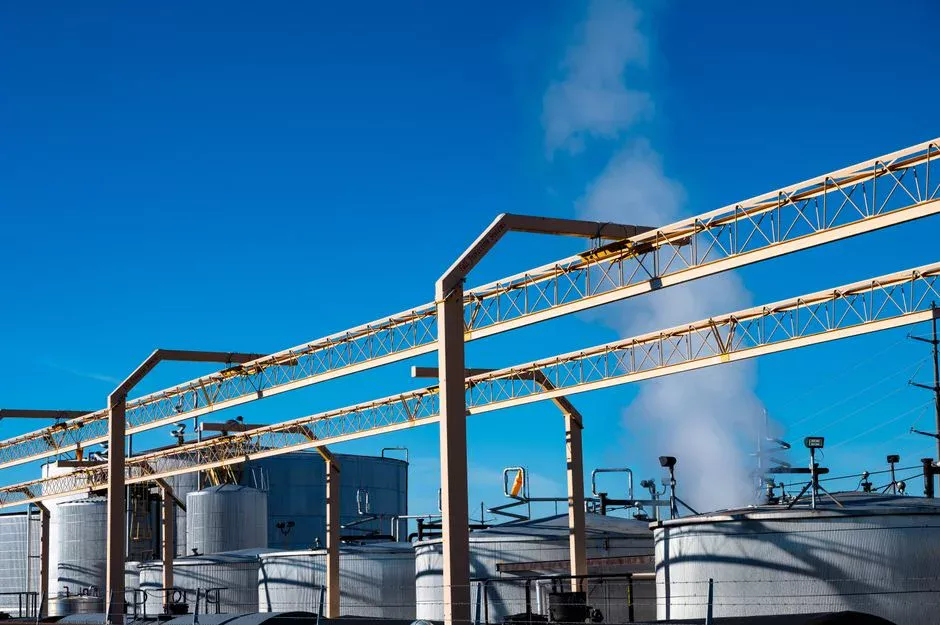
The literature and commercial SAVMIN-style flow sheets point to an ordered sequence: pH correction, coagulation, solids separation, multimedia filtration, and membrane polish when salts or trace metals persist, with monitoring and sludge handling on the back end (Genesis Water Technologies; PMC review, 2024-02). Each step maps to a specific unit operation a buyer can write as an RFQ line item.
- pH correction: lime raise to pH >10 so dissolved metals precipitate as hydroxides and gypsum drops out, before thickening (PMC review, 2024-02). A PLC-controlled chemical dosing skid for lime, coagulant, flocculant, and pH-adjuster injection is the standard fit.
- Coagulation: aggregate suspended solids and fine metal particles into settleable or floatable flocs, matched to the floc density that drives the next step (Genesis Water Technologies).
- Solids separation: a DAF unit for buoyant floc and oil/fines removal in mining wastewater for buoyant floc, or a lamella clarifier for heavy, high-volume metal hydroxide sludge where sludge volume and footprint dominate (Genesis Water Technologies, 2025-11).
- Multimedia filtration: drop turbidity and colloids to protect downstream membranes; specify target SDI after the filter, not inlet turbidity. A multi-media filter specified to a target SDI for RO feed protection is the workhorse.
- Membrane polish: UF for fine colloids and RO for dissolved salts and metals. An industrial RO system for >99% rejection of dissolved metals and salts operates at 50–70% recovery on AMD feed and 70–85% as the RO stage of a ZLD train (AMPAC USA, 2025-09).
- Monitoring and sludge handling: PLC/HMI with continuous pH, flow, and conductivity plus POTW self-monitoring records; chemical precipitation produces metal hydroxide sludge that must be dewatered by a plate and frame filter press for dewatering metal hydroxide sludge (LiqTech, 2025-08).
DAF vs. Lamella: Choosing the Right Clarifier for St. Marys Mining Streams
The choice between DAF and lamella is driven by floc density, sludge volume, and oil loading. DAF is preferred when the floc is buoyant or the influent carries oils or fines that float; the specification should state air-to-solids ratio and polymer compatibility. Lamella is preferred when sludge volume and footprint are the constraint and there is no oil loading; the specification should state plate spacing and underflow solids. A DAF vs clarifier factory guide for a different industrial wastewater applies the same decision logic to a parallel sector.
| Decision factor | DAF | Lamella clarifier |
|---|---|---|
| Floc character | Buoyant, low-density floc that floats | Heavy floc that settles; no oil loading |
| Influent feature | Oils, fines, low-density suspended solids | High sludge volume, footprint-constrained |
| Key spec to state | Air-to-solids ratio, polymer compatibility | Plate spacing, underflow solids |
| Typical surface loading | Not stated in research; specify by m³/h | 20–40 m/h surface loading, with reported chemical consumption reduction versus conventional basins (HydropureWater product literature, JY/lamella series) |
| Skid envelope | 13 standard models, 4–300 m³/h capacity range with micro-bubble technology and automatic skimming (HydropureWater DAF product literature) | Compact footprint, vertical plate pack |
Reuse Economics: Why Compliance Investment Pays Back Near St. Marys
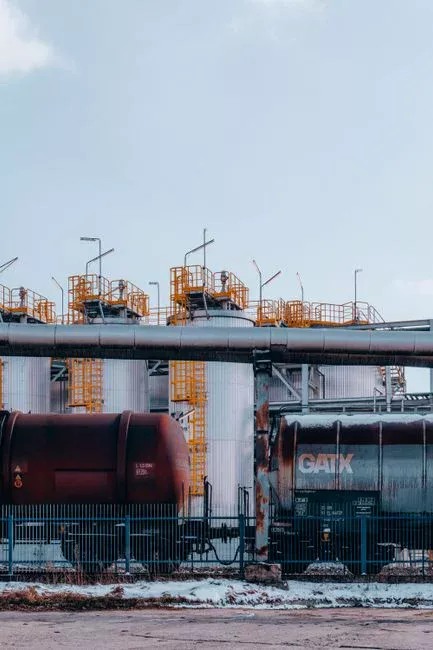
RO-enabled internal reuse can reduce freshwater consumption by 40–60% compared to once-through operations (AMPAC USA, 2025-09). In a ZLD train, the RO stage typically recovers 70–85% of the bulk water before the more energy-intensive thermal stages handle the remaining concentrate (AMPAC USA, 2025-09). The buyer should request a recovery curve from the supplier, because recovery vs. feedwater quality is non-linear (AMPAC USA, 2025-09). Peak flow drives equalization and pump selection, not average flow, and the sizing logic is "reuse as much as economics allow, then polish the rest to sewer quality" (LiqTech, 2025-08). Even with reuse, any volume not recycled must meet local limits on metals, pH, and TDS.
Basis of Design and Supplier-Selection Checklist for an RFQ
Operators must provide specific inputs before a defensible quotation can be issued: peak and average flow in m³/h, influent pH and metal profile from a representative sampling round, local sewer authority discharge limits for metals, pH, and TSS, and the desired recovery percentage if reuse is in scope. Before quoting, confirm whether the site's mineral falls under an active Part 436 subpart with numeric effluent limits or a reserved subpart, as reserved subparts mean the local layer is the only numeric anchor (EPA, 2026-02). Quotations must be requested against the operator's own basis of design rather than a published range.
Supplier-qualification questions for the bid form include: end-to-end scope from chemistry dosing through membrane skid and sludge dewatering; PLC/HMI integration across the whole train; installed references at flows in the same order of magnitude as the St. Marys site; and capability on DAF or lamella, multimedia filter, UF, RO, and sludge dewatering (LiqTech, 2025-08). Set warranty and performance guarantee terms for 2026 wastewater system builders into the same RFQ so the acceptance test has a numeric anchor.
Frequently Asked Questions
Does 40 CFR Part 436 apply to my St. Marys aggregate or quarry site?
It applies as the federal floor for any mining or quarrying operation that discharges wastewater, but several subparts — including Dimension Stone (A), Lightweight Aggregates (H), Lithium (U), Ball Clay (AH), Feldspar (AI), Talc/Steatite/Soapstone/Pyrophyllite (AJ), and Garnet (AK) — are reserved with no current numeric effluent limits; an aggregate or dimension-stone operator must verify their subpart status and rely on Ohio EPA and the local POTW for numeric anchors (EPA, 2026-02).
What is the minimum unit-operation sequence to meet sewer-pretreatment limits in 2026?
The sequence includes pH correction, coagulation, solids separation (DAF or lamella), multimedia filtration, membrane polish (UF and RO), and monitoring plus sludge dewatering; the operator maps each stream type (AMD, process water, tailings pond effluent, dewatering discharge) onto the steps its chemistry demands, as no single train fits all four (AMPAC USA, 2025-09; Genesis Water Technologies, 2025-11).
How much does a compliant mining wastewater pretreatment train cost?
The buyer must request a quotation against their own basis of design — peak and average flow in m³/h, influent pH and metal profile, local discharge limits, and desired recovery percentage — rather than rely on a published range.
Can a mining site near St. Marys reuse treated wastewater for dust suppression or process water?
Yes, RO-enabled internal reuse can reduce freshwater consumption by 40–60% compared to once-through operations, with the RO stage rejecting more than 99% of dissolved metals and salts and operating at 70–85% recovery as the bulk-water step of a ZLD train (AMPAC USA, 2025-09). The sizing logic is to reuse as much as economics allow, then polish the rest to sewer quality, with the project schedule driven by PLC/pre-wired skid delivery and the inputs the buyer provides on the RFQ (LiqTech, 2025-08).