Why a Santa Cruz Data Center Cannot Treat Water as an Afterthought
Lawrence Berkeley National Laboratory reported that U.S. data centers consumed approximately 17 billion gallons of water for cooling in 2023, a figure projected to double or quadruple by 2028 as AI workloads scale (Lawrence Berkeley National Laboratory, 2024, in Valicor, 2024-2025). Santa Cruz de la Sierra sits inside the same supply-chain pressure even though local volumes are smaller. A hyperscale facility using evaporative cooling typically consumes 400,000–550,000 gallons daily — roughly the daily water use of 3,000–4,000 U.S. households — and the Council Bluffs, Iowa site reportedly peaked at 2.7 million gallons per day in summer 2024, demonstrating that even "average" facilities see order-of-magnitude seasonal swings (Valicor, 2025; Google Environmental Report, 2025).
The volumetric mechanics matter because they define the discharge problem. In evaporative systems, roughly 80% of makeup water is lost to evaporation and the remaining ~20% leaves as cooling tower blowdown, water that carries concentrated dissolved solids, treatment chemicals, and corrosion byproducts. That blowdown cannot be discharged without treatment in most jurisdictions, and a closed-loop air-cooled alternative at 100 MW cuts cooling water to approximately 8,000 gallons daily at the cost of roughly 10% more electricity (Valicor, 2025). Santa Cruz's dry season (May–September) is the analogous design peak: water-resource stress in the Piraí and Guadalquivir basins climbs, SAGUAPAC/COOPAGUAS demand rises, and any facility drawing from the same municipal system or from self-extracted groundwater feels the squeeze. The city's water-security conversation is less mature than the U.S. examples, but the same pattern of industrial users competing with residential demand applies.
Source-Water Profile: What Cooling Makeup Looks Like in Santa Cruz
Source water quality — mineral content, biological load, and seasonal variability — is the foundation for every downstream decision about treatment chemistry, cycles of concentration, and blowdown management (Valicor, 2025). A facility drawing hard groundwater faces different scaling risks than one using treated municipal supply, so source-by-source testing is non-negotiable before any pretreatment train is specified. Santa Cruz groundwater in the Piraí basin generally runs higher in dissolved solids than surface-derived municipal supply, which is why a single assumed water chemistry is the most common design error on regional projects.
Cooling water for data center evaporative systems typically has to meet these envelopes: TDS 500–1,500 mg/L, hardness below 200–400 mg/L as CaCO₃, suspended solids 10–25 mg/L, bacterial counts below 10,000 CFU/mL, pH 6.5–8.5, and alkalinity 50–200 mg/L as CaCO₃ (Genesis Water Technologies, 2025). Municipal wastewater after secondary treatment typically shows 600–1,200 mg/L TDS, which is a useful benchmark for whether tertiary-treated reuse water is even viable as makeup without further membrane polishing. Specify a startup sampling protocol of weekly composite sampling for 8–12 weeks covering both wet and dry seasons, with full ionic chromatography, heterotrophic plate count, and Legionella screening before final equipment specification.
| Parameter | Cooling Tower Makeup Target | Secondary-Treated Municipal Reuse Benchmark | Santa Cruz Design Implication |
|---|---|---|---|
| TDS | 500–1,500 mg/L | 600–1,200 mg/L | RO/NF polishing if reuse water is selected |
| Hardness (as CaCO₃) | < 200–400 mg/L | Often above target | Industrial water softening or NF hardness cut |
| Suspended solids | 10–25 mg/L | Variable | Multi-media filter for cooling makeup pretreatment |
| Bacterial count | < 10,000 CFU/mL | Often above target | Disinfection + side-stream filtration |
| pH | 6.5–8.5 | ~7.0–7.5 | Verify against source-specific seasonal swing |
| Alkalinity (as CaCO₃) | 50–200 mg/L | Often above target | Scale-inhibitor program if upper end |
Specifying an industrial water softener system ahead of the cooling tower is the standard approach when hardness exceeds 400 mg/L, and a multi-media filter is the most common first barrier for both turbidity and iron control. Because Santa Cruz source-water quality varies by season and by intake (SAGUAPAC surface water vs. private well), the parameter envelope should be written into the specification as "design to upper end, verify at commissioning" — not as a single mid-range value.
Cooling-System Architecture: Evaporative, Closed-Loop, or Hybrid
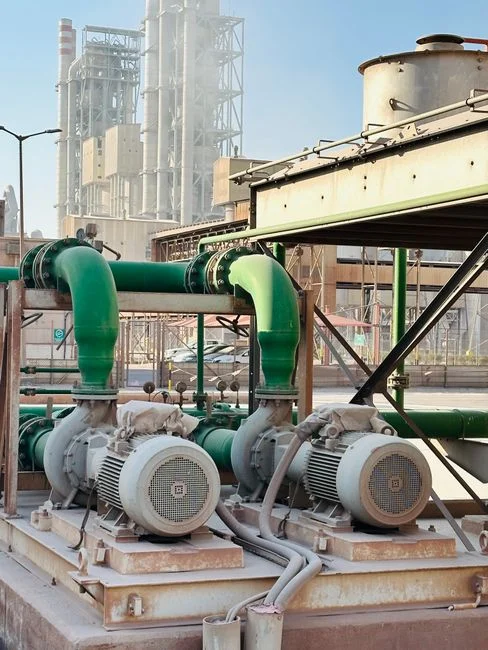
Evaporative cooling remains dominant because it cuts energy consumption by roughly 10% versus air-cooled alternatives, but it generates the blowdown stream the rest of this treatment train must manage (Valicor, 2025). Closed-loop systems using air-cooled chillers or dry coolers reduce cooling water to domestic/sanitary volumes — about 8,000 gallons daily at 100 MW — but shift the environmental burden to electricity demand and to the carbon intensity of the grid serving the site. Santa Cruz's subtropical climate (mean temperatures 22–28°C, relative humidity often 60–80% in the wet season) supports more free-cooling hours than Phoenix but fewer than Council Bluffs, which makes the local water-versus-carbon weighting site-specific rather than inherited from U.S. reference projects.
Hybrid wet/dry systems let operators throttle evaporative operation during peak water-cost or discharge-fee periods, a design hedge worth specifying for any new Santa Cruz build. The architecture decision is typically locked in at design stage and is difficult to reverse, so the water-and-energy tradeoff should be made explicitly with documented assumptions — and a written record of which direction the operator chose, and why. For a 5 MW enterprise or colocation facility, the math often favors hybrid because the blowdown volume falls below the threshold where on-site recovery is economic, and discharge to sanitary sewer becomes the lowest-friction option. For a 50–100 MW campus, the blowdown stream is large enough that a recovery train pays back the capital within a 3–5 year horizon.
Cooling Tower Blowdown: Chemistry, Cycles of Concentration, and Discharge Reality
Cooling tower blowdown is the controlled discharge of recirculating water whose dissolved solids, corrosion byproducts, and biological growth have reached the upper bound of what the chemistry program can hold in solution. The volume scales inversely with cycles of concentration (COC): at 4 COC, blowdown equals 25–30% of makeup water; pushing to 5–6 COC reduces blowdown volume but intensifies scaling, corrosion, and biological-control challenges (Genesis Water Technologies, 2025). At 4 COC, blowdown chemistry typically lands between roughly 2,000 and 6,000 mg/L TDS depending on makeup quality, with hardness, silica, and phosphate scaling indices rising alongside.
Blowdown accumulates treatment chemicals — biocides, corrosion inhibitors, scale inhibitors, and dispersants — which can interfere with downstream membrane systems and trigger discharge-permit scrutiny when sent off-site. Direct discharge fees in water-stressed regions now run 5–15 USD per 1,000 gallons, and some jurisdictions enforce TDS limits below 1,500 mg/L that effectively prohibit untreated blowdown discharge (Genesis Water Technologies, 2025). Bolivia's environmental discharge framework, administered at the departmental level under the Autoridad Ambiental Departamental (RUE/EMAR pathway), does not yet publish hyperscale-specific thresholds equivalent to California's Title 22, but the trajectory is toward tighter conventional-parameter limits — BOD, TSS, pH, residual chlorine — and metals. A PLC-controlled chemical dosing system for scale and corrosion control tightens the upstream chemistry envelope so the downstream blowdown stream stays predictable. Design for the direction the regulation is moving, not the floor it sits on today, and keep valves, media, and replacement components specified for the eventual limit tightening.
Building the Blowdown Treatment Train for a Santa Cruz Facility
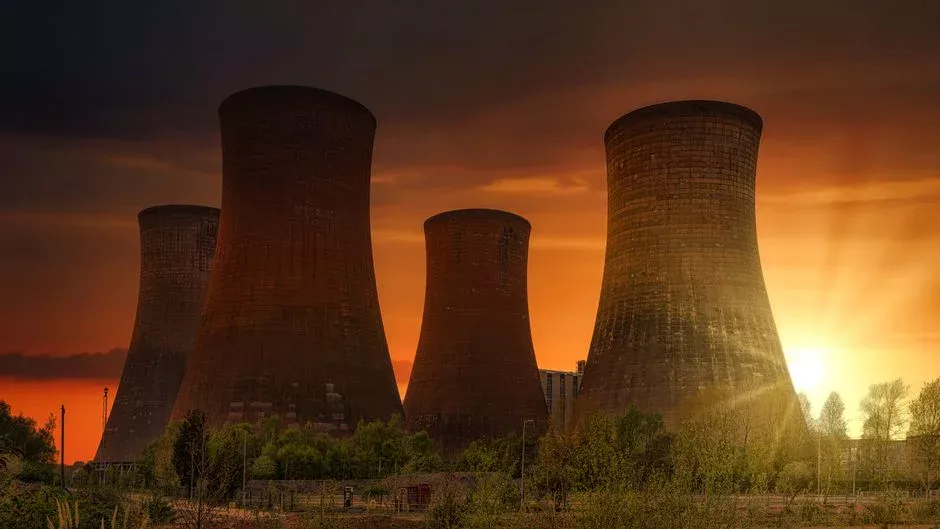
Side-stream filtration is the lowest-cost enabling technology: capital costs typically 50,000–200,000 USD for data center installations, with minimal operating expense beyond solids disposal, and it unlocks higher cycles of concentration upstream by continuously removing suspended solids before they can foul heat exchangers (Genesis Water Technologies, 2025). Membrane systems (UF followed by RO or NF) dominate blowdown recovery because they reach 90–95% recovery in side-stream polishing and produce 10–50 mg/L TDS permeate suitable for direct return to the cooling tower as high-quality makeup.
RO recovery from blowdown specifically ranges 50–85% because scaling potential rises with concentrate TDS; a staged RO/NF design can push 70–80% recovery in stage 1 and concentrate the remainder for further treatment or minimal discharge (Genesis Water Technologies, 2025). ZLD systems reach 95–99% overall water recovery but require 3–8 million USD capital and substantial energy; they make sense only when discharge is impossible or the operator is pursuing a water-positive commitment. One hyperscale case study cited in the research achieved 88% overall recovery with a primary/secondary RO configuration and 98% TDS reduction, a useful benchmark for Santa Cruz projects evaluating reuse over discharge (Genesis Water Technologies, 2025). On-site treatment at a Texas hyperscale facility processes 2.5 million gallons of blowdown monthly and reduced municipal water consumption by 35% — a comparable Santa Cruz facility could see similar percentage gains depending on makeup source.
| Technology | Recovery | Permeate Quality | Capital Band (USD) | Best Fit in Santa Cruz |
|---|---|---|---|---|
| Side-stream filtration | N/A (pretreatment) | Reduces blowdown TSS | 50,000–200,000 | All facilities; enables 5–6 COC |
| UF → RO/NF | 90–95% | 10–50 mg/L TDS | Mid six-figures and up | Campus-scale reuse |
| Staged RO/NF (blowdown) | 50–85% | 10–50 mg/L TDS | Project-specific | Where concentrate disposal is feasible |
| ZLD (evap + crystallizer) | 95–99% | Distillate-quality | 3,000,000–8,000,000 | Only when discharge is impossible |
Specify an industrial RO system for blowdown recovery with UF pretreatment ahead of RO, and confirm the RO/UF membrane elements are rated for the higher-TDS concentrate that blowdown produces — standard potable-rated elements will foul prematurely on this duty. For a local comparison point, see how a comparable Brazilian data center blowdown treatment design was structured for a subtropical climate.
Discharge Compliance and Cost in the Bolivian Context
Blowdown sent to sanitary sewer requires a pretreatment permit; surface discharge requires an authorization under Bolivia's environmental law and the departmental environmental authority. Permit limits cover conventional parameters — BOD, TSS, pH — and increasingly include metals, nutrients, residual chlorine, and temperature, none of which are free to manage if blowdown is concentrated. Off-site discharge fees in water-stressed regions can exceed 15 USD per 1,000 gallons, and a hyperscale Santa Cruz facility discharging untreated blowdown would face a recurring line item that competes directly with the capital cost of on-site recovery (Genesis Water Technologies, 2025).
On-site reuse eliminates the discharge fee, converts a variable cost into a fixed asset, and positions the operator ahead of anticipated regulatory tightening. For colocation or enterprise facilities under 5 MW, a packaged skid combining an MBR-integrated wastewater treatment unit with a small RO unit and on-site chlorine dioxide generation for residual control is often more economic than piped sewer discharge over a 5-year horizon. When planning the OPEX side of the business case, review the industrial wastewater OPEX breakdown for 2026 and the 2026 membrane technology market outlook so the capex and consumable-cost assumptions are anchored to current market data rather than to U.S. reference numbers.
Frequently Asked Questions
What water-quality parameters must cooling-tower makeup meet for a Santa Cruz data center?
Cooling-tower makeup should hit the standard envelope of TDS 500–1,500 mg/L, hardness below 200–400 mg/L as CaCO₃, suspended solids 10–25 mg/L, bacterial counts below 10,000 CFU/mL, pH 6.5–8.5, and alkalinity 50–200 mg/L as CaCO₃ (Genesis Water Technologies, 2025). Before specifying equipment, the buyer must obtain 8–12 weeks of weekly composite samples from the actual intake (SAGUAPAC/COOPAGUAS tap point or specific well) across both wet and dry seasons, including full ionic chromatography and Legionella screening — single-sample snapshots are not a defensible design basis for a hyperscale facility.
How much does a data-center blowdown treatment train cost in Bolivia?
Side-stream filtration for data-center installations typically falls in the 50,000–200,000 USD capital band, membrane-based blowdown recovery (UF + RO/NF) sits in the mid six-figures and up depending on flow, and full zero-liquid-discharge systems range 3,000,000–8,000,000 USD (Genesis Water Technologies, 2025). Off-site discharge fees in water-stressed regions can exceed 15 USD per 1,000 gallons, so a buyer should request site-specific quotes from at least two regional system integrators and ask each for a 5-year OPEX projection including membrane replacement, chemical dosing, and labor — rather than relying on U.S. reference pricing.
Is evaporative or closed-loop cooling the right choice for Santa Cruz's climate?
Evaporative cooling cuts energy use by roughly 10% versus air-cooled alternatives but generates a 400,000–550,000 gallons-per-day blowdown stream at hyperscale; a closed-loop 100 MW facility drops to about 8,000 gallons daily at the cost of higher electricity demand (Valicor, 2025). Santa Cruz's subtropical climate (22–28°C mean, 60–80% wet-season relative humidity) supports more free-cooling hours than Phoenix but fewer than Council Bluffs, so the buyer should request an hourly psychrometric simulation from the MEP consultant that maps evaporative versus hybrid operation across the full year before locking the architecture.
What permitting pathway applies to blowdown discharge in Santa Cruz?
Blowdown sent to sanitary sewer requires a pretreatment permit and surface discharge requires authorization under Bolivia's environmental law administered at the departmental level through the Autoridad Ambiental Departamental (RUE/EMAR pathway). Bolivia does not yet publish hyperscale-specific thresholds equivalent to California's Title 22, so the buyer must request a pre-application meeting with the departmental environmental authority to confirm which conventional parameters (BOD, TSS, pH, residual chlorine) and metals limits will apply to the specific project, and to confirm whether any on-site reuse pathway triggers a separate authorization.
Related Equipment
- industrial RO system for blowdown recovery — specifications, capacity range, and technical data