Why Domestic Sewage Treatment in Durban Is a 2026 Priority
Specifying domestic sewage treatment in Durban is a response to documented infrastructure failure in the municipal network. Mohammed and Swalaha, writing in Environmental Monitoring and Assessment (26 Sep 2025, Durban University of Technology), show that even small sewage intrusion into drinking-water distribution systems produces measurable increases in bacterial biomass, bacterial diversity, and dissolved organic matter, which is the same contamination pathway that motivates onsite treatment at the estate or community scale.
The scale of the underlying problem is not local: Subedi et al. (Natural Resources and Conservation, 2024) put global domestic wastewater production at an estimated 127.13 billion tons per year, framing Durban as one node in a much larger discharge problem. Bwapwa (IJESD, vol. 12 no. 8, 2021, Mangosuthu University of Technology, Durban) confirms that Durban municipal sludge is rich in biodegradable organic matter, which both supports energy-recovery add-ons and tells the engineer the influent is not weak. The supplied research does not include a numeric eThekwini discharge limit or peak-factor standard; the engineer must request the current bylaw value from the municipality before finalising any design.
The Three Process Trains Used for Domestic Flow in Durban
Three process configurations dominate Durban domestic tenders, with each addressing specific site constraints. The first is the buried A/O package unit — anoxic zone, aerobic contact oxidation, sedimentation, and disinfection combined in a single below-grade tank that runs fully automated, sized at 1–80 m³/h and available as a trailer-mounted mobile unit, as described for the buried A/O package sewage treatment plant. The second is the integrated membrane bioreactor (MBR), which couples activated sludge with submerged PVDF membrane filtration at less than 1 μm, delivering a filtrate suitable for irrigation or toilet flushing and cutting the above-grade footprint by roughly 60% versus a conventional layout, with a product envelope of 10–2,000 m³/day per train, as listed for the integrated MBR membrane bioreactor. The third is conventional activated sludge with secondary clarification, which remains the baseline in larger municipal works and in any extension of an existing eThekwini asset. All three generate a waste-activated sludge stream that is a candidate for anaerobic digestion; Bwapwa (IJESD, 2021) treats Durban sludge as a feedstock for bio-methane and bio-hydrogen, and Subedi et al. (NRC, 2024) flag heavy-metal accumulation in the sludge cake as a downstream disposal constraint that any Durban design must address through sludge handling.
| Parameter | A/O WSZ package | Integrated MBR | Conventional activated sludge |
|---|---|---|---|
| Flow envelope | 1–80 m³/h (catalog) | 10–2,000 m³/day per train (catalog) | Unbounded; scales poorly under ~50 m³/day |
| Filtrate / effluent clarity | Package-plant standard (settlement + disinfection) | Sub-micron filtrate, <1 μm (catalog) | Clarifier overflow; usually needs tertiary polishing for reuse |
| Footprint | Buried; above-grade footprint ≈ 0 | ~60% smaller than conventional (catalog) | Largest civil footprint; multiple basins |
| Operator demand | None (fully automated) | Automated; membrane cleaning and integrity checks required | Highest routine operator attention |
| Sludge outlet | WAS to digester or dewatering | WAS to digester or dewatering | WAS to digester or dewatering |
MBR vs A/O Package vs Conventional Activated Sludge: 2026 Comparison
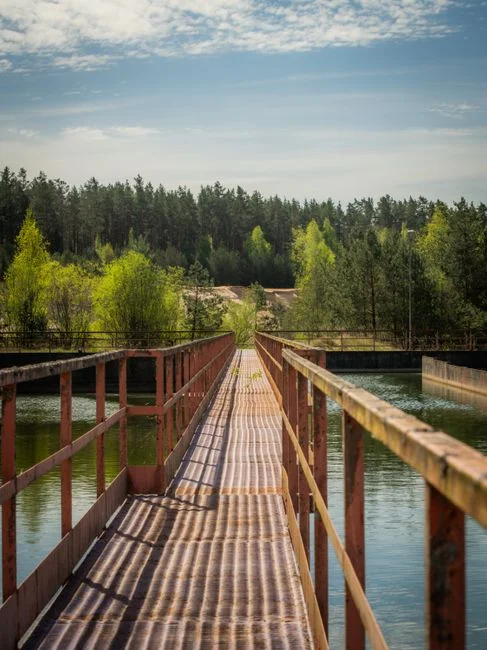
Selection depends on matching the site envelope, the reuse target, and the operator capacity on the estate. Footprint is the first differentiator: an MBR train sits in roughly 40% of the civil area a conventional activated-sludge layout needs, while a buried A/O package sewage treatment plant takes the working volume below grade and leaves the surface free for landscaping or parking. Effluent quality is the second: an MBR membrane bioreactor produces a sub-micron filtrate usable for irrigation or toilet flushing; a package A/O plant discharges to local standard; conventional activated sludge generally needs a tertiary polish before any reuse claim can be defended. Operator demand is the third: the package A/O unit is fully automated with no on-site operator; the MBR is also automated but needs periodic membrane cleaning and integrity monitoring; conventional activated sludge has the highest routine operator burden. The fourth is flow envelope: the A/O WSZ tops out at 80 m³/h (catalog), the MBR runs 10–2,000 m³/day per train, and conventional activated sludge is technically unbounded but loses economy below roughly 50 m³/day. All three produce a biodegradable waste-activated sludge stream, and Bwapwa (IJESD, 2021) supports routing that sludge to anaerobic digestion for bio-methane; the dewatering side of that train is typically a plate and frame filter press for sludge dewatering with 1–500 m² filtration area.
| Decision axis | A/O WSZ package | Integrated MBR | Conventional activated sludge |
|---|---|---|---|
| Reuse-ready effluent | No (discharge-quality) | Yes (sub-micron filtrate, catalog) | Only after tertiary polish |
| Stormwater / peak tolerance | Buffer in upstream sump required | Equalisation tank recommended | Primary tanks buffer moderate peaks |
| Sludge to digester | Compatible (Bwapwa 2021) | Compatible (Bwapwa 2021) | Compatible (Bwapwa 2021) |
| Capex vs footprint | Low civil cost, buried | Higher unit cost, small footprint | Low unit cost, high civil cost |
| Best fit | Small estates, lodges, schools, rural clusters | Reuse-driven sites, water-scarce estates, hotels | Large institutional works, municipal extensions |
Sizing a Domestic STP for a Durban Residential Site
Durban sizing requires three site-specific inputs obtained by the buyer rather than from a catalogue. First, the average dry-weather flow per capita, which the project brief must lock in. Second, a peak wet-weather factor, which must be requested from the design engineer of record or from the eThekwini bylaw in force at the time of tender. Third, the discharge or reuse target, which sets whether an MBR polish is required or a package A/O overflow is sufficient. Worked against a 500 m³/day estate at an indicative 250 L/capita/day, the resident count lands at roughly 2,000 people, which sits inside the 10–2,000 m³/day envelope of the integrated MBR membrane bioreactor and can also be served by a multi-unit arrangement of the package sewage treatment plant inside the 1–80 m³/h envelope. The wasted sludge volume from a 500 m³/day plant is the binding driver for the dewatering train, and the 1–500 m² catalogue range of a plate and frame filter press for sludge dewatering covers the design point once the dry-solids loading is calculated. Peak wet-weather flow is the binding constraint in Durban because stormwater infiltration routinely overwhelms small plants, and the same infrastructure-resilience argument Mohammed and Swalaha (Environ Monit Assess, Sep 2025, DUT) make for the drinking-water network applies in reverse to the collection side of the estate. The supplied research does not give a numeric Durban-specific discharge limit or peak factor, so the buyer must request the current eThekwini bylaw values before locking the design.
Pretreatment, Disinfection, and Sludge Handling for Durban Plants
Headworks, disinfection, and sludge handling are the three supporting equipment lines a Durban domestic tender pulls in alongside the main biological train. Headworks: a rotary mechanical bar screen for headworks protects downstream pumps and membranes from rags and grit, and is the first item to specify regardless of whether the main reactor is an MBR or an A/O package. Disinfection: Durban reuse scenarios — irrigation of grounds, toilet flushing, vehicle wash — generally require either a residual or a UV dose, and the catalogue covers a chlorine dioxide generator range and a UV sterilizer for reuse effluent. FOG-prone sites — a hotel kitchen, a resort, a school with a large food-service load, or a worker canteen — should consider a dissolved air flotation unit upstream of the biological stage to protect the biomass and the membranes. Sludge dewatering: a plate and frame filter press with 1–500 m² of filtration area takes the waste-activated sludge to a handleable cake, and Bwapwa (IJESD, 2021) supports routing the cake to anaerobic digestion for bio-methane recovery as an energy-recovery add-on for Durban plants. The buyer must request the current eThekwini discharge and reuse limits before finalising the disinfection dose and the dewatering target solids content. For nearby context on South African tenders in adjacent sectors, see the engineering guide on rural sewage treatment in South Africa and the guide on hotel and resort wastewater treatment in South Africa, and use the sewage treatment plant servicing in 2026 reference to build the post-commissioning maintenance schedule.
Frequently Asked Questions
What capital cost should we budget for a Durban domestic sewage plant in 2026?
The supplied research does not quote a Rand price for any domestic STP configuration. The defensible check is to request a written quotation broken into the main reactor, headworks, disinfection, and sludge dewatering lines, with each line tied to a flow rating and a delivery lead time.
How do we choose between an MBR and a buried A/O package plant for a Durban estate?
The decision rests on the reuse target and the site envelope. An MBR is the right pick when the estate wants a reuse-quality filtrate for irrigation or toilet flushing, when the above-grade footprint is constrained, and when the daily flow sits inside the 10–2,000 m³/day per-train envelope. A buried A/O package unit is the right pick when the discharge route is the local sewer or a coastal outfall to eThekwini standard, when the surface must remain free for landscaping, and when the design flow sits inside 1–80 m³/h.
What compliance documents do we need before commissioning in Durban?
The buyer must obtain the current eThekwini bylaw discharge and reuse limits, the SANS 241 compliance envelope for any reuse claim, and confirmation of the receiving-water or sewer connection conditions. Bwapwa (IJESD, 2021) and Mohammed and Swalaha (Environ Monit Assess, Sep 2025, DUT) reinforce that the sludge and intrusion pathways are both audit-relevant.
Can the wasted sludge be used for energy recovery on a Durban site?
Bwapwa (IJESD, vol. 12 no. 8, 2021, Mangosuthu University of Technology, Durban) characterises Durban municipal sludge as high in biodegradable organic matter and supports anaerobic digestion as a route to bio-methane, with bio-hydrogen as a developing option. Subedi et al. (NRC, 2024) add a heavy-metal caveat: the sludge cake must be characterised before agricultural or land-application reuse is claimed, and a