What Sewage Treatment Plant Servicing Actually Covers in 2026
Sewage treatment plant servicing consists of the recurring inspection, preventive maintenance, calibration, and performance-verification tasks required to keep a plant within its discharge permit limits. It spans headworks screening, the biological stage, disinfection, and the sludge-handling train, and it is best framed as a written Sewage Management Program — a structure the American Society of Agricultural and Biological Engineers describes as a necessary component of every successful decentralized wastewater treatment system (S3, ASABE, 2001).
Three service models are common in 2026. Full O&M outsourcing hands day-to-day operation to a single vendor under a multi-year contract. Hybrid models keep owner staff on shift while a specialist services critical assets such as blowers, membranes, and dewatering presses. Owner-only with on-call support is the leanest option but pushes most of the compliance risk onto the plant's own team. The supplied research does not include CAPEX or OPEX benchmarks for any of these models, so the choice must be evaluated against site-specific labour costs, downtime exposure, and the cost of a single permit excursion.
The scale behind the routine matters. Worldwide, about 80% of municipal wastewater is discharged untreated into water bodies (S2, Sustainability/MDPI, 2019), which raises the compliance stakes for operating plants and makes disciplined servicing a regulator-facing asset rather than a maintenance line item.
The 2026 Servicing Schedule: Daily, Weekly, Monthly, Quarterly, Annual
A copy-paste schedule provides the most utility for a 2026 servicing document. ASABE's framing is explicit: system users must be included as part of the program because they are part of the system (S3, ASABE, 2001), which is why the cadence below is built around tasks an operator can execute on the day, rather than tasks reserved for an OEM technician.
| Cadence | Tasks | Why it matters |
|---|---|---|
| Daily | Headworks bar-screen walkdown; influent/effluent turbidity and pH; aeration-tank DO and temperature; scum and foam observation; running log of flows and power. | Catches screen blinding, aeration failure, and toxic shocks before effluent compliance slips. |
| Weekly | MLSS and SVI trends; return/waste activated-sludge rate verification; blower and pump seal/lube checks; grab-sample BOD and COD against a rolling baseline. | Process-health early warning; lets the team trend biology rather than react to alarms. |
| Monthly | Diffuser inspection and airflow balancing; compliance BOD, COD, TSS sampling; calibration of online DO, pH, and conductivity probes; belt/filter press cycle-time review. | Maintains biological capacity and keeps dewatering energy within design envelope. |
| Quarterly | Full aeration-tank profile and microscopy; membrane or tertiary-filter inspection if fitted; review of chemical-dosing logs against the more than 700 emerging pollutants listed in European aquatic environments (S2, Sustainability/MDPI, 2019) to confirm the treatment train is still appropriate. | Detects biology drift and emerging-pollutant load changes that daily checks will miss. |
| Annual | Full plant audit against the discharge permit; energy and biosolids mass balance; review of whether the plant is still capturing the calorific value of about 12 MJ/kg that the research base uses for biosolids (S1, International Plasma Technology Center, 2024). | Aligns hardware performance with permit and energy-recovery objectives. |
These frequencies represent the minimum requirements; high-load sites, locations near industrial discharges, and facilities with membrane bioreactors should increase the inspection intensity. Operators running an MBR should account for the daily CIP and weekly integrity-test overhead covered in our MBR plant operation and maintenance guide. Oxidation-ditch plants carry a different aeration and brush-maintenance profile and should be benchmarked against the dedicated oxidation ditch maintenance guide before adopting this cadence verbatim.
KPIs a 2026 Servicing Contract Must Track
A service contract without named KPIs functions as little more than a labour invoice. The four KPI families below map to specific failure modes the schedule above is designed to prevent.
| Family | KPI | What it tells you |
|---|---|---|
| Compliance | Effluent BOD₅, COD, TSS, ammonia-N, total phosphorus, E. coli vs. permit limit; compliance sample pass rate. | Whether the plant is meeting its permit; emerging-pollutant performance is highly variable, with reported pharmaceutical removal rates ranging from less than 10% to almost 100% depending on physico-chemical properties and treatment technology (S2, Sustainability/MDPI, 2019). |
| Process health | MLSS, SVI, F/M ratio, DO in aeration zones, wasting rate. | Early-warning indicators a contractor should review before effluent compliance starts to slip. |
| Energy and sludge | kWh per m³ treated; biogas yield; biosolids calorific value (planning benchmark of about 12 MJ/kg per S1); dewatering cake dryness. | Whether the plant is preserving its energy-recovery potential and biosolids quality. |
| Reliability | Mean time between failures on blowers, pumps, and screens; percentage of scheduled tasks actually completed on time. | Where written service contracts succeed or fail; pure availability numbers hide deferred maintenance. |
The compliance and process-health rows serve as the regulatory spine. The energy and reliability rows convert a service contract from a sunk cost into a defensible operational asset.
Process Flow: Where Servicing Effort Goes in a Typical STP
Servicing hours are not distributed equally across the process train, as the right allocation follows the failure-cost gradient. Headworks — the mechanical bar screen and grit removal — take the most wear per cubic metre treated; every hour spent here protects pumps, blowers, and membranes downstream.
The biological stage is where the bulk of compliance variability originates. Removal of pharmaceuticals and other emerging contaminants is technology-dependent, with reported STP removal rates spanning from less than 10% to almost 100% (S2, Sustainability/MDPI, 2019), so process-control servicing on anoxic/aerobic zones, MBBR carriers, MBR modules, or conventional activated sludge delivers the largest compliance return on labour hours. A documented MBR plant operation and maintenance guide is critical whenever membranes are fitted.
Disinfection (chlorine, UV, ozone) is the stage most often skipped under cost pressure; UV lamp and quartz cleaning, chlorine residual checks, and ozone generator tuning should be hard-coded into the contract rather than left to discretion. Sludge handling, anchored on the sludge dewatering filter press, is where the biosolids energy balance is maintained; a well-serviced dewatering line preserves the calorific value the research uses for energy-recovery sizing (S1, International Plasma Technology Center, 2024).
Choosing a Service Contract in 2026: Decision Framework

Procurement must prioritize risk allocation over the lowest upfront cost. Four axes frame the decision.
Decision axis 1 — scope. Full O&M, hybrid, or owner-only with on-call support. The supplied research does not include cost benchmarks, so the reader should request three vendor quotes and a 20-year TCO view, using our DaaS vs CapEx TCO comparison for utility wastewater as a structured input.
Decision axis 2 — risk allocation. Define who owns permit non-compliance, who owns spare parts, and how response-time SLAs are tied to the KPIs above. ASABE's argument that a Sewage Management Program is a necessary component of every successful decentralized system (S3, ASABE, 2001) highlights that the program — not the hardware — determines long-term success.
Decision axis 3 — performance guarantees. Tie a portion of the service fee to KPI outcomes (compliance sample pass rate, kWh/m³, biosolids dryness) with clear measurement protocols. Contracts that pay only for hours worked reward attendance, not performance.
Decision axis 4 — data and reporting. Require monthly KPI dashboards, an asset-condition register, and a written deviation-and-corrective-action log so the plant can demonstrate program maturity to regulators and internal audit.
What Servicing Looks Like for Buried Package and Containerized STPs
Compact plants require a specialized service model. A buried package sewage treatment plant combines anoxic/aerobic biological contact oxidation with sedimentation and disinfection in a single buried unit, typically operating with full automation and no on-site operator. The servicing model relies on scheduled vendor visits plus remote alarm monitoring. Access, confined-space, and odour-control procedures must be written into the contract; the underground layout is the primary reason these plants fail in the long run if servicing is ad hoc, as blowers, diffusers, and disinfection lamps degrade out of sight.
Trailer-mounted configurations of the same equipment family require a different handover routine, including site-restoration and decommissioning tasks that the service contract must cover. Buyers evaluating these units should ask the vendor to define the alarm-to-attendance SLA in writing and to name the KPIs (effluent BOD/COD, MLSS, DO, sludge dryness) that the monthly report will cover.
Linking Servicing Discipline to Energy Recovery and Compliance Risk
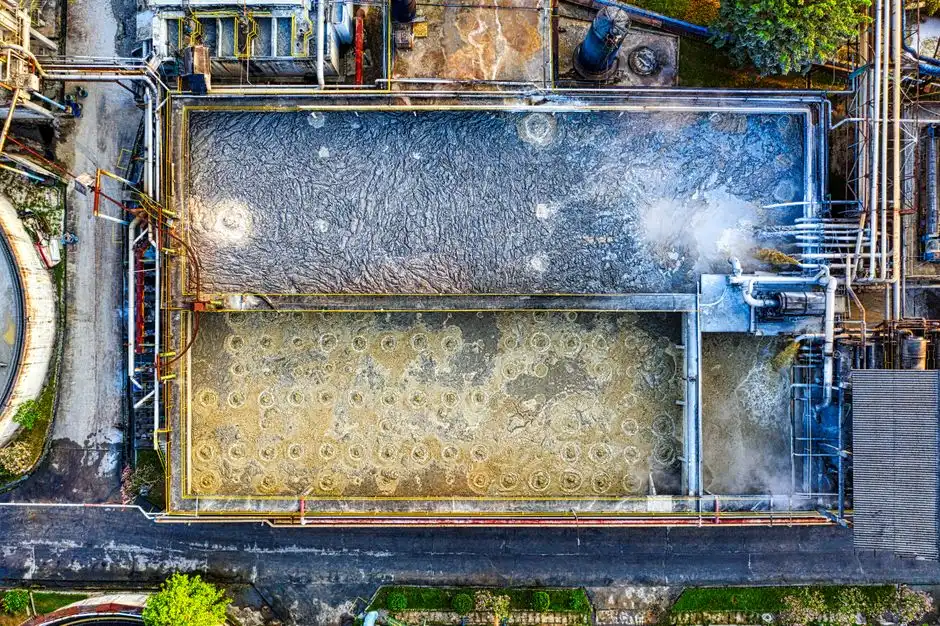
A well-tuned plant protects its biosolids energy value. The research base uses a biosolids calorific value of about 12 MJ/kg as a planning constant, and the 5,000 GWh/day US WWTP energy potential (S1, International Plasma Technology Center, 2024) only materialises if individual plants are operated within their design envelope; a dewatering line drifting from 22% to 18% dryness erodes the feedstock the gasifier was sized for.
The compliance case is equally concrete. With more than 700 emerging pollutants reported in European aquatic environments (S2, Sustainability/MDPI, 2019) and pharmaceutical removal rates spanning from less than 10% to almost 100% depending on technology (S2), a documented service routine ensures the treatment train remains appropriate for the actual influent.
A written Sewage Management Program (S3, ASABE, 2001) combined with KPI-tied service contracts converts servicing from a reactive cost into a controllable operational asset that protects both the discharge permit and the plant's energy-recovery economics.
Frequently Asked Questions
How often should a sewage treatment plant be serviced?
A 2026 STP should be serviced on a layered cadence: daily walkdown and online-instrument checks, weekly MLSS/SVI and grab-sample work, monthly diffuser and probe calibration, quarterly biological profiling, and an annual full-plant audit against the discharge permit. ASABE's framing of a Sewage Management Program (S3, 2001) treats that cadence — together with the system users themselves — as an integrated part of the treatment system.
What KPIs should a 2026 STP service contract track?
Contracts should track four families: compliance KPIs (effluent BOD₅, COD, TSS, ammonia-N, total phosphorus, E. coli, compliance pass rate); process-health KPIs (MLSS, SVI, F/M, DO, wasting rate); energy and sludge KPIs (kWh/m³, biogas yield, biosolids calorific value, cake dryness); and reliability KPIs (MTBF on blowers, pumps, and screens, plus percentage of scheduled tasks completed on time). The compliance row should explicitly account for emerging-pollutant variability — reported pharmaceutical removal rates span from less than 10% to almost 100% depending on the technology (S2, 2019).
What does a sewage treatment plant service contract cost in 2026?
The supplied research does not include CAPEX or OPEX benchmarks for STP service contracts, so any headline number is unsupported. A buyer should request at least three vendor quotes for an equivalent scope and evaluate them against a 20-year TCO view, using the