Why Blackey Mining and Metals Sites Stress a Secondary Treatment Train
Blackey sits in Letcher County in the eastern Kentucky coalfield, where acid mine drainage (AMD), coal-preparation wash water, and small-scale metals beneficiation are the dominant mining wastewater streams. AMD influent from seeps typically arrives at pH 2.0–4.0 and swings to 9.0–11.0 during CIP or wash-down events, with sulfate commonly exceeding 1,000 mg/L (HydropureWater field data, 2026). Those swings drive filamentous bulking in a CAS clarifier but only foul an MBR membrane surface, which is the first clue that a settling-based train will lose the influent war on this feed.
Available pad around existing prep plants, haul roads, and sediment basins is usually under 500 m² because the terrain forces every square meter of flat ground into double duty. That is the threshold below which the MBR footprint advantage is decisive rather than marginal: an integrated MBR wastewater treatment system at 8,000–12,000 mg/L MLSS fits the same load in roughly 40% of the basin volume a CAS clarifier train needs (Mannina et al., 2020; HydropureWater product catalog, 2026).
Make-up water in the Cumberland Valley is increasingly metered and tier-priced, so reuse revenue is a real line item and not a hypothetical. Kentucky's NPDES permit overlay typically layers selenium and sulfate limits on top of the federal 40 CFR Part 440 numbers, which means the secondary train must produce effluent clean enough to reuse for dust suppression or prep-plant wash water without a separate RO polish (per EPA 40 CFR Part 440). Taken together, the regional constraint set — feed swings, pad, and a binding reuse driver — is what the rest of this article works against.
The 30-Second Score: Three Questions That Decide MBR or CAS
Before reading another specification, run the site through three binary questions. The score is the fastest way to defend the technology pick to a Kentucky reviewer and the same way a procurement memo will frame the decision upstream.
- Is your available process pad under about 500 m²? Yes/No.
- Do you have a reuse driver — make-up water above $2/m³, brine disposal cost, or a ZLD mandate? Yes/No.
- Does the feed swing in metal concentration from AMD seeps, storm surges, or batch CIP wash-down? Yes/No.
Scoring rule: three yes answers point to MBR; two yes answers point to MBR or to a hybrid clarifier-plus-MBR polish on the reuse stream; zero or one yes answer points to CAS, with MBR kept open for a future retrofit (HydropureWater field data, 2026). Most Blackey-area coal-prep and AMD sites will score 2 or 3 because the pad is tight and storm-driven metal pulses are routine. Greenfield discharge-to-stream sites without a reuse driver will score 0–1, and CAS is the cheaper answer for that archetype.
The score is intentionally blunt. It exists so the engineer does not have to defend a CAPEX premium on a site where the binding constraints are not actually binding.
How an MBR Differs From CAS in Mechanism, Not Just Hardware
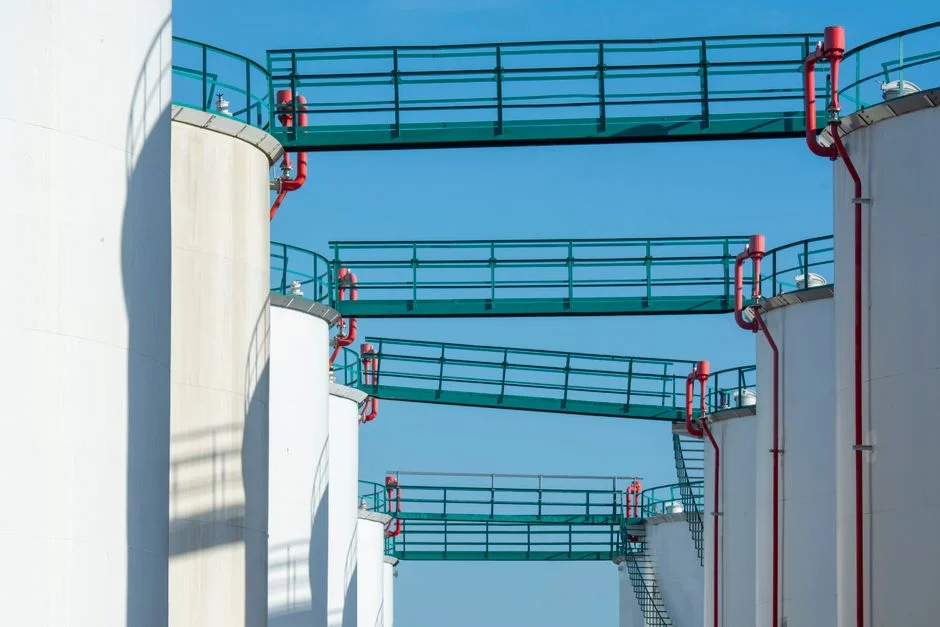
CAS is an aeration tank followed by a secondary clarifier. Microorganisms oxidize dissolved organics in the aeration basin, mixed liquor flows to the clarifier, biological solids settle by gravity as floc, settled sludge is returned as RAS with a WAS purge, and clarified water exits over the weir. Typical biomass runs 2,000–4,000 mg/L MLSS, and the whole train is vulnerable to bulking and shock because the floc is what carries precipitated metals out (HydropureWater engineering reference, 2026).
An MBR replaces the secondary clarifier and the sand filter with a submerged PVDF membrane module at 0.1–0.4 μm nominal pore size sitting inside an aerated biological tank. The membrane physically retains solids regardless of how well they flocculate, which decouples MLSS from settleability and is the single largest process difference between the two trains (Mannina et al., 2020; HydropureWater product catalog, 2026). For a Blackey AMD feed where floc structure breaks under metal shock, that decoupling is what keeps the effluent in spec.
Because the membrane holds biomass back by particle size, MLSS in an MBR runs 8,000–12,000 mg/L (up to 15,000 in some configurations) versus 2,000–4,000 mg/L in CAS — roughly 3× more biomass per unit tank volume (Jijingi et al., 2024; EPA MBR Fact Sheet). SRT sits at 30–60 days for MBR versus 5–15 days for non-nitrifying CAS (1–5 days for nitrifying CAS), and the longer SRT preserves slow-growing nitrifiers that a short-SRT CAS simply washes out (Mannina et al., 2020; HydropureWater field data, 2026). A DF-series flat-sheet MBR module in this service range gives the engineer a current, supported format to specify for the pilot.
The MBR membrane does not care whether the biomass flocculates — it only sees particles above its pore size — which is the single reason it survives the AMD and CIP excursions that defeat a clarifier. That mechanism is also why a CAS retrofit on a Blackey feed is rarely a like-for-like swap; the biology, the SRT, and the headworks all change at the same time.
Head-to-Head Parameters: MBR vs CAS for a Blackey Mining Feed
The table below consolidates the parameters a process engineer will copy into an evaluation memo. MBR numbers are drawn from the EPA Membrane Bioreactor Fact Sheet (Calls Creek and Cauley Creek facilities) and from Jijingi et al. (2024); CAS numbers are typical secondary-clarifier performance for activated sludge on a mining feed.
| Parameter | MBR | CAS |
|---|---|---|
| MLSS | 8,000–12,000 mg/L (up to 15,000) | 2,000–4,000 mg/L |
| SRT | 30–60 days | 5–15 days non-nitrifying / 1–5 days nitrifying |
| Effluent turbidity | 0.01–1.31 NTU (EPA MBR Fact Sheet) | 10–30 mg/L TSS steady; spikes >100 mg/L on upset |
| Effluent TSS | 0.10–0.72 mg/L typical (EPA MBR Fact Sheet) | 10–30 mg/L steady |
| Footprint at equivalent load | ≈ 40% of CAS area (≈ 60% smaller) | Baseline |
| Module or clarifier life | 5–8 years on mining duty | 7–12 years (clarifier) |
| Metal-shock behavior | Biomass retained; effluent quality stable | 30–60% removal loss for 24–72 h after a metal pulse |
Footprint and metal-shock behavior are the two rows that flip the decision on a Blackey site. A 200 m³/day mine-water train typically needs 350–500 m² of process area in a CAS layout and 140–200 m² in an MBR layout, and a single storm surge can push a CAS clarifier above its monthly-average TSS ceiling for hours (Mannina et al., 2020; HydropureWater product catalog, 2026; HydropureWater field data, 2026).
The Compliance Layer: 40 CFR Part 440 and the Kentucky NPDES Overlay
40 CFR Part 440 — Ore Mining and Dressing Point Source Category — sets the compliance ceiling for any Blackey-area mining discharge. The subparts differ by ore type: 440.20 covers gold ore, 440.50 covers base and precious metals, and 440.60 covers iron ore. Each subpart names a TSS monthly-average limit, a pH range of 6.0–9.0, and metal-specific daily-maximum and monthly-average ceilings for arsenic, lead, zinc, copper, nickel, and cadmium (per EPA 40 CFR Part 440). Those numbers are what drive the MBR versus CAS choice, because the secondary train is what determines whether the precipitated fines actually leave the plant.
Kentucky's NPDES permit typically layers selenium and sulfate limits on top of the federal numbers. The state overlay must be pulled from the current permit language before the design is frozen, and it is a routine reason an MBR gets specified for a site that a pure CAPEX comparison would have given to CAS. Both MBR and CAS still need upstream precipitation to hit the Part 440 ceilings: pH 8.5–9.5 with lime or caustic for a CAS train, and pH 6.5–7.5 ahead of the membranes for an MBR train to keep dissolved metals as hydroxides (per EPA 40 CFR Part 440).
Metals removal is not a biological function in either system — it happens upstream in lime, NaOH, or sulfide precipitation. What the secondary system controls is whether the precipitated fines leave over the weir. MBR's 0.1 μm physical barrier retains essentially all biomass and most metal-hydroxide fines, which is why the MBR train typically lands at <5 mg/L TSS against a 20–50 mg/L monthly-average Part 440 ceiling (HydropureWater product catalog, 2026). For deeper cost and sizing numbers that affect the compliance decision, see the MBR cost per m³ 2026 guide.
CAPEX, OPEX, and the Reuse-Payback Formula for a Blackey Project
For a 1,000 m³/day Blackey-area plant, MBR CAPEX runs 20–40% above an equivalent-flow CAS basin because of membrane cassettes, fine screens, permeate pumps, and PLC upgrade. MBR OPEX runs 15–30% higher per m³, driven by air-scour energy, periodic CIP with sodium hypochlorite and citric acid, and membrane replacements over a 20-year horizon (HydropureWater field data, 2026). Order-of-magnitude installed cost for a 200 m³/day US Midwest plant in 2026 falls in the $1.2–1.8M range for CAS and $1.8–2.6M for MBR; OPEX runs $0.6–0.9/m³ for CAS versus $0.9–1.4/m³ for MBR (HydropureWater field data, 2026).
The reuse-payback formula is what flips the answer on a Blackey project. When make-up water is above about $2/m³ and the electricity tariff is above about $0.09/kWh, MBR permeate reuse typically pays back the CAPEX premium inside 4–6 years (HydropureWater field data, 2026). Without those thresholds, the 67-year academic lifecycle breakeven (Karim & Mark, 2017, cited in Mannina et al., 2020) is not relevant to a finite mine or prep-plant permit, and CAS or a hybrid clarifier-plus-MBR polish on the reuse stream only is the cheaper answer.
| Cost line | CAS | MBR |
|---|---|---|
| 200 m³/day installed CAPEX, US Midwest 2026 | $1.2–1.8M | $1.8–2.6M |
| OPEX per m³ treated | $0.6–0.9 | $0.9–1.4 |
| Reuse-driven CAPEX payback | Not applicable without tertiary polish | 4–6 years at make-up water > $2/m³ and power > $0.09/kWh |
Two OPEX swing factors dominate: the electricity tariff and the dollar value of reused water. Above the reuse-water threshold, every avoided cubic meter of make-up water drops straight to the bottom line, and an MBR permeate that can go straight to dust suppression or prep-plant wash water without a tertiary polish step is what unlocks that line item.
Pretreatment and Pilot Testing Before You Commit CAPEX
Most MBR failures in mining service trace back to skipped pretreatment. All MBR systems require 1–3 mm fine screens immediately before the membranes, with the cutoff driven by module type — 1–2 mm for hollow-fiber (ZeeWeed, Memcor) and 2–3 mm for flat-plate (Kubota, DF-series). Undersized screening is the single most common cause of torn membranes and shortened cassette life, and a GX-series rotary bar screen at the headworks is the standard mining-duty answer (HydropureWater field data, 2026).
pH must be adjusted to 6.5–7.5 before the MBR to keep dissolved metals precipitated as hydroxides; pair the screen with an automatic chemical dosing system for lime, caustic, or coagulant so membrane CIP is not left to operator memory. For high-turbidity or oil-laden AMD feeds upstream of equalization, a DAF unit removes floatables and protects the fine screens — the same selection logic that appears in the DAF vs clarifier for mining wastewater selection guide.
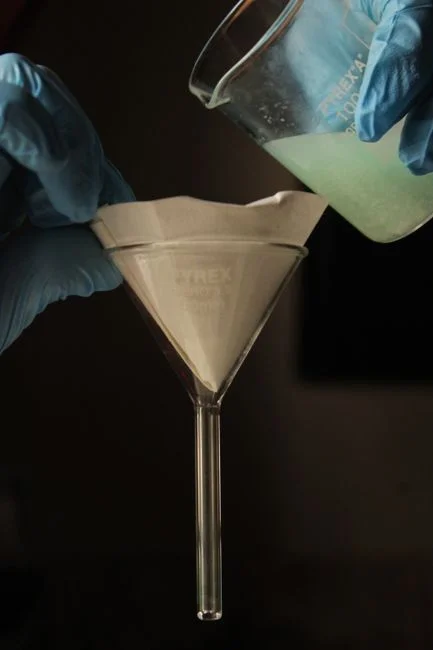
MBR waste sludge has lower settleability and more colloids than CAS waste activated sludge, so a plate-and-frame filter press for MBR waste sludge is the right dewatering choice to hit 25–35% dry solids for landfill or backfill (CAS cake runs 35–45% dry solids after pressing). Before committing CAPEX, rent one DF-series flat-sheet MBR cassette for a 60–90 day pilot against the actual Blackey-area feed and verify metals removal at the real influent matrix. The 10–2,000 m³/day integrated MBR flow band covers most coal-prep and AMD retrofits in the area, and the pilot is the only step that converts the regional overlay into a defensible Kentucky NPDES submittal.
Frequently Asked Questions
Does an MBR actually meet 40 CFR Part 440 limits for a coal-prep site in Letcher County?
Yes. MBR routinely delivers <5 mg/L TSS against the 20–50 mg/L monthly-average ceiling in 40 CFR Part 440 subparts 440.20 and 440.50, and the 0.1 μm physical barrier retains essentially all biomass and most metal-hydroxide fines (HydropureWater product catalog, 2026; per EPA 40 CFR Part 440). The Kentucky selenium and sulfate overlay still has to be verified against the current permit language before the design is frozen.
What is the realistic CAPEX premium and reuse-payback for MBR on a 200 m³/day Blackey train?
For a 200 m³/day US Midwest plant in 2026, MBR installed cost falls in the $1.8–2.6M range versus $1.2–1.8M for CAS, so the CAPEX premium is roughly $0.6–1.0M (HydropureWater field data, 2026). When make-up water is above about $2/m³ and electricity is above about $0.09/kWh, MBR permeate reuse typically pays back that premium inside 4–6 years; below both thresholds, the academic 67-year lifecycle breakeven (Karim & Mark, 2017, cited in Mannina et al., 2020) is not relevant to a finite mine or prep-plant permit, and the buyer should request a site-specific reuse-credit quote before pricing the decision.
How long should a pilot run before I sign the MBR purchase order?
60–90 days is the standard decision window for a Blackey-area AMD or coal-prep feed. Rent one DF-series flat-sheet MBR cassette, run it against the real influent matrix, and verify metals removal, TMP creep, and CIP frequency before the PO is cut (HydropureWater field data, 2026). Anything shorter does not capture storm-season metal pulses; anything longer usually means the influent characterization was not done first.
How do I pick a supplier who will still be around for membrane replacements in year seven?
Ask for the supplier's installed base in Appalachian mining duty, the documented membrane replacement interval on sulfate-laden feeds, and the lead time on a replacement cassette from a US warehouse. Module life on mining duty is 5–8 years under rigorous pretreatment and disciplined CIP, and sulfate above 1,000 mg/L accelerates fouling — so the supplier's CIP protocol and stocking location are as important as the cassette price (HydropureWater field data, 2026). A pilot supplier that cannot answer those three questions in writing is not the right supplier for a finite Kentucky permit.