Why Homer Fabricated Metals Plants Are Asking the DAF-vs-Clarifier Question in 2026
The 2026 capital decision for a Homer, Alaska fabricated metals plant is shaped by four constraints that a generic Midwest or Gulf Coast comparison page ignores: a different federal categorical ceiling, a sub-arctic operating envelope, marine/port freight economics, and intermittent cutting oil on the stream. The regulatory ceiling is 40 CFR 433 (Metal Finishing), not 40 CFR 437 (Ore Mining and Dressing) — the latter is the rule that frames the parallel New Albany article and it does not apply to a structural-steel, marine-hardware, or oilfield-component shop on the Kenai Peninsula. Confirm the applicable subpart against the plant's SIC code and the Alaska Department of Environmental Conservation (ADEC) NPDES permit before any equipment is shortlisted, because the categorical pretreatment standard is the legal ceiling the rest of the design has to fit under.
Stream profile drives the mechanism choice. Homer fab shops produce iron/steel structural work, marine hardware for the Cook Inlet fishing fleet, and oilfield supply components, which generates iron and aluminum hydroxide floc streams with intermittent emulsified cutting oil from maintenance bays and machine shops. Free oil and emulsified FOG do not settle in residence time, so any clarifier-only configuration on a stream with intermittent oil will see that oil bypass into the outfall — exactly the failure mode the 40 CFR 433 envelope is designed to catch.
Climate is the third constraint. Coastal sub-arctic operation means prolonged sub-zero winter exposure, freeze risk on unheated sludge hoppers and recycle lines, and short marine shipping windows that compress the delivery schedule. Local vendor density on the Kenai Peninsula is thin, so packaged skid delivery and factory acceptance testing (FAT) before barge or truck shipment are procurement line items, not nice-to-haves. The U.S. EPA Emerging Technologies for Wastewater Treatment and In-Plant Wet Weather Management handbook (EPA 832-R-06-006, February 2008) lists DAF and high-rate clarification as established physical/chemical treatment processes, so neither choice is a permit gamble on technology grounds.
How DAF and a Clarifier Actually Separate Solids — and Why the Mechanism Decides the Homer Answer
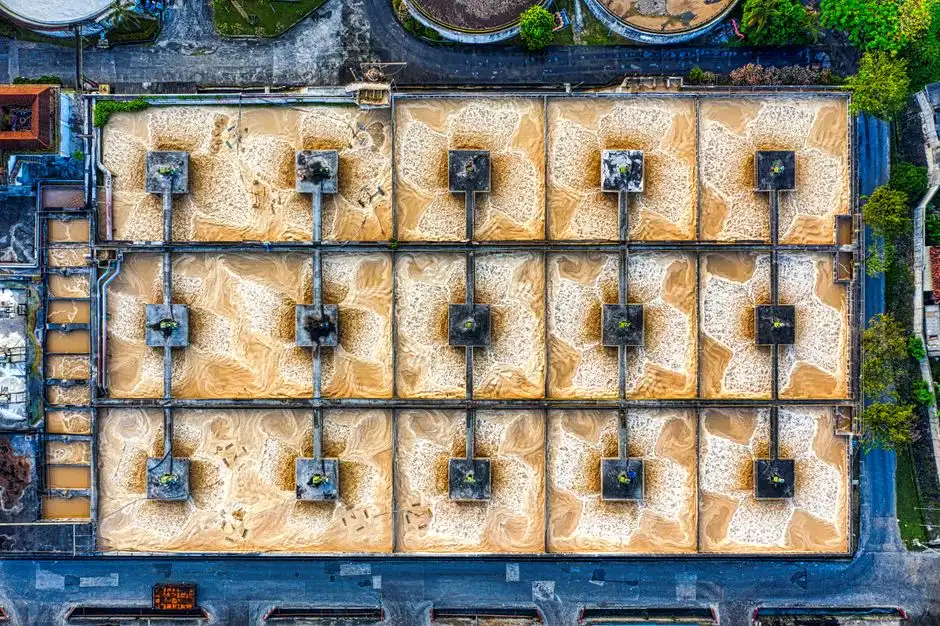
A dissolved air flotation system separates on buoyancy, not gravity. Clarified effluent is drawn from the DAF outlet, pressurized to approximately 6 bar (87 psi), and saturated with air inside a packed saturation vessel. When that saturated recycle stream returns to the flotation cell at atmospheric pressure, dissolved air comes out of solution as 20–40 µm micro-bubbles, which attach to chemically conditioned floc and lift it to the surface (per DAF Corporation product literature on the FC Maximizer and RC UniMax lines, dafcorp.com). A skimmer sweeps float into a sludge trough, clarified water exits below the float blanket, and heavy settleables drop to a bottom sediment compartment. The float is thickened in the cell and feeds a downstream filter press directly. The dense Fe(OH)₃ and Al(OH)₃ floc typical of fabricated metals streams responds well to this mechanism once the upstream chemistry is right.
A lamella clarifier — also called an inclined-plate settler or high-rate sedimentation tank — stacks inclined plates inside a compact tank. The plates multiply effective settling area, so surface loading climbs to 20–40 m/h versus 1–2 m/h for a conventional gravity clarifier (per the related New Albany metals guide, 2026). That ratio is the entire reason the 2026 retrofit path exists: a 100 m³/h line drops from roughly 600 m² of conventional clarifier footprint to about 30–50 m² of lamella footprint, and the civil-savings line item is what makes a lamella retrofit competitive against a full DAF primary. Many lamella designs include a sludge-recirculation loop that re-injects settled sludge to contact fresh influent, which is reported to cut coagulant consumption by up to 30% on HydropureWater's P-series inclined-plate design.
Design benchmarks an engineer should sanity-check against any Homer vendor proposal: roughly 3-minute hydraulic retention, 4–5 GPM/sqft clarification capacity, effluent TSS in the 20–30 mg/L band, and float thickened to 2–3% DS without a separate thickener (per Lenox Institute / Krofta field data, 2022, as cited in the New Albany guide). DAF Corp documents 92–98% TSS removal on the round FC Maximizer and 85–90% on the rectangular RC UniMax, with float thickened to 2–4% DS (dafcorp.com). The chemistry dependency is non-negotiable: PAC, ferric chloride, or alum as coagulant paired with an anionic polymer flocculant. Without that conditioning, micro-bubbles pass colloidal fines and the DAF underperforms regardless of hydraulic sizing.
Six-Question Comparison Matrix: DAF vs Lamella vs Conventional Clarifier on a Homer Stream
The table below is the single artifact most procurement officers will paste into a board memo. Rows are the six questions a Homer buyer actually asks on a dense Fe(OH)₃ / Al(OH)₃ stream with intermittent cutting oil; columns are the three realistic 2026 candidates.
| Question | DAF (dissolved air flotation) | Lamella / inclined-plate clarifier | Conventional gravity clarifier |
|---|---|---|---|
| TSS removal on dense Fe(OH)₃ / Al(OH)₃ floc | 90–95% (up to 97% per HydropureWater field data, 2026) | 85–92% on well-conditioned hydroxide floc | 70–85%, residence-time dependent |
| Equipment CAPEX multiplier at equal flow (lamella = 1.0x) | 1.5–2.5x (HydropureWater field data, 2026) | 1.0x equipment + moderate civil | 0.7–0.9x equipment, large civil/building delta |
| Footprint at 100 m³/h | 0.2–0.4 m² per m³/h (~30 m²) | 0.3–0.6 m² per m³/h | 5–8 m² per m³/h (~600 m²) |
| Energy | 8–15 kWh/m³ (compressor + recycle) | ~0.1–0.3 kWh/m³ (scraper drive) | ~0.1–0.3 kWh/m³ (scraper drive) |
| Cold-weather performance (<10°C) | Moderate — size recycle/saturation with 10–15% margin; bubble nucleation slows 20–30% at 5°C (HydropureWater field data, 2026) | Low — freezing risk in unheated sludge hopper | Low — same freeze risk on a larger vault |
| FOG / emulsified oil / colloidal fines | Very strong — float skimmed to filter press | Very weak — emulsified oil bypasses into NPDES outfall | Very weak — same bypass on a larger tank |
Verdict from the matrix: DAF wins on FOG, colloidal fines, footprint, and float dryness; the lamella clarifier wins on CAPEX for FOG-free streams at sustained high flow; the conventional gravity clarifier loses on footprint and is rarely the 2026 Homer answer. For Homer, the practical question is sequencing — DAF primary plus a HydropureWater high-efficiency lamella clarifier polish covers the full 40 CFR 433 envelope on a mixed-metals stream, while lamella-only is defensible on a clean, FOG-free hydroxide floc. The same six-question logic is laid out against a different regulatory ceiling in the parallel DAF vs clarifier for mining and metals in Cranks article.
Three Homer Scenarios — Which System Goes First, and When Lamella-Only Is Defensible
Scenario 1 — small Homer structural/marine fab at roughly 20 m³/h with intermittent cutting oil. The stream is dilute, variable, and prone to slug loads of emulsified oil from the maintenance bay. A packaged HydropureWater DAF system skid is the defensible primary because the FOG is intermittent and the shop needs a unit that starts and stops in minutes through an Alaska winter. A lamella polish is justified only when residual TSS needs tightening against the 40 CFR 433 daily-maximum metals envelope. This is the small-shop (<20 m³/h) packaged-skid case the generic 2026 comparison pages do not cover: civil work is minimal, freight dominates, and a skid-mounted DAF that arrives on one barge module is the lowest-risk procurement path.
Scenario 2 — mid-size Homer metals plant at roughly 80 m³/h with a continuous cutting-oil emulsion. Combined process wastewater runs elevated TSS plus 50–200 mg/L emulsified cutting oil. A DAF primary is non-negotiable because a clarifier would discharge the emulsified oil straight to the NPDES outfall and trip the 40 CFR 433 envelope on oil-and-grease as well as TSS. A lamella clarifier follows as polish for residual TSS margin. The 80 m³/h flow sits mid-band on a standard DAF model, so no custom-engineering markup is required.
Scenario 3 — clean FOG-free galvanizing or anodizing line at >200 m³/h. A high-rate lamella primary at 20–30 m/h on the plate-pack projected area is the lowest-CAPEX 2026 path; add a DAF polish only if a downstream rinse stage starts contributing emulsified soap or oil. The general rule that emerges: it is not DAF or lamella — it is which one goes first on this specific stream, and the DAF-primary-plus-lamella-polish configuration covers the full 40 CFR 433 envelope on a mixed-metals Homer stream. The same sequencing logic in a different climate is detailed in the parallel article on fabricated metals pretreatment compliance near Pleasant Prairie.
Five-Year Total Cost of Ownership for a Homer Plant — CAPEX, Freight, Energy, Sludge
The headline 2026 ratio: DAF CAPEX runs 1.5–2.5x a comparable lamella at equal flow (HydropureWater field data, 2026). That gap narrows once civil work, excavation, and footprint-driven building costs are added, because a DAF at 0.2–0.4 m² per m³/h is far cheaper to house than a conventional clarifier at 5–8 m² per m³/h, and a lamella at 0.3–0.6 m² per m³/h sits in between. The DAF CAPEX premium therefore looks largest in cold, space-rich sites and smallest in dense industrial corridors where every square meter of building is expensive. For a 100 m³/h stream, the difference is roughly 30 m² of DAF footprint versus 600 m² of conventional clarifier footprint — the same ~20x ratio that drives most 2026 retrofit decisions.
OPEX narrows the gap further once the downstream sludge line is included. The table below compares the two most common 2026 configurations on the items a procurement officer will model in the five-year TCO.
| Cost line item | DAF primary (+ optional lamella polish) | Lamella primary only |
|---|---|---|
| Equipment CAPEX multiplier (lamella = 1.0x) | 1.5–2.5x equipment + small civil (HydropureWater field data, 2026) | 1.0x equipment + moderate civil |
| Energy | 8–15 kWh/m³ (compressor + recycle) | ~0.1–0.3 kWh/m³ (scraper drive) |
| Coagulant / polymer dose | Standard dose + sludge recirculation trim | Up to 30% lower (sludge recycle) |
| Sludge dewatering | Float 4–8% DS — smaller HydropureWater plate-and-frame filter press, less polymer | Underflow 2–5% DS — larger press, more polymer |
| Cold-weather retrofit | Insulate/heat-trace saturation vessel + 10–15% recycle margin (HydropureWater field data, 2026) | Insulate sludge hopper; freeze risk persists |
Energy asymmetry is real, but on a 100 m³/h Homer line the annual energy delta is modest against freight, polymer, and haul-off tonnage line items. The Homer-specific cost layer is freight: Alaska barge and truck freight on a packaged DAF skid, plus heated enclosure or heat-tracing on the saturation vessel and recycle line, must be carried in the 2026 capital line. Require these in the vendor RFQ before comparing bids. An HydropureWater automatic chemical dosing skid holds the dose tight against variable influent so neither system drifts out of its design window.
Homer Vendor Qualification Checklist — What to Put in the RFQ Before Signing
Request packaged skid delivery plus factory acceptance test (FAT) documentation before shipment, and confirm the DAF is one of the manufacturer's standard models in the 4–300 m³/h range to avoid custom-engineering markup. A packaged DAF in that flow range covers 13 standard models on the HydropureWater line, so a 20 m³/h small-shop skid and an 80 m³/h mid-size skid both fall inside the standard catalog with no custom surcharge.
Require written confirmation that the saturation vessel and recycle line are sized with the 10–15% cold-weather margin called out in the comparison matrix, and that insulation or heat-tracing is included in the supply scope for Homer's coastal sub-arctic winters. Verify the proposed chemistry skid interlocks with the existing PLC and the NPDES sampling port, and request a five-year TCO model from each bidder that includes civil, energy, polymer, and haul-off line items — not just equipment CAPEX.
Confirm the vendor's 40 CFR 433 reference experience. DAF Corp publishes 10–11,000 gpm and 85–98% TSS removal across the FC Maximizer and RC UniMax lines (dafcorp.com), so a 2026 Homer buyer can request equivalent performance guarantees and pilot-test data. Ask each vendor for hydraulic calculations against the plant's actual influent particle size distribution (PSD), not generic municipal curves, before signing. The same design-criteria logic is laid out in the parallel micro-bubble flotation design criteria guide.
Frequently Asked Questions
Does 40 CFR 433 actually require a DAF, or can a lamella clarifier meet the daily-maximum metals envelope on a Homer stream?
No. Neither technology is named in 40 CFR 433. The rule sets daily-maximum and monthly-average limits for TSS, total recoverable lead, zinc, copper, and nickel plus a pH band, and a well-sized DAF or lamella, paired with chemical precipitation, can meet those limits. The selection logic is the stream profile, not the rule: a stream with intermittent emulsified cutting oil needs DAF as the primary because emulsified oil bypasses a clarifier into the NPDES outfall. Verify the applicable subpart against the plant's SIC code and the ADEC permit before signing.
What is the realistic 2026 CAPEX difference between a DAF and a lamella clarifier at 80 m³/h, and what should I put in the board memo?
DAF CAPEX typically lands 1.5–2.5x a comparable lamella at equal flow (HydropureWater field data, 2026), and a custom lamella retrofit on existing civil works is the lowest-CAPEX 2026 path for a FOG-free stream. For a defensible board number, ask each bidder for a five-year TCO model that includes civil, energy, polymer, and haul-off line items — not just equipment CAPEX. Because no published 2026 unit price applies to every site, request a packaged equipment quotation against your specific flow and influent.
Can a packaged DAF skid start and stop reliably through a Homer winter, or does the freeze risk force a building enclosure?
A packaged DAF sized with the 10–15% cold-weather margin on the saturation vessel and recycle line, plus heat-tracing and a small heated enclosure on the recycle pump skid, will start and stop reliably through a coastal sub-arctic winter. Bubble nucleation slows 20–30% at 5°C, so the saturation vessel must be sized with that margin from day one (HydropureWater field data, 2026). The freeze risk is highest on an unheated sludge hopper in a lamella or conventional clarifier vault, not on a packaged DAF skid.
What supplier selection and lead-time questions should a Homer buyer put in the RFQ to avoid a 2026 delivery miss?
Require packaged skid delivery plus FAT documentation, confirm the DAF is a manufacturer's standard model in the 4–300 m³/h range to avoid custom-engineering markup, and verify the chemistry skid interlocks with the existing PLC and the NPDES sampling port. For Alaska deliveries, ask the vendor for a confirmed barge or truck schedule that fits inside the short marine shipping window and request a written lead time in weeks, not months, with liquidated-damages language on the FAT date. Vendor reference experience on 40 CFR 433 streams and documented PSD-based hydraulic calculations are the two items that separate a defensible 2026 bid from a generic one.