Why Corrosion Is a Board-Level Issue for Wastewater Treatment Plants
The global cost of corrosion is roughly US$2.5 trillion per year, about 3.5% of global GDP, per NACE/IMPACT figures cited in Khamis et al. (npj Materials Degradation 9, 95, 2025-07-28). That is the macro frame. At the asset level, Australian water and sewer pipeline repair is estimated at around AUD 125 billion over 20 years, and the New Zealand figure is around NZD 25 billion over the same horizon (Melchers & Tan 2022, cited in Khamis et al. 2025). Most of those buried and immersed assets are constructed, sized and stressed the same way as the pipework, clarifiers and digesters inside a wastewater treatment plant (WWTP), which is why the same NACE review concludes that a large share of that cost is avoidable with established prevention methods.
The WWTP operating envelope is unusually aggressive. Moisture is constant; chlorides, sulfates, organic acids, H2S, NH3, CO2, CH4 and other VOCs are present simultaneously; and the headspace above the waterline delivers both chemical and microbiological attack on metals and concrete (MDPI Materials 15, 4279, 2022; Khamitov 2024). Industrial effluents add acids, alkalies, organic compounds and heavy metals that accelerate every corrosion form (Khamis et al. 2025). A WWT plant is therefore both the receiving environment and, when H2S escapes from biological stages, a corrosion source onto its own concrete and copper. In 2026, presenting corrosion as a maintenance line item is no longer defensible: it is an asset-management and capital-planning question that belongs on the same slide as energy, sludge handling and regulatory compliance.
Corrosion Mechanisms You Must Control in a WWTP
Seven mechanism families drive most WWTP damage: uniform, pitting, crevice, galvanic, intergranular, stress-corrosion cracking, and microbiologically influenced corrosion (MIC). Uniform corrosion is the most common and predictable; pitting and crevice corrosion are typically more damaging because they are hidden until they perforate (Fontana 1987; Jones 1996; ASM Handbook Vol. 13A, all cited in Khamis et al. 2025). Galvanic corrosion is triggered whenever dissimilar metals (e.g., a stainless coupling mated to a mild-steel pipe) share an electrolyte — a common situation in retrofit plants (Davis 2000, in Khamis et al. 2025).
MIC requires three components — electrolyte, metal, and microorganisms — and sulfate-reducing bacteria such as Desulfovibrio and Desulfomaculum reduce sulfates to H2S, which oxidises to sulfuric acid on the moist concrete surface above the waterline (MDPI Materials 15, 4279, 2022). MICC also liberates H2S, CO2, NH3, CH4 and other VOCs that attack electronics and endanger workers. Sandoval-Jabalera et al. 2006 (in Khamis et al. 2025) reported that 1018 carbon steel showed minor signs of localized corrosion in synthetic wastewater, while stainless steel showed none — supporting alloy upgrading as a primary lever. Larché et al. 2021 (Mater. Corros. 72, in Khamis et al. 2025) added that lean duplex stainless steel performs acceptably in H2S-containing urban WWTP headspaces when H2S contamination is moderate; this condition must be confirmed case by case, not assumed.
| Mechanism | Where it shows up in a WWTP | Primary risk |
|---|---|---|
| Uniform | Process tanks, mild-steel pipework, exposed ducting | Predictable wall loss, easy to plan for |
| Pitting / crevice | Under gaskets, couplings, support pads, settled sludge lines | Hidden perforation between inspections |
| Galvanic | Stainless-to-carbon transitions, instrumentation fittings | Accelerated loss of the less-noble metal |
| MIC / MICC | Concrete headspaces, clarifier weirs, digester gas piping | Concrete softening, H2S on copper and electronics |
| Stress corrosion cracking | Austenitic stainless in warm chloride service | Sudden brittle failure |
Method 1 — Material Selection and Alloy Upgrades
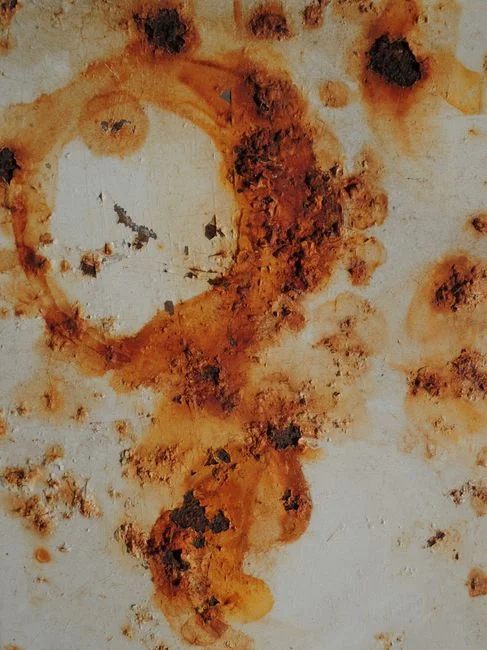
Material choice is the foundational control layer because every other method is only as good as the substrate it sits on. Sandoval-Jabalera et al. 2006 (in Khamis et al. 2025) found stainless steel showed no localized corrosion in synthetic wastewater, while 1018 carbon steel showed minor signs of localized corrosion under the same conditions. Larché et al. 2021 (in Khamis et al. 2025) further concluded that lean duplex stainless steel is a cost-effective alternative to austenitic stainless for urban WWTP units when H2S contamination is moderate, which captures most headworks and secondary treatment enclosures.
For non-metallic and lined options, FRP, HDPE liners, PVC liners and high-density polyethylene are standard for sewage pipes and clarifier internals where metal is uneconomic or unsafe (MDPI Materials 15, 4279, 2022). The 2025 Nature review explicitly notes that future work is required for high-risk industries (pharmaceutical, food) and that there is no universal alloy — the effluent chemistry sets the alloy ceiling, and the buyer must match the alloy to the contaminants rather than the other way round. Galvanic pairs must be eliminated by isolating dissimilar metals with dielectric unions or by specifying the same alloy family throughout a unit (Davis 2000, in Khamis et al. 2025). For headworks, an example of an alloy-anchored equipment choice is a stainless-steel rotary bar screen for WWTP headworks.
| Substrate / alloy | Typical WWTP zone | Behaviour in H2S / MIC service |
|---|---|---|
| 1018 carbon steel | Dry service, ductwork, supports | Minor localized corrosion in synthetic wastewater (Sandoval-Jabalera et al. 2006, in Khamis et al. 2025) |
| Austenitic stainless (e.g. 304/316) | Process piping, screens, weirs | No localized corrosion in synthetic wastewater tests (Sandoval-Jabalera et al. 2006, in Khamis et al. 2025) |
| Lean duplex stainless | Headworks and secondary enclosures with moderate H2S | Acceptable when H2S is moderate (Larché et al. 2021, in Khamis et al. 2025) |
| FRP / HDPE / PVC liners | Sewers, clarifier internals, chemical dosing rooms | Standard for concrete and metal protection (MDPI Materials 15, 4279, 2022) |
Material choice is also the upstream enabler for downstream processes: an ultrafiltration system for industrial wastewater or an MBR system for sewage only delivers its rated membrane life when the upstream alloy and lining choices have kept chlorides, sulfates and free H2S within the membrane supplier's envelope.
Method 2 — Corrosion Inhibitors and Chemical Dosing
Inhibitors are the second layer of defense and they only work when material selection and coatings have already addressed the bulk of the attack (Khamis et al. 2025). Khadom et al. 2015 (in Khamis et al. 2025) demonstrated environmentally friendly inhibitors for galvanic corrosion of steel–copper couples in petroleum wastewater, which is directly relevant to WWTP headworks with mixed-metal piping and copper instrument lines. In practice, inhibitor performance is effluent-specific: type and rate of corrosion depend on the nature and concentration of contaminants (Nemerow 1987; Ram et al. 2012, in Khamis et al. 2025), so the buyer must obtain the influent water chemistry before specifying a product family and dose.
Closed-loop feedback is required to avoid under- or overdosing in variable-strength industrial influent (Khamis et al. 2025). A PLC-controlled chemical dosing skid for inhibitor and pH adjustment is the practical implementation: dose is tied to pH, ORP and conductivity signals, not to a timer. Upstream of the inhibitor skid, biogenic H2S can be partially controlled by dosing nitrate or iron salts to suppress sulfate-reducing bacteria, which complements the downstream physical and ventilation controls (MDPI Materials 15, 4279, 2022; Khamitov 2024). pH adjustment troubleshooting for corrosion-sensitive WWTPs is usually where field engineers first notice whether the inhibitor program is actually working.
| Inhibitor class / target | What it does | Field caveat (Khamis et al. 2025) |
|---|---|---|
| Environmentally friendly inhibitors for steel–Cu couples (Khadom et al. 2015) | Reduces galvanic attack at mixed-metal couplings | Effectiveness depends on contaminant profile |
| Nitrate / iron salts upstream of biological stages | Suppresses SRB, lowers biogenic H2S | Complement, not replacement, for ventilation |
| Dose-controlled inhibitor + pH/ORP loop | Holds dose against variable influent | Requires influent chemistry, not assumed dose |
Method 3 — Protective Coatings, Linings and Concrete Protection

Concrete infrastructure in WWTPs is protected either by mix modification, replacement with corrosion-resistant materials, or by applying a coating to the inner surface of the pipe or tank (MDPI Materials 15, 4279, 2022). The most cited long-term head-to-head data the SERP surfaces is the 3% H2SO4 (pH 0.45) exposure over 5+ years, in which multiphase composite and geopolymer coatings lost roughly 35% strength, cement samples lost 52%, and uncoated samples lost 73% (MDPI Materials 15, 4279, 2022). That is the only multi-year head-to-head dataset the top results carry, and it tells a clear story: a serious coating system more than halves strength loss versus cement alone, and uncoated concrete is a write-off in that service.
For short-cycle intervention, a single nitrite spray reduced concrete corrosion rate by 40–90% over 6 months, and biannual application extended sewer service life by 1.6–10 times at fairly low cost (MDPI Materials 15, 4279, 2022). Other coating options used in sewage service include PVC liners, coal tar coatings, epoxy, acrylic resins, polyester-based polymers, and HDPE liners (MDPI Materials 15, 4279, 2022). Because MICC is a three-stage process — sulfate reduction to H2S by SRB, escape into the headspace, and biological oxidation to sulfuric acid on the concrete surface — the coating must resist both chemical and biological attack, not just one (MDPI Materials 15, 4279, 2022).
| Coating / lining | 5+ year strength loss in 3% H2SO4 (pH 0.45) | Notes |
|---|---|---|
| Multiphase composite coating | ~35% | Head-to-head dataset, MDPI Materials 15, 4279, 2022 |
| Geopolymer coating | ~35% | Same dataset, comparable performance to multiphase composite |
| Cement sample (no protective layer) | 52% | Same dataset |
| Uncoated concrete | 73% | Same dataset; effectively a write-off in this service |
| Nitrite spray (biannual) | Concrete corrosion rate down 40–90% over 6 months; service life 1.6–10× | Low-cost, short-cycle intervention (MDPI Materials 15, 4279, 2022) |
Method 4 — Environmental Control: H2S, Humidity and Ventilation
The cheapest, highest-leverage control the literature keeps returning to is reducing both H2S concentration and humidity in the headspace using supply–exhaust (forced) ventilation, especially around electronics cabinets (Khamitov 2024). Khamitov 2024 also documents that copper corrosion under H2S proceeds in moist air — drying the air alone is insufficient; H2S removal is required in parallel. Because MICC produces H2S, CO2, NH3, CH4 and other VOCs that endanger both materials and worker safety, ventilation is a dual-asset control rather than a single-purpose one (MDPI Materials 15, 4279, 2022).
The link to material selection is direct. Larché et al. 2021 (in Khamis et al. 2025) found lean duplex stainless steel only performs acceptably in H2S-containing WWTP headspaces when H2S contamination is moderate, which means a plant that invests in supply–exhaust ventilation is also widening the alloy envelope it can specify downstream. Practical 2026 implementations include covered headspaces, gas scrubbers on DAF air streams, and bioscrubbers; specific sizing is site-specific and should be requested from the engineering team. On the equipment side, a DAF system for FOG and colloidal removal upstream of biological treatment is one of the more common point sources to scrub, and DAF design for high-strength industrial wastewater typically pairs the flotation unit with an H2S treatment step on the off-gas.
Method 5 — Cathodic Protection and Process Monitoring
Cathodic protection (CP) with sacrificial anodes or impressed current is standard for buried steel pipelines and submerged tankage in WWTPs and is normally specified as a companion to a coating system. The research provided does not include numeric CP setpoints, so the impressed-current density and anode bed layout must be confirmed with the CP vendor against the resistivity of the soil or water at the site. Done correctly, CP turns the buried or immersed surface into the cathode of a controlled electrochemical cell; done without a coating, current demand rises sharply and the anode life shortens.
Monitoring proves the program is working. The standard toolkit is weight-loss coupons, linear polarization resistance (LPR), electrochemical impedance spectroscopy (EIS) and hydrogen probes, with selection driven by the expected corrosion form (Khamis et al. 2025). Ultrasonic thickness and guided-wave testing cover pitting and crevice attack that coupons miss; the practical approach is to combine coupon + electronic probe + UT rather than pick one (Khamis et al. 2025). The 2025 Nature review identifies AI-assisted corrosion monitoring as a near-term direction — useful framing for a 2026 reader building a digital-twin program — and Foorginezhad et al. 2021 (in Khamis et al. 2025) reviews sensing and assessment of corrosion in sewage pipelines, which supports a permanent monitoring budget line, not a one-off inspection.
Building a 2026 Corrosion Prevention Program: Decision Framework
None of the five methods stand alone. A defensible program layers material selection → coatings/lining → inhibitors → environmental control → cathodic/monitoring, and removing any one layer raises residual risk because the remaining layers were never sized to carry the full load (synthesis from Khamis et al. 2025; MDPI Materials 15, 4279, 2022; Khamitov 2024). The economic case is the NACE/IMPACT estimate that a large fraction of the roughly US$2.5 trillion global corrosion cost is avoidable with established methods (Khamis et al. 2025), which is why a prevention program pays back faster than the AUD 125B / NZD 25B 20-year pipeline-repair bill implies.
The 2026 regulatory anchors a buyer or engineer should name in front of management are: EU Urban Waste Water Treatment Directive 91/271/EEC for discharge quality; EU Industrial Emissions Directive 2010/75/EU for IED installations; US EPA NPDES pretreatment limits; and WHO Guidelines for Drinking-water Quality where reuse is intended. The operating tool is a single decision matrix — WWTP zone × dominant mechanism × primary method × secondary method × monitoring signal — populated during HAZOP and revisited annually. A 2026-ready program should also be digital: real-time H2S sensors, dosing tied to influent load, coating-condition data in a CMMS, and trending to predict remaining useful life, directionally aligned with the AI-monitoring outlook in Khamis et al. 2025. Two pieces of supporting reading: 2026 heavy metals discharge limits and compliance options, and a regional compliance comparison.
| WWTP zone | Dominant mechanism | Primary method | Secondary method | Monitoring signal |
|---|---|---|---|---|
| Headworks / screening | Galvanic, crevice, abrasive | Lean duplex or austenitic stainless | Dielectric isolation of dissimilar metals | UT thickness on couplings, coupon rack |
| Biological reactors | MIC, H2S headspace attack | Alloy upgrade + cover + ventilation | Nitrate/iron dosing to suppress SRB | Real-time H2S sensor, humidity |
| Clarifiers / weirs | MICC on concrete | Multiphase composite or geopolymer coating | Biannual nitrite spray on uncoated sections | Coating-condition CMMS entries |
| DAF / sludge lines | Uniform + MIC | FRP / HDPE lining | Scrubber on DAF off-gas | LPR probe in sludge line |
| Buried / submerged steel | External soil-side, internal water-side | Coating + cathodic protection | Impressed current with reference cells | CP potential monitoring, coupon retrieval |
Frequently Asked Questions
What is the single most cost-effective corrosion control at a WWTP?
Reducing both H2S concentration and humidity in the headspace with supply–exhaust ventilation is identified by Khamitov 2024 as the most cost-effective combined action, because copper corrosion under H2S proceeds in moist air and drying alone is insufficient; both H2S removal and humidity reduction are required. Buyers should request an H2S mass-balance and headspace humidity profile from the engineering team before specifying fan duty and scrubber type.
Stainless or carbon steel for new WWTP pipework?
Sandoval-Jabalera et al. 2006 (in Khamis et al. 2025) found stainless steel showed no localized corrosion in synthetic wastewater, while 1018 carbon steel showed minor signs of localized corrosion. For headspaces with moderate H2S, lean duplex stainless is a cost-effective alternative to austenitic stainless (Larché et al. 2021, in Khamis et al. 2025). When specifying, the buyer should request the headspace H2S envelope (typical, peak) from the supplier so the alloy choice is matched to the actual service rather than a generic catalogue line.
Which coating actually lasts in sewer headspace service?
The 5+ year head-to-head test in MDPI Materials 15, 4279 (2022) is the only long-term dataset the top results surface: in 3% H2SO4 (pH 0.45), multiphase composite and geopolymer coatings lost ~35% strength, cement samples lost 52%, and uncoated samples lost 73%. For low-cost intervention, a single nitrite spray cut corrosion rate by 40–90% over 6 months and biannual application extended service life by 1.6–10× (MDPI Materials 15, 4279, 2022). Buyers should ask suppliers for the same pH 0.45 / 5+ year evidence, not generic immersion data, before accepting a coating proposal.
How should a buyer budget a 2026 corrosion prevention program?
There is no published line-item price for a complete 2026 program in the supplied research, so any quotation must be built from site-specific inputs: influent water chemistry, headspace H2S and humidity profile, alloy and coating selections, monitoring density, and the regulatory regime (EU 91/271/EEC and 2010/75/EU, US EPA NPDES, WHO reuse guidelines as applicable). The defensible economic argument is qualitative at the line-item level and quantitative at the portfolio level: NACE/IMPACT, cited in Khamis et al. (2025-07-28), puts the global avoidable corrosion cost at a large fraction of roughly US$2.5 trillion per year, and the AUD 125B / NZD 25B 20-year pipeline-repair estimate (Melchers & Tan 2022, in Khamis et al. 2025) is the local benchmark a 2026 capital plan should be benchmarked against. A buyer should request a written scope that names the alloy, coating, inhibitor, ventilation, CP and monitoring layers, with a separate cost line for each, rather than a single lump sum.
Related Equipment
- stainless-steel rotary bar screen for WWTP headworks — specifications, capacity range, and technical data
- PLC-controlled chemical dosing skid for inhibitor and pH adjustment — specifications, capacity range, and technical data
- DAF system for FOG and colloidal removal upstream of biological treatment — specifications, capacity range, and technical data
- on-site chlorine dioxide generation for H2S and microbiological control — specifications, capacity range, and technical data