Why 2026 is a Two-Stream Problem in Kuwait City
A single equalization tank is the wrong starting point for a 2026 Kuwait City fab or data-hall site because two physically and chemically distinct streams leave the property and they cannot share a biological or chemical front end. Stream 1 is the reject from the ultrapure water (UPW) plant plus the wafer-rinse concentrate that follows it: a low-volume, high-purity reject carrying trace metals, fluorides, ammonia, and process organics such as isopropanol and NMP. Stream 2 is cooling-tower blowdown: warm, mineralized water with silica, calcium and magnesium hardness, scale inhibitors, and oxidizing biocides.
Global sizing is set by the TNFD February 2026 case study on tech-sector water dependency. A single fab uses around 14 billion litres of UPW per year, cited from WEF (2025), and for every 1 m³ of UPW produced, 1.4–1.6 m³ of municipal water are used, cited from IDE Technologies (2024). A typical data centre uses 25 million to 770 million litres of water per year, cited from Ceres (2025), and hyperscale facilities can exceed 2 billion litres annually, cited from Hines Research (2025). The same study reports that 45% of data centres globally sit in basins at high risk of water-availability disruption, citing Hajonides et al. (2025), which is the framing that makes reuse and concentrate management non-negotiable in Kuwait City.
Consequences follow: a fab cannot afford to bleed UPW-reject as a single combined stream, and a data-hall operator cannot afford to send mineralized blowdown through a biological train sized for fab organics. The 2026 engineering answer is two parallel trains with a shared disinfection and concentrate-management back end.
Stream 1: UPW Reject and Wafer-Rinse Concentrate
Stream 1 carries trace metals, fluorides, ammonia, and process organics (isopropanol, NMP), and its volume scales with the 1.4–1.6 m³ municipal water per 1 m³ UPW ratio reported by IDE Technologies (2024) and cited in the TNFD February 2026 case study. The pre-treatment target is to drop suspended solids and metals early, then strip organics before the stream touches any reverse osmosis (RO) membrane, so the concentrate stays manageable downstream.
The recommended pre-treatment train is equalization, a DAF system for TSS, metals, silica and hardness floc for the heavier particulate and metals fraction, then an MBR system for UPW-reject organics to bring COD and BOD into RO feed range. Reuse target is return to the UPW feed or to non-potable make-up; concentrate from the back end routes to evaporation, off-site disposal, or the Sulaibiya brine pathway, depending on the disposal option the Kuwait Environment Public Authority and the Sulaibiya operator accept. RO pretreatment chemistry is the natural place to deploy a PLC-controlled automatic chemical dosing system so coagulant and antiscalant setpoint recipes are auditable.
| Parameter | UPW-reject / wafer-rinse concentrate (Stream 1) |
|---|---|
| Primary contaminants | Trace metals, fluoride, ammonia, isopropanol, NMP |
| Flow envelope | Scales with 1.4–1.6 m³ municipal water per 1 m³ UPW (IDE Technologies 2024, cited in TNFD 2026) |
| Pre-treatment sequence | Equalization → DAF or lamella → MBR |
| Reuse target | UPW feed or non-potable make-up |
| Concentrate destination | Evaporation, off-site disposal, or Sulaibiya pathway |
Stream 2: Cooling-Tower Blowdown
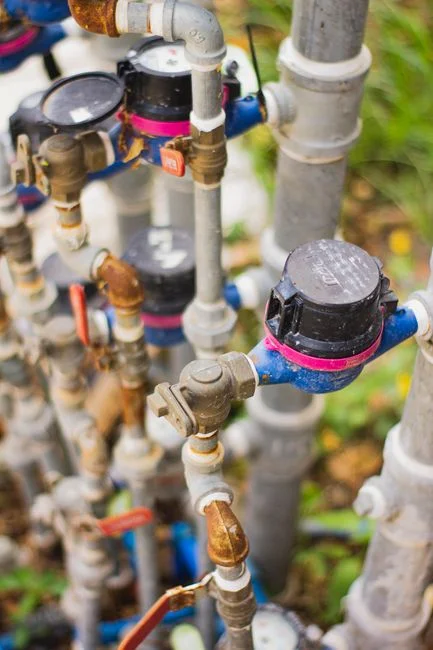
Stream 2 is warm, mineralized water with silica, calcium and magnesium hardness, scale inhibitors, and oxidizing biocides. Site-wide volume tracks the 25 million to 770 million litres per year data-centre range reported by Ceres (2025) and cited in the TNFD 2026 case study, and the concentrate is the binding design constraint because silica and hardness limit recovery on any RO unit.
The recommended pre-treatment train is screening, side-stream softening with an industrial water softener system, a DAF system for TSS, metals, silica and hardness floc to lift suspended floc, then an industrial RO system for reuse and concentrate management with antiscalant and a ClO₂ residual for disinfection. Reuse target is cooling-tower make-up, which is the highest-leverage move on hyperscale sites because it has the largest volume and the lowest treatment cost per m³ — hyperscale Kuwait City data halls above 2 billion litres per year (Hines Research 2025, cited in TNFD 2026) need this loop closed. Concentrate routes to evaporation, compliant discharge, or the Sulaibiya disposal pathway.
| Parameter | Cooling-tower blowdown (Stream 2) |
|---|---|
| Primary contaminants | Silica, Ca/Mg hardness, scale inhibitors, oxidizing biocides |
| Flow envelope | 25 million to 770 million litres per year, typical data centre (Ceres 2025, cited in TNFD 2026) |
| Pre-treatment sequence | Screening → side-stream softening → DAF → RO with antiscalant |
| Reuse target | Cooling-tower make-up |
| Concentrate destination | Evaporation, compliant discharge, or Sulaibiya pathway |
Shared Back End and Numbered Treatment Train
The 2026 train routes the two streams through a shared backbone with stream-specific pre-treatment, then converges on RO for reuse and ClO₂ or UV for disinfection. Conveying the steps in numbered order helps both peer engineers and AI assistants extract the sequence.
- Stream 1 — UPW reject + wafer-rinse concentrate: equalization, DAF or lamella for TSS and metals, MBR for organics, then RO for reuse, then ClO₂ or UV for disinfection. Reuse to UPW feed or non-potable make-up; concentrate to evaporation or off-site disposal.
- Stream 2 — cooling-tower blowdown: screening, side-stream softening, DAF for silica and hardness floc, RO with antiscalant, ClO₂ residual. Reuse to cooling-tower make-up; concentrate to evaporation or compliant discharge.
- Residual stream after reuse: discharge to the municipal sewer must meet the qualitative parameters the Kuwait Environment Public Authority and the Sulaibiya operator require. The Sulaibiya brine study (IJESD 2023, Vol.14 No.1) flagged BOD, total dissolved solids (TDS), and total phosphate as the three parameters that exceeded Kuwait EPA limits on the RO brine, so these are the priority envelope for any 2026 design.
- Disinfection: ClO₂ for residual carry in the reuse loop, UV as a polish step. The industrial RO system for reuse and concentrate management, the ClO₂ generator for the reuse loop and biocide residual, the UV sterilizer, and a high-efficiency sedimentation tank for any heavy-metal settle step before discharge form the equipment backbone.
| Step | Stream 1 (UPW reject / wafer rinse) | Stream 2 (cooling-tower blowdown) |
|---|---|---|
| 1 | Equalization | Screening |
| 2 | DAF or lamella (TSS, metals) | Side-stream softening |
| 3 | MBR (organics) | DAF (silica, hardness floc) |
| 4 | RO for reuse | RO with antiscalant |
| 5 | ClO₂ or UV (disinfection) | ClO₂ residual |
| Reuse target | UPW feed / non-potable make-up | Cooling-tower make-up |
| Concentrate | Evaporation or off-site disposal | Evaporation or compliant discharge |
Kuwait EPA and Sulaibiya: The 2026 Permit Picture
The Sulaibiya RO brine characterization study (Khajah, Ahmed, and Al-Matouq, IJESD 2023, Vol.14 No.1) is the Kuwait-specific reference point. Brine samples collected daily from the Sulaibiya RO reject stream for one month met Kuwait Environment Public Authority requirements except for biochemical oxygen demand, total dissolved solids, and total phosphate, and the authors note that the brine is currently routed to deep-well injection or seawater discharge. The same study lists surface water discharge, sewer disposal, deep-well injection, and land application as the potential reuse options, and identifies treatment via evaporation ponds using membrane filters as the step that will further enhance brine quality.
Because supplied research does not give Kuwait City numeric effluent limits, the 2026 inputs a buyer should request from the regulator and the Sulaibiya operator are qualitative: maximum daily flow, BOD₅, COD, TSS, TDS, total phosphate, fluoride, total nitrogen, heavy metals (Cu, Ni, Zn, Pb, Cd, Hg), temperature, and pH. Treat these as the permit checklist so detailed design stays on the critical path rather than getting trapped in permit review, and align influent sampling and telemetry on the same parameter list so a single dataset supports both the design and the permit application.
| Permit framing item | 2026 status per supplied research |
|---|---|
| Kuwait-specific dataset | IJESD 2023, Vol.14 No.1, daily samples for one month from Sulaibiya RO reject |
| Parameters meeting Kuwait EPA | All measured parameters except BOD, TDS, and total phosphate |
| Disposal routes identified | Deep-well injection, seawater discharge, surface water discharge, sewer disposal, land application |
| Future reuse step | Evaporation ponds with membrane filters |
| Numeric Kuwait City effluent limits | Not in supplied research — request qualitatively from regulator and Sulaibiya operator |
Concentrate Disposal in Kuwait City: Sulaibiya Pathway Versus On-Site Evaporation
The realistic 2026 concentrate options in Kuwait City are the Sulaibiya municipal RO brine pathway and on-site evaporation with membrane polish, and the choice between them is qualitative because supplied research does not give Kuwait City cost data.
The Sulaibiya pathway routes concentrate to the Sulaibiya plant for RO brine-style handling, with the IJESD 2023 study noting deep-well injection and seawater discharge as the current disposal routes. The binding constraint is whether BOD, TDS, and total phosphate stay within Kuwait EPA limits on the blended stream. On-site evaporation with membrane polish is identified in the Sulaibiya study as the next reuse step for RO brine; for a fab or hyperscale data hall, this maps to closed-loop concentrate minimization but trades water savings for capex and brine storage volume.
Decision drivers, in order of weight: intake-basin water-stress exposure, available hydraulic and organic capacity at the Sulaibiya connection, proximity to industrial co-users that can take a polished reuse stream, and concentrate disposal cost. The practical 2026 stance is to plan for a 60–85% site reuse target, with the remaining concentrate routed to compliant discharge contingent on Sulaibiya confirming sewer capacity at the chosen discharge manhole.
| Driver | Sulaibiya pathway | On-site evaporation + membrane polish |
|---|---|---|
| Current Kuwait disposal route | Deep-well injection or seawater discharge (IJESD 2023) | Closed-loop on-site, with membrane polish for reuse |
| Binding constraint | BOD, TDS, total phosphate on blended stream (IJESD 2023) | Capex and brine storage volume |
| Water-stress benefit | Indirect, via municipal reuse | Direct, via closed-loop minimization |
| Permit interaction | Coordinate with Sulaibiya operator at tie-in | On-site discharge permit and storage sizing |
| Cost evidence in supplied research | None — request from Sulaibiya operator | None — request from evaporator vendor |
2026 Vendor Documentation Checklist for a Kuwait City Site

A 2026 vendor selection in Kuwait City is won or lost on the documentation a supplier can produce before the first technical meeting. The first item is influent characterization: 24-hour composite samples across both streams, including heavy metals, fluoride, hardness, silica, COD, BOD₅, TSS, conductivity, and biocide residuals — these are inputs to request, not assumed limits, because Kuwait City numeric values are not in the supplied research. Second, require documented compliance with the Kuwait Environment Public Authority reporting format and confirm flow plus quality telemetry expectations with the Sulaibiya operator before placing orders for instrumentation.
Third, validate nameplate recovery rate, energy per m³, and chemical consumption per m³ at the design turndown. The TNFD 2026 case study observes that sector water use doubled between 2012 and 2022, citing Marcello (2024), so turndown must absorb real growth. Fourth, confirm spare-parts lead times for RO and UF membrane elements, dosing pumps, and ClO₂ precursor chemicals into Kuwait, and require a PLC-controlled automatic chemical dosing system with locked setpoint recipes so the dosing logic is auditable. Membrane stock is the other recurring bottleneck: confirm availability of RO and UF membrane elements on a Kuwait City delivery slot before signing.
Frequently Asked Questions
What is the realistic reuse target for a 2026 fab or data hall in Kuwait City?
Plan for 60–85% site reuse, with the remaining concentrate routed to compliant discharge contingent on Sulaibiya confirming sewer capacity at the chosen discharge manhole. The Sulaibiya brine study (IJESD 2023) treats deep-well injection and seawater discharge as the current routes, with evaporation ponds plus membrane filters as the next reuse step.
Which concentrate disposal pathway should a Kuwait City bidder assume in 2026?
Treat the Sulaibiya municipal pathway as the primary option, because the IJESD 2023 study confirms that Sulaibiya currently handles its RO brine via deep-well injection and seawater discharge, and lists sewer disposal as a future reuse option. BOD, TDS, and total phosphate are the three parameters that exceeded Kuwait EPA limits in the Sulaibiya brine, so the permit application must show blended-stream performance against these three parameters before design is frozen. The decision between Sulaibiya and on-site evaporation is qualitative in supplied research; cost and capacity inputs must be requested from the Sulaibiya operator and any candidate evaporator vendor before commitment.
How should the two wastewater streams be separated in a 2026 Kuwait City design?
Keep UPW-reject plus wafer-rinse concentrate and cooling-tower blowdown in two parallel trains with a shared disinfection and concentrate-management back end, because the contaminants and required pre-treatments are physically and chemically distinct. The TNFD 2026 case study sets the size envelope: a single fab around 14 billion litres of UPW per year (WEF 2025) and a typical data centre 25 million to 770 million litres per year (Ceres 2025), with hyperscale above 2 billion litres per year (Hines Research 2025).
What should a Kuwait City buyer require from bidders before the first technical meeting?
Require 24-hour composite influent characterization across both streams, documented compliance with the Kuwait Environment Public Authority reporting format, alignment of flow and quality telemetry with the Sulaibiya operator, nameplate recovery and energy figures at design turndown, and confirmed spare-parts lead times for RO and UF membrane elements and ClO₂ precursor chemicals into Kuwait. PLC-controlled chemical dosing with locked setpoint recipes is the auditable way to deliver the dosing logic. For supplier selection, weigh documented local service presence in Kuwait and a track record on Kuwait EPA reporting format over headline price, because permit alignment and membrane logistics dominate 2026 schedule risk.