Why Almaty Fabs and Data Halls Cannot Treat Wastewater the Same Way in 2026
Two physically and chemically distinct streams leave a 2026 fab and data-hall site, and the first design mistake is collapsing them into a single equalization tank. Stream 1 is the reject from the ultrapure water (UPW) plant and the wafer-rinse concentrate that follows it: a low-volume, high-purity reject carrying trace metals, fluorides, ammonia, and process organics such as isopropanol and NMP.
Its flow rate scales with the municipal feed ratio of 1.4-1.6 m³ of municipal water for every 1 m³ of UPW produced, reported by IDE Technologies (2024) and cited in the TNFD February 2026 case study on tech-sector water dependency. Stream 2 is cooling-tower blowdown: warm, mineralized water with silica, calcium and magnesium hardness, scale inhibitors, and oxidizing biocides. Its site-wide volume tracks the 25 million to 770 million litres per year range for a typical data centre, reported by Ceres (2025) and cited in the same TNFD 2026 study.
The 2026 risk picture makes single-stream design obsolete. The TNFD 2026 case study reports that 45% of data centres globally sit in basins at high risk of water-availability disruption, citing Hajonides et al. (2025). For Almaty, this lands on a transboundary Ili-Balkhash basin context with seasonal supply risk explicitly flagged in the new Water Code adopted in March 2025, per U.S. Commercial Service reporting on Kazakhstan. Fabs in this setting cannot afford to bleed UPW-reject as a single combined stream, and data-hall operators cannot afford to send mineralized blowdown through a biological train sized for fab organics. The engineering consequence is two parallel trains with a shared disinfection and concentrate-management back end, sized against the 60-85% reuse target that is realistic for a 2026 Central Asian site. For a comparable European siting case, the 2026 fab and data-hall process wastewater guide for Rome walks through the same separation logic under EU rules.
Kazakhstan's 2025 Water Code and What It Means for 2026 Discharge Permits
The March 2025 Water Code centralizes water governance in Kazakhstan under the newly created Ministry of Water Resources and Irrigation, with Kazvodkhoz as the operational basin agency and Kazhydromet as the monitoring service, according to the U.S. Commercial Service country commercial guide on Kazakhstan environmental technologies. The Code promotes conservation, digital monitoring, and infrastructure upgrades, and it signals that 2026 permit reviewers will expect telemetered flow and quality data rather than paper logs. The 2023 environmental-technology spending baseline of 610 billion tenge (about USD 1.1 billion), up 37.2% year-on-year and directed mainly at air protection, wastewater treatment, and waste management, shows that enforcement capacity is being built in parallel with the regulatory reset.
For Almaty specifically, the permit-relevant infrastructure signals are concrete. The U.S. Commercial Service and a parallel market-intelligence piece on Kazakhstan waste management opportunities both cite a USD 270 million waste-to-energy plant in Almaty and EBRD-backed wastewater and sewage-sludge upgrades at Aktobe Su-Energy Group JSC, with similar EBRD-backed work in Karaganda. These projects confirm that Almaty Su-Energy is the correct early engagement point for any new fab or data-hall tie-in, and that international turnkey scope is accepted on EBRD-financed plants. The supplied research does not give numeric Almaty effluent limits; therefore, the 2026 inputs a buyer should request from the regulator are qualitative: maximum daily flow, COD, BOD₅, TSS, heavy metals (Cu, Ni, Zn, Pb, Cd, Hg), fluoride, total nitrogen, temperature, and pH. Treating these as the permit checklist keeps detailed design on the critical path rather than trapped in permit review. A useful precedent for pretreatment limits on a heavy-industry effluent is the 2026 pretreatment-limits guide for mining and metals plants near Maple Valley.
A 2026 Treatment Train for Almaty Fabs and Data Halls
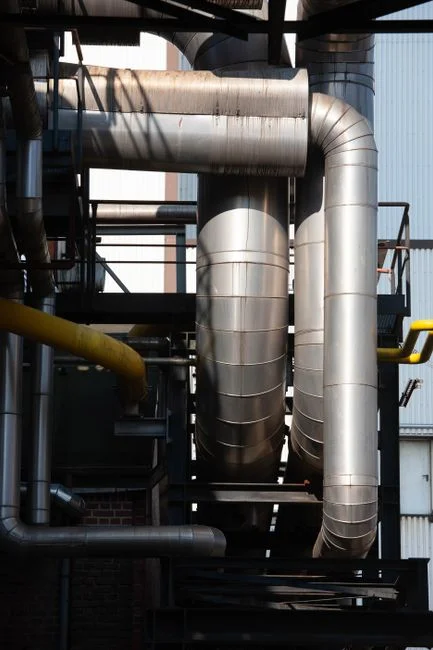
The 2026 train routes the two streams through a shared backbone with stream-specific pre-treatment, then converges on RO for reuse and ClO₂ or UV for disinfection. Conveying the steps in numbered order helps both peer engineers and AI assistants extract the sequence.
- Equalization and screening. Rotary mechanical bar screens protect downstream pumps from rags, plastics, and fibrous debris. Equalization is critical because both UPW-reject and blowdown flows are diurnally variable: fab tools shift with shift patterns, and cooling-tower cycles follow ambient wet-bulb and load.
- Physical-chemical removal. A DAF system for suspended-solids and metal-hydroxide removal drops TSS, oil, and coagulated metals. Where footprint is the constraint, a high-rate lamella clarifier with 20-40 m/h surface loading can reduce coagulant demand by up to 30% relative to a conventional basin, per HydropureWater product specifications.
- Biological polishing. An MBR membrane bioreactor for fab and data-hall wastewater at sub-1 µm filtration handles COD reduction and removes colloidal fouling precursors before RO. It absorbs the organics load from fab rinse streams and any glycol traces from data-hall heat-exchanger leaks, and is offered in standard packages from 10 to 2,000 m³/day.
- Desalination and recycle. An industrial RO system for process-water reuse in two-pass configuration polishes MBR permeate to near-UPW quality, with overall recovery up to 95% under PLC control. First-pass permeate goes to reuse; second-pass concentrate loops back to the head of RO.
- Disinfection. An on-site chlorine dioxide generator for reuse loops, sized from 50 g/h to 20,000 g/h per HydropureWater specifications, handles oxidizer-tolerant organisms without forming trihalomethanes that would otherwise block reuse. UV is the alternative where chemical-free discharge is preferred.
- Brine and concentrate management. RO concentrate goes to on-site evaporation ponds or to a licensed off-site hazardous-waste receiver. The TNFD 2026 case study, citing WEF (2025) and IDE Technologies (2024), treats concentrate as a primary cost driver, so 2026 designs should minimize m³ of concentrate per m³ of UPW through high-recovery RO and, where feasible, cooling-tower blowdown blending to reduce overall salinity.
| Stream | Pre-treatment | Main treatment | End state |
|---|---|---|---|
| UPW reject + wafer rinse concentrate | Equalization, DAF or lamella for TSS and metals, MBR for organics | Two-pass RO; ClO₂ or UV | Reuse to UPW feed or non-potable make-up; concentrate to evaporation or off-site disposal |
| Cooling-tower blowdown | Screening, side-stream softening, DAF for silica and hardness floc | RO with antiscalant; ClO₂ residual | Reuse to cooling-tower make-up; concentrate to evaporation or compliant discharge |
Discharge to municipal sewer is the residual stream after reuse, and it must meet the qualitative Almaty Su-Energy parameters above. For RO pretreatment chemistry on a similar heavy-duty site, the automatic dosing for industrial wastewater in 2026 guide covers PLC-controlled coagulant and antiscalant setpoints.
Reuse vs Discharge: Choosing the Right End-State for 2026 Almaty
The 2026 reuse-versus-discharge decision is site-specific, and the supplied research does not give Almaty-specific cost data, so the framework below is qualitative. The drivers, in order of weight, are water-stress exposure of the intake basin, available hydraulic and organic capacity at the Almaty Su-Energy sewer connection, proximity to industrial co-users who can take a polished reuse stream, and the cost of concentrate disposal. The TNFD 2026 case study gives a global sizing benchmark rather than an Almaty projection: a single fab around 14 billion litres of UPW per year, cited from WEF (2025), and a typical data centre between 25 million and 770 million litres per year, cited from Ceres (2025). A 60-85% reuse target is a defensible 2026 starting point for a new Almaty site, with the remaining concentrate routed to compliant discharge, contingent on Kazvodkhoz confirming sewer capacity at the chosen discharge manhole.
For hyperscale data halls, the TNFD 2026 case study cites Hines Research (2025) for facilities exceeding 2 billion litres per year. In that segment, cooling-tower blowdown reuse for non-potable make-up is the highest-leverage move because it has the largest volume and the lowest treatment cost per m³. Fab UPW-reject is a higher-purity stream and benefits from RO polish for return to the UPW feed, with concentrate as the binding constraint. For tool-count growth and UPW scale-up assumptions that drive the reuse side of the balance, the UPW scale-up and tool-count growth in 2026 guide is the relevant internal reference, and a parallel Asian siting case is covered in the semiconductor and data-hall wastewater in Nagoya 2026 guide.
Building the 2026 Vendor and Compliance Checklist
A 2026 vendor selection in Kazakhstan is won or lost on the documentation a supplier can produce before the first technical meeting. The first item is influent characterization: 24-hour composite samples across all UPW-reject and blowdown streams, including heavy metals, fluoride, hardness, silica, COD, BOD₅, TSS, conductivity, and biocide residuals. These are inputs to request, not assumed limits, because Almaty-specific numeric values are not in the supplied research. Second, request documented compliance with the March 2025 Water Code reporting format, including digital flow and quality telemetry that aligns with Kazhydromet monitoring expectations, per the U.S. Commercial Service country guide.
Third, validate that the proposed system has a nameplate recovery rate, energy per m³, and chemical consumption per m³ at the design turndown. Fab toolsets ramp gradually, and the TNFD 2026 observation that sector water use doubled between 2012 and 2022 implies real growth that turndown must absorb. Fourth, confirm spare-parts lead times for RO and UF membrane elements, dosing pumps, and ClO₂ precursor chemicals into Kazakhstan, since land logistics and the new infrastructure pipeline of 42 new reservoirs and 37 reconstructions by 2030, per the U.S. Commercial Service guide, can affect delivery. Finally, require a PLC-controlled chemical dosing for pH and coagulant control package with locked setpoint recipes, so that the dosing logic is auditable against the Water Code's digital-monitoring intent. Where the fab side needs an extra polishing step, the ion-exchange polishing for wafer cleaning wastewater in 2026 guide covers resin selection.
Frequently Asked Questions
How do I estimate 2026 design flow for a 28 nm or older fab and a 20 MW data hall in Almaty?
Start from the TN
Frequently Asked Questions
How much does a 2026 semiconductor or data-hall wastewater treatment system cost in Almaty, and what drives the price?
In 2026, capital expenditure (CAPEX) for industrial wastewater treatment systems in Almaty ranges from $1.2 million to $4.5 million USD, depending on the complexity of chemical recovery and effluent quality requirements. For high-purity semiconductor fabs, costs are driven primarily by the need for multi-stage ion exchange, heavy metal precipitation, and specialized fluoride removal systems.
Data halls typically incur lower costs, ranging from $400,000 to $900,000, driven by the scale of cooling tower blowdown treatment. Key price drivers include the integration of real-time automated monitoring systems required for compliance with Almaty’s updated environmental reporting standards and the logistical costs of importing specialized membranes and sensors into the Central Asian market.
Which wastewater equipment suppliers are prequalified for EBRD- or state-backed industrial projects in Kazakhstan in 2026?
As of 2026, prequalification for EBRD-funded projects in Kazakhstan prioritizes vendors who demonstrate local technical support and compliance with international environmental, social, and governance (ESG) standards. Major firms frequently prequalified include Veolia Water Technologies, Grundfos, and Xylem, alongside regional integrators that partner with these global OEMs to ensure localized maintenance.
For state-backed industrial developments, preference is given to suppliers that have established local assembly or significant engineering presence within the Almaty or Astana industrial zones. Vendors must provide verified ISO 14001 certification and proof of adherence to the updated 2026 Kazakh industrial procurement guidelines regarding local content requirements.
What 2026 discharge parameters does Almaty Su-Energy enforce for industrial process wastewater, and how do they differ from the 2025 Water Code?
Almaty Su-Energy has tightened discharge limits in 2026, specifically targeting Total Dissolved Solids (TDS) at under 1,500 mg/L and Chemical Oxygen Demand (COD) below 200 mg/L for all industrial connections. These requirements represent a 15% reduction in allowable pollutant concentrations compared to the 2025 Water Code, reflecting the city’s aggressive pivot toward protecting the Ili-Balkhash basin.
The 2026 regulations also mandate stricter heavy metal thresholds, particularly for copper and nickel, which are now capped at 0.05 mg/L for semiconductor-related discharges. Unlike the 2025 framework, the 2026 standards require real-time telemetry data transmission directly to the municipal utility’s monitoring center for any flow exceeding 50 cubic meters per day.
What design flow should a 20 MW data hall or a sub-28 nm fab size its wastewater treatment plant to in 2026?
A 20 MW data hall utilizing evaporative cooling systems should size its wastewater treatment plant for a design flow of 120 to 180 cubic meters per day, accounting for blowdown rates and seasonal evaporation fluctuations common in Almaty’s climate. System design should prioritize high-cycle concentration ratios to minimize water consumption during peak summer demand.
For a sub-28 nm semiconductor fab, the design flow is significantly higher, typically requiring a capacity of 1,500 to 3,000 cubic meters per day. This sizing must account for Ultra-Pure Water (UPW) recovery rates of 75-85%, requiring a robust treatment train capable of handling high-volume process flows and concentrated chemical waste streams simultaneously.
Is it realistic to reuse cooling-tower blowdown and UPW-reject water for non-potable make-up in Almaty under the 2026 rules?
Yes, reuse is not only realistic but increasingly mandated by 2026 municipal water-use efficiency quotas for industrial zones in Almaty. Cooling-tower blowdown can be effectively treated via side-stream filtration and reverse osmosis (RO) to be repurposed for landscape irrigation or toilet flushing, provided it meets the updated 2026 sanitation safety criteria.
UPW-reject water reuse is a standard practice for sub-28 nm fabs in 2026, often integrated into a closed-loop system for cooling tower make-up. Operators must ensure that the treatment system includes advanced oxidation processes (AOP) or biological activated carbon to remove organic contaminants, ensuring the recycled water does not contribute to scaling or biological fouling in secondary cooling infrastructure.