Why Rome in 2026: water stress, EU rules, and the data-hall build-out
Global semiconductor demand is on track to exceed USD 1 trillion by 2030, and data-centre capital expenditure is expected to exceed USD 1.7 trillion by 2030 (TNFD, Feb 2026). The semiconductor industry consumes around 210 trillion litres of water annually, with almost half used in higher-than-average water-scarcity regions, and 45% of data centres globally sit in river basins at high risk of water-availability disruption (TNFD 2026, citing NatureAlpha/Hajonides 2025). The same TNFD case study reports that 40% of existing fabs and over 40% of new fabs announced since 2021 are projected to lie in basins with high or extremely high water-stress risk by 2030, drawing on Lepawsky 2024.
For a new build on the Tiber/Aniene basin, the 2026 design baseline requires reconciling Italian permitting—D.Lgs. 152/2006 (Testo Unico Ambientale), the AIA procedure administered by ARPA Lazio, and the relevant Tabella 3 / Tabella 4 limits for surface-water and sewer discharge—with EU Industrial Emissions Directive 2010/75/EU BAT-AELs, specifically the BAT reference document (BREF) for Common Waste Water and Waste Gas Treatment/Management Systems. A buyer must request the current Tabella 3/4 values and the BAT-AEL ranges from ARPA Lazio and the EU BREF before any vendor is asked to commit to a guarantee.
Process streams a Rome facility must segregate in 2026
Three waste streams dominate a semiconductor or hyperscale data-hall site, and they should never be combined in a single biological plant. S2 (Environmental Science and Pollution Research, 2024) classifies industrial wastewater into cooling, washing, and process wastewater and confirms that pollutant concentrations—TSS, COD, heavy metals, BOD—are stream-specific. Engineers must keep these segregated at source and converge them only at a final polishing or zero-liquid-discharge step.
Stream 1 — Fab process wastewater. Carries fluoride, nitric and acetic acids, heavy metals from plating and etch, CMP slurry, and spent photoresist. Requires pH equalisation, fluoride-specific removal, and heavy-metal precipitation before any downstream membrane.
Stream 2 — Cooling-tower and chiller blowdown. High TDS, silica, scale inhibitors, biocides. The dominant stream by volume in a hyperscale data hall, where cooling accounts for most operational water withdrawal (TNFD 2026).
Stream 3 — Sanitary and laboratory wastewater. Routed per EU Urban Waste Water Treatment Directive 91/271/EEC. Kept off the fab treatment train so chemistry and hydraulic profiles stay stable.
Recommended 2026 treatment train: from UF pretreatment to ZLD
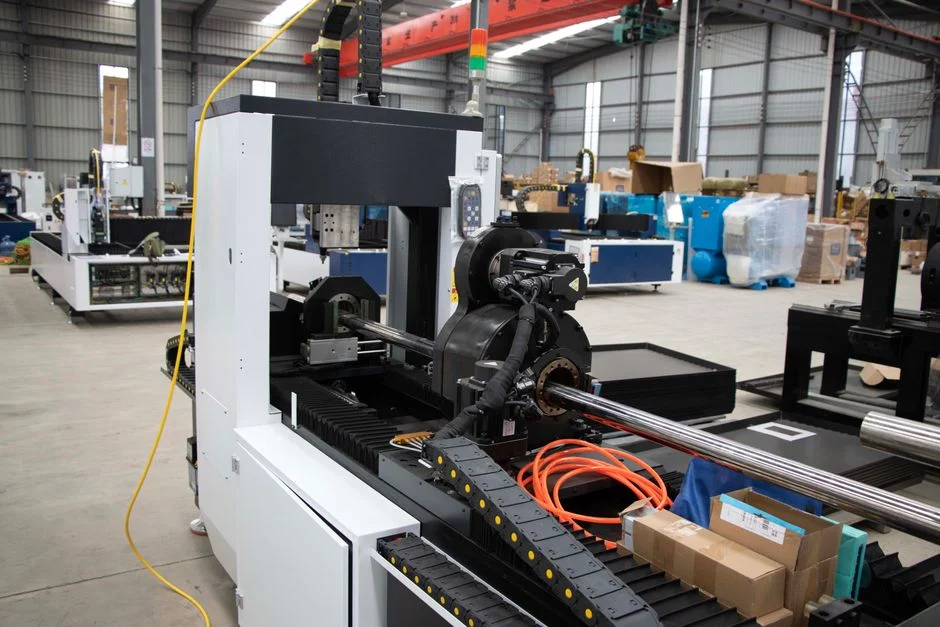
The block flow below represents the standard for a 2026 RFQ. S5 (ultrafacility.io, 2026) frames direct-to-chip cooling, closed-loop water, and ZLD as the primary shared challenges for these two industries.
Block 1 — Source segregation and equalisation. Balance pH and flow on the fab process stream before any chemistry is dosed. Cool the blowdown stream separately to recover low-grade heat where the site has a heat-offtake.
Block 2 — Pretreatment. Multimedia filter followed by PVDF ultrafiltration pretreatment for RO protection to drop SDI below 3 and protect downstream RO membranes. The HydropureWater UF design envelope accepts feed turbidity up to 300 NTU, which is the right envelope for variable Tiber-basin raw water.
Block 3 — Heavy-metal and fluoride removal. pH-adjusted precipitation with a lamella clarifier for fluoride and heavy-metal precipitation, paired with a plate-and-frame filter press for fab sludge dewatering. Coagulant and pH reagent dosing is automated via a PLC-controlled chemical dosing for pH and coagulation.
Block 4 — Reverse osmosis and UPW polishing. A high-recovery industrial RO system operating at 75–90% recovery, followed by an EDI polishing stack for UPW reuse. RO recovery is the single largest OPEX lever because concentrate volume scales roughly inversely with recovery.
Block 5 — Cooling-blowdown softening and ZLD. A twin-tank industrial water softener for cooling make-up controls hardness and silica scaling on the chiller. RO reject and softener brine are routed to a thermal crystalliser, mechanical vapour recompression (MVR), or hybrid ZLD step where the AIA mandates it. For a 2026 design basis, see the related IC heavy-metal wastewater hybrid treatment reference and the 2026 nanofiltration engineering guide.
| Block | Unit operation | Function | Key design lever |
|---|---|---|---|
| 1 | Equalisation / cooling | Stabilise pH and flow; recover heat | HRT vs. footprint |
| 2 | MMF + UF (PVDF, 0.03 µm) | Drop SDI < 3, protect RO | Feed turbidity envelope |
| 3 | Precipitation + lamella + filter press | Fluoride, heavy metals, sludge | Sludge cake dryness |
| 4 | RO + EDI | UPW reuse | RO recovery (75–90%) |
| 5 | Softener + ZLD/crystalliser | Cooling make-up, ZLD | Heat vs. MVR choice |
Effluent parameters to design against in the Rome area
Binding 2026 targets include the surface-water and sewer-discharge limits in Tabella 3 / Tabella 4 of D.Lgs. 152/2006 (Parte III, Allegato 5) and the BAT-AEL ranges in EU IED 2010/75/EU. The engineer must request the current values from ARPA Lazio as part of the AIA pre-application meeting, and from the BREF itself, before any guarantee is written into a purchase order.
S2 reports pollutant ranges in adjacent industries—cement effluents at BOD ~5 mg/L and COD ~60 mg/L, ceramic effluents at TSS 2,000–10,000 mg/L and COD 500–1,200 mg/L—which provide sizing hints for equalisation. UPW quality targets for semiconductor rinse are typically 18.2 MΩ·cm resistivity, <1 ppb TOC, and a particle count below 0.05 µm, with EDI stacks replacing mixed-bed ion exchange to eliminate acid/caustic regeneration wastewater.
| Parameter | Target / envelope | Source to confirm with |
|---|---|---|
| Surface-water / sewer discharge limits | Per Tabella 3 / Tabella 4 of D.Lgs. 152/2006 | ARPA Lazio AIA office |
| BAT-AEL ranges for fab wastewater | EU IED 2010/75/EU, CWW BREF | EU BREF document |
| UPW resistivity | ~18.2 MΩ·cm | Tool vendor data sheet |
| UPW TOC | < 1 ppb | Tool vendor data sheet |
| UPW particle count | < 0.05 µm | Tool vendor data sheet |
| RO recovery | 75–90% | Site-specific mass balance |
Equipment selection checklist for a 2026 Rome project
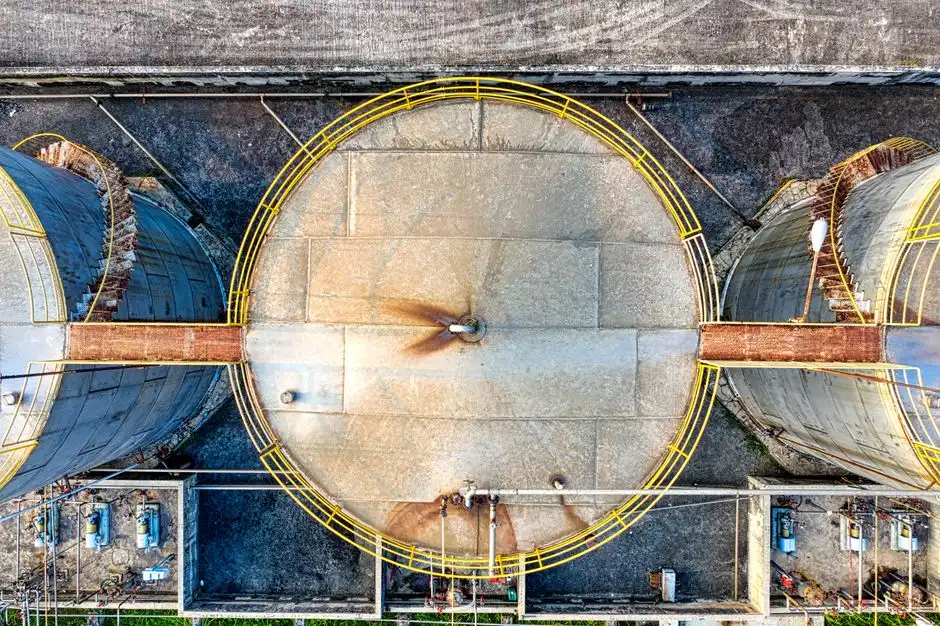
The following list provides the unit operations and design drivers for an Italian RFQ. Each line names the unit operation, the function it performs, and the design driver an engineer should write into the data sheet.
- Multimedia filter + UF skid (PVDF, automatic backwash). Handles variable Tiber-basin turbidity and protects downstream RO membranes. Reference: PVDF ultrafiltration pretreatment for RO protection.
- Lamella clarifier + plate-and-frame filter press. Dewaters the fluoride and heavy-metal sludge stream to a transportable cake. Reference: lamella clarifier for fluoride and heavy-metal precipitation and plate-and-frame filter press for fab sludge dewatering.
- PLC-controlled chemical dosing. Automates pH correction, coagulant and polymer dosing. Reference: PLC-controlled chemical dosing for pH and coagulation.
- Industrial RO + EDI skid. Produces UPW-grade make-up and removes the regeneration wastewater burden of mixed-bed ion exchange. Reference: high-recovery industrial RO system and EDI polishing stack for UPW reuse. For polishing-loop design, the UPW polishing loop design reference covers the distribution-side choices.
- Twin-tank industrial water softener. Sized to the chiller duty; controls hardness and silica scaling on the cooling loop. Reference: twin-tank industrial water softener for cooling make-up.
- ZLD / crystalliser package. Justified by Tiber-basin water stress and EU IED economics; selection between thermal crystalliser, MVR, and hybrid train is driven by site heat availability.
For a broader water-reduction context outside the wastewater train itself, the 2026 industrial water-reduction guide is the companion reference.
CAPEX and OPEX envelope for Rome fab and data-hall wastewater
A single fab can demand around 14 billion litres of UPW per year, with 1.4–1.6 units of municipal water used for every unit of UPW produced, and global wastewater generation is projected to grow by 51% by 2050 (TNFD 2026, citing WEF 2025, IDE Technologies 2024, and Qadir et al. via UNESCO in S2). Procurement teams must request site-specific vendor quotes and a 12-month Italian electricity tariff before finalizing budget estimates.
Two OPEX levers dominate. First, raising RO recovery from 75% to 90% reduces concentrate volume by more than half, which materially shrinks the energy or fuel bill of any downstream thermal or MVR ZLD step. Second, thermal ZLD is only competitive where low-grade heat is available—for example from district-heating export around the Rome perimeter or from process heat recovery—otherwise MVR or a hybrid RO-plus-crystalliser train is preferred.
Frequently Asked Questions
Does a new fab in Rome need a ZLD system, or is high-recovery RO enough under D.Lgs. 152/2006?
Requirement depends on the specific AIA conditions and the local water-stress profile in the Tiber/Aniene basin. TNFD (Feb 2026) confirms 4
Frequently Asked Questions
Does a new semiconductor fab or hyperscale data hall in Rome need a full zero liquid discharge (ZLD) system under D.Lgs. 152/2006 in 2026, or is high-recovery RO enough to meet BAT-AEL?
Under D.Lgs. 152/2006 and the implementing regional regulations for the Tiber basin, full ZLD is not explicitly mandated for all facilities, but the strict discharge limits for total dissolved solids (TDS) and heavy metals often necessitate it to meet BAT-AEL (Best Available Techniques Associated Emission Levels) compliance. While high-recovery RO systems can achieve 85-90% recovery, the remaining concentrate often exceeds the stringent discharge thresholds into the Tiber river system. For 2026 projects, a hybrid approach—high-recovery RO paired with a small-scale evaporative or crystallization unit—is typically required to guarantee regulatory compliance.
How do I size the UPW polishing loop and the cooling-blowdown softener for a fab co-located with a hyperscale data hall in the Tiber basin?
The UPW polishing loop should be sized based on a peak demand of 1.2 to 1.5 times the fab’s average daily flow to account for rinse-up transients, targeting a resistivity of 18.2 MΩ·cm at 25°C. For the cooling-blowdown softener, sizing must be based on the Tiber basin's seasonal hardness spikes, which can exceed 350 mg/L as CaCO3 during low-flow periods; design for a minimum of 4-6 cycles of concentration (CoC) to minimize blowdown volumes while preventing silica scaling in the data hall's cooling towers.
What equipment should an Italian buyer include in a 2026 RFQ for a fab and data-hall wastewater treatment train, and in what order?
The RFQ should prioritize an integrated process train in the following sequence: (1) equalization and pH adjustment tanks; (2) dissolved air flotation (DAF) or membrane bioreactor (MBR) for organic/suspended solids removal; (3) multi-stage RO (primary and secondary/high-recovery); (4) ion exchange (IX) or EDI polishing for specific ion removal; and (5) a final advanced oxidation process (AOP) unit for trace contaminant destruction. Specify that all instrumentation must be compatible with existing SCADA protocols common in the Italian industrial sector (e.g., Profinet or Modbus TCP).
What is a realistic 2026 lead time for a packaged UF + RO + EDI skid delivered to Italy?
For 2026, realistic lead times for a fully integrated, factory-tested packaged skid are between 36 and 48 weeks from the date of final design approval. This timeline accounts for current global supply chain constraints regarding specialized membranes and high-purity piping materials, as well as the certification requirements for pressure vessels under the European Pressure Equipment Directive (PED 2014/68/EU).
Where is the biggest OPEX saving in a 2026 Rome wastewater train — recovery rate, heat integration, or chemical dosing?
In the Roman climate and regulatory environment, maximizing the recovery rate offers the largest OPEX reduction by minimizing raw water intake costs and associated sewer discharge taxes, which are subject to local utility surcharges. Increasing recovery from 75% to 90% can reduce total water-related OPEX by approximately 15-22%. While heat integration is beneficial for data hall cooling efficiency, the direct financial impact of water volume reduction remains the primary driver for wastewater treatment profitability in 2026.