Binh Duong’s Industrial Wastewater Challenge: Why Treatment is Non-Negotiable
Binh Duong’s 29 industrial parks—spanning 12,600 hectares with 91% occupancy—generate high volumes of wastewater requiring advanced treatment to meet Vietnam’s QCVN 40:2011/BTNMT standards. In 2025, industrial facilities in Binh Duong typically achieve 92–97% COD removal and 95%+ TSS reduction using dissolved air flotation (DAF) or membrane bioreactor (MBR) systems, with CAPEX ranging from $500,000 to $2M for plants handling 500–5,000 m³/day. This guide provides technical specs, cost benchmarks, and compliance requirements for selecting the right system.
The industrial landscape in Binh Duong is dominated by high-impact sectors including textiles, electronics manufacturing, and food processing. Each sector presents a unique chemical profile: electronics facilities often discharge heavy metals like copper and nickel, while food processing plants generate high Biological Oxygen Demand (BOD) and Fats, Oils, and Grease (FOG). According to a 2024 JICA report, while Binh Duong is a leader in industrial output, approximately 60% of industrial parks still lack optimized on-site treatment facilities capable of meeting the most stringent Class A discharge limits.
Vietnam’s QCVN 40:2011/BTNMT sets strict limits for industrial effluent, requiring Chemical Oxygen Demand (COD) to be ≤ 150 mg/L (Class B) or ≤ 75 mg/L (Class A), Total Suspended Solids (TSS) ≤ 100 mg/L, and pH levels between 6 and 9. Under Decree 155/2016/ND-CP, non-compliance fines range from 50 million to 200 million VND ($2,100–$8,500) per violation. For large-scale manufacturers, these fines are compounded by the risk of operational suspension. For example, a textile factory in VSIP Binh Duong recently reduced its raw COD from 1,200 mg/L to 80 mg/L by integrating a high-efficiency DAF system for Binh Duong’s food and textile industries, effectively avoiding an estimated $50,000 per year in environmental penalties based on 2024 audit data.
The World Bank’s 2024 water quality initiative highlights that Binh Duong faces increasing pressure to protect the Dong Nai and Saigon river basins. As regulatory oversight shifts toward real-time monitoring, the "wait and see" approach to wastewater investment has become a significant liability for plant operators and procurement managers.
Key Industrial Wastewater Treatment Methods for Binh Duong’s Sectors
Selecting a treatment method requires matching the technology to the specific pollutant load of the industry. In Binh Duong’s high-density industrial parks, three primary technologies dominate the market: Dissolved Air Flotation (DAF), Membrane Bioreactors (MBR), and automated chemical dosing systems.
Dissolved Air Flotation (DAF) is the industry standard for sectors with high suspended solids and emulsified oils, such as food processing, textiles, and pulp and paper. The process involves dissolving air into the wastewater under pressure and then releasing it at atmospheric pressure in a flotation tank. The resulting micro-bubbles (30–50 μm) attach to flocculated particles, causing them to float to the surface where they are mechanically skimmed. This method typically achieves 95%+ TSS removal and 85% FOG reduction, making it a critical primary treatment step. Many facilities in Binh Duong utilize how DAF systems achieve 95%+ TSS removal in Southeast Asia as a benchmark for local performance expectations.
Membrane Bioreactor (MBR) technology is preferred for electronics and pharmaceutical sectors where high-quality effluent is required for potential reuse. By combining the activated sludge process with advanced PVDF membranes (0.1 μm pore size), MBR systems eliminate the need for secondary clarifiers. This results in 99% pathogen removal and effluent TSS below 1 mg/L. While energy-intensive, with consumption rates of 0.8–1.2 kWh/m³ (per 2024 EPA benchmarks), the compact MBR system for electronics and pharmaceutical wastewater in Binh Duong offers a footprint 60% smaller than conventional systems, which is vital for factories with limited expansion space.
Chemical Dosing Systems serve as the "brain" of the treatment plant, managing pH adjustment and coagulation. Precise PLC-controlled chemical dosing for pH adjustment and coagulation in Binh Duong ensures that coagulants like Polyaluminum Chloride (PAC) or ferric chloride are delivered at optimal rates (typically 20–50 mg/L for COD reduction). This prevents chemical waste and ensures compliance with the pH 6–9 discharge requirement.
| Technology | Primary Application | COD Removal | TSS Removal | Key Advantage |
|---|---|---|---|---|
| DAF | Textiles, Food, Paper | 70–85% | 92–97% | Excellent FOG/TSS removal |
| MBR Integrated | Electronics, Pharma | 90–98% | 99%+ | Small footprint; water reuse |
| Chemical Dosing | Pre-treatment/Polishing | 30–50% | Varies | Automated pH & coagulation |
| Hybrid (DAF + MBR) | High-strength Dyeing | 98%+ | 99%+ | Maximum compliance security |
Technical Specs for Binh Duong: Equipment Parameters and Footprint
Engineering teams must evaluate equipment based on hydraulic loading, removal efficiency, and physical space requirements. In Binh Duong’s industrial parks, where land costs are high, footprint efficiency is often as important as treatment performance. HydropureWater’s field data from 2025 indicates that modular systems are increasingly favored for their rapid installation and scalability.
For DAF systems, the DAF line provides flow rates ranging from 4 to 300 m³/h. A system designed for a medium-sized textile facility (approx. 50 m³/h) typically requires a footprint of 25–40 m². These systems are engineered to handle high influent TSS (up to 2,000 mg/L) while maintaining a surface loading rate of 5–10 m³/m²/h. This ensures that even during peak production cycles, the float layer remains stable for efficient skimming.
MBR systems offer even higher density. For a 1,000 m³/day plant, the footprint is significantly reduced compared to traditional activated sludge because the membrane tank replaces the large footprint of a secondary sedimentation tank. Standard membrane flux in Binh Duong facilities is maintained between 15–25 LMH (liters per square meter per hour). The energy breakdown for these systems typically shows 70% of power consumption dedicated to aeration for membrane scouring and biological oxygen demand, with the remaining 30% used for permeate and sludge pumps.
Sludge management is the final technical hurdle. Using a plate-and-frame filter press with a filtration area of 1–500 m², facilities can reduce sludge volume by 70–80%. This is essential for meeting Vietnam’s QCVN 07:2009/BTNMT standards, which dictate the moisture content and chemical stability of sludge destined for landfill disposal.
| Parameter | DAF-50 | MBR (1000 m³/d) | Filter Press (Manual/Auto) |
|---|---|---|---|
| Flow Capacity | 50 m³/h | 42 m³/h (Avg) | 1–20 m³ sludge/cycle |
| Footprint | ~30 m² | ~150 m² | 15–50 m² |
| Energy Req. | 0.2–0.4 kWh/m³ | 0.8–1.2 kWh/m³ | 1.5–7.5 kW (Motor) |
| TSS Effluent | < 50 mg/L | < 1 mg/L | 25–35% Dry Solids |
Cost Breakdown: CAPEX, OPEX, and ROI for Binh Duong Facilities
Budgeting for wastewater treatment in Binh Duong requires a dual focus on initial Capital Expenditure (CAPEX) and ongoing Operational Expenditure (OPEX). While MBR systems carry a higher initial price tag, their ability to produce high-quality water for reuse can significantly offset costs in the long term.
CAPEX for DAF systems in 2025 typically ranges from $200,000 for small units to $1.2M for high-capacity industrial configurations. MBR systems, due to the cost of PVDF membranes and advanced automation, range from $500,000 to $2.5M for capacities up to 2,000 m³/day. Chemical dosing skids are the most affordable component, usually costing between $50,000 and $200,000 depending on the number of dosing points and the level of PLC integration.
OPEX is driven by chemical consumption, energy, and maintenance. DAF systems are relatively low-cost to operate ($0.10–$0.30/m³), primarily requiring coagulants and electricity for the saturation pump. MBR systems have higher OPEX ($0.20–$0.50/m³) due to membrane replacement cycles (typically every 5–7 years) and high-intensity aeration. However, when considering the ROI, plant managers must factor in the avoidance of fines ($2,100–$8,500 per violation) and the savings from water recycling. In Binh Duong, industrial water rates are approximately $0.50–$1.50/m³; recycling just 40% of treated effluent can save a 500 m³/day facility over $100,000 annually.
| Cost Component | DAF System | MBR System | Chemical Dosing |
|---|---|---|---|
| CAPEX Range | $200k – $1.2M | $500k – $2.5M | $50k – $200k |
| OPEX (per m³) | $0.10 – $0.30 | $0.20 – $0.50 | $0.05 – $0.20 |
| Maintenance | Low (Mechanical) | Moderate (Membranes) | Low (Sensors/Pumps) |
| Est. ROI | 3–5 Years | 3.5–6 Years | < 2 Years |
A 2024 financial audit of a VSIP Binh Duong facility showed that a $1M investment in an MBR system paid for itself in 3.5 years through a combination of water reuse and the total elimination of non-compliance surcharges previously levied by the industrial park's central management.
Compliance and Permitting: Navigating Vietnam’s Regulations in Binh Duong
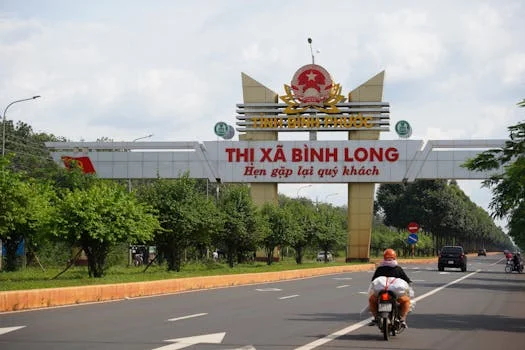
Compliance in Binh Duong is not a one-time event but a continuous regulatory obligation. The primary standard is QCVN 40:2011/BTNMT, which categorizes effluent into Class A (safe for water supply purposes) and Class B (safe for navigation and irrigation). Most industrial parks in Binh Duong require tenants to pre-treat wastewater to Class B before discharging into the park’s central collection network.
The permitting process begins with an Environmental Impact Assessment (EIA) or an Environmental Protection Plan, submitted to Binh Duong’s Department of Natural Resources and Environment (DONRE). This process includes a 30-day public consultation period and typically takes 60–90 days for approval. Following installation, Decree 40/2019/ND-CP requires facilities with discharge volumes over 1,000 m³/day to install automated, continuous monitoring systems. These systems must track pH, temperature, flow, TSS, and COD, transmitting the data directly to DONRE via platforms like iLotusLand.
Recent 2024 updates to QCVN 40:2011/BTNMT have introduced stricter limits on heavy metals. For instance, allowable Chromium VI levels have been lowered from 0.5 mg/L to 0.1 mg/L. This change necessitates the use of advanced oxidation or specialized chemical precipitation, often involving a chlorine dioxide generator for final disinfection and organic polishing. Understanding these regional nuances is as critical as understanding Indonesia’s industrial wastewater regulations and equipment selection when operating across Southeast Asian markets.
How to Select the Right Wastewater Treatment System for Your Binh Duong Facility
Selecting the appropriate system requires a systematic approach that balances technical requirements with financial constraints. Use the following five-step framework to guide your decision-making process.
Step 1: Characterize Your Wastewater. Conduct a comprehensive lab analysis of your raw effluent. Textile effluent, for example, typically shows COD between 800–1,500 mg/L and TSS 300–600 mg/L. Electronics wastewater may have lower COD but requires monitoring for specific heavy metals. Step 2: Match Treatment to Sector. If your primary goal is removing suspended solids and grease (e.g., food or textiles), DAF is the most cost-effective solution. If you need high-purity water for reuse or have limited space, MBR is the superior choice.
Step 3: Evaluate Space Constraints. In Binh Duong’s high-occupancy parks, space is a premium. MBR systems require 60% less space than conventional activated sludge systems, making them ideal for urban industrial zones. Step 4: Calculate Total Cost of Ownership (TCO). Use the formula: ROI (years) = (CAPEX + OPEX) / (Annual Savings + Fine Avoidance). This calculation should be compared against the benchmarks found in Malaysia’s approach to industrial wastewater treatment in high-occupancy industrial parks to ensure competitive operational costs.
Step 5: Vendor Selection. Prioritize suppliers with a proven track record in Binh Duong. HydropureWater’s experience with VSIP and My Phuoc industrial parks ensures that equipment is tailored to local environmental conditions and regulatory expectations.
| Selection Factor | High TSS/FOG (Food/Textile) | High COD/Pathogens (Pharma) | Heavy Metals (Electronics) |
|---|---|---|---|
| Recommended System | DAF + Chemical Dosing | MBR + Disinfection | Chemical Precipitation + DAF |
| Critical Parameter | Bubble size (30-50 μm) | Membrane flux (15-25 LMH) | Dosing accuracy (±1%) |
| Space Requirement | Moderate | Low (Compact) | Moderate |
Frequently Asked Questions
What are the three types of industrial wastewater treatment?
Industrial treatment is categorized into Primary (physical separation like DAF to remove solids/oils), Secondary (biological treatment like MBR to remove organic matter), and Tertiary (chemical polishing or disinfection using chlorine dioxide). Binh Duong facilities often require a combination of all three to meet QCVN 40:2011/BTNMT Class A standards.
Does Vietnam have a sewage system?
While Vietnam has municipal sewage systems, coverage is limited. In Binh Duong, the Thuan An plant handles 17,000 m³/day but primarily serves domestic waste. Industrial parks are legally required to operate their own centralized or individual on-site treatment plants to process industrial-grade effluent before it enters the environment.
Which is the best method for treating industrial wastewater in Binh Duong?
The "best" method depends on the industry. DAF is most effective for food and textile industries (95% TSS removal), while MBR is the gold standard for electronics and pharmaceuticals due to its 99% pathogen removal and compact footprint. Chemical dosing is essential across all sectors for pH control.
Why is industrial wastewater difficult to treat?
Industrial effluent is challenging due to variable pollutant loads, high concentrations of COD/BOD, and the presence of inhibitory substances like heavy metals or synthetic dyes. For instance, textile dye effluent can have COD levels exceeding 1,000 mg/L, requiring a hybrid approach (DAF followed by MBR) to achieve compliance.
What are the penalties for non-compliance in Binh Duong?
Under Decree 155/2016/ND-CP, fines range from 50 million to 200 million VND ($2,100–$8,500) per violation. Repeated offenses can lead to the revocation of environmental licenses and the mandatory shutdown of production lines until the treatment system is upgraded and certified by DONRE.