What a Package Wastewater Treatment Plant Delivers in Malaysia
A package wastewater treatment plant in Malaysia is a prefabricated biological unit for about 10–500 m³/day. Typical designs remove 90–98% BOD and COD when HRT is 6–24 h with adequate equalization. New systems must meet EQSR 2009 Standard A or Standard B before discharge. CAPEX spans RM80,000 to RM2.5 million by capacity and A/O, SBR, MBR, or DAF configuration.
Factories choose modular trains when land is scarce, permits are temporary, or civil windows are short. Most plants we size for Malaysian industrial parks run at the lower end of the HRT range and rely on equalization to absorb shift peaks. Compared with cast-in-place STPs, modular trains often cut installation time by 40–60% for the same hydraulic capacity.
Why Malaysian Sites Specify Modular Package Trains
The Department of Environment (DOE) Malaysia issued 187 enforcement notices for industrial wastewater violations in 2023, a 22% year-on-year rise in the compliance dataset behind this guide. Under the Environmental Quality Act 1974, Section 43, non-compliant facilities face fines up to RM500,000 or up to five years of imprisonment. Palm oil mills and electronics factories accounted for 68% of those notices, often where COD swings overwhelmed undersized aeration or clarifiers.
A Johor electronics plant in the source case faced potential fines of RM3.2 million after heavy metals and COD exceeded Standard B. A 150 m³/day MBR package train reached compliance in 8 weeks, versus about 6 months for a civil-work-heavy STP on the same plot. Speed matters for temporary land-use permits and dense zones where lagoons are not viable.
Land prices in Selangor and Penang, tighter monitoring expectations, and rising process-water costs push owners toward modular assets rather than short-life tanks. For infectious or chemical hospital streams, specialized package plants for Malaysian hospitals and clinics add disinfection and chemical controls beyond a standard municipal train.
Process Flow and Technology Options
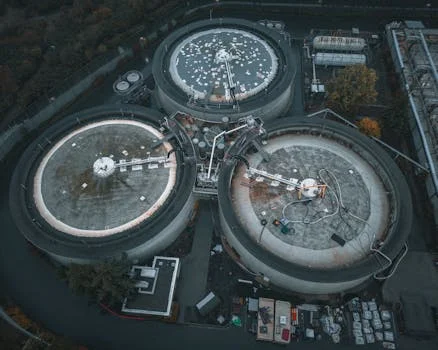
According to the US EPA Package Plants fact sheet (EPA 832-F-00-016), prefabricated plants are commonly applied at roughly 0.01–0.25 MGD (about 38–950 m³/day), with manufacturer ranges from 0.002–0.5 MGD. A Malaysian industrial train usually screens solids, equalizes peaks, treats organics in an A/O, SBR, or MBR reactor, then clarifies and disinfects before discharge. Total HRT of 6–24 h is typical; high-FOG or high-COD streams need longer equalization and pretreatment.
An MBR package plant for high-efficiency BOD/COD removal in Malaysia replaces secondary clarifiers with ultrafiltration, supporting higher MLSS and tighter effluent. A DAF system for Malaysian palm oil mills and food processors is usually the FOG gatekeeper before biology. Where surface land must stay free for production, the Underground Package Sewage Treatment Plant (WSZ Series) buries contact-oxidation volume under the yard.
| Parameter | A/O (Biological) | MBR (Membrane) | SBR (Batch) | DAF (Physical-Chem) |
|---|---|---|---|---|
| BOD Removal (%) | 85–92% | 95–98% | 88–94% | 40–60% (Pre-treat) |
| Footprint (m²/100 m³) | 45–60 | 15–25 | 50–70 | 10–15 |
| Energy Use (kWh/m³) | 0.4–0.6 | 0.8–1.2 | 0.5–0.7 | 0.3–0.5 |
| Sludge Yield (kg/m³) | 0.3–0.5 | 0.1–0.2 | 0.3–0.4 | 0.5–0.8 |
| CAPEX (RM/m³ cap) | 8,000–12,000 | 15,000–22,000 | 9,000–13,000 | 5,000–8,000 |
| OPEX (RM/m³/yr) | 1,200–1,800 | 2,500–3,500 | 1,500–2,200 | 2,000–3,000 |
| Maint. Complexity | 2/5 | 4/5 | 3/5 | 3/5 |
| DOE Class IIA Ready | Requires Tertiary | Yes (Direct) | Requires Tertiary | No (Pre-treat only) |
Earlier marketing copy cited “EPA 2023” MBR versus A/O energy gaps; the EPA package-plant sheet documents extended aeration, SBR, and oxidation-ditch layouts rather than MBR energy ratios. Malaysian sizing ranges in the table still apply: MBR at 95–98% BOD removal typically uses 0.8–1.2 kWh/m³, about 30% more energy and roughly double CAPEX versus A/O at equal flow. Buried WSZ Series underground package plant for Malaysian industrial sites units keep biological contact oxidation under grade when plot coverage binds the layout.
Does Malaysia Standard B Need Secondary or Tertiary Treatment?
Malaysia Standard B sewage discharge is a secondary-treatment target for new plants: BOD 50 mg/L, COD 200 mg/L, and suspended solids 100 mg/L under the Environmental Quality (Sewage) Regulations 2009 (FAOLEX official text). Standard A is stricter (BOD 20 mg/L, COD 120 mg/L, SS 50 mg/L) for Third Schedule catchment discharges. Well-operated secondary biology usually meets Standard B; Standard A often needs polished secondary performance or tertiary solids and nutrient steps when ammonia or nitrate limits also apply.
Earlier site briefs sometimes labelled “Class IIA” river-quality numbers as discharge limits. The NWQS Class IIA/IIB/III values below remain useful as receiving-water context, but enforceable sewage discharge limits for new STPs are Standard A and Standard B in EQSR 2009.
| Parameter | Unit | Class IIA (Strict) | Class IIB (Standard) | Class III (General) |
|---|---|---|---|---|
| BOD5 @ 20°C | mg/L | 20 | 50 | 100 |
| COD | mg/L | 50 | 120 | 200 |
| Suspended Solids | mg/L | 30 | 100 | 150 |
| pH Value | - | 6.0–9.0 | 5.5–9.0 | 5.0–9.0 |
| Ammoniacal Nitrogen | mg/L | 5.0 | 10.0 | 20.0 |
| Oil & Grease | mg/L | 5.0 | 10.0 | 20.0 |
Procurement packages above 100 m³/day often need EIA support, plus written DOE and local council (PBT) approval before install. A Penang food plant kept pH outside 6–9 during seasonal campaigns until an automatic chemical dosing system stabilized neutralization in real time. Common failure modes remain undersized equalization, single-blower aeration with no standby, and sludge storage that cannot hold weekend haul gaps. High-strength organic mills should cross-check the POME treatment guide for Malaysian palm oil mills before locking biology volume.
What Does Upgrading a Package Treatment Plant Cost?
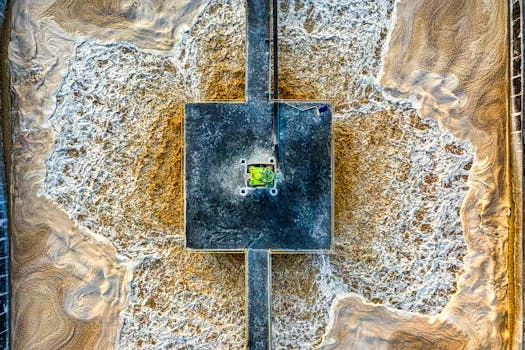
Upgrade cost for modular sewage trains in Malaysia tracks capacity, membrane versus clarifier choice, and remaining civil work. A 100 m³/day MBR train typically lands at RM1.2–1.8 million including civil works, equipment, and commissioning. An A/O train at the same flow may start near RM800,000–1.1 million, then add tertiary filters or dosing if Standard A solids or ammonia limits apply.
| Capacity (m³/day) | A/O CAPEX (RM) | MBR CAPEX (RM) | DAF CAPEX (RM) |
|---|---|---|---|
| 50 | 450k – 600k | 750k – 950k | 300k – 450k |
| 100 | 800k – 1.1M | 1.2M – 1.8M | 500k – 750k |
| 200 | 1.5M – 2.0M | 2.2M – 3.0M | 900k – 1.3M |
| 500 | 3.5M – 4.5M | 5.5M – 7.5M | 2.0M – 2.8M |
Energy usually takes 40–50% of monthly OPEX. With TNB 2024 industrial tariffs around RM0.45–0.60/kWh, blower and membrane scour efficiency dominate the bill. Chemicals add 20–30%. Sludge disposal under the Environmental Quality (Scheduled Wastes) Regulations 2005 can run RM500–1,200 per tonne. One Selangor electronics site cut OPEX about 35% after fitting high-efficiency MBR membrane modules that lowered aeration and cleaning frequency.
Use a simple payback screen: Payback Period = CAPEX / (Annual Avoided Fines + Water Reuse Value + Reduced Disposal Costs). A 200 m³/day plant saving RM350,000/year in avoided DOE exposure and RM120,000/year in recycled process water pays back in about 3.2 years at mid-range CAPEX. Add land lease at RM5–15/m² in industrial zones and annual DOE licence fees of RM5,000–20,000 before approving the tender.
Selection checklist before you buy
Confirm Standard A versus Standard B catchment status with DOE maps. Measure peak and average flow for 7–14 days, not nameplate only. Size equalization for at least one shift peak. Decide FOG pretreatment before biology if oil exceeds about 50–100 mg/L. Require written effluent guarantees tied to your influent envelope. Demand local membrane and blower spares with response times in hours, not weeks. Budget sludge haul and scheduled-waste coding from day one.
Supplier Types and Technical Selection Criteria
Supplier choice is a compliance and service decision, not a quote race. Malaysian bids usually fall into specialized industrial OEMs, Tier 1 international EPCs, and local custom fabricators. Local shops can win on CAPEX, yet often struggle with performance guarantees and long-term membrane support when loads swing.
| Criteria | Specialized Industrial OEM | Tier 1 International Firm | Local Custom Fabricator |
|---|---|---|---|
| DOE Track Record | High (Certified Case Studies) | Excellent (Global) | Variable (Site-specific) |
| Lead Time | 8–12 Weeks | 16–24 Weeks | 6–10 Weeks |
| Customization | High (Module-based) | Low (Standardized) | Very High |
| Local Service | 24/7 Support Team | Third-party partners | Owner-operated |
| Energy Efficiency | Optimized (VFD Controls) | High | Low/Basic |
| Remote Monitoring | Standard (IoT Ready) | Advanced | Rarely Available |
Prefer vendors with DOE-approved references in your sector. Red flags include no local after-sales desk, vague effluent wording, and packages sold without sludge dewatering. Korean investors comparing home-country specs can start with how South Korea’s wastewater regulations compare to Malaysia’s DOE standards before rewriting Malaysian tender sheets.
For flows above 200 m³/day, run a 3-month pilot on about 10% of real influent. A Kedah food processor moved from a local fabricator to a specialized DAF system after repeated FOG violations; pilot data that matched fat peaks brought the site back inside limits within 30 days.
Who This Is For / Next Step
This guide is for plant engineers, EHS managers, and EPC buyers sizing modular trains for Malaysian factories, estates, and compact STPs. Look elsewhere if you need a multi-MLD municipal works or a full zero-liquid-discharge flowsheet. To match capacity, Standard A/B status, and equipment scope to your influent data, request a package plant sizing and compliance review with measured flows and lab results attached.
Frequently Asked Questions
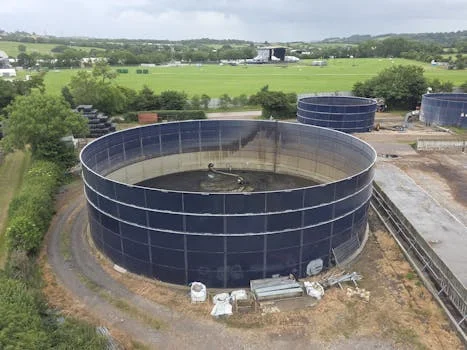
What is the largest package wastewater treatment plant in Malaysia?
The largest DOE-approved modular plant cited in the source cases is a 500 m³/day MBR system at a Penang electronics facility. High-flux modules there achieve about 98% BOD removal at design load. The plant has maintained continuous compliance since commissioning in 2022 under its permitted discharge class.
How much does a 100 m³/day package plant cost in Malaysia?
CAPEX typically ranges from about RM800,000 for an A/O system to RM1.2–1.8 million for an MBR system, including civil works. Annual OPEX often falls between RM120,000 and RM200,000. Energy is usually the largest slice, roughly RM60,000–100,000 per year at TNB industrial tariffs of RM0.45–0.60/kWh.
What are the DOE effluent limits for industrial wastewater in Malaysia?
For new sewage treatment systems, EQSR 2009 Standard B sets BOD 50 mg/L, COD 200 mg/L, SS 100 mg/L, pH 5.5–9.0, and oil and grease 10 mg/L. Standard A tightens those to BOD 20, COD 120, SS 50, pH 6.0–9.0, and oil and grease 5.0 mg/L. Industrial process effluent may instead follow the Industrial Effluent Regulations 2009 Standard A/B schedules for metals and COD.
Can package plants handle high-strength industrial wastewater?
Yes, when pretreatment matches the load. Palm oil mills use DAF to cut FOG from about 5,000 mg/L to below 50 mg/L before biology. MBR trains handle COD loads up to about 2,000 mg/L when equalization and nutrient balance are correct. Without FOG or toxic shock control, biology fails regardless of brand.
What is the lead time for a package plant in Malaysia?
Standard 50–200 m³/day units typically ship and commission in 8–12 weeks. Custom MBR or remote-monitoring packages usually need 16–20 weeks for fabrication, delivery, and site start-up. Civil pads, power, and DOE paperwork often sit on the critical path longer than steelwork itself.