Why Indian wastewater rules are the deal-defining constraint
When AstraZeneca acquires an Indian pharmaceutical plant in 2026, the binding wastewater requirements are: re-application for Consent to Operate (60–180 day SPCB window), Hazardous Waste Authorization under HOWM Rules 2016 (60–120 days), and CETP membership (30–90 days), with discharge meeting CPCB/SPCB limits of COD below 250 mg/L, BOD below 30 mg/L, and pH 6.5–8.5. Draft 2024 norms add antibiotic-residue limits at ng/L levels, and AMR-driven escrow holdbacks of $5–20M have priced into 2024–2025 Indian pharma deals.
The arithmetic that governs the deal is a single ratio. API plant inlet COD typically runs 1,000–10,000 mg/L, with synthesis lines frequently above 10,000 mg/L (per HydropureWater process engineering data, 2026). The discharge cap is 250 mg/L. That is a 4–40× removal challenge compressed into whatever unit-operation chain the seller hands over at signing. A facility that was barely meeting consent at 220 mg/L under seller operation is one solvent batch spill away from revocation, and consent revocation routinely halts production for 6–18 months while a fresh CTO is negotiated (per SPCB enforcement patterns compiled 2025-08). The 2024–2025 deal market confirms the magnitude: multiple pharma acquisitions have triggered 8–15% price chips and $5–20M escrow holdbacks tied to legacy antibiotic-residue exceedances in surrounding groundwater (per trade-press reporting, 2025).
AstraZeneca's AMR Industry Alliance manufacturing framework commitments are what make effluent a board-level issue on an India deal rather than an EHS line item. The Alliance audits owned and supplier sites in India against risk-based, science-based discharge targets for antibiotics, whether or not the local SPCB has set a residue number (per AstraZeneca AMR Industry Alliance disclosures, 2025). The Avlon Works precedent sharpens the point: in 2002, a 12-month EIA delay on AstraZeneca's £20M ETP upgrade added a 12% cost penalty and £250,000 in unbudgeted EIA preparation costs (per UK Parliament Select Committee Record, 2002). The root cause was a contested regulatory interpretation of whether a modified discharge counted as a new discharge. For any cross-border pharma acquirer in 2026, that precedent is the cautionary tale: model the regulator's treatment of permit transfers and ETP modifications before signing, not after.
The three India-specific permits on the critical path
Three India-specific documents sit on the critical path of any acquisition close: the Consent to Operate under the Water Act and Air Act, the Hazardous Waste Authorization under HOWM Rules 2016, and the CETP membership letter. Each is issued to a specific legal entity. A change-of-control clause in the SPA does not transfer the document; it triggers a fresh SPCB application by the new Indian entity (per SPCB procedural guidance, 2025-08).
The Consent to Operate runs a 60–180 day SPCB re-application window. The new Indian entity must hold a valid CTO before any discharge to sewer, CETP, or land. The deal team should treat the re-consent window as a closing condition, not an afterthought. During that window the plant either operates under a discretionary continuation letter, which is revocable, or halts discharge entirely; both outcomes are deal-killers if not pre-negotiated in the SPA. Hazardous Waste Authorization under HOWM Rules 2016 re-issues in 60–120 days. Revocation halts sludge disposal and triggers a show-cause notice, with non-compliance carrying criminal liability under Section 15 of the Environment (Protection) Act, 1986. CETP membership re-issues in 30–90 days; capacity mismatch at the receiving CETP triggers per-m³ surcharges that erode the deal's working-capital forecast.
The US parallel for any US-domiciled AstraZeneca target runs faster but no less strictly. EPA NPDES permits re-issue on a 5-year cycle, but change-of-control still requires a name transfer filing within 30–90 days. 2024–2025 consent-decree cases show that missing that window triggers automatic escalation to a consent order (per EPA enforcement records, 2025). The diligence team should pull the SPCB and EPA portals directly, because data-room versions are routinely out of date by one or two consent cycles.
| Document | Re-issue Window | Operating Risk During Window | Deal Action |
|---|---|---|---|
| Consent to Operate (Water + Air) | 60–180 days | Production halt on revocation; continuation letter is discretionary | Re-application with new PAN/TAN; closing condition |
| Hazardous Waste Authorization (HOWM 2016) | 60–120 days | Sludge disposal stop; show-cause notice; Section 15 EPA liability | Closing condition; re-application in seller's name pre-signing |
| CETP Membership Letter | 30–90 days | Capacity mismatch; per-m³ surcharge | Verify CETP capacity; escrow surcharge risk |
| EPA NPDES Name Transfer (US target) | 30–90 days | Automatic consent-order escalation on miss | Pre-signing filing; acknowledgement as CP |
Mapping the 250/30/6.5–8.5 envelope to your unit-operation chain
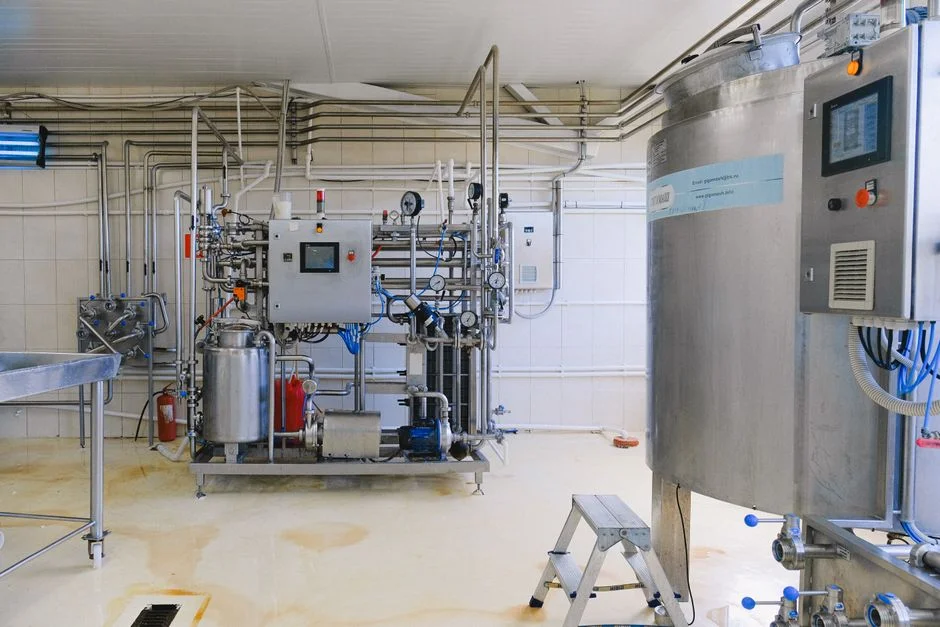
Every retrofit, indemnity trigger, and post-close covenant in this framework is measured against a single compliance yardstick: COD below 250 mg/L, BOD below 30 mg/L, pH 6.5–8.5 (per CPCB/SPCB general discharge standards, compiled 2025-08). The envelope is the constant reference that ties permit transfer, Phase II sampling, unit-operation audit, and SPA trigger language into one arithmetic. The audit team walks the chain end-to-end: screening → grit → O&G → equalization (HRT 6–24 h) → neutralization → coagulation → primary clarification → biological (DO 2–4 mg/L, sludge age 5–15 days) → secondary clarification → tertiary (AC, UF/RO) → disinfection (chlorine residual 0.5–1.0 mg/L at the discharge weir).
Four failure modes account for most envelope misses in Indian API plants. (1) Bulking sludge (SVI >150 mL/g) is the most common cause of secondary clarifier carryover. (2) Nocardia or Microthrix foaming signals prolonged low F/M or oil and grease carryover that coats the biomass. (3) Toxic-shock events from solvent or antibiotic peaks strip biomass within hours and produce a flat DO spike. (4) O&G carryover upstream of the aeration tank suffocates floc and is the single most common root cause of poor BOD removal in older plants (per pharma ETP operations data, 2025). When heavy solvent loads are present, a DAF micro-bubble pre-treatment system upstream of the biological stage is required to prevent biomass inhibition.
Dosing discipline must be verified, not assumed. Neutralization dose is typically 0.56 mg/L CaO per 1 mg/L acidity, jar-test verified (per pharma ETP design data, 2025). Coagulant dose must be re-validated against the current production schedule, because API mix changes can shift optimal dose by 20–40%. For any AstraZeneca biologic transition, the COD:N:P ratio shifts and the existing biological train can be rendered ineffective, a change-of-mix risk that must be modeled in the Quality of Earnings review. Generic wastewater models fail to account for whole-effluent toxicity endpoints, algal growth inhibition, and luminescent bacteria toxicity, all of which are critical for compliance with the EU IED BAT-AEL 2027 milestones. An integrated MBR membrane bioreactor system ensures physical retention of macromolecular APIs, providing a barrier that conventional secondary clarifiers cannot match; for residual API breakdown the polish train should reference activated carbon polishing for residual API breakdown.
AMR-residue risk and the 2024 Indian draft norms
That yardstick is tightening. India's draft pharmaceutical effluent norms notified in 2024 propose antibiotic-residue limits at ng/L levels, mirroring EU practice. EPA's PFAS/PPCP framework updates (2025) and EU IED 2010/75/EU BAT conclusions (2022 update, in force 2026) both treat specific API residues as candidate regulated pollutants with monitoring triggers. Detected exceedances in groundwater or downstream drinking-water sources have driven the 8–15% price chips and $5–20M escrow holdbacks seen in 2024–2025 deals (per trade-press reporting, 2025).
The implication for deal paper is direct: a permit compliant today is non-compliant on re-issue. The buyer's counsel should commission an AMR-aware permit outlook, not a file review. The minimum analytical panel for a Phase II influent/effluent campaign is COD, BOD, TSS, pH, O&G, total nitrogen, target APIs covering the site's manufacturing portfolio (solvents, antibiotics, hormones, and any SVHC-listed compounds), and heavy metals. Antibiotic and hormone residue assays at the outlet, run on LC-MS/MS, are not yet universally required but should be commissioned anyway; they will be required on the next permit re-issue, and the data are the single largest source of 2024–2025 escrow holdbacks.
Retrofit cost bands: what 2026 compliance actually costs
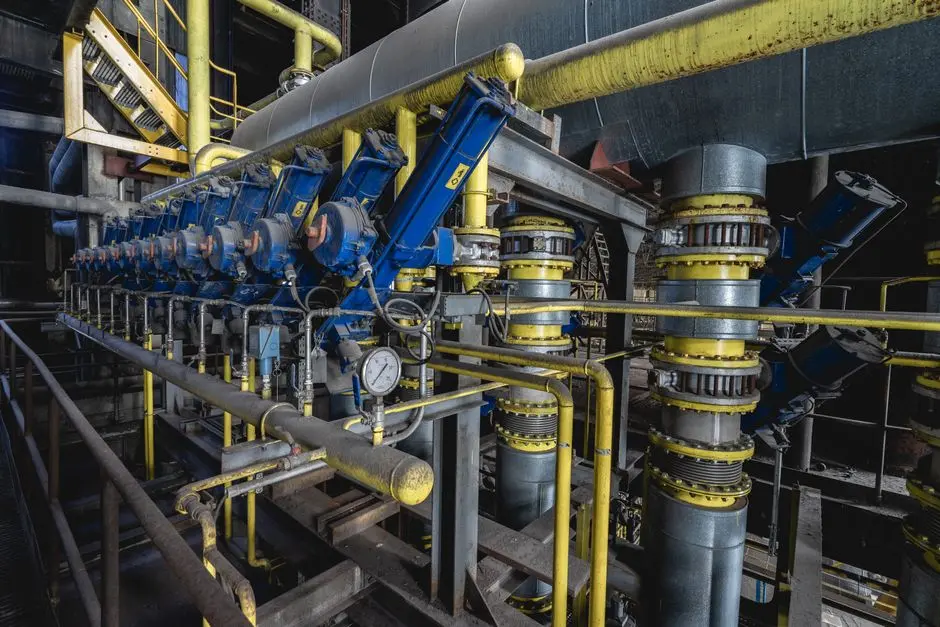
The mapping rule the deal team should underwrite against: spending under $1M typically buys consent renewal; $1–3M buys modern compliance with the 250/30/6.5–8.5 envelope; above $3M is required for ZLD or reuse-grade water for cooling-tower makeup. For a typical 500–2,000 m³/day API plant, the full compliance retrofit lands at $2–6M; ZLD or reuse-grade lands at $6–15M (per internal engineering benchmarks, 2026). These are order-of-magnitude 2026 estimates for greenfield-equivalent installed cost, sized to the inlet load and discharge objective, and should be validated by an EPC advisor before being written into the SPA.
Retrofit line items map directly to the unit-operation chain. A lamella clarifier retrofit at 20–40 m/h surface loading delivers roughly 30% chemical-use reduction and a smaller footprint for primary TSS cut. An MBBR or integrated MBR membrane bioreactor system hits BOD below 30 mg/L and approaches reuse quality. Industrial RO at up to 95% recovery feeds reuse-grade water to the cooling tower. An AOP skid is required for residual API breakdown wherever AMR-residue targets apply. For a high-rate primary step where buffer batch dumps dominate the load, a high-efficiency sedimentation tank sized for ≥1.5× diurnal flow with active mechanical mixing and automated pH control is the lowest-cost entry point. Cross-jurisdiction comparators for retrofits and trigger thresholds, including US state-level NPDES parallels, are documented in the pharmaceutical wastewater treatment engineering guide.
| CAPEX Band (500–2,000 m³/day) | Scope Delivered | Discharge Objective | Deal Treatment |
|---|---|---|---|
| Under $1M | Consent renewal only; minor repairs | Holds current CTO | Closing condition; no price chip |
| $1–3M | Lamella clarifier + MBBR/MBR polish + AC | 250/30/6.5–8.5 envelope | 5–10% equity escrow for 18–36 months |
| $3–6M | Compliance package + RO to cooling tower | Reuse-grade makeup water | Specific indemnity + PLL insurance |
| $6–15M | ZLD: RO + brine concentrator + MEE/crystallizer | Zero liquid discharge | Price chip; regulatory-change cost-share |
Translating retrofit risk into SPA, escrow, and insurance
Convert the retrofit cost into deal structure using four building blocks. First, the buyer holds 5–10% of equity value in escrow for 18–36 months against ETP retrofit cost over-run, consent revocation, and any third-party API claim. Second, the seller gives a specific indemnity for known historical spills, documented non-attainment events, and any pending enforcement action disclosed in the data room. Third, Pollution Legal Liability plus Cleanup Cost Cap insurance covers unknown legacy conditions up to $10–50M for mid-cap deals (per M&A insurance market practice, 2025). Fourth, a post-close compliance covenant obliges the seller to fund continued ETP operation up to closing, with daily influent and effluent logs shared via an online dashboard. Performance-based obligations with quantified KPIs are best structured using performance-based wastewater O&M contracts so that post-close operating risk transfers with measurable accountability.
The environmental schedule should reference specific trigger events rather than general compliance language. Acceptable triggers: any non-attainment of the 250 mg/L COD, 30 mg/L BOD, or 6.5–8.5 pH envelope measured against a 30-day rolling average; any API-in-effluent exceedance against the target list; any third-party damage claim; any show-cause or closure notice from an SPCB or EPA regional office. Vague language such as "material environmental liabilities" invites litigation; quantified triggers convert disputes into arithmetic. Any transaction involving European targets must also incorporate cost-sharing language addressing the EU IED recast BAT-AEL compliance milestones running through 2027, ensuring that the capital costs of upgrading treatment processes are shared equitably. Escrow release milestones must be tied to successful completion of a 12-month post-close water-stewardship commitment, with independent engineering verification.
90-day post-close stabilization plan
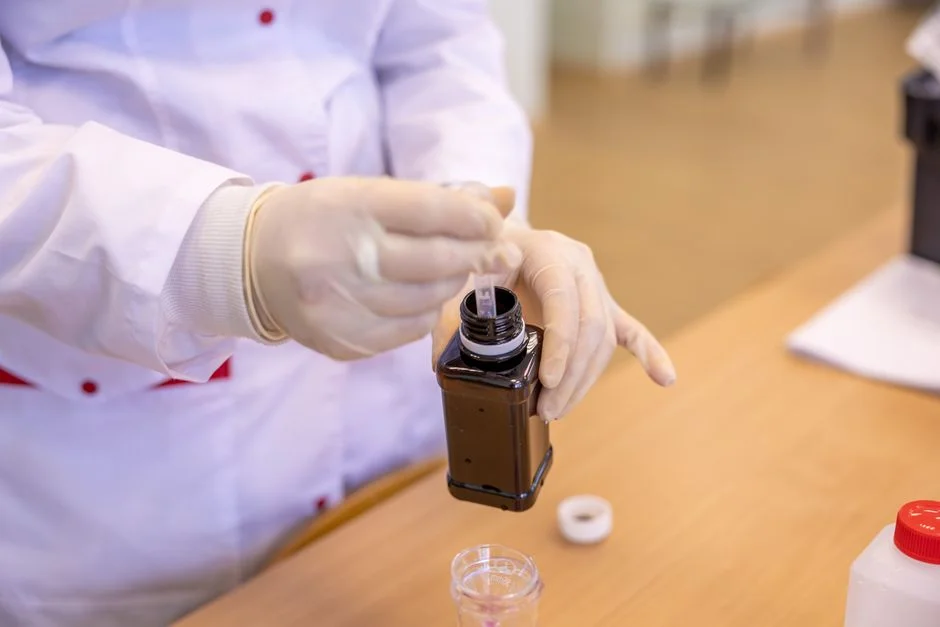
Day 0–30 is stabilization, not construction. Install online telemetry (pH, flow, COD/TOC) at the inlet and outlet, run a 30-day compliance confirmation campaign against the 250/30/6.5–8.5 envelope, and calibrate a PLC-controlled automatic chemical dosing system to the jar-test-validated setpoint. Lock the operator shift roster; a reliable baseline is the only way to measure the retrofit's impact.
Day 31–60 is the priority retrofit window. Execute neutralization upgrades, install a lamella clarifier retrofit where primary clarification is the bottleneck, and tune return-activated-sludge controls to a sludge age of 5–15 days with DO at 2–4 mg/L. These are the lowest-cost, highest-payback moves on the matrix. Day 61–90 is the polish train. Install an MBR membrane bioreactor with a PVDF flat-sheet module for secondary polishing, an industrial RO system for reuse-grade water, and an AOP skid for residual API breakdown. Commission a reuse line to the cooling tower. Experienced EPCs deliver these as skid-mounted, pre-wired, factory-tested modules so the 90-day window holds. For sludge handling across all three windows, a plate and frame filter press rated for 60–80% dry solids cake minimizes off-site disposal volumes and reduces hazardous-disposal cost by up to 60%.
Frequently Asked Questions
Which Indian permits must AstraZeneca re-apply for after a 2026 acquisition?
The buyer must re-apply for the new Indian entity's Consent to Operate (60–180 day SPCB window), confirm Hazardous Waste Authorization under HOWM Rules 2016 (60–120 days), and verify CETP membership (30–90 days). The 250/30/6.5–8.5 envelope is the discharge yardstick that gates each re-issue.
How long is the re-consent window, and what happens during it?
Re-consent at the SPCB runs 60–180 days after a change-of-control event. During the window the new entity either operates under a discretionary continuation letter or halts discharge; both outcomes are deal-killers if not pre-negotiated as a closing condition in the SPA.
What does a compliance retrofit cost for a 500–2,000 m³/day Indian API plant in 2026?
Order-of-magnitude 2026 estimates put a compliance retrofit, covering lamella clarifier, MBBR or MBR biological polishing, and RO, at $2–6M. A ZLD or reuse-grade upgrade lands at $6–15M, and any figure above $3M is required where reuse-grade cooling-tower makeup water is the objective.
Are antibiotic-residue limits enforceable in India today?
Not yet under final rule, but the draft pharmaceutical effluent norms notified in 2024 propose antibiotic-residue limits at ng/L levels, mirroring EU practice. Detected exceedances in groundwater or downstream drinking-water sources have already triggered 8–15% price chips and $5–20M escrow holdbacks in 2024–2025 deals.
What contractual protections should the SPA carry for ETP retrofit risk?
A defensible schedule includes 5–10% equity escrow held 18–36 months against retrofit over-run; a specific seller indemnity for known spills, documented non-attainment, and pending enforcement actions; Pollution Legal Liability plus Cleanup Cost Cap insurance at $10–50M; and quantified trigger language referencing the 250/30/6.5–8.5 envelope on a 30-day rolling average, plus any API-in-effluent exceedance, third-party claim, or SPCB show-cause or closure notice.