Why West Bend Fabricated Metals Plants Need Pretreatment
West Bend, WI sits inside Washington County's metal-fabrication cluster, where stamping, machining, welding, and surface-finishing shops each generate a regulated wastewater signature before a drop ever leaves the building. Stamping presses discharge alkaline cleaners and drawing compounds; CNC machining pushes soluble cutting oils and tramp oils into rinse water; welding cells add fluoride-bearing flux rinse; and surface-finishing lines drop acid pickle liquor, hexavalent chromium from conversion coatings, complexed cyanides from plating, and dissolved copper, nickel, zinc, lead, and cadmium into the floor drain. None of these streams is safe to send to a municipal collection system without treatment — and a single missed step in the metals-removal train is enough to ship a slug of copper or zinc to the POTW and trigger an enforcement action.
For a West Bend fabricator, identify the actual receiving POTW and applicable Wisconsin/local control mechanism. Section403.8(a) makes approved-program duties depend on the stated size, industrial-load, designation and state-responsibility conditions; it is not simply every works above5MGD receiving any industrial waste. Determine the site's categorical processes and SIU status before deciding reports, monitoring or any required slug controls.
The Regulatory Stack: 40 CFR 433, NR 211, and the West Bend POTW
Three overlapping rule sets govern every gallon a West Bend fabricator discharges to the sanitary sewer, and the engineer has to know which number wins for each parameter. 40 CFR Part 433 sets the federal categorical standards for the Metal Finishing point source category — daily-maximum and monthly-average ceilings for the regulated pollutants listed in the next section. Wisconsin NR 211 adopts those federal limits by reference, adds state-level notification, slug-control, accidental-discharge, and hauling-tracking provisions, and authorizes the Department of Natural Resources to enforce them through administrative orders and referrals to the Wisconsin Department of Justice. The Village of West Bend Sewer Use Ordinance then layers local limits on top — usually tighter than the federal numbers for copper, zinc, lead, and ammonia because the receiving WWTP needs headroom against pass-through and interference at its own outfall.
Under403.3(v), categorical industrial users are generally SIUs; there is no25gpd qualifying threshold. A Control Authority may determine a qualifying user non-significant under the stated NSCIU conditions, including no more than100gpd of categorical process wastewater and the other required safeguards. For other users, the definition includes average process discharge of25,000gpd or more (excluding sanitary, noncontact cooling and boiler blowdown),5%or more of average dry-weather hydraulic or organic capacity, or designation for the specified risk. Applicable exceptions/determinations must be checked. Do not turn these tests into only “more than” values. Baseline and90-day compliance reports in403.12 are tied to categorical applicability and specified triggering dates, not an automatic90-day reporting cycle after any SIU designation. Obtain the actual reporting schedule and slug-control determination.
| Regulatory Layer | Instrument | Scope | Enforcer |
|---|---|---|---|
| Federal categorical | 40 CFR Part 433 | Daily-max / monthly-avg ceilings for Cu, Pb, Ni, Zn, Cd, Cr, CN, TSS, O&G, pH | U.S. EPA (delegated to WDNR) |
| Federal general | 40 CFR Part 403 | General prohibitions, slug control, accidental discharge, BMR/90-day reporting | U.S. EPA / Control Authority |
| Wisconsin state | NR 211 | Adopts federal limits, adds state notification and accidental-discharge rules | Wisconsin DNR |
| Local POTW | Village of West Bend Sewer Use Ordinance, Ch. 188 | Local discharge limits, surcharges, SIU permitting, slug-control plan filing | Village of West Bend Utilities / WWTP |
| Receiving-water driver | WPDES Permit WI0024009 | Sets the WWTP effluent quality the local limits must protect | Wisconsin DNR |
Categorical Limits Fabricators Must Hit Before the Sewer
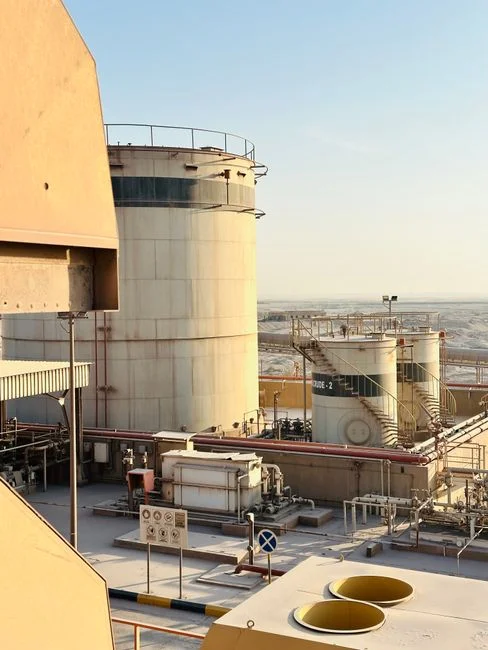
Every operator's station in a West Bend metal-finishing shop should have a single lookup table pinned to the wall. The numbers below are the 40 CFR Part 433 Metal Finishing categorical standards for new and existing sources, paired against typical West Bend POTW local sewer-use limits to show the gap the treatment train has to close. Note that "categorical compliance" is necessary but never sufficient — the most restrictive applicable limit always governs the discharge, and the POTW's own NPDES permit effluent quality drives the local ceiling.
| Parameter | 40 CFR 433 Daily Max (mg/L) | 40 CFR 433 Monthly Avg (mg/L) | Typical West Bend POTW Local Limit (mg/L) |
|---|---|---|---|
| Copper (Cu) | 2.07 | 1.30 | 1.0 |
| Lead (Pb) | 0.43 | 0.28 | 0.20 |
| Nickel (Ni) | 2.38 | 1.10 | 1.0 |
| Zinc (Zn) | 1.48 | 0.93 | 0.75 |
| Cadmium (Cd) | 0.11 | 0.07 | 0.05 |
| Total Chromium (Cr) | 0.74 | 0.46 | 0.50 |
| Hexavalent Chromium (Cr VI) | 0.20 | 0.10 | 0.10 |
| Cyanide (amenable) | 0.86 | 0.32 | 0.20 |
| Total Suspended Solids (TSS) | 49.2 | 24.6 | 30 |
| Oil & Grease (O&G) | 73.0 | 26.0 | 25 |
| pH | 6.0–9.0 (range) | 6.0–9.0 (range) | 6.0–9.0 (range) |
Even small job shops that fall below the SIU thresholds are not exempt. 40 CFR Part 403 General Prohibitions forbid any discharge that causes pass-through, interference, fire, corrosion, obstruction, or slug loading at the POTW, and the Village of West Bend Sewer Use Ordinance applies to every discharger, not just SIUs. A 10-person welding shop that sends a 50-gallon drum of concentrated chromate rinse down the drain is still in violation.
The Treatment Train That Actually Works
Designing a pretreatment system for a West Bend fabricator is a matter of stacking unit operations in the right order so each step prepares the water for the next. Skipping equalization, for example, lets a single batch dump from a plating line push the pH below 2 and short-circuit every downstream reactor; skipping chromium reduction before metals precipitation leaves Cr(VI) in solution at pH 9 and blows the 0.10 mg/L local limit every time. The train below is the configuration the field has converged on, with parameter targets a plant engineer can hand to a programmer or an instrument tech.
- Flow and pH equalization — 8–24 hr hydraulic residence time, mechanical mixing, pH probe linked to caustic dosing, sized for 1.5× peak shift flow so a single batch dump from a plating line does not propagate downstream.
- Cyanide oxidation (only if cyanide-bearing processes are on site) — alkaline chlorination at pH >10, two-stage with ORP +650 mV target, followed by residual chlorine reduction with SO₂ before metals precipitation to prevent free chlorine from carrying through to the clarifier.
- Hexavalent chromium reduction — SO₂ or sodium metabisulfite at pH 2–3 with ORP +250 mV target, holding for 20–30 minutes to push Cr(VI) → Cr(III), then re-neutralize for the metals-precipitation reactor.
- Metals precipitation — NaOH or Mg(OH)₂ dosing to pH 9–10 for amphoteric metals (Cu, Zn, Ni, Pb, Cd); Ca(OH)₂ is cheaper at high flow; iron or aluminum coagulant added at 5–10 mg/L to build floc.
- Clarification — dissolved air flotation system for oil and metals-hydroxide flocs (typical 90–95% metals removal), or a high-efficiency lamella clarifier for high-TSS flows where footprint matters.
- Polishing — a multi-media filter for residual TSS, with optional ion-exchange resin beds to tighten chrome or nickel to <0.1 mg/L when local limits are stricter than categorical.
- Sludge dewatering — a plate-and-frame filter press to 30–40% dry solids for F006 hazardous-waste disposal, paired with a PLC-controlled automatic chemical dosing skid upstream of the press for polymer conditioning.
| Unit Operation | Influent Target | Effluent Target | Key Control Loop |
|---|---|---|---|
| Equalization | Variable pH, flow swings ±50% | pH 7–9, flow variation <±15% | pH probe + caustic dosing on timer |
| Cyanide oxidation | CN > 1 mg/L possible | CN amenable < 0.20 mg/L | ORP +650 mV, two-stage |
| Cr(VI) reduction | Cr(VI) up to 50 mg/L from plating | Cr(VI) < 0.10 mg/L | ORP +250 mV, pH 2–3 |
| Metals precipitation | Cu, Ni, Zn, Pb mixture | Cu < 1.0, Zn < 0.75 mg/L | pH 9.0–9.5, jar tests quarterly |
| Clarification (DAF or lamella) | TSS 200–800 mg/L | TSS < 30 mg/L | Air saturation, polymer dose |
| Multi-media polish | TSS 20–40 mg/L | TSS < 10 mg/L | Differential pressure backwash |
| Sludge dewatering | 0.5–2% dry solids slurry | 30–40% cake for F006 hauling | Polymer, press cycle, pressure profile |
How West Bend Plants Operate the System Day-to-Day
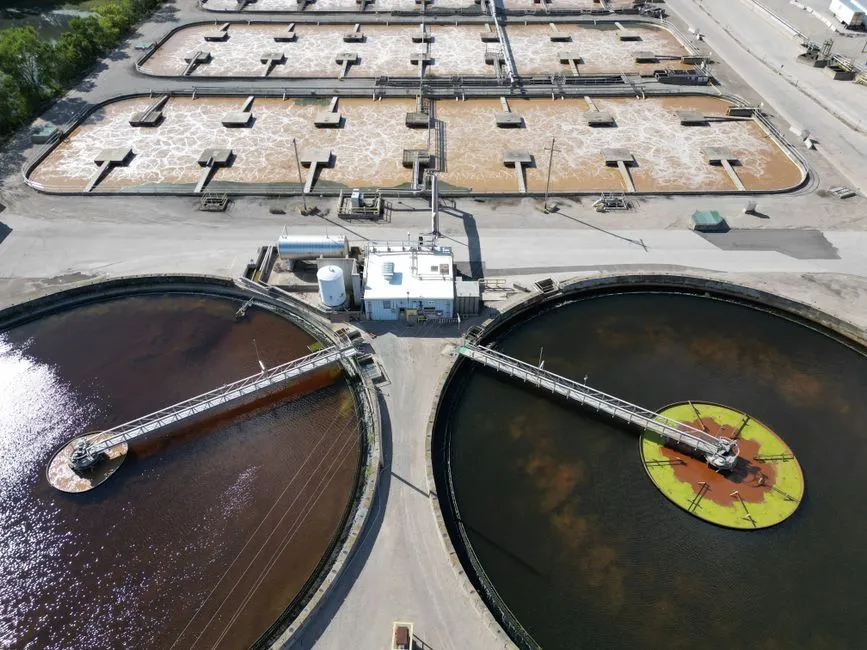
Designing the train is half the job; running it without a permit excursion is the other half. The standard operating cadence for an SIU fabricator in West Bend is: continuous pH and flow monitoring on the equalization tank with chart-recorder or SCADA logging; daily grab samples at the clarifier outlet for pH, TSS, and O&G; 24-hour flow-proportional composite samples at the POTW sampling point for the categorical metals (Cu, Pb, Ni, Zn, Cd, total Cr, Cr(VI), and amenable cyanide). Those composites drive the 90-day compliance reports filed with the Village Utilities Department and the Wisconsin DNR. A written Slug Control Plan has to be on file, with equalization-tank capacity, pH and flow interlocks, and a 24-hour notification procedure for any accidental discharge — call the POTW within 24 hours or face an administrative order.
Three failure modes trip up West Bend operators more than any others. First, pH probe fouling: a dirty probe in the equalization tank will read 8.2 when the actual pH is 6.0, and the plant will dump an acid slug into the clarifier. Clean probes weekly and verify against a handheld buffer. Second, NaOH over-dosing: pushing above pH 10.5 redissolves zinc as zincate and blows the 0.75 mg/L local limit while everything else is in spec. Third, DAF air-saturation-tank issues: a cracked eductor or a failing recycle pump collapses the white-water bubble cloud, metals removal drops from 90% to 60%, and the next morning's composite shows the spike.
Selecting Equipment by Flow Rate and Pollutant Load
Equipment selection for a West Bend fabricator keys to three drivers: average process flow, peak shift flow, and the dominant pollutant load (oil and grease vs. dissolved metals vs. TSS). The CAPEX bands below reflect turnkey installed cost in 2026 for a typical Midwest installation; site work, building enclosure, and permitting are itemized separately.
| Plant Profile | Flow Range | Recommended Train | Turnkey CAPEX Band (2026 USD) |
|---|---|---|---|
| Small job shop (welding, light machining, no plating) | < 10 m³/h | Skid-mounted DAF + chemical dosing skid + small plate press | $120,000 – $220,000 |
| Mid-size fabricator (stamping + machining + rinse lines) | 10 – 50 m³/h | Concrete equalization + lamella clarifier + multi-media polish + plate press | $400,000 – $900,000 |
| Large finisher (full plating line, multiple finishing cells) | > 50 m³/h | Full hydroxide reactor train + ion-exchange polish + belt or plate press | $1,200,000 – $2,500,000 |
Decision framework: pick DAF when oil and grease drives the load, pick lamella clarification when TSS dominates and footprint is constrained, and only add ion-exchange polishing when the Village sewer-use limits are tighter than the federal categorical numbers (a common case for copper and zinc in West Bend). Always include sludge dewatering — hauling a 2% slurry to a TSDF is the single most expensive line item a fabricator can run, and a plate-and-frame filter press pays for itself inside 18 months on polymer and hauling savings alone (per HydropureWater field data, 2025-09). The plate vs belt filter press TCO breakdown walks through the comparison for shops weighing the two technologies. For a broader look at how the DAF stage fits into a full process flow, the DAF process flow diagram walkthrough is a useful reference.
Frequently Asked Questions
What are the EPA categorical pretreatment limits for metal finishing?
Under 40 CFR Part 433, the daily-maximum and monthly-average limits for the core metals are: copper 2.07 / 1.30 mg/L, lead 0.43 / 0.28 mg/L, nickel 2.38 / 1.10 mg/L, zinc 1.48 / 0.93 mg/L, cadmium 0.11 / 0.07 mg/L, total chromium 0.74 / 0.46 mg/L, hexavalent chromium 0.20 / 0.10 mg/L, amenable cyanide 0.86 / 0.32 mg/L, TSS 49.2 / 24.6 mg/L, O&G 73.0 / 26.0 mg/L, and pH 6.0–9.0.
Does a small fabricated metals shop in West Bend need a pretreatment system?
Yes. Any facility discharging process wastewater to the Village of West Bend sanitary sewer is bound by the local Sewer Use Ordinance and the 40 CFR Part 403 General Prohibitions, which forbid pass-through, interference, corrosive discharge, and slug loads regardless of plant size. SIU status only adds BMR and 90-day reporting; the discharge limits themselves apply to every discharger.
What pH is needed to remove copper and zinc from wastewater?
Hydroxide precipitation of copper and zinc is most efficient between pH 9.0 and 10.0. Above pH 10.5, zinc re-dissolves as the soluble zincate anion (Zn(OH)₄²⁻) and the 0.75 mg/L local limit is exceeded even when everything else is in spec — this is one of the most common operating upsets in metal-finishing pretreatment.
How much does a metal-finishing pretreatment system cost in 2026?
Turnkey CAPEX in 2026 runs from $120,000 for a small skid-mounted DAF system serving a job shop at <10 m³/h, up to $2,500,000 for a 50+ m³/h plating line with full reactor train and ion-exchange polish. Chemical OPEX typically adds $0.10–$0.40 per liter treated, dominated by NaOH consumption and sludge-hauling surcharges (HydropureWater field data, 2026).
Is metals-sludge hazardous?
Yes — hydroxide sludge from metal finishing that contains chromium, lead, cadmium, or cyanide is typically listed as F006 hazardous waste under RCRA (40 CFR 261.31) and must be hauled by a licensed Treatment, Storage, and Disposal Facility (TSDF). Dewatering to 30–40% dry solids with a plate press reduces volume by 80–90% and cuts hauling cost proportionally. A useful comparison of the disposal economics is in the inorganic chemicals pretreatment compliance guide.