What 'Leading' Means for a Municipal Wastewater Equipment Supplier in 2026
A municipal facility functions as a chain of unit processes—headworks screening, primary clarification, biological treatment, tertiary filtration, disinfection, and sludge handling—so a supplier qualifies as "leading" only when it can deliver, integrate, and warrant equipment across that entire train rather than a single island. In the U.S., every municipal facility discharges under an EPA NPDES permit, which sets site-specific effluent limits and conditions (US EPA, "Municipal Wastewater").
Equipment must be specified against the permit, not against a generic catalogue curve, and the supplier must be able to defend its selection in writing. Sewer system type drives the front of the plant: combined sewers were designed to carry both sanitary sewage and stormwater, and state and local authorities generally have not allowed construction of new combined sewers since the first half of the 20th century (US EPA). Separate sanitary sewers, by contrast, suffer infiltration and inflow (I/I) during storms, which can cause sanitary sewer overflows and operational stress at the treatment facility (US EPA). The reference benchmark any leading supplier should be able to match or explain is the New York City DEP system: 14 WRRFs treating 1.3 billion gallons of wastewater daily, more than 6,000 miles of sewer pipes, 135,000 catch basins, more than 495 permitted outfalls for the discharge of Combined Sewer Overflows, and 95 pumping stations (NYC DEP, "Wastewater Treatment Plants"). A vendor that cannot speak credibly to that scale, to NPDES documentation, and to wet-weather operating envelopes is not yet a full-train candidate for municipal work.
Headworks and Primary Treatment Equipment
Fine screening serves as the first line of defense at a municipal plant. A rotary mechanical bar screen for municipal headworks protects downstream pumps, valves, aeration diffusers, and biological processes from rags, plastics, and fibrous debris that arrive in the raw sewage stream, and the apertures and cleaning cycle set the upstream boundary for everything that follows. Because combined-sewer cities face large wet-weather surges, existing infrastructure must absorb legacy peaks. Separate sanitary sewers, when not watertight, can receive large volumes of infiltration and inflow during wet weather, causing SSOs and operational problems at the treatment facility (US EPA). Primary treatment equipment must tolerate these flow swings, and screening, grit removal, and primary tanks must be specified for the wet-weather peak rather than the dry-weather average. Dissolved air flotation is a common choice for primary clarification and for FOG and suspended-solids removal in pre-treatment; a DAF system for municipal pre-treatment should be evaluated on surface loading, air-to-solids ratio, and skimmer design at peak flow rather than on nominal throughput alone. Buyers should also ask how the supplier sizes equalization storage and bypass screening to keep debris out of primary tanks when flows exceed design. For a head-to-head view of clarification choices, the DAF vs clarifier selection guide for 2026 details the loading and chemistry trade-offs.
| Equipment | Headworks / Primary Duty | Buyer Request for Proposal Items |
|---|---|---|
| Rotary mechanical bar screen (GX) | Rags, plastics and fibrous debris removal ahead of pumps and biological processes | Aperture size, cleaning cycle, peak-flow hydraulic capacity, materials of construction |
| Dissolved air flotation (DAF) | Primary clarification, FOG and suspended-solids removal | Surface loading at peak flow, air-to-solids ratio, skimmer design, polymer compatibility |
| Grit removal / primary tanks | Sand, silt and settleable solids ahead of biological stage | Peak-flow retention time, scum and grit handling, bypass screening arrangement |
Biological and Membrane Treatment Equipment

Membrane bioreactors combine activated sludge with submerged membranes to deliver near-reuse effluent on a smaller footprint than conventional secondary clarification, making an MBR membrane bioreactor for municipal sewage package a standard for tight sites and reuse duties. The membrane module itself—covered separately as an MBR membrane bioreactor module—is the consumable and performance-defining component, so specifiers should treat the module specification as a first-class procurement line. For small communities, hotels, hospitals, and rural areas where land and operator presence are limited, an underground integrated sewage treatment package plant offers an A/O process in a buried envelope. At larger municipal scales, the Frontiers of Environmental Science & Engineering review of China's 40-year wastewater sector development names four persistent challenges that any "leading" supplier must help the buyer address: underdeveloped sewers, weak sludge disposal, low sustainability of treatment processes, and questionable effluent discharge standards (Zheng et al., "Municipal wastewater treatment in China: Development history and future perspectives", doi:10.1007/s11783-019-1172-x). When screening biological and membrane suppliers, request membrane pore size, MLSS operating range, aeration energy per cubic meter treated, and reference installations at a plant size comparable to the buyer's duty. The membrane fouling prevention in MBR systems guide covers the operating-side controls that keep those specifications consistent over a membrane's service life.
| Process Option | Typical Duty | Buyer Spec Items to Request |
|---|---|---|
| Conventional activated sludge | Carbon and nitrification at large municipal scale | MLSS range, aeration energy per m³, clarifier surface overflow rate |
| Membrane bioreactor (MBR) | Near-reuse effluent, small footprint, strict effluent limits | Membrane pore size, module replacement cost, MLSS operating range, air-scour demand |
| Package / underground A/O plant | Small communities, hotels, hospitals, rural areas | Pre-fabrication standards, buried-loading rating, remote telemetry, operator burden |
Tertiary, Disinfection and Reuse Equipment
Tertiary filtration and disinfection represent the stage where NPDES permit limits are met, as the US EPA establishes discharge limits and conditions for municipal wastewater facilities ("Municipal Wastewater", US EPA). UV is chemical-free and effective against chlorine-resistant organisms, so a UV sterilizer for tertiary disinfection is a common final barrier on reuse trains. Chlorine dioxide supports both drinking-water and wastewater disinfection duties with a different biocide profile, and on-site chlorine dioxide generation must align with the EU Drinking Water Directive 98/83/EC and the WHO Guidelines for Drinking-water Quality wherever a reuse scenario is in scope. Ozone, delivered through an ozone generator for water tank sterilisation, adds an oxidation step that breaks down recalcitrant organics and trace contaminants ahead of the final barrier. Buyers should ask suppliers for validated log-reduction data, lamp or electrode life, and side-by-side operating costs at the design peak flow rather than the average, because the peak determines equipment sizing and permit compliance. The control interface matters too: integration with the SCADA system and with the wastewater telemetry for remote pump stations layer determines whether alarms and dose trimming happen on time.
Sludge Handling and Resource Recovery Equipment
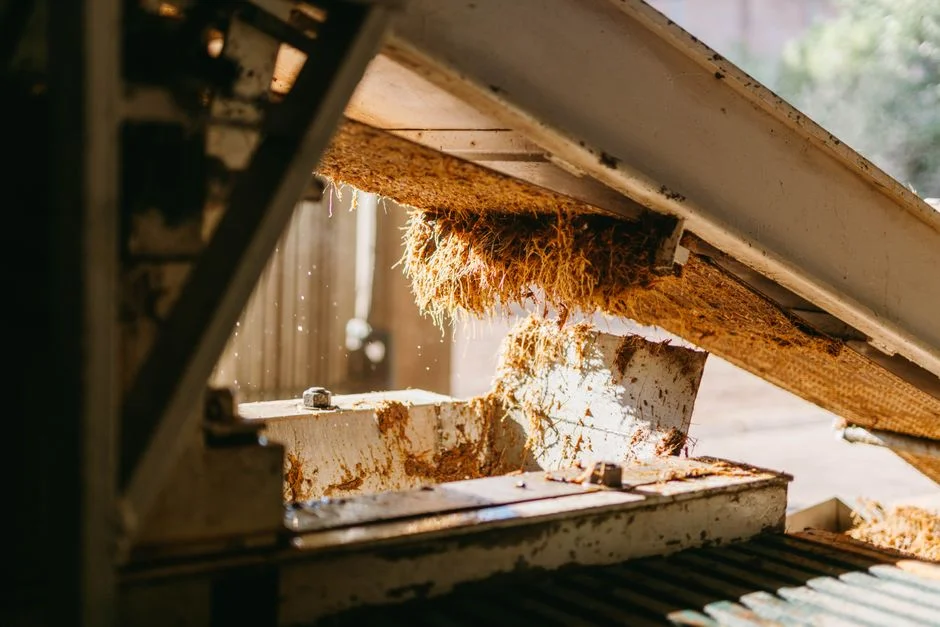
The Frontiers review explicitly identifies underdeveloped sludge disposal facilities as a remaining challenge in the municipal wastewater sector, alongside underdeveloped sewers, low process sustainability, and questionable effluent standards (Zheng et al., doi:10.1007/s11783-019-1172-x). Sludge train capability is therefore a procurement differentiator. A plate and frame filter press for municipal sludge dewatering is a core thickening and dewatering technology; buyers should compare filtration area range, control level, and cake dryness guarantees rather than price alone, because hauling and disposal costs dominate lifecycle spend. A high-efficiency sedimentation tank thickens before dewatering and reduces the hydraulic load on the press. Polymer dosing is a routine operations and maintenance pain point, and an automatic chemical dosing system with a verified polymer preparation and aging control window cuts operator burden and chemical overuse. For utilities running biosolids-to-energy or reuse programs, ask suppliers for thermal hydrolysis, anaerobic digestion integration, and dewatering references at a dry-solids throughput comparable to the plant's design.
Supplier Shortlist Matrix: How to Score Vendors in 2026
A defensible municipal shortlist scores each vendor on five criteria, weighted toward evidence a procurement officer can verify in writing rather than marketing claims. First, full-train coverage across headworks, primary, biological, tertiary, and sludge duty is essential, because a vendor that can only supply one island forces the utility to integrate and warrant the rest. Second, demand reference installations at a comparable scale; a single reference at the 1.3 billion gallons per day class demonstrated by New York City's 14 WRRFs (NYC DEP) is more defensible than ten sub-utility references. Third, require regulatory documentation covering NPDES permit alignment and, for European tenders, the EU UWWTD 91/271/EEC framework, using effluent testing reports rather than catalogue curves as evidence (US EPA, "Municipal Wastewater"). Fourth, evaluate local service and spare-parts density, including water treatment parts, valves and media held regionally, and RO and UF membrane filter elements with documented replacement cycles. Fifth, ensure lifecycle cost transparency across energy, chemicals, membrane replacement, and decommissioning. Weight a wet-weather clause explicitly: combined-sewer and high-I/I catchments require documented SSO and CSO performance, because the US EPA warns that large volumes of I/I can cause SSOs and operational problems at the treatment facility, and significant flow increases can adversely affect treatment efficiency, reliability, and control (US EPA). Require a written 10-year spare-parts and membrane supply commitment—compatibility with incumbent plants is non-negotiable in municipal operations budgets.
| Criterion | What "Good" Looks Like | Evidence the Buyer Should Demand |
|---|---|---|
| Full-train coverage | Headworks through sludge, with single-vessel integration responsibility | Process flow diagram, P&ID, and single warranty covering the train |
| Reference scale | Reference at or above the buyer's design flow, ideally utility-scale (e.g. 1.3 BGD-class) | Signed reference letter, site visit, three years of operating data |
| Regulatory documentation | NPDES-aligned specs, EU UWWTD 91/271/EEC where applicable | Effluent testing reports, not catalogue curves |
| Service and parts density | Regional spares, certified service engineers, 10-year membrane and parts supply commitment | Spares list, lead-time commitments, escalation procedure |
| Lifecycle cost transparency | Energy, chemical, membrane and decommissioning costs broken out | LCC model with assumptions stated and sensitivity tested |
Frequently Asked Questions
Which wastewater equipment suppliers should a municipal utility put on a 2026 shortlist?
Shortlist vendors that can document full-train coverage, a reference installation at a flow comparable to your design duty, and NPDES-aligned performance data. Demand effluent testing reports rather than catalogue curves, and require a written 10-year spare-parts and membrane supply commitment before scoring service and parts density.
What compliance evidence should we require to satisfy NPDES permit conditions?
Require the supplier to provide effluent testing reports from comparable municipal installations, validated log-reduction data for the disinfection step, and a written statement of how each equipment line aligns with the site-specific NPDES permit limits. Ask the supplier to identify the documentation they will hand over for the permit trail; if they cannot name it, they are not yet a compliant-vendor candidate.
Is a package biological plant suitable for a small community upgrade?
Yes, where land and operator presence are limited. An underground A/O package plant is a