Why Kochi Sites Need a Different STP Logic in 2026
Kochi in 2026 is not a generic Indian STP context. Dense urban plots, a high water table, and proximity to the Coastal Regulation Zone mean that conventional open Sewage Treatment Plants with large clarifiers and drying beds are rarely buildable on a residential, hotel, hospital or school footprint. "Domestic sewage" here means the combined black-water (toilets) and gray-water (kitchen, bath, laundry) stream from a residential or institutional site, after a grease trap on the kitchen line — the same two-subsystem split (sewage plus gray water) described in the constructed-wetland case study on the El Dorado system in the Dominican Republic (Sustainability, 2023, doi:10.3390/su152215850).
Any STP specified for Kochi must also handle a highly variable daily flow, because residential and institutional occupancy swings sharply between day and night, on weekdays versus weekends, and across tourist seasons for hotels. The risk model in that same constructed-wetland study is explicit that wastewater treatment systems themselves can become a significant source of environmental pollution — the paper cites the Warsaw plant releases of approximately 3.6 and 4.8 million m³ of raw wastewater into the Vistula in 2019 and 2020, and the Fort Lauderdale, Florida spill of close to 1 million m³. A similar operational failure is documented at the Rothera Research Station STP, which has been "repeatedly subject to operational and technical challenges and at the time of this study was largely not effective" (Environmental Microbiome, 2025, doi:10.1186/s40793-025-00671-z). For a Kochi engineer, the lesson is that under-operated STPs themselves become point sources of pollution, which raises the bar for selecting a decentralized system. This article helps a Kochi engineer pick between an underground packaged A/O plant, a packaged MBR, a vermifilter, and a nature-based planted-gravel filter — the latter already piloted in Kochi at the Elamakkara Government Higher Secondary School (snp.c-hed.org) — using a framework that mirrors a Bhopal-style domestic sewage treatment engineering guide rather than a centralized municipal sewerage brief.
The Four 2026 Options That Actually Work in Kochi
Four treatment options are credible for a 1–500 m³/day domestic site in Kochi in 2026, and they form the shortlist for the rest of this article.
Option 1 — Underground packaged A/O. The HydropureWater WSZ underground packaged A/O sewage treatment plant combines anoxic/aerobic biological contact oxidation with sedimentation and disinfection in a single buried unit, handles 1–80 m³/h, is fully automated with no operator required, and can be installed below grade with landscaping above or trailer-mounted for mobile deployment (HydropureWater verified product catalog).
Option 2 — Packaged MBR. The HydropureWater packaged MBR membrane bioreactor pairs activated sludge with submerged PVDF membrane filtration to less than 1 μm, delivers near-reuse-quality effluent, occupies roughly 60% less footprint than a conventional activated-sludge plant of the same capacity, and is offered from 10 to 2,000 m³/day — covering the upper end of a Kochi residential society or small township.
Option 3 — Vermifiltration. Academic work in IntechOpen describes vermifiltration as "efficient, viable, requires less expertise and can be decentralised," and has been used to treat domestic septic-tank sewage water with measured design parameters and efficiency (IntechOpen, doi:10.5772/intechopen.103920). Its Kochi fit depends on plot area and on the developer's willingness to accept earthworm-based biology.
Option 4 — Nature-based planted-gravel filter. The Elamakkara Government Higher Secondary School pilot routes septic-tank overflow through a Planted Gravel Filter and then a pressurized sand and carbon filter, producing reuse-grade water for irrigation with no odour, no mosquito breeding, and a measurable local cooling effect — demonstrating that NBS is feasible in an urban Kochi setting, not just a rural one (snp.c-hed.org).
Each option can in principle meet domestic-sewage reuse or KSPCB discharge expectations, but only when paired with correct front-end screening, a grease trap, and an O&M plan — a point reinforced by the risk-model findings in the El Dorado study and the Rothera STP case.
| Option | Flow envelope | Footprint signal | Operator skill | Best-fit reuse |
|---|---|---|---|---|
| Underground packaged A/O (WSZ, HydropureWater catalog) | 1–80 m³/h | Buried below grade; can sit under landscaping | Fully automated, no on-site operator | Discharge to drain; landscape irrigation |
| Packaged MBR (HydropureWater catalog) | 10–2,000 m³/day | ~60% smaller than conventional activated sludge of same capacity | Trained operator recommended for membrane care | Toilet flushing, car wash, cooling make-up, gardening |
| Vermifiltration (IntechOpen) | Smaller published envelope; site-specific | Needs filter bed area | Less expertise-dependent than conventional STP | Landscape irrigation after polish |
| Planted-gravel filter NBS (Elamakkara pilot) | Pilot-scale; suitable for schools and clusters | Needs landscaped filter bed plus sand/carbon polish | Decentralized, simple method | Landscape irrigation only |
Kochi-Flavoured Parameter Comparison: A/O Packaged vs MBR vs Vermifilter vs NBS
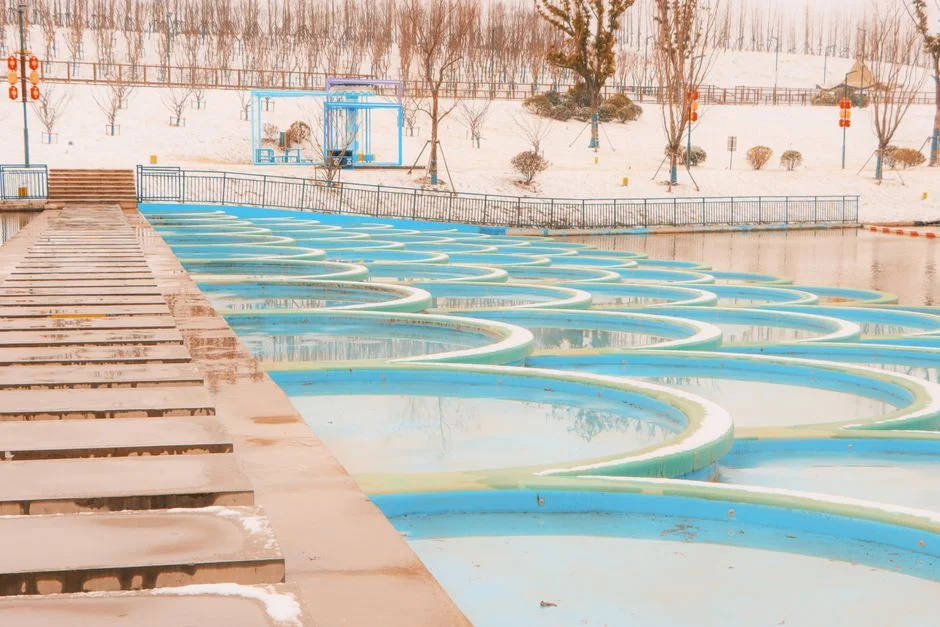
The table below uses only parameters traceable to the supplied research: flow envelope from the WSZ catalog and the HydropureWater MBR catalog, footprint signal from the MBR catalog, decentralized and operator-skill claims from the IntechOpen vermifiltration study and the Elamakkara NBS page, and risk-modeling requirement from the El Dorado constructed-wetland study.
| Parameter | Underground packaged A/O (WSZ) | Packaged MBR | Vermifilter | Planted-gravel filter NBS |
|---|---|---|---|---|
| Source of envelope | HydropureWater WSZ catalog: 1–80 m³/h | HydropureWater MBR catalog: 10–2,000 m³/day | IntechOpen (semi-arid septic-tank context) | Elamakkara Government HSS pilot (Kochi) |
| Effluent quality | Discharge-grade after sedimentation + disinfection | Near-reuse quality at <1 μm filtration | Site-specific; compared against statutory limits in source study | Reuse-grade for irrigation after sand/carbon polish |
| Footprint | Buried or trailer-mounted; landscaping above | ~60% smaller than conventional plant of same capacity | Filter bed area required | Landscaped filter bed plus polish train |
| Operator skill | Fully automated, no on-site operator (catalog) | Trained operator for membrane cleaning and aeration control | Less expertise-dependent (IntechOpen) | Decentralized and simple; consistent monitoring still required (El Dorado risk model) |
| Reuse fit | Landscape; some flushing with site-side control | Toilet flushing, car wash, cooling make-up, gardening | Landscape irrigation after polish | Landscape irrigation (per Elamakkara description) |
| Kochi site-fit signal | High water table, CRZ, tight plot | Higher reuse target, limited footprint | Available land, tolerant client | School, park, residential layout with landscaped area |
All four still need a documented risk model that defines the immediate area and the impact area, two collection subsystems (sewage and gray water), and a grease trap, per the El Dorado case study.
A Decision Framework for Picking the Right STP on a Kochi Site
Use the four steps below to convert the shortlist into a single technology for a specific site.
Step 1 — Plot and water table. If usable area is tight, the water table is high, or the site is close to the CRZ, an underground packaged A/O (WSZ) or a packaged MBR is the only realistic answer because both can be buried or sited on a small structural plinth. The WSZ catalog explicitly allows buried installation below grade with landscaping above, or trailer-mounted deployment, which suits a Kochi plot where the developer would rather not see a treatment plant at all.
Step 2 — Reuse requirement. If the developer wants treated sewage reused for toilet flushing, car washing, gardening, or cooling make-up, packaged MBR is the cleanest fit because of its sub-1 μm effluent and near-reuse quality (HydropureWater MBR catalog). If the only reuse is landscape irrigation, the Elamakkara-style planted-gravel filter train already demonstrates this in Kochi itself. Vermifiltration and packaged A/O can both reach irrigation quality with appropriate polishing, but neither is documented in the research at the sub-1 μm reuse level that an MBR delivers.
Step 3 — Operator skill. If no trained O&M contractor is available, vermifiltration (IntechOpen) and underground packaged A/O (HydropureWater catalog) are both described as low-expertise or fully automated options. MBR requires membrane care; constructed-wetland and NBS systems still need a risk-management plan and consistent monitoring, as the El Dorado risk model and the Rothera STP case both illustrate — the Rothera plant "has been repeatedly subject to operational and technical challenges and at the time of this study was largely not effective."
Step 4 — Compliance posture. KSPCB will ask for design basis, hydraulic balance, and an O&M plan. A packaged plant ships with a tested hydraulic envelope (1–80 m³/h per the WSZ catalog), while a natural system needs the project engineer to build the risk model themselves. The El Dorado paper gives a ready-made structure — define the immediate area within the STP perimeter and the impact area as the receiving basin, identify initiating events such as hydraulic failure or septic-tank overflow, and assign defenses such as screening, grease traps, and automated control. The HydropureWater DF series flat-sheet MBR membrane module is the specific component a Kochi engineer would procure when the MBR branch is selected.
Process Flow That a Kochi Engineer Can Put on a Drawing
The choice between the four options collapses into a P&ID-style sequence that any EPC consultant can drop into a tender drawing.
Inlet works. A HydropureWater GX series rotary mechanical bar screen protects all four downstream options from rags, plastics, and fibrous debris that would otherwise clog membranes or gravel filters — a defense explicitly listed in the El Dorado risk model.
Equalization and grease removal. A balance tank with a grease trap on the gray-water line, matching the two-subsystem (sewage + gray water) architecture described in the El Dorado case study. The grease trap is non-negotiable on a Kochi hotel or hospital site.
Biological step. Anoxic + aerobic contact oxidation for the packaged A/O train (WSZ catalog), or activated sludge coupled to a submerged PVDF MBR module (HydropureWater MBR catalog) for the MBR train. For vermifilter and planted-gravel filter, the biological step is the soil/gravel/earthworm matrix itself — the "filtration process combined with earthworms" described in the IntechOpen source.
Sludge handling. A HydropureWater plate and frame filter press for sludge dewatering dewaters the wasted biosolids so the Kochi site does not have to store wet sludge on a tight plot. Sludge volume reduction is one of the operational defenses that prevents an STP from becoming the kind of point source of pollution documented at Warsaw and Fort Lauderdale.
Disinfection and reuse. A HydropureWater chlorine dioxide generator or UV unit for packaged A/O and MBR trains; in the Elamakkara NBS train the final barrier is the pressurized sand + carbon polish, which the source describes as enough for landscape irrigation but not for human-contact reuse. For an MBR plant, a submerged MBR working principle and engineering specs reference is the right thing to attach to the design basis.
Compliance, Risk, and What to Ask KSPCB Before You Buy
KSPCB expects a design basis, hydraulic balance, and an O&M plan. A packaged plant gives the engineer a tested envelope (1–80 m³/h, WSZ catalog) to anchor that submission, while a natural system needs the project engineer to build the risk model themselves, drawing on the El Dorado framework rather than relying on the supplier's standard documentation. The El Dorado paper specifically recommends defining the immediate area (within the STP perimeter) and the impact area (the receiving basin) before design, and using initiating events such as hydraulic-system failure, septic-tank overflow, and constructed-wetland substrate clogging as the basis for assigning defenses.
When pitching a decentralized or NBS option to KSPCB, cite the Elamakkara pilot as a precedent — it is a real local project, not a literature case study, and it shows that NBS has a working urban reference point in the district. Do not promise reuse water quality the plant cannot deliver: a packaged A/O or MBR supports toilet flushing and gardening; a planted-gravel filter train is appropriate for landscape irrigation only, per the Elamakkara description. Always plan for sludge — a plate-and-frame filter press is the standard way to reduce sludge volume for Kochi site disposal and to keep the STP from becoming a smell and vector problem. For the dosing and disinfection side of the O&M plan, the HydropureWater automatic chemical dosing system and the HydropureWater UV sterilizer are the auxiliary items to spec on the drawing. Finally, treat the plant itself as an asset that needs supervision — remote monitoring of sewage treatment plants is the most practical way to prevent a Kochi packaged plant from repeating the Rothera pattern of repeated operational failure.
Frequently Asked Questions
What budget should a Kochi builder plan for a packaged STP in 2026?
The research supplied to this article documents flow envelopes and footprints, not unit prices. The WSZ catalog gives a 1–80 m³/h capacity range and the MBR catalog gives 10–2,000 m³/day, but neither publishes a price list. A buyer should request a quotation tied to a specific design flow (m³/day) and peaking factor, plus a separate line for civil works, sludge dewatering, and an O&M contract. Without those three numbers, any unit price quoted is not comparable between suppliers.
How do I select the right supplier for a domestic STP in Kerala?
Ask each bidder for the same four documents: a tested hydraulic envelope (the WSZ catalog is a good reference for 1–80 m³/h), a documented O&M plan including remote monitoring capability, a sludge-handling proposal using a plate-and-frame filter press or equivalent, and a compliance package covering KSPCB design basis and hydraulic balance. Suppliers who can supply all four reduce the buyer's risk of ending up with the kind of under-operated plant that the Rothera case study documents.
How do I size a packaged STP for a residential society in Kochi?
Start from the society's daily water consumption in m³/day, apply a sewage-return factor, and add a peaking factor for morning and evening loads — the El Dorado risk model explicitly treats hydraulic variability as an initiating event. Then match the resulting flow against the WSZ envelope (1–80 m³/h, i.e. up to about 1,900 m³/day) or the MBR envelope (10–2,000 m³/day). Submit the calculation as part of the design basis to KSPCB, not as an afterthought.
What compliance risk should a Kochi facility manager plan for before buying?
The El Dorado study and the Rothera case both show that a poorly operated STP is itself a point source of pollution. Before procurement, request the current KSPCB discharge parameters for the specific receiving drain or water body, and confirm whether the chosen train (packaged A/O, MBR, vermifilter, or NBS) can meet those values consistently under Kochi's variable hydraulic load. The risk-model structure from the El Dorado paper — immediate area, impact area, initiating events, defenses — is the format KSPCB will expect to see in the compliance submission.