Why Bhopal Needs Locally Engineered Domestic Sewage Treatment
Bhopal's outer residential colonies — Kohefiza, Bagh Sewania, Kolar Road extensions — have outgrown the septic-tank-plus-soak-pit arrangement that worked when densities were low. A 2018 Zenodo design study for a sewage treatment plant in Kohefiza, Bhopal explicitly chose a physical–chemical–biological train over the conventional septic system because colony density had made soak-pit absorption unreliable (S3, Zenodo 2018). Domestic sewage here is household wastewater carrying physical, chemical, and biological contaminants, and the design objective is an effluent and a sludge that are both safe for discharge and for reuse (S3).
Field data from Indian STPs makes the failure mode concrete. Multi-year STP monitoring along the Upper Ganga (Parida et al., Environ Monit Assess, 2026) found that even operating plants still discharge elevated BOD, COD, and 741–1540 MPN/100 mL total coliforms in treated effluent (S2). For a Bhopal builder or housing society, the practical risk is not whether the STP runs, but whether the effluent clears the local discharge and reuse expectations without a polishing step.
A 2026 Bhopal STP must be specified against three Bhopal-specific conditions: monsoon hydraulic surges on undersized collection lines, limited municipal sewer coverage in peripheral colonies that pushes projects toward decentralised package STPs, and the intended end-use of the treated water — discharge, gardening, or toilet flushing — which sets the polishing bar. These conditions require a design that goes beyond generic "biological STP" data sheets.
What 'Domestic Sewage' Actually Contains in a Bhopal Colony
Domestic sewage in a Bhopal housing colony is a mix of black water (toilets) and grey water (kitchen, bath, laundry) and carries suspended solids, biodegradable organics, nutrients (nitrogen and phosphorus), and pathogens (S3, Zenodo 2018). The load is not constant: morning peaks from bathroom use, kitchen discharge spikes, and monsoon ingress through manholes all change the influent character hour by hour.
Quantitative STP inlet data from Parida et al. (2026) on Indian municipal STPs shows total dissolved solids at the inlet ranging from 166–587 mg/L, with outlet TDS still at 67–446 mg/L (S2). That is an order of magnitude above clean river water and confirms how much dissolved load a Bhopal domestic STP has to handle before any reuse or discharge claim is made.
The same study reports that even after biological treatment, the effluent carried 741–1540 MPN/100 mL total coliforms and 390–654 MPN/100 mL E. coli (Parida et al., S2, 2026). For a Bhopal colony planning to reuse treated water for gardening or toilet flushing, that residual pathogen load is the design-driving parameter, not the BOD number on a vendor brochure.
Designers should insist on representative influent sampling across the dry season, monsoon, and post-monsoon before fixing a design basis. A single grab sample, particularly one taken in winter, will understate the peak BOD and TSS that the biological stage must absorb in July and August.
Design Parameters and MPPCB Effluent Targets for a Bhopal Domestic STP

The Kohefiza, Bhopal design (S3, Zenodo 2018) follows a physical → chemical → biological process flow, and that skeleton remains the 2026 default for Bhopal residential colonies. The biological stage can be conventional activated sludge, A/O contact oxidation, or an MBR, but the upstream screening, grit removal, and equalisation, and the downstream disinfection and sludge handling, are non-negotiable.
Effluent targets should be aligned to MPPCB discharge norms. The supplied research did not contain the exact numerical MPPCB domestic discharge schedule, so the buyer must request the latest limit set directly from the Madhya Pradesh Pollution Control Board before freezing the design. The biological stage should be sized against the 2023–2025 field reality, not textbook averages: Parida et al. (S2, 2026) show that even a working STP leaves residual BOD, COD, and coliforms, so the disinfection stage must be oversized and the polishing step must be capable of cutting coliforms by another 2–3 log units if reuse is the target. The hydraulic design must absorb monsoon peak flows; using only the dry-weather average will undersize the equalisation and blow the biological stage during the first heavy shower.
The table below summarises the influent envelope a Bhopal domestic STP must be designed against and the polishing decisions that follow.
| Parameter | Typical domestic sewage range (Bhopal design basis) | Source | 2026 design implication |
|---|---|---|---|
| Total Dissolved Solids (influent) | 166–587 mg/L | Parida et al., 2026 (S2) | Confirm with on-site TDS logging; design for upper bound |
| Total Dissolved Solids (STP outlet) | 67–446 mg/L | Parida et al., 2026 (S2) | Reuse only if end-use tolerates this TDS; otherwise add RO/UF |
| BOD / COD (residual after biological) | Elevated, exact values not reported in S2 | Parida et al., 2026 (S2) | Disinfection must be sized for residual organics; consider tertiary polishing for reuse |
| Total coliforms (effluent) | 741–1540 MPN/100 mL | Parida et al., 2026 (S2) | Plan UV or chlorination with 2–3 log reduction; reuse requires pathogen polishing |
| E. coli (effluent) | 390–654 MPN/100 mL | Parida et al., 2026 (S2) | Disinfection stage is non-optional; verify post-disinfection counts with lab data |
| MPPCB discharge limits (Bhopal) | Confirm current schedule with MPPCB | Not in supplied research | Request the latest domestic discharge schedule before finalising the design |
| Peak hydraulic factor | Flow variability built into Kohefiza design | S3, Zenodo 2018 | Size equalisation and biological stage on peak hourly flow, not daily average |
For BOD removal method selection and 2026 process choices, see this BOD reduction methods for 2026 reference.
Three Technology Options That Fit a Bhopal Housing Society or Small Township
For the 1–80 m³/h range that covers most Bhopal housing societies, small hotels, hospitals, and township pockets, three technology families dominate shortlists. Each addresses a different constraint — footprint, reuse quality, or operator skill — and each must be paired with a polishing step because conventional biological treatment alone leaves residual coliforms (Parida et al., S2, 2026).
| Technology | Configuration | Flow range | Best fit in Bhopal | Key trade-off |
|---|---|---|---|---|
| Buried package STP (WSZ, A/O contact oxidation + sedimentation + disinfection) | Single buried integrated unit, fully automatic | 1–80 m³/h | Space-constrained Bhopal colonies, below-grade installation with landscaping above | Effluent quality is secondary-grade; add polishing for reuse |
| MBR (submerged PVDF membrane + activated sludge) | Membrane tank inside the biological reactor | 1–80 m³/h (modular) | Sites where treated water must meet reuse quality for gardening or toilet flushing | Higher capex; membranes need periodic chemical cleaning |
| Vermifiltration | Earthworm-assisted trickling filter bed on septic-tank effluent | Decentralised, small flows | Rural Bhopal peri-urban sites with limited power and operator availability | Lower throughput per unit footprint; documented in semi-arid developing contexts (S5, IntechOpen 2022) |
The buried package A/O option is widely used for residential colonies because it sits below grade, needs no dedicated operator, and runs automatically — see the buried package A/O sewage treatment plant in the WSZ series. The MBR option is the right call when the project targets reuse and footprint is constrained, and an MBR system for Bhopal sewage reuse delivers near-reuse-quality effluent. For O&M planning on the MBR route, the MBR O&M guide covers membrane cleaning cycles and chemical wash intervals. Vermifiltration has been documented as a decentralised, low-expertise, low-energy option for domestic septic-tank sewage in semi-arid contexts (S5, IntechOpen 2022), which makes it credible for a peri-urban Bhopal site where grid power and trained operators are limited. None of the three removes the polishing obligation, as residual coliforms reported by Parida et al. (S2, 2026) still persist after standard treatment.
Selecting the Right Capacity and Configuration for a Bhopal Project
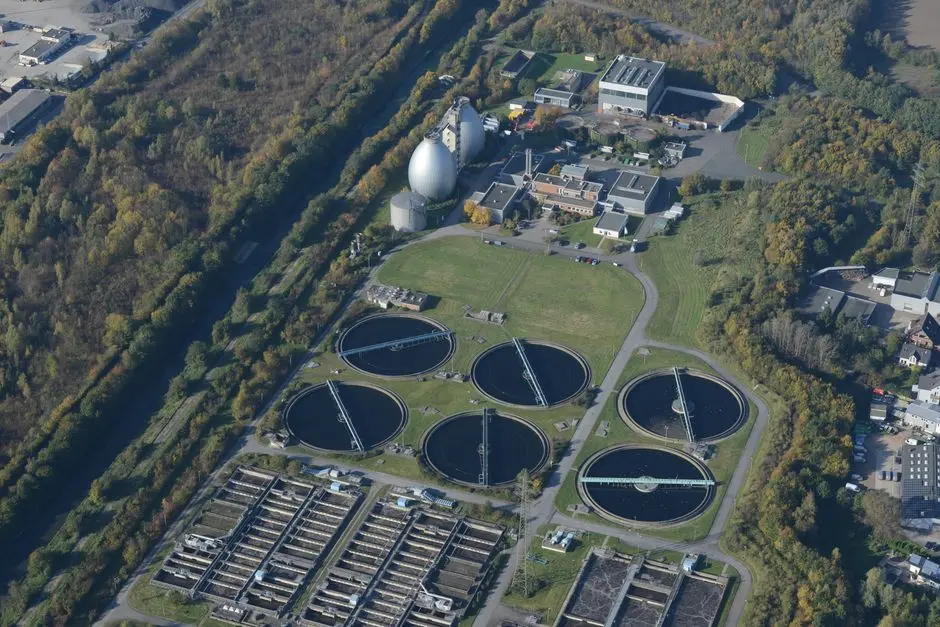
Capacity sizing for a Bhopal housing society, hotel, or hospital starts with per-capita sewage generation — typically 130–150 L per person per day for residential — multiplied by the design population, then multiplied by a peak factor (usually 2.0–2.5) to capture morning and evening spikes (S3, Zenodo 2018). Using the daily average as the design flow is the most common under-sizing mistake in Bhopal colonies, because the equalisation tank and the biological stage both lose performance when the peak factor is ignored.
The second decision is end-use. If the treated water is for discharge only, a conventional secondary train with chlorination may be acceptable, subject to MPPCB limits. If it is for gardening or toilet flushing, the design must add a polishing step — typically UF polishing for STP reuse or an MBR — to bring turbidity, TSS, and coliforms down to reuse quality. Confirm the membrane module sizing with the membrane supplier against the actual STP outlet SDI, not against a generic data sheet.
For housing societies, hotels, and hospitals in the 1–80 m³/h range, a buried A/O package is typically the lowest-footprint and lowest-operator option. An MBR is worth the premium when the project can capture the reuse value, the footprint is genuinely constrained, or the discharge consent is tight.
2026 Cost, Compliance, and Vendor Selection Checklist for Bhopal
No supplied 2026 source quotes Bhopal-specific STP capex or opex. The right move is to request itemised vendor quotations that split tankage, the biological stage, disinfection, automation, and civil works as separate line items, so the buyer can compare like-for-like and audit the package against the influent envelope above.
Ask the vendor to demonstrate, with lab or third-party data, that their quoted unit can meet MPPCB discharge limits for the Bhopal site's expected influent. This is the exact failure mode documented by Parida et al. (S2, 2026): conventional biological treatment alone leaves residual BOD, COD, and coliforms, and a vendor who cannot produce effluent numbers for the Bhopal design case is selling a generic unit, not a Bhopal unit.
Verify the scope: a single integrated package (reactor + blower + disinfection + control panel), factory-tested before dispatch, with installation drawings that account for Bhopal soil and water-table conditions. Confirm commissioning support, operator training, and access to spare parts and consumables — membranes, UV lamps, chemicals — within Madhya Pradesh. Chemical dosing for the disinfection stage is a frequent under-spec item, and an automatic chemical dosing for Bhopal STP setup should be on the BOM from day one, not added as a retrofit.
Frequently Asked Questions
What size STP do I need for a 100-flat Bhopal housing society?
Size on per-capita sewage generation (typically 130–150 L per person per day) × design population (assume 4–5 persons per flat for a Bhopal housing society) × a peak factor of 2.0–2.5; do not use the daily average flow as the design basis (S3, Zenodo 2018). For 100 flats, expect design flow in the order of
Frequently Asked Questions
What size domestic sewage treatment plant is needed for a 100-flat housing society in Bhopal?
For a standard 100-flat housing society in Bhopal, assuming an average occupancy of 4-5 persons per flat and a water consumption rate of 135 liters per capita per day (LPCD), the design capacity should be based on 80% sewage generation. This equates to approximately 45,000 to 55,000 liters per day (45-55 KLD).
Engineering best practices suggest applying a peak factor of 2.0 to 2.5, resulting in a recommended plant capacity of 60 KLD to ensure operational stability during morning and evening peak flow hours.
Which MPPCB discharge parameters must a domestic STP meet in Bhopal in 2026?
In accordance with the latest Madhya Pradesh Pollution Control Board (MPPCB) and CPCB guidelines, treated effluent must meet stringent standards: pH between 6.5 and 9.0, Biochemical Oxygen Demand (BOD) below 10 mg/l, Chemical Oxygen Demand (COD) below 50 mg/l, and Total Suspended Solids (TSS) below 10 mg/l.
Additionally, for safe non-potable reuse in landscaping or flushing, the plant must achieve a Fecal Coliform count of less than 100 MPN/100ml and maintain a residual chlorine level of at least 1 mg/l after 30 minutes of contact time.
Is a buried package STP or an MBR system better for a small Bhopal colony?
For small colonies where land footprint is a constraint, Membrane Bioreactor (MBR) systems are superior because they eliminate the need for secondary clarifiers and tertiary sand filters, reducing the overall plant footprint by 30-40%. MBR systems provide high-quality permeate suitable for immediate reuse, though they require higher electrical consumption and periodic membrane cleaning.
Buried package plants are cost-effective for space-abundant sites but require more frequent sludge removal and offer lower effluent quality compared to MBR. If the colony intends to reuse water for HVAC cooling or gardening, MBR is the technically preferred choice for 2026 standards.
What is the realistic 2026 budget for a domestic sewage treatment plant in Bhopal?
The capital expenditure (CAPEX) for a standard 60 KLD STP in Bhopal ranges from INR 18 lakhs to 28 lakhs, depending on the chosen technology (MBR versus conventional Moving Bed Biofilm Reactor). This cost typically covers civil works, mechanical equipment, electrical panels, and initial commissioning.
Operational expenditure (OPEX) should be budgeted at approximately INR 15 to 25 per cubic meter of treated water, accounting for electricity, chemical dosing, sludge disposal, and routine maintenance of specialized components like membranes or blowers.
How do I choose a reliable STP supplier and installer in Bhopal?
Select a supplier who possesses a valid registration with the MPPCB and can provide a list of operational sites in Bhopal or similar climatic zones in Madhya Pradesh. Verify their technical capability by requesting performance data from their existing installations, specifically focusing on BOD and TSS logs from the last 12 months.
Prioritize vendors who offer a comprehensive Annual Maintenance Contract (AMC) that includes 24/7 remote monitoring or rapid on-site response within 12 hours. Ensure the contract explicitly mandates a performance guarantee for the treated water quality and provides a warranty on critical electromechanical parts for a minimum of 24 months.