Why Small Greek Communities Need Their Own Wastewater Logic
Greece is 80% mountainous, has roughly 3,000 islands and almost 18,000 km of coastline, with Olympus at 2,919 m as the vertical reference. The 2014 national inventory — the most recent published snapshot — counted 254 urban WWTPs serving 91% of the connected population at a combined capacity of about 1.74×10⁶ m³/day, with 83% providing biological nitrogen removal, 57% biological phosphorus removal, and 93% tertiary disinfection (per the MDPI mini-review of Greek urban wastewater, 2020-08). That 91% figure is the national headline. The remaining 9% is not a small residual; it represents roughly 2.5 million p.e. in agglomerations below 2,000 inhabitants, which EU Directive 91/271/EEC exempts from mandatory sewerage and which still depend on septic tanks and soil absorption (S3, 2020-08). Add the projected 18% precipitation drop by mid-century and 22% by 2100 (S3), and the geography forces a design problem that the EU Directive cannot solve by centralisation: a small community wastewater system in Greece is, by default, a decentralised one, sitting on karst, on a slope, or on a non-interconnected island.
For this article, "small community" means 200–6,500 p.e. — the band that includes the Palio electrocoagulation field study (S5, 2022-03) and the upper limit of what a single package plant, an SBR train, or a two-train MBR can absorb without becoming a conventional medium-size WWTP in disguise.
Regulatory and Reuse Framework That Governs the Design
The binding instrument is Directive 91/271/EEC, as amended by Directive 98/15/EEC on urban wastewater treatment and disposal (per the MDPI review, 2020-08). For agglomerations under 2,000 p.e., the directive does not require collecting systems — which is exactly why decentralised solutions exist as a market in Greece, and exactly why discharge quality is governed by national and regional permits rather than by Article 5 effluent tables. The relevant adjacent instrument for any reuse case is Regulation (EU) 2020/741 on minimum requirements for water reuse, with EU Drinking Water Directive 98/83/EC and the WHO Guidelines sitting behind any potable or food-crop endpoint.
Two quantitative targets anchor the design envelope. First, the 93% disinfection coverage of the national WWTP fleet is the de facto tertiary benchmark any new small plant should match or exceed, even though the directive itself does not impose it on <2,000 p.e. sites. Second, the carbon benchmark: Greece has committed to a 40% GHG reduction by 2030 versus 1990 levels, and the literature recommends a <2 kg CO₂e/m³ ceiling (current national average ≈2.2) and 0.8–1 kg CO₂e/m³ for anaerobic/anoxic/oxic configurations (S3, 2020-08). In practical terms, an island SBR running on diesel generation cannot meet that target; a PV-assisted MBR or a constructed-wetland polish on a secondary effluent can.
Reuse is the third pillar and the one most exposed to climate risk. The EU Joint Research Centre projected at least a 20% increase in water-resource pressure by 2050 versus 2010 in Greece (cited in S3, 2020-08), yet only 13% of Greek WWTPs currently practise reclaimed-water reuse for agricultural irrigation (S3, 2020-08). Any 2026 small-community design that ignores reuse is signing a retrofit obligation for 2035.
Five Technologies Compared for 200–6,500 p.e. Settlements
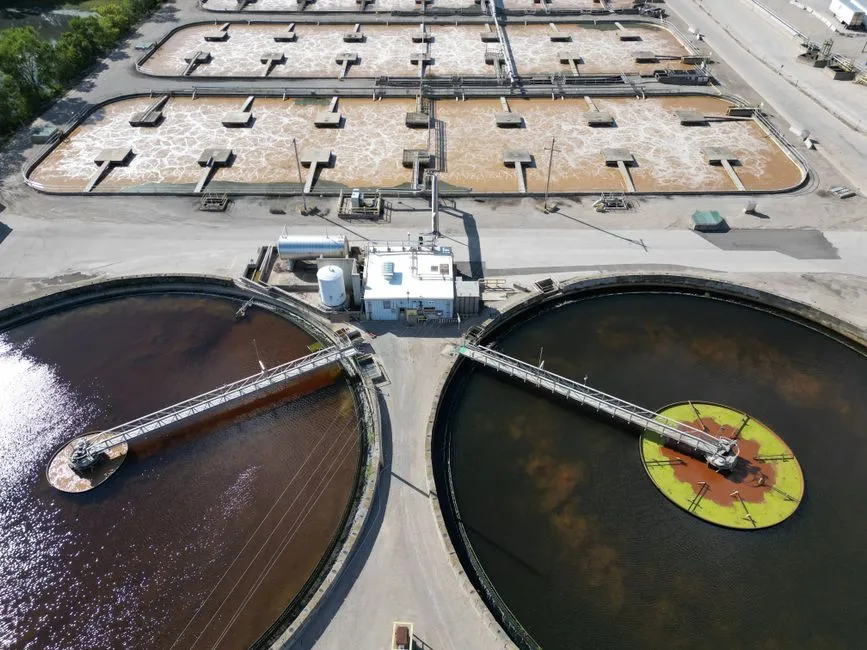
Five process trains cover practically every Greek small-community brief. Septic/soil absorption remains the baseline. Package A/O (the WSZ buried family), SBR, MBR, and constructed wetlands are the engineered upgrades. A PV-powered electrocoagulation pretreatment is treated separately in the case study because it is a polishing or pre-concentration step, not a stand-alone train. The table below is a procurement-side shortlist, not a final selection — sites still need hydraulic and load verification.
| Technology | Typical p.e. range | Footprint band | Effluent BOD / COD / TSS (typical) | Energy kWh/m³ | Reuse-readiness | Climate sensitivity |
|---|---|---|---|---|---|---|
| Septic tank + soil absorption | ≤200 p.e. (single cluster) | Large land take; subsoil-dependent | ≈30 / 100 / 30 mg/L (soil-polished) | 0 (passive) | Low — discharge to subsoil only | High — fails in heavy rain or karst |
| Package A/O (WSZ) | 200–1,500 p.e. | Buried, no surface building | ≈20 / 90 / 20 mg/L with disinfection | 0.4–0.7 | Medium — needs UV/ClO₂ polish for reuse | Moderate — buried = insulated |
| SBR | 500–5,000 p.e. | 0.4–0.8 m²/p.e. | ≈15 / 80 / 20 mg/L with decant | 0.6–1.0 | Medium — needs tertiary for reuse | Moderate — winter nitrification drops unless heated |
| MBR | 500–6,500 p.e. | ≈60% smaller than CAS at same load | <5 / <30 / <1 μm absolute (membrane) | 0.8–1.4 | High — direct feed to UV or RO | Low–moderate — enclosed, less weather-exposed |
| Constructed wetland (VF/HF) | 200–2,000 p.e. | 5–10 m²/p.e. | ≈20 / 80 / 20 mg/L (summer); +20–40% in winter | 0.05–0.2 (pumps only) | Low–medium — polishing step usually added | High — seasonal performance swing documented (S1, 2001) |
For buried sites with no operator presence, a buried package A/O plant for 1–80 m³/h is the default. For any site where the reuse endpoint is golf-course, hotel grounds, or municipal irrigation, a submerged MBR system for 10–2,000 m³/day removes the TSS risk that blocks downstream UV or RO. Constructed wetlands are the lowest-energy option, but the seasonal performance swing is real and must be designed around, not ignored (S1, ASABE 2001).
Case Study: A 6,500 p.e. Northern Greek Community on PV-Powered Pretreatment
Palio is a small community in northern Greece at 40.9° N, 24.4° E, with a base population of roughly 2,000 p.e. that can spike to 6,500 p.e. in the touristic summer months (S5, MDPI 2022-03). The site cannot easily be tied to the Kavala city sewer because of topography, which is exactly the constraint that recurs across the Greek mainland and the islands. A 24-hour composite sample was treated by an Fe/Al electrocoagulation cell at three current densities (6, 12 and 24 mA/cm², i.e. 150, 300 and 600 mA) and five contact times (60 to 300 min). The operating point that survived engineering scrutiny was 60 min at 300 mA with Al/Fe electrodes, removing approximately 55% of COD at a specific consumption of 0.012 kWh/L (12 V) — a pretreatment level, not a discharge level (S5, 2022-03).
The energy case matters more than the chemistry case for an island or off-grid village. Palio has a mean daily horizontal solar radiation of 4.28 kWh/m²/day. RETScreen modelling of an upscaled PV-powered electrocoagulation train returned roughly 93% grid-CO₂ reduction versus the natural-gas-mix baseline, or about 2,105 t CO₂ avoided in the local area annually (S5, 2022-03). The honest caveat is that electrocoagulation is a pretreatment. A biological polishing step is still required for any discharge or reuse permit — which is why a downstream RO polishing train is the natural pairing for a site targeting agricultural reuse, not a competitor to the EC cell.
Disinfection and Reuse: Closing the Loop to Tertiary Standards
The 93% disinfection coverage across the national WWTP fleet is the empirical benchmark for what a "compliant" Greek effluent looks like in 2026 (S3, 2020-08). For a small community plant, the realistic way to land there is to choose between UV and on-site generated chlorine dioxide rather than bulk hypochlorite. UV is the chemical-free default and is the only practical technology against chlorine-resistant Cryptosporidium and Giardia; a chemical-free UV disinfection stage sized to a 40 mJ/cm² fluence handles the pathogen target without producing DBPs. Where a residual is required by the discharge permit — common in irrigation reuse — an on-site ClO2 generator compliant with EU Drinking Water Directive 98/83/EC and the WHO Guidelines, with outputs from 50 to 20,000 g/h, covers capacities from a 200 p.e. hamlet to a 6,500 p.e. seasonal resort.
Before disinfection, a high-rate TSS polish is the cheapest insurance against UV transmittance loss and membrane fouling. A lamella clarifier polishing step at 20–40 m/h surface loading rate routinely cuts coagulant demand by up to 30% and protects the downstream UV or MBR from hydraulic shock. The reuse argument is no longer optional: the JRC 20% water-stress projection by 2050 (S3, 2020-08) and the 13% current reuse rate mean that any new plant designed only for discharge is designing for a permit modification within a decade.
Why a 2026 Antibiotic-Resistance Lens Matters for Greek Small Systems
The August 2026 baseline study at the Patras municipal WWTP reported that, among 16 E. coli isolates from untreated influent, 14/16 were non-wild-type for meropenem and 15/16 for ciprofloxacin, while only 1/16 was non-WT for ampicillin; blaTEM was the most frequently detected ARG in E. coli, and intI1 and sul1 were detected in subsets of P. aeruginosa isolates (Anastopoulou et al., Microorganisms 14(8):1714, 2026-08, DOI 10.3390/microorganisms14081714). All 13 P. aeruginosa were wild-type for meropenem but non-WT for ciprofloxacin; all 17 Enterococcus spp. were wild-type for vancomycin and ampicillin.
For a small-community designer, the operational translation is straightforward: any new plant within the catchment shadow of a hospital, a port, or a dense tourist cluster should be specified with ARG-relevant polishing in the base scope — UV plus ClO₂ for non-potable reuse, or MBR with absolute barrier integrity (<1 μm) where the discharge goes to an irrigation scheme. The 2024 revision of the EU Urban Wastewater Treatment Directive imposes quaternary treatment obligations on plants above 150,000 p.e.; small Greek plants are below that threshold today, but designing with headroom costs little at the small scale and avoids a forced retrofit when the line is redrawn.
Decision Framework: Matching Site Conditions to Technology
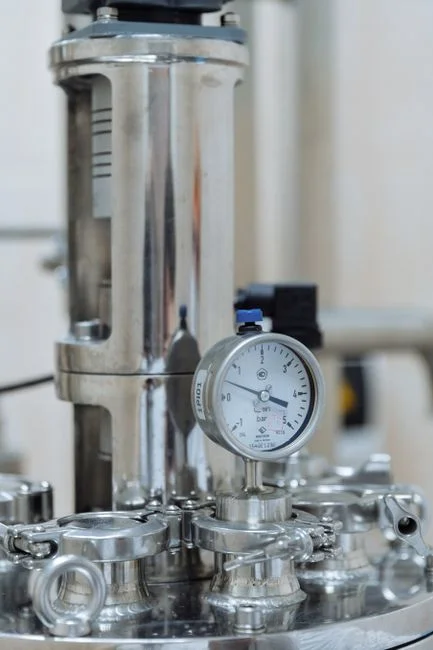
Four questions, in order, resolve most small-community briefs. Q1 — population and seasonality: below 500 p.e. and stable, specify a package A/O or a constructed wetland; 500–2,000 p.e. with a clear tourist peak, size an SBR or MBR with an upstream equalisation tank. Q2 — discharge endpoint: surface-water body, secondary plus UV/ClO₂ is enough; irrigation reuse, push to MBR or MBR-RO; short sea outfall with good dilution, secondary plus disinfection remains defensible. Q3 — terrain: a flat, buildable footprint suits a buried WSZ; karstic or rocky sites force above-ground MBR or SBR; an island with a credible solar resource and a population that doubles or triples in summer fits the PV-electrocoagulation-plus-MBR architecture demonstrated at Palio (S5, 2022-03). Q4 — operator skill: zero on-site operator means a fully automated package with remote alarms; a trained municipal crew can run an SBR or MBR with a SCADA control layer for fully automated small WWTPs. For sites on karst where the package plant is buried and intermittent, a troubleshooting playbook for buried package plants is the operational backstop. Plants targeting potable-grade polish should plan membrane protection with a UF stage upstream of any RO to control SDI.
Frequently Asked Questions
What qualifies as a "small community" wastewater system in Greece under EU rules?
An agglomeration below 2,000 p.e., which Directive 91/271/EEC exempts from mandatory sewerage; this covers roughly 2.5 million p.e. in Greece that still rely on septic tanks (per the 2020 MDPI review of Greek urban wastewater).
Which technology fits a 2,000–6,500 p.e. Greek village with a summer tourist peak?
An MBR or SBR with upstream equalisation handles the 2–4× seasonal load swing; the Palio study demonstrated PV-powered electrocoagulation pretreatment at 60 min, 300 mA, removing ≈55% COD at 0.012 kWh/L (MDPI 2022-03).
What is the de facto national benchmark for disinfection in 2026?
93% of the Greek WWTP fleet provides tertiary disinfection, with 91% of the population connected to 254 plants treating 1.74×10⁶ m³/day (per the 2014 inventory, summarised in the 2020 MDPI review).
Does the 2024 EU UWWTD revision force quaternary treatment on small Greek plants?
No — the revision targets plants above 150,000 p.e., but a 2026 baseline at Patras found 14/16 E. coli non-wild-type for meropenem, so designing small plants near hospitals or dense tourist sites with UV plus ClO₂ or MBR polishing is prudent headroom.
What is the carbon target a new small Greek WWTP should aim for?
Less than 2 kg CO₂e/m³ as a national ceiling, with 0.8–1 kg CO₂e/m³ achievable in anaerobic/anoxic/oxic configurations (Koutsou et al., cited in the 2020 MDPI review); the Palio PV-EC system modelled ≈93% grid-CO₂ reduction (MDPI 2022-03).