What Counts as a Small Community WWTP in Portugal in 2026
A Portuguese small community wastewater system typically serves agglomerations under 2,000 population equivalents (PE) and must comply with EU Directive 91/271/EEC, with additional obligations from the 2024 revision (EU 2024/3019) that Member States — including Portugal — must transpose and apply from 2026 onward. Under 91/271/EEC, secondary treatment is required for all discharges from agglomerations above 2,000 PE; nitrogen and phosphorus removal becomes mandatory for discharges to sensitive areas above 10,000 PE, and stricter effluent limits (BOD₅ ≤ 25 mg/L, COD ≤ 125 mg/L, TSS ≤ 35 mg/L) apply (per EU Directive 91/271/EEC, Annex I). The 2024 revision (EU 2024/3019) layers in micropollutant monitoring, energy-neutrality targets for plants above 10,000 PE by 2040, and explicit obligations for small agglomerations below 2,000 PE that were previously ambiguous — Portugal's transposition timeline runs from 2026 through 2030, which directly affects 2026 capex submissions.
As an international cross-reference, the U.S. EPA defines a small community as one with 10,000 or fewer people and an average daily wastewater flow below 1 million gallons (~3,785 m³/day) (EPA, About Small Wastewater Systems, 2024). That ceiling is roughly twice the hydraulic envelope of a 2,000 PE Portuguese parish at 200 L/person·day, so the Portuguese small-community segment is hydraulically tighter than the EPA bracket — useful context for EPC partners working on both sides of the Atlantic.
National co-financing has historically flowed through the PEAASAR strategic plan (Plano Estratégico de Abastecimento de Água e Saneamento de Águas Residuais) and the PNUEA (Plano Nacional de Uso Eficiente da Água). These programmes funded most of the 165-plant dataset still cited in Portuguese WWTP literature and remain the typical route for parish-level upgrade applications in 2026. For a parallel decision framework in a comparable jurisdiction, see the parallel French small-community engineering guide and the parallel German small-community engineering guide.
Portugal's Small Community WWTP Track Record: What 165 Plants Tell Us
Portugal's national wastewater service level rose from 55% in 2000 to 80% in 2006, with continued growth into 2013 (source: S3, ScienceDirect 2009). That expansion is the dataset most Portuguese engineers still use as a cost anchor: 165 WWTPs commissioned between 2002 and 2004, grouped into four population bands and analysed in terms of investment per capita. For the lowest band — plants up to 2,000 PE — the average investment was about €800 per inhabitant, versus roughly €89 per inhabitant for plants above 30,000 PE, a ~9× ratio that explains the structural preference for natural systems and package plants at parish scale (source: S3).
The same study notes that unit costs for the sub-2,000 PE band vary widely with served population and, to a much smaller extent, with treatment type — meaning the headline €800/inhabitant is an average, not a budget line (source: S3). These 2002–2004 figures are denominated in 2009 €; any 2026 capex submission must escalate them with Portuguese construction cost indices (e.g., ICE Indices de Custos de Construção) rather than treat them as current prices. Constructed wetlands are highlighted in the same dataset as a lower-cost, lower-energy option that performs well on three Portuguese sustainability-indicator groups — environmental, economic, and social (source: S3).
The condensed dataset that engineers still quote is:
| Population band (PE) | Average investment (€/inhabitant, 2002–2004) | Dominant technology mix |
|---|---|---|
| ≤ 2,000 | ~€800 | Constructed wetlands, package biological, oxidation ditches |
| 2,000–10,000 | ~€250–€400 (interpolated) | Package A/O, SBR, small conventional activated sludge |
| 10,000–30,000 | ~€150–€200 (interpolated) | Conventional activated sludge, SBR |
| > 30,000 | ~€89 | Conventional activated sludge, nutrient removal |
For a vendor-agnostic framework that puts numbers like these into a wider 2026 cost context, see the framework for comparing wastewater treatment solutions. Engineers should also reference 2026 cost benchmarks per MGD for water and wastewater infrastructure to convert the legacy €/inhabitant figures into a defensible 2026 envelope.
Three Technology Families for Small Portuguese Communities
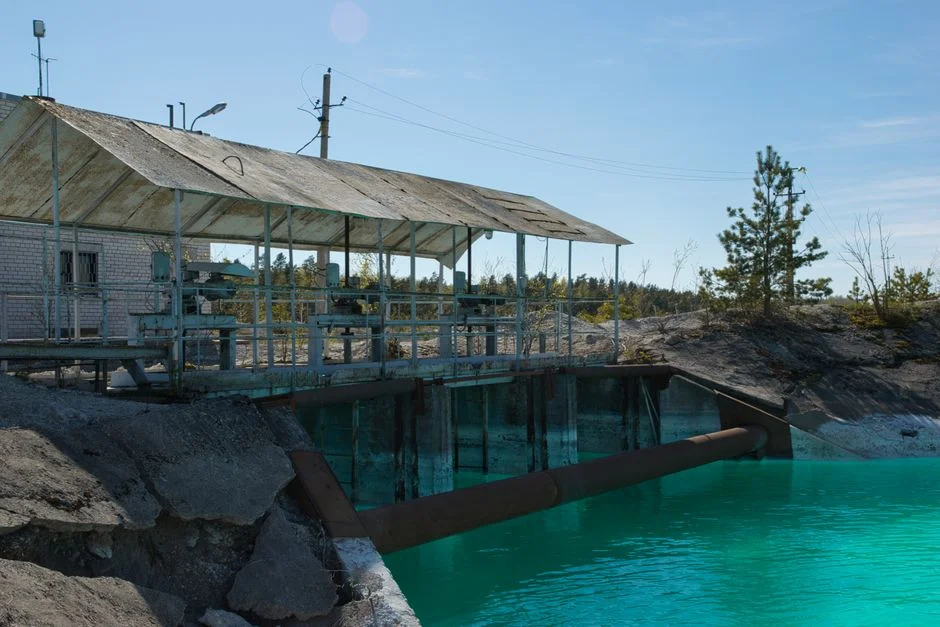
The realistic technology menu for a Portuguese parish WWTP in 2026 sits in three families, each with a defensible niche. Natural systems — typically horizontal- or vertical-flow constructed wetlands — deliver low energy and low operating cost but need 5–10 m²/PE of land and show seasonal performance variation, particularly for ammonia, which the ASABE study on four full-scale systems documents in detail (source: S1, ASABE, doi:10.13031/2013.6072). The same study reports that pairing anaerobic pretreatment with constructed wetlands produces both energy savings and atmospheric carbon reduction through retention of long-chain carbon compounds — a meaningful argument for parish boards with carbon-reduction KPIs (source: S1).
Package biological A/O plants — the WSZ-class buried anoxic/aerobic contact-oxidation units with integral sedimentation and disinfection, rated 1–80 m³/h and designed for unattended operation — fit residential communities, rural parishes, hotels, and small industrial sites where land is constrained and the parish wants a discreet installation with landscaping above. A buried package A/O plant for Portuguese parishes of this type is factory-fabricated, typically delivered as one or two GRP or carbon-steel tanks, and can be commissioned inside a few weeks once the civil shell is ready.
MBR membrane bioreactors — submerged 0.1–0.4 µm PVDF systems combining activated sludge with physical filtration at 10–2,000 m³/day — produce a near-reuse effluent and cut footprint by roughly 60% versus conventional plants of equivalent capacity. An MBR for tight-footprint or reuse-quality small-community projects using a submerged PVDF MBR membrane module for small WWTPs trades higher energy and membrane-replacement cost for the cleanest effluent in the menu. Across all three families, automation and remote monitoring are decisive at small scale: most Portuguese parish WWTPs run with weekly or less frequent operator visits, and the SCADA / digital-twin layer is what makes unattended compliance possible.
Sizing Logic: Population, Load, and Hydraulic Peaks
Anchor the hydraulic design on per-capita flow of 150–200 L/person·day for a typical Portuguese residential catchment; tourist mixers (aldeias with seasonal population doubling) and small industrial contributors can push the figure above 250 L/person·day and the design should be set from at least 12 months of measured inflow where existing infrastructure allows. Use standard small-plant loadings as engineering guidance: BOD₅ ~40–60 g/person·day, COD ~90–130 g/person·day, TSS ~30–50 g/person·day, and TN ~8–12 g/person·day — these are textbook ranges, not new research claims. Design for a 2.5–3× peak-to-average hydraulic ratio to handle morning/evening peaks that dominate small-community hydraulics; anything below 2× risks partial-flow short-circuiting in package reactors.
Pre-treatment is non-negotiable for any mechanical plant: a rotary mechanical bar screen protects downstream MBR membranes from ragging and fibrous material, and a dissolved air flotation unit can be added ahead of biological treatment where fats, oils, and grease are significant. A mechanical bar screen for pre-treatment on small Portuguese WWTPs with 3–6 mm aperture is a typical starting point; a dissolved air flotation unit for FOG and TSS reduction ahead of biological treatment suits tourist-and-restaurant catchments. Disinfection is required under the UWWTD; UV disinfection for UWWTD compliance is chemical-free and effective against Cryptosporidium and Giardia — useful where chlorine by-products are a concern for the receiving water.
The condensed sizing reference for engineers preparing a design basis is:
| Parameter | Typical small-community value | Source / basis |
|---|---|---|
| Per-capita flow (residential) | 150–200 L/person·day | Engineering guidance, Portuguese residential norms |
| BOD₅ per capita | 40–60 g/person·day | Engineering guidance |
| COD per capita | 90–130 g/person·day | Engineering guidance |
| TSS per capita | 30–50 g/person·day | Engineering guidance |
| Total nitrogen per capita | 8–12 g/person·day | Engineering guidance |
| Peak-to-average hydraulic ratio | 2.5–3.0× | Engineering guidance for small communities |
| EPA small-community flow ceiling | ~3,785 m³/day (1 MGD) | EPA, About Small Wastewater Systems, 2024 |
Matching Technology to a 500–2,000 PE Portuguese Parish
For a 500–2,000 PE parish — the most common Portuguese small-community case — the technology choice resolves into three credible options. Constructed wetlands sit at the historical low-capex end (~€800/inhabitant at the 2002–2004 baseline, S3), need 5–10 m²/PE, run on negligible energy, and show seasonal performance variation for ammonia and TSS (S1). A buried package A/O plant for Portuguese parishes is the workhorse for sites where the parish wants a discreet installation with landscaping above: 1–80 m³/h packaged capacity, factory-built, no operator required, and a footprint of roughly 1–2 m²/PE including access. An MBR for tight-footprint or reuse-quality small-community projects delivers the smallest footprint (~60% smaller than conventional), near-reuse effluent suitable for irrigation or groundwater recharge, and higher energy use than A/O but still modest at small scale; pair the reactor with a high-efficiency sedimentation tank for pre-MBR TSS polishing where raw wastewater strength warrants it.
The practical decision tree is: if land exceeds ~1 ha and reuse is not required, evaluate constructed wetlands; if footprint is tight and reuse is required, evaluate MBR; otherwise, a package A/O plant covers the typical parish case at the lowest engineering risk. Two further drivers matter: visible-versus-buried infrastructure (many parish boards prefer buried for aesthetic reasons) and operator presence (most parishes have none, so a fully automated unit with remote telemetry is the default). For parallel frameworks, the parallel French small-community engineering guide and the parallel German small-community engineering guide walk the same decision logic in their respective regulatory contexts.
The side-by-side comparison for a 1,000 PE parish:
| Parameter | Constructed wetlands | Package A/O (buried WSZ-class) | MBR (submerged PVDF) |
|---|---|---|---|
| Indicative capex (2026 envelope) | Lowest (legacy band ~€800/PE at 2002–2004 baseline, escalate to 2026) | Mid (pre-fabricated, fast install) | Highest of the three |
| Footprint | 5–10 m²/PE (large) | 1–2 m²/PE (small) | ~60% smaller than conventional |
| Energy use | Negligible | Modest (blowers, controls) | Higher (blowers + permeate pumps) |
| Operator presence | Low; vegetation maintenance | None required; remote monitoring | None required; membrane CIP quarterly |
| Effluent quality | Secondary; seasonal variation | Secondary + disinfection | Near-reuse; suitable for irrigation |
| Best fit | Land available, low OPEX priority | Standard parish case, tight site | Reuse required, tightest footprint |
Compliance Checklist for Portugal's 2026 UWWTD Obligations
Step one: confirm the agglomeration size and the receiving water's sensitive-area status under EU Directive 91/271/EEC — this drives whether secondary treatment alone is enough or whether nitrogen and phosphorus removal is mandatory (per EU Directive 91/271/EEC, Annex II). Step two: account for the revised Directive (EU) 2024/3019 obligations on micropollutants, energy neutrality, and small agglomerations that apply in Portugal from 2026. Step three: plan for sludge handling — the UWWTD regulates sludge disposal, and a small-community sludge dewatering press covers parish volumes in a packaged skid, typically producing a cake at 18–25% dry solids suitable for transport or composting.
Step four: ensure automatic monitoring and reporting capability — relevant for both EU obligations and remote operation in small communities. Step five: confirm receiving-water quality and the required disinfection log reduction; pair with a UV step sized to the design flow, or a chlorine dioxide generator where a residual is required downstream. A chlorine dioxide generator for residual disinfection on small WWTPs works where the receiving water benefits from a maintained residual. Step six: add a digital monitoring/control layer — an automatic chemical dosing system for nutrient-removal polish on small WWTPs supports phosphorus precipitation where the receiving water is sensitive, and integrates with the same SCADA platform that handles flow, level, and energy data. For 2026 designs, also plan SCADA / digital-twin capability so the plant can run unattended and feed compliance data to the operator remotely.
Frequently Asked Questions
What population equivalent (PE) range defines a small community WWTP in Portugal under the 2026 rules?
Portuguese small-community WWTPs typically serve agglomerations under 2,000 PE, with EU Directive 91/271/EEC triggering secondary treatment above 2,000 PE and nutrient removal above 10,000 PE in sensitive areas; the 2024 revision (EU 2024/3019) layers in micropollutant and energy-neutrality obligations that apply from 2026.
Is a constructed wetland cheaper than a package A/O plant for a 500–2,000 PE parish?
Historical 2002–2004 Portuguese data put constructed-wetland capex at the low end of the sub-2,000 PE band (averaging ~€800/inhabitant, S3), but those figures must be escalated to 2026 with national construction indices; for tight-footprint sites with no reuse intent, a package A/O plant often wins on whole-life cost because land and earthworks dominate wetlands at small scale.
How does the U.S. EPA small-community definition compare with the Portuguese one?
The EPA defines a small community as 10,000 or fewer people with an average daily flow below 1 MGD (~3,785 m³/day), roughly twice the hydraulic envelope of a 2,000 PE Portuguese parish at 200 L/person·day; the Portuguese small-community segment is therefore tighter on flow but more demanding on UWWTD effluent quality (EPA, 2024).
When should an MBR be selected over a constructed wetland or package A/O plant?
Select an MBR when the parish needs a near-reuse effluent for irrigation or groundwater recharge, the footprint is at a premium, and the receiving water is sensitive; otherwise, a package A/O plant handles the typical parish case at lower capex and energy, and a constructed wetland is the lowest-energy option where land is available (per the ASABE study, S1, and engineering guidance).
What national funding programmes typically support a 2026 parish WWTP upgrade in Portugal?
PEASAR and PNUEA are the historical national programmes that co-financed the 165-plant dataset still cited in Portuguese WWTP literature (S3); parish-level upgrade applications in 2026 typically run through PEAASAR successors, EU cohesion funds, or municipal budgets under Portugal's transposition of the revised UWWTD.