What Counts as a TSS and Nutrient Removal System in 2026
The best wastewater treatment systems for TSS and nutrient removal in 2026 are process trains, not single units: dissolved air flotation or lamella clarifiers for primary TSS cut, A2O or MBR for biological nitrogen and phosphorus removal, and continuous sand filtration or membrane polishing to reach total nitrogen below 2 mg/L and total phosphorus around 0.15 mg/L. Match the train to influent strength, footprint, and discharge or reuse target.
Four parameters define a 2026 discharge or reuse permit: total suspended solids (TSS), total nitrogen (TN), ammonia (NH4-N), and total phosphorus (TP). TSS is regulated because particulates carry adsorbed heavy metals, BOD, and phosphorus; TN and NH4-N drive oxygen demand and toxicity in receiving waters; TP drives eutrophication. Typical 2026 industrial and municipal permits in the U.S. sit near 10 mg/L TSS, 2-10 mg/L TN, 1-4 mg/L NH4-N, and 0.5-1.0 mg/L TP, while reuse for cooling or irrigation pushes TN below 2 mg/L and TP below 0.15 mg/L.
Every modern train shares four functional stages: primary separation to cut TSS and protect downstream biology; biological nutrient removal (BNR) for organic carbon, ammonia, and biological phosphorus; a membrane or tertiary separation step; and a polishing or disinfection stage for the final TSS, nutrient, and microbial target. The design tension is straightforward — tighter effluent limits (TN <2 mg/L, TP <0.15 mg/L per the ASTRASAND benchmark) cannot be met by biology alone and demand a polishing stage. A second tension is hidden in the mass balance: 15-25% of the total nitrogen load at municipal plants typically comes from reject-water sidestream (Paques, 2025-08), so a high-performing mainstream train can still miss its annual permit if sidestream is not addressed. That is why comparing industrial wastewater treatment solutions in 2026 means looking at the whole train, not the headline aeration tank.
Primary Solids Removal: DAF, Lamella Clarifiers and Rotary Screens
Front-end TSS removal is the cheapest pound of pollutant you will ever cut. Three unit operations dominate the first stage: dissolved air flotation, lamella clarification, and rotary mechanical bar screens. Each is sized to the upstream solids, and the choice downstream dictates the chemistry and biology that follow.
Dissolved air flotation units (DAF) handle 4-300 m³/h across standard models and are proven in food, pulp and paper, textile, metalworking, petrochemical, and municipal pre-treatment (HydropureWater DAF catalog, 2026). A well-designed DAF paired with coagulant and flocculant dosing removes 90-95% of influent TSS and a meaningful fraction of the particulate phosphorus load. Hydraulic retention is short — typically 20-30 minutes — which is why DAF fits high-flow, variable-strength industrial streams. The DAF vs clarifier for industrial wastewater decision is mostly a footprint and flow-turndown decision; DAF wins on turndown, lamella wins on gravity simplicity.
Lamella clarifiers deliver 20-40 m³/m²·h surface loading rates and can cut coagulant consumption by up to 30% versus conventional settling thanks to the short settling path between inclined plates (HydropureWater lamella catalog, 2026). Lamellas are passive, have no air-saturation recycle, and suit sites that already dose metal salts for phosphorus precipitation. For a high-rate primary stage on a tight site, a high-rate sedimentation tank is often paired with coagulation ahead of the biological step.
Rotary mechanical bar screens sit ahead of both DAF and lamellas as the first line of defense. Their job is to protect downstream biology from rags, plastics, and fibrous debris that would rag up mixers, clog aerators, and foul membranes. A 2-3 mm aperture rotary drum screen is the current default for plants that run an MBR downstream, where any bypassed fiber translates directly into membrane cleaning events.
Biological Nutrient Removal: A2O, SBR, MBBR and Anaerobic Polishing
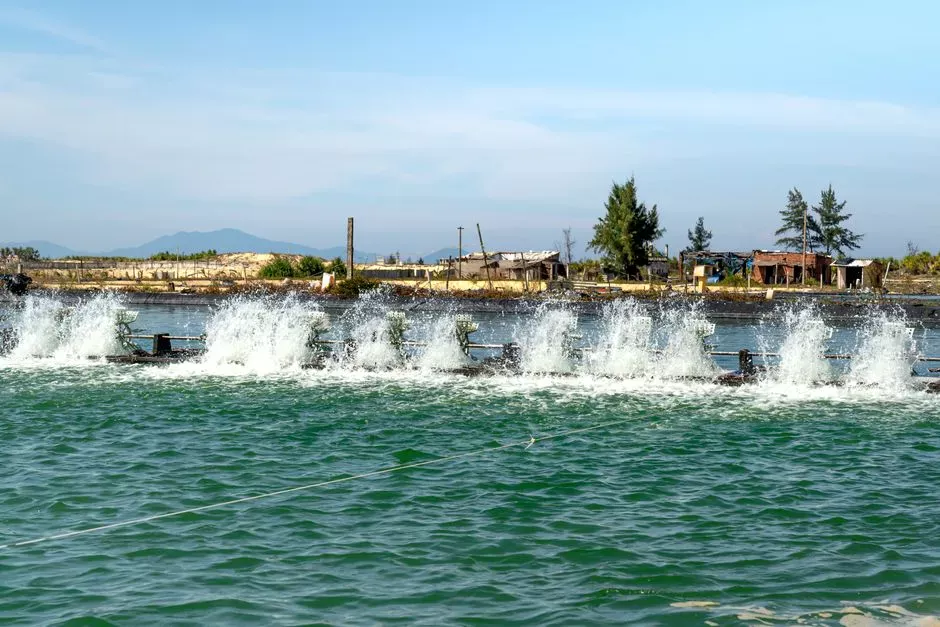
Biological nutrient removal is where the carbon-nitrogen-phosphorus balance is set. The unit operation is the same — mixed or biofilm biology under alternating redox conditions — but the reactor configuration changes how much tankage, energy, and operator attention the train demands.
| Process | Typical Effluent TN (mg/L) | Typical Effluent TP (mg/L) | Best-Fit Scenario | Energy Footprint |
|---|---|---|---|---|
| A2O (anaerobic/anoxic/aerobic) | 5-15 | 0.5-2 | Municipal BNR with biological P removal | Moderate (mixed liquor + internal recycle) |
| SBR (sequencing batch reactor) | 5-15 | 0.5-2 | Small flows, variable loads, single-tank BNR | Moderate (cycle-based aeration) |
| MBBR / IFAS | 3-10 | 1-3 (with chemical P) | Retrofit to upgrade existing CAS nitrification | Lower tankage; biofilm carriers add media cost |
| Anaerobic + CIRCOX polishing | 2-8 | 0.5-2 (with chemical P) | High-strength industrial; biogas recovery | Lowest aeration; high biogas yield |
| ANAMMOX sidestream (reject water) | Lifts plant TN capacity 15-25% | n/a | Plants with significant sludge dewatering sidestream | 60% less energy than conventional N/DN (Paques, 2025-08) |
A2O remains the workhorse for combined biological nitrogen and phosphorus removal. Effluent quality before polishing sits at TN 5-15 mg/L and TP 0.5-2 mg/L — good enough for a 10 mg/L TN permit with chemical P trim, but not tight enough for reuse without a downstream polish. SBR packs the same biology into a single tank with timed phases, which suits smaller flows (typically <500 m³/d) and variable loads where flow equalization is impractical. MBBR and IFAS use free-floating or fixed biofilm carriers to boost nitrification capacity without expanding the aeration tank — the standard retrofit answer when an existing conventional activated sludge (CAS) basin cannot nitrify at current loads. Anaerobic polishing (UASB, BIOPAQ) recovers biogas and reduces COD load ahead of aerobic BNR but does not by itself meet nutrient limits; it earns its place on high-strength industrial streams where the avoided aeration energy and biogas revenue offset the extra tankage. ANAMMOX targets the sidestream reject water from sludge dewatering rather than the mainstream flow, removing ammoniacal nitrogen without methanol and using 60% less energy than conventional nitrification-denitrification (Paques, 2025-08) — economic only at plants with sufficient sidestream ammonia load. Across all of these, PLC-controlled coagulant dosing is what closes the last 0.3-0.5 mg/L of phosphorus once biology has done its work.
Membrane Bioreactors vs Sand Filtration: Where Each Wins
The polishing or separation stage is where most 2026 reuse and tight-discharge trains are decided. Two technologies dominate: submerged MBR and continuous sand filtration. They solve the same problem from opposite ends of the cost-and-footprint trade-off.
| Parameter | Submerged MBR (PVDF, 0.1 µm) | Continuous Sand Filter (ASTRASAND-type) |
|---|---|---|
| Effluent TSS | Typically <5 mg/L; near-zero turbidity | Typically 5-10 mg/L |
| Effluent TN | 5-15 mg/L (biology-controlled) | <2 mg/L with chemical/dn stage (Paques, 2025-08) |
| Effluent TP | 0.5-2 mg/L (biology-controlled) | 0.15 mg/L with precipitation (Paques, 2025-08) |
| Footprint vs CAS | ~60% smaller (HydropureWater MBR catalog, 2026) | Compact; sits on existing secondary clarifier footprint |
| Operating energy | Higher aeration demand (membrane scour + biology) | Intermittent backwash only; low steady-state power |
| CAPEX | Higher (membrane modules, cassettes, blowers) | Lower than MBR (Paques, 2025-08) |
| Best fit | Land-scarce sites; reuse for process or irrigation; tough effluent (industrial + municipal) | Larger sites, retrofits to existing CAS, plants polishing to <2 mg/L TN |
An MBR membrane bioreactor system combines activated sludge with submerged PVDF flat-sheet or hollow-fiber membranes at 0.1 µm nominal pore size. The membrane replaces the secondary clarifier entirely and produces near-reuse effluent in a single step, with a footprint roughly 60% smaller than the equivalent CAS train (HydropureWater MBR and DF series flat sheet MBR module catalogs, 2026). The trade-off is energy: membrane scour air sits on top of biological air, and operators carry a membrane-replacement budget every 7-10 years.
Continuous sand filtration does the opposite job. An ASTRASAND-type filter runs in a constant backwash mode, with dirty sand lifted out of the bed, washed, and returned — the same chemical precipitation or denitrification chemistry that works in a basin works in a sand bed. The result is TN below 2 mg/L and TP at 0.15 mg/L in a single self-cleaning vessel, with CAPEX below an MBR (Paques, 2025-08). It is the right answer when land is available, secondary clarifiers already exist, and the goal is to tighten the existing train to 2026 limits rather than rebuild it. For plants already weighing this trade-off, the switching from lagoon to MBR in 2026 decision guide and the pressure flotation vs clarifier decision guide walk through the same logic from the front end of the train.
Putting the Train Together: Recommended Systems by Scenario
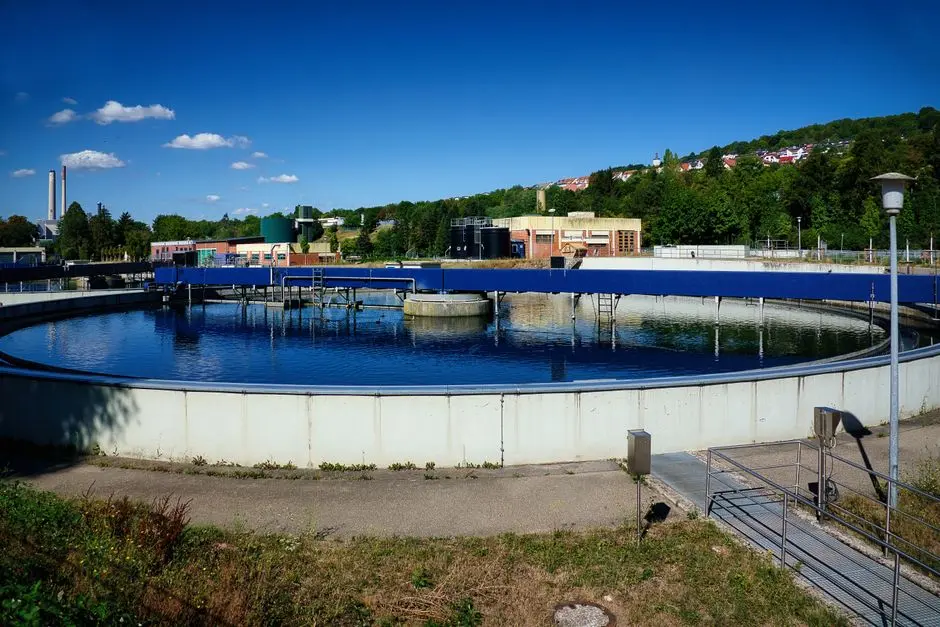
Four scenarios cover the bulk of 2026 shortlists. The table below maps influent strength and discharge target to a recommended process train; each row assumes biology is followed by UV or ClO2 disinfection to meet microbial limits.
| Scenario | Influent Profile | Discharge / Reuse Goal | Recommended Train | Why This Train |
|---|---|---|---|---|
| High-strength industrial (food, tannery, chemical) | COD >3000 mg/L, TSS >1000 mg/L, variable | Discharge to sewer or surface water; tight local TP | Rotary screen → DAF → A2O or anaerobic + CIRCOX → sand filter → UV | DAF cuts particulate load cheaply; biology handles carbon; sand filter hits TP without membrane cost |
| Space-constrained municipal plant | Typical municipal, TN 30-50 mg/L | Reuse for irrigation or industrial process | Fine screen → MBR (submerged PVDF) → UV, with chemical P trim | MBR's 60% smaller footprint and reuse-quality effluent offset the higher energy |
| Existing CAS retrofit for 2026 limits | Existing secondary effluent; TN near permit | Tighten TN to <10 mg/L, TP to <0.5 mg/L | MBBR carriers added to aeration tank → multi-media polishing filter → UV | MBBR boosts nitrification in existing basin; multi-media polish handles TSS and residual P |
| Sidestream reject from sludge dewatering | NH4-N 500-1500 mg/L, hot flow | Plant TN mass balance | Route reject through ANAMMOX-style deammonification → return to head of works | 60% less energy than conventional N/DN (Paques, 2025-08); lifts plant TN capacity 15-25% |
Two practical rules apply across all four. First, the polishing stage earns its place only when biology alone cannot meet the permit; if your permit is TN 10 mg/L and your A2O already delivers 8 mg/L, a sand filter is unnecessary. Second, the energy budget is set by the aeration tank, not the membrane — choosing MBR over sand filter adds membrane scour air (typically 0.2-0.4 kWh/m³) but does not change the underlying biological demand. Shortlist the train against the discharge goal first, then optimize the equipment within each stage.
Frequently Asked Questions
What is the typical effluent TSS from a well-designed MBR versus a sand filter?
A submerged MBR with 0.1 µm PVDF membranes typically delivers TSS below 5 mg/L and near-zero turbidity, while a continuous sand filter typically reaches 5-10 mg/L (HydropureWater MBR catalog, 2026; Paques ASTRASAND data, 2025-08). Both meet most reuse standards once paired with UV or ClO2 disinfection.
Can biological treatment alone meet TN below 2 mg/L and TP below 0.15 mg/L?
No. A2O, SBR, and MBBR biology typically deliver TN 5-15 mg/L and TP 0.5-2 mg/L before any polish. Hitting TN below 2 mg/L and TP around 0.15 mg/L requires a polishing stage — either an MBR, a continuous sand filter with chemical precipitation and denitrification, or a multi-media filter with coagulant dosing.
How much of a municipal plant's total nitrogen load comes from sludge dewatering sidestream?
Typically 15-25% of the total nitrogen load at a municipal wastewater treatment plant comes from reject water (Paques, 2025-08). Treating that sidestream with ANAMMOX deammonification uses 60% less energy than conventional nitrification-denitrification and can lift overall plant TN capacity by 15-25%.
When is a DAF more appropriate than a lamella clarifier for primary TSS removal?
DAF wins on flows with high variability, oil and grease, or floatable solids — typical of food, pulp and paper, and metalworking streams — and handles 4-300 m³/h with 90-95% TSS removal when paired with coagulant dosing. Lamella clarifiers win on passive operation, lower chemistry demand (up to 30% coagulant savings versus conventional settling), and 20-40 m³/m²·h surface loading where the influent is already low in oil and grease.