
What '20-Year TCO' Actually Means for a Semiconductor UPW System
A 20-year total cost of ownership for a semiconductor ultrapure water system typically lands between $40M and $180M for a mid-sized 5,000 m³/day fab, depending on recovery target. Standard 85–95% reclaim runs $0.50–$1.50/m³ OPEX; adding selective ZLD for the brine cut raises OPEX up to 5x but secures 99.9% recovery. Membrane, resin and high-grade piping replacement cycles every 3–5 years are the dominant variable, not initial CAPEX.
For a procurement or sustainability engineer defending a 20-year model to finance, TCO is the sum of three line items, not the turnkey number on a vendor quote. It is initial CAPEX, discounted operating cost over 20 years (energy, chemicals, labor, consumables), and scheduled capex replacement events — RO elements, UF modules, EDI stacks, mixed-bed resin, high-purity PVDF and oxidation-passivated SUS316L distribution piping, and UV lamps. The 5-year vendor quote captures the first line and a fraction of the third. The 20-year model is what the 2026 lifecycle cost estimation guide for UPW systems actually resolves.
Regulatory pressure is the reason finance should accept a 20-year horizon rather than a 5-year payback. The SEMI S23-0718 standard mandates 30% reuse by 2026 (HydropureWater 2026 engineering data), and the EU Industrial Emissions Directive 2024 targets a 50% UPW reduction for new facilities. Once a permit references a reuse rate, the equipment has to perform to that rate for the facility's full service life — which for a leading-edge fab is 20+ years, not the 5-year finance window vendors prefer to quote against.
Operating cost dominates the 20-year picture. In published fab models, energy plus chemicals plus membrane replacement plus labor runs roughly 2–3x the initial CAPEX over a 20-year service life, because the replacement events stack up while the sticker price is paid once. That ratio is the lever a TCO model should expose, and the reason this article breaks it out line by line rather than presenting a single bundled number.
CAPEX Breakdown: What You Buy Once
Capital expenditure for a semiconductor water reclaim system runs $500–$1,500 per m³/day of capacity depending on pretreatment complexity, which puts a 5,000 m³/day mid-sized fab at $2.5M–$7.5M before any ZLD add-on (HydropureWater 2026 engineering data). That number is the line item finance sees on the quote; the line items hidden inside it are what a defensible TCO model needs to separate.
| CAPEX Bucket | Typical Range (5,000 m³/day fab) | Notes |
|---|---|---|
| Reclaim skid (RO + EDI + UF core) | $2.5M–$7.5M | $500–$1,500 per m³/day; membrane skids, dosing, PLC/SCADA included |
| Pretreatment: multi-media filter + UF (0.02–0.1 μm PVDF) | ~15–25% of skid | Drives downstream RO membrane life; undersized here = 2x replacement cost |
| RO polishing block (FilmTec XLE-440 class, 99% rejection, 15–25 L/m²·h) | ~20–30% of skid | Primary demineralization step before EDI |
| EDI stack to 18.2 MΩ·cm | ~10–15% of skid | Eliminates mixed-bed acid/caustic regen; continuous continuous EDI polishing to eliminate mixed-bed regeneration |
| ZLD add-on (thermal evaporator + crystallizer, scaled to fab) | $15M–$30M for 10 MGD | Only required for the brine cut in a hybrid configuration |
| High-purity distribution loop (oxidation-passivated SUS316L or PVDF) | Often underestimated | Per Ohmi 1992, passivated SUS316L resists elution and ozone attack; see long-term cost data for high-purity fab distribution piping |
| Online instrumentation (TOC, resistivity, particle) | 2–4% of skid | Sievers 500 RL class TOC analyzers (0.03 ppb detection), particle counters per SEMI F47-0609 |
The industrial RO skids for the primary demineralization block and the multi-media filter and UF pretreatment line are the two CAPEX items that determine how aggressive the 20-year replacement schedule will be. A $2.5M skid with minimal pretreatment tends to hit the upper bound of the 3–5 year RO replacement window; a $7.5M skid with proper UF and chemical dosing can stretch elements past 5 years and pull down the 20-year consumables line materially.
ZLD is the one CAPEX item that does not belong in the standard comparison. At $15M–$30M for a 10 MGD unit (HydropureWater 2026 data), it can double or triple the reclaim CAPEX for a hybrid system, and that cost is justified only when the fab sits in a high-stress region or faces a discharge permit denial scenario. See the scenario table in section 5 for how it shifts the 20-year number.
OPEX Drivers Over 20 Years: Energy, Chemicals, Consumables
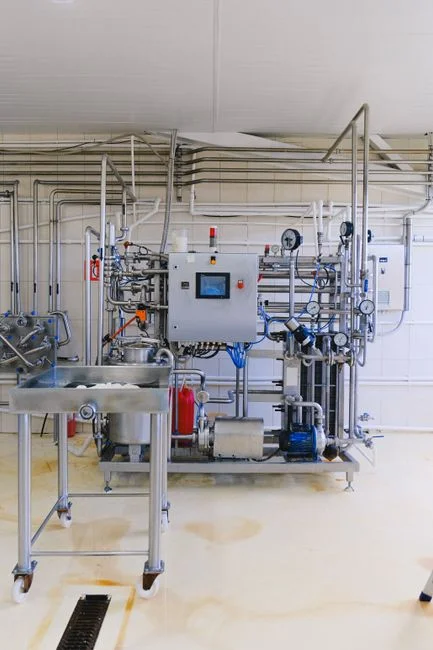
Operating expenditure for a standard reclaim loop runs $0.50–$1.50/m³ (HydropureWater 2026 engineering data), but that single number obscures four distinct spend lines that move independently over a 20-year horizon. A defensible TCO breaks them out, because a vendor can quote low energy and high membrane replacement, or vice versa, and the 5-year cash flow looks similar in both cases while the 20-year number diverges sharply.
| OPEX Driver | Typical Range | 20-Year TCO Implication |
|---|---|---|
| RO energy | 0.8–1.5 kWh/m³ | Largest single energy line; tracks electricity tariff and load factor |
| EDI electrical load | Marginal vs RO | Continuous, low-voltage DC; one of the cheaper items in the model |
| Thermal ZLD energy (when present) | Order of magnitude > RO | Dominant energy line in hybrid configurations; the reason OPEX scales 5x at 99.9% recovery |
| Antiscalants + biocides | $0.05–$0.15/m³ | Recurring; see automatic chemical dosing systems for antiscalant and biocide control |
| Acid/caustic for mixed-bed regen | $0.10–$0.30/m³ when present | Eliminated by EDI — one of the cleanest OPEX savings in a UPW TCO |
| Membrane replacement | 15–20% of annual OPEX | Driven by feedwater silica, organics, and CIP discipline; RO and UF replacement elements scheduled across the 20-year horizon |
| UV (254 nm at 40 mJ/cm²) + periodic ozone or ClO₂ | Lamp replacement + chemical | Extends membrane life beyond 3–5 year envelope; see 254 nm UV at 40 mJ/cm² for biofilm control in the reclaim loop |
| Online analyzers (TOC, particle, resistivity) | Recurring service + consumable | Compliance-critical; failure here is a permit event, not a maintenance line |
Energy dominates the OPEX line in standard reclaim at $0.50–$1.50/m³; chemicals and consumables ride on top. In a hybrid reclaim + selective ZLD configuration, the thermal evaporator is the line that moves the OPEX up to 5x standard reclaim (HydropureWater 2026 data) — not because the evaporator runs at 5x RO energy per m³ of brine, but because the brine volume is concentrated and the kWh per m³ of distillate produced is order-of-magnitude higher than RO. Treat the 5x figure as a published benchmark, not a physics calculation: the make-up economics still favor ZLD in water-stressed regions where virgin water hits the upper end of the $10–$30/m³ range (Gradiant 2025).
Replacement Cycles: The Variable Nobody Quotes in Year 1
Replacement reserves are the line item that turns a CAPEX number into a 20-year number, and they are the variable vendor quotes most often omit. RO elements carry a 3–5 year service life; UF modules typically exceed 5 years; EDI stacks and mixed-bed resin drive different recurring costs; UV lamps hit 12,000–17,000 hours; and high-purity distribution piping can outlast the 20-year horizon if passivation is maintained. Multiply those intervals against the unit replacement cost and discount the cash flows — that is the number a finance reviewer can defend.
| Component | Service Life | Replacement Events in 20 Years | Cost Driver |
|---|---|---|---|
| RO elements | 3–5 years | 4–7 events | Feedwater silica, organic fouling, CIP discipline |
| UF modules (0.02–0.1 μm PVDF) | >5 years | 3–4 events | Mechanical fouling; backwash recovery |
| EDI stacks | 5–7 years typical | 3–4 events | Eliminates acid/caustic regen of mixed-bed; capex only, no recurring chemicals |
| Mixed-bed resin (where still in service) | Per cycle | n events | Regen chemicals and waste neutralization; a real OPEX line EDI displaces |
| UV lamps (254 nm) | 12,000–17,000 hours | Recurring | Lamp replacement; UV sterilization for biofilm control |
| High-purity PVDF / oxidation-passivated SUS316L piping | 20+ years if passivated | 0–1 events | Often the cheapest 20-year line if passivation is maintained per Ohmi 1992 |
| Online analyzers (TOC, resistivity, particle) | 7–10 years | 2–3 events | Modest line item, compliance-critical; water treatment parts, valves, and media refresh schedule |
The single biggest swing variable in the 20-year model is RO replacement frequency. A fab that hits 3-year replacement pays for 7 element sets over 20 years; one that hits the 5-year envelope pays for 4. At the membrane-replacement share of 15–20% of annual OPEX (HydropureWater 2026 data), the spread between those two schedules is enough to move the 20-year TCO by 10–15% on its own. Pretreatment sizing, antiscalant selection, and CIP discipline are the engineering levers that decide which schedule the fab actually runs.
Three 20-Year Scenarios: 85%, 95% and 99.9% Recovery
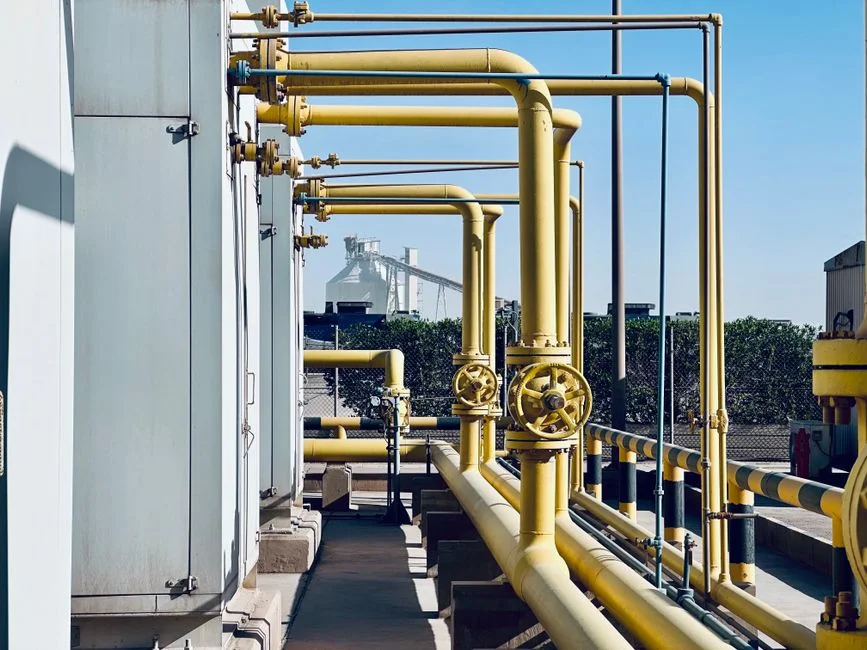
The recovery target is the single design choice that drives the 20-year TCO more than any other line item. The three scenarios below all share the same 5,000 m³/day fab footprint and the same $10–$30/m³ virgin make-up cost (Gradiant 2025); they differ in CAPEX intensity, OPEX intensity, and avoided make-up cost compounding over 20 years.
| Scenario | Recovery | Reclaim CAPEX | OPEX | Indicative 20-Year TCO | Fit |
|---|---|---|---|---|---|
| A — Standard reclaim, no ZLD | 85% | $2.5M–$7.5M | $0.50–$1.50/m³ | $40M–$80M | Low-stress regions (Oregon, Ireland) |
| B — Advanced reclaim + MBR polish for high-TOC streams | 95% | $4M–$10M (adds MBR and tighter RO staging) | $0.50–$1.50/m³ | $55M–$110M | Mixed-stress regions; MBR pretreatment of CMP/TMAH waste per MBR pretreatment for high-TOC developer and stripping waste |
| C — Hybrid reclaim + selective ZLD on the brine cut | 99.9% | $15M–$30M (ZLD add-on) on top of B | Up to 5x standard reclaim | $120M–$180M | High-stress regions (Arizona, Taiwan, Israel); see MBR modules for high-TOC wastewater recovery in the upstream pretreatment train |
The avoided make-up cost is the offset finance should see against the gross TCO. Virgin UPW runs $10–$30/m³ (Gradiant 2025); reclaimed make-up at $3–$8/m³ (Gradiant 2025) closes part of that spread. For a 5,000 m³/day fab at 85% recovery, roughly 4,250 m³/day is recycled and the avoided virgin cost compounds materially across 20 years. The published TSMC Tainan benchmark — reclaim reduced UPW cost 35% while maintaining SEMI F63-0921 compliance (HydropureWater 2026 data) — is the real-world validation that the avoided-cost side of the model holds up, not just the spend side.
For an apples-to-apples comparison against vendor proposals, the 2026 cost benchmarks per MGD for water treatment infrastructure provide the per-unit line items most finance reviewers will recognize, and they reconcile to the scenario totals above when the fab volume is normalized.
How Fab Node Class Shifts the 20-Year Math
Water intensity per wafer shifts by 2–3x between mature and leading-edge nodes, and that shift is the second design lever (after recovery target) that changes a 20-year TCO. A 28nm fab treats the reclaim system as a cost optimization; a 2nm fab treats it as a permit prerequisite and a competitive signal.
Mature nodes (28nm and above) typically run lower UPW volume per wafer and can absorb 85–95% standard reclaim without pushing the polishing block to its limits. The TCO model for these fabs tracks the lower bound of the scenario table. Leading-edge nodes (2nm and below) demand more water for surface cleaning and CMP, and the waste streams concentrate around CMP slurry, fluoride, and TMAH — all of which require MBR pretreatment of high-TOC developer waste to bring TOC below the 50 ppb filtrate target before the RO block (HydropureWater 2026 data). For these fabs, the reclaim loop is sized for higher flow and tighter chemistry, which pushes the model toward Scenario B or C regardless of regional water stress.
Discharge permit tightening is closing the gap between low-stress and high-stress regions. Fluoride, TMAH, and heavy-metal limits are getting harder to meet, and a permit denial scenario in a region with cheap water still forces higher recovery because the alternative is no discharge at all. Ozone generation for water tank sterilization and chlorine dioxide generation for biofilm control sit in the chemical barrier stack that supports the permit compliance case. The TSMC, Intel, and Samsung 100% recycling pledge by 2030 is the competitive signal that vendor pricing and permit terms will favor high-recovery configurations through 2030, which means quoting a 20-year TCO on the 2026 cost basis at low recovery understates the replacement-cycle spend a finance reviewer should expect.
For a defensible TCO, the fab node class sets two parameters: the per-wafer UPW volume that drives the flow rate, and the waste-stream chemistry that drives the pretreatment intensity. The 20-year number is a function of both, multiplied through the replacement schedule from section 4 and the energy/consumable schedule from section 3.
Frequently Asked Questions
What is the typical 20-year TCO for a semiconductor UPW system?
For a 5,000 m³/day mid-sized fab, the 20-year TCO ranges from $40M to $180M depending on recovery target. Standard 85% reclaim lands at $40M–$80M; 95% advanced reclaim with MBR polish at $55M–$110M; and 99.9% hybrid reclaim plus selective ZLD on the brine cut at $120M–$180M (HydropureWater 2026 engineering data).
How much does a semiconductor UPW reclaim system cost per cubic meter of capacity?
CAPEX for a standard reclaim skid runs $500–$1,500 per m³/day of capacity, putting a 5,000 m³/day fab at $2.5M–$7.5M before pretreatment and ZLD add-ons (HydropureWater 2026 data). ZLD adds $15M–$30M for a 10 MGD unit, applied selectively to the brine cut in a hybrid configuration.
What are the OPEX drivers for a UPW system over 20 years?
Standard reclaim OPEX runs $0.50–$1.50/m³, driven by RO energy at 0.8–1.5 kWh/m³, antiscalants and biocides at $0.05–$0.15/m³, and membrane replacement at 15–20% of annual OPEX (HydropureWater 2026 data). Adding selective ZLD on the brine cut raises OPEX up to 5x because thermal evaporation is the dominant energy line in the configuration.
How often do RO membranes need to be replaced in a UPW reclaim system?
RO elements carry a 3–5 year service life, which translates to 4–7 replacement events over a 20-year horizon depending on feedwater silica, organic fouling, and CIP discipline. UF modules run longer than 5 years and require 3–4 replacement events over the same window. UV lamps at 254 nm hit 12,000–17,000 hours and require recurring replacement.
What SEMI standards govern a 20-year UPW TCO model?
SEMI F63-0921 mandates 18.2 MΩ·cm resistivity and TOC below 1 ppb for reclaimed water reused in critical cleaning (HydropureWater 2026 data). SEMI S23-0718 mandates 30% reuse by 2026. SEMI F47-0609 sets particle counts below 100 particles/L for sizes larger than 0.05 μm. These three standards define the compliance floor a 20-year TCO has to defend, and the 2026 SEMI F63 compliance guide for UPW systems maps the spec-to-cost links line by line.