Semiconductor ultrapure water reclaim systems can recover up to 99.9% of fab wastewater. That can cut freshwater demand by as much as 10 million gallons per day per plant—about the daily use of 33,000 households (EPA 2024). Typical reclaim trains combine reverse osmosis (RO), electrodeionization (EDI), and membrane bioreactors (MBR) to approach parts-per-quadrillion ionic purity for wafer processing. This blueprint covers process specs, cost drivers, and zero-liquid-discharge (ZLD) options for chip fabrication plants.
Why Fabs Prioritize Semiconductor Ultrapure Water Reclaim
Large semiconductor fabs can consume up to 10 million gallons of water per day for wafer cleans and CMP. Reclaim trains recovering 85%–99.9% of wastewater cut municipal demand under permit limits. Unit cost typically falls from about $10–$30/m³ for virgin UPW to roughly $3–$8/m³ for reclaimed process water when RO, EDI, and pretreatment match each drain stream.
Seventy percent of global semiconductor fabrication facilities are projected to face high or extreme water stress by 2030, according to World Economic Forum data (WEF 2024). Discharge permits for fluoride, tetramethylammonium hydroxide (TMAH), and metals are also tightening in many jurisdictions. Onsite reclaim is often the practical path for expansion when municipal allocation or outfall limits constrain growth.
Earlier commentary sometimes cited SEMI S23-0718 as mandating a 30% water reuse rate by 2026. SEMI S23 is a guide for conserving energy, utilities, and materials used by manufacturing equipment, not a site-wide reuse quota (SEMI, 2021). Industry water-reuse practice is framed instead by SEMI F98 and related drain-segregation guidance such as SEMI F116, with IRDS facility roadmaps stressing segregation and maximizing reclaim of recoverable streams (IEEE IRDS ESHS, 2024). The EU Industrial Emissions Directive 2024 targets a 50% reduction in total UPW consumption for new facilities. Corporate pledges from TSMC, Intel, and Samsung toward high recycling rates by 2030 further pull capital toward high-recovery trains.
Producing UPW from municipal sources typically costs $10–$30 per cubic meter when energy, chemicals, and resin replacement are included. Modern reclaim systems can deliver high-quality process water at about $3–$8 per cubic meter (Gradiant 2025 data). That gap, plus rising municipal tariffs and fine risk, is why procurement teams compare reclaim, hybrid, and ZLD scopes early in fab design.
Engineering the UPW Reclaim Loop: System Components and Purity Requirements
A semiconductor UPW reclaim loop starts with ultrafiltration (UF) membranes at 0.02–0.1 μm pore size so effluent turbidity stays below 1 NTU before secondary treatment. That pretreatment protects downstream RO and EDI from suspended solids and colloidal silica common in CMP wastewater reclaim strategies. High-surface-area modules, such as the DuPont IntegraTec XP 77 IG, help hold stable flux on high-solids streams.
Which reverse osmosis systems suit semiconductor production?
Semiconductor-grade RO for UPW reclaim uses low-energy, high-rejection membranes such as FilmTec XLE-440 on semiconductor-grade RO systems for UPW reclaim. These membranes typically deliver ion rejection above 99% at flux rates of 15–25 L/m²·h under controlled SDI feed. Multi-stage RO provides primary demineralization before polishing. Permeate then feeds EDI stacks that continuously regenerate ion-exchange resins with an electric field, avoiding chemical regenerants.
An EDI Electrodeionization System is the usual polishing step to reach resistivity near 18.2 MΩ·cm at 25°C. Earlier guidance often cited SEMI F63-0921 for that target; the current published revision is SEMI F63-1224, which superseded SEMI F63-0521 (SEMI store, 2024). Reclaimed water intended for critical wet steps must meet the same UPW quality expectations as virgin UPW when it re-enters the polish loop.
High-organic developer or stripper waste usually needs MBR modules for high-TOC wastewater recovery before RO. Specialized biology breaks down organics, and membrane separation can yield filtrate with total organic carbon (TOC) below 50 ppb for non-critical rinses or UPW plant feed. Managing TMAH pretreatment for UPW reclaim is essential, because nitrogen-rich organics foul standard RO if not biologically or chemically controlled.
| Parameter | Pretreatment (UF) | Primary RO | Polishing (EDI) |
|---|---|---|---|
| Pore Size / Rejection | 0.02 – 0.1 μm | 99.2% – 99.7% Ion Rejection | Resistivity >18 MΩ·cm |
| Flux Rate | 40 – 70 L/m²·h | 15 – 25 L/m²·h | N/A (Flow-through) |
| TOC Rejection | 10% – 20% | 95% – 98% | 99%+ (Trace organics) |
| Typical Recovery | 90% – 95% | 75% – 85% (per stage) | 90% – 95% |
| Critical Spec | Turbidity < 1 NTU | SDI < 3.0 | TOC < 1 ppb |
Reclaim vs. Zero Liquid Discharge (ZLD): Technology Comparison and Use Cases
Standard reclaim systems typically achieve 85% to 95% water recovery at $0.50 to $1.50 per cubic meter OPEX. Zero Liquid Discharge (ZLD) systems reach 99.9% recovery at costs up to five times higher. Local water stress and brine disposal cost decide the split. In Oregon or Ireland, a ~90% reclaim loop often meets ESG and municipal-demand goals. In Arizona, Taiwan, or Israel, ZLD is increasingly required for new fab permits.
ZLD trains add thermal evaporation and crystallization on RO brine, converting liquid waste into distillate and solid salts for landfill or limited reuse. CAPEX for full ZLD often ranges from $15M to $30M for a 10 million gallon per day facility. A hybrid design is frequently the best ROI: high-efficiency reclaim on ~90% of flow, plus a smaller selective ZLD unit on fluoride-rich or CMP slurry concentrates.
| Feature | Standard Reclaim | Zero Liquid Discharge (ZLD) | Hybrid System |
|---|---|---|---|
| Recovery Rate | 85% – 95% | 99% – 99.9% | 95% – 98% |
| CAPEX (Relative) | 1.0x (Base) | 2.5x – 4.0x | 1.5x – 2.0x |
| OPEX ($/m³) | $0.50 – $1.50 | $2.00 – $5.00 | $1.20 – $2.50 |
| Primary Tech | UF + RO + EDI | RO + Evaporator + Crystallizer | RO + Selective Evaporation |
| Best Use Case | Water-rich regions | Extreme water stress / No discharge | Balanced ROI & Compliance |
What Drives 20-Year Lifecycle Cost for UPW Reclaim?
Capital expenditure for semiconductor water reclaim systems ranges from $500 to $1,500 per cubic meter of daily capacity, depending on pretreatment complexity for CMP and specialty wastes. For a mid-sized fab at 5,000 m³/day, that is about $2.5M to $7.5M installed for membrane skids, dosing, PLC integration, and stainless or PVDF piping. Adding ZLD evaporators can double or triple CAPEX because of corrosion-resistant alloys.
Over a 20-year lifecycle, energy, membrane replacement, and chemicals dominate cash flow more than first cost. RO typically consumes 0.8–1.5 kWh/m³; EDI adds a smaller electrical load. Membrane replacement is often 15% to 20% of annual OPEX when silica or organics drive fouling. Antiscalants and biocides usually cost $0.05–$0.15 per cubic meter. Using UV and ClO₂ disinfection for reclaim loops can cut clean-in-place frequency and extend RO life beyond the common 3–5 year window.
| Cost Category | Estimated Cost (Reclaim) | Estimated Cost (ZLD) |
|---|---|---|
| CAPEX per m³/day | $500 – $1,500 | $1,500 – $3,000 |
| Energy Consumption | 1.0 – 2.0 kWh/m³ | 5.0 – 12.0 kWh/m³ |
| Chemicals & Consumables | $0.10 – $0.30/m³ | $0.40 – $0.80/m³ |
| Maintenance & Membranes | $0.15 – $0.40/m³ | $0.50 – $1.20/m³ |
| Typical Payback Period | 3 – 5 Years | 5 – 8 Years |
What UPW Specifications Protect Purity and Reliability?
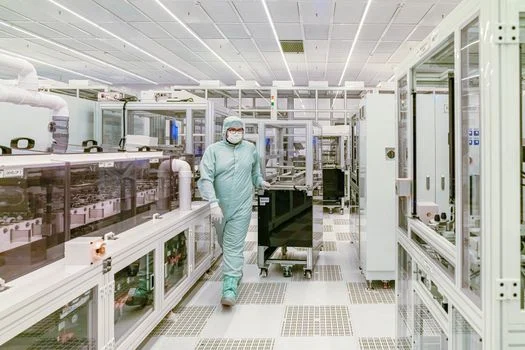
Ultrapure water for advanced-node wafer processing must hold resistivity of 18.2 MΩ·cm and TOC below 1 ppb when used in critical cleans, consistent with SEMI F63 guidance now published as SEMI F63-1224 (SEMI, 2024). Reclaimed water must meet the same limits if it returns to critical rinses. Out-of-spec ions or organics can create wafer spots or shift transistor electrical properties. For cooling-tower make-up or housekeeping, TOC below 500 ppb may be acceptable, but many fabs prefer one high-purity loop to simplify distribution.
Online TOC analyzers such as the Sievers 500 RL report detection limits near 0.03 ppb so MBR or RO breakthrough is caught quickly. Particle monitoring remains critical; SEMI F47-0609 standards require counts of less than 100 particles per liter for sizes larger than 0.05 μm. Biofilm is the most common compliance failure mode. A typical multi-barrier set uses UV at 254 nm with a dose of 40 mJ/cm², sub-micron filtration, and periodic ozone or chlorine dioxide sanitization. TSMC’s Tainan fab has reported reclaim integration that cut UPW costs by 35% while meeting SEMI F63 targets through EDI polishing.
How to Select a Semiconductor UPW Reclaim System: A 5-Step Decision Framework
A water balance audit of reclaimable rinse and backwash streams is the first technical step when selecting semiconductor ultrapure water reclaim equipment. Front-end-of-line (FEOL) rinse water is usually low in contaminants and high in volume, so it is the first recovery candidate. Back-end-of-line (BEOL) streams with CMP slurry or concentrated acids need heavier pretreatment. Map volume and chemistry before sizing skids.
Once the balance is known, use this five-step framework:
- Contaminant Profiling: Test for TMAH, fluoride, boron, and metals (Cu, Ni). Decide whether MBR or chemical precipitation is required.
- Recovery Target Alignment: Set recovery (for example 50% vs. 95%) from discharge limits and ESG goals. That choice separates standard RO reclaim from ZLD.
- Technology Matching: Match membrane materials to chemistry. PVDF is often preferred on high-TOC streams for fouling resistance versus PES.
- Pilot Testing: Run a 3–6 month pilot on real fab effluent to measure flux decline and CIP frequency, the largest OPEX unknowns.
- Vendor Evaluation: Require uptime guarantees above 98% and documented SEMI-compliant installations.
| RFP Checklist Item | Requirement / Target | Status |
|---|---|---|
| System Uptime Guarantee | >98% Annual Availability | Critical |
| Membrane Lifespan Guarantee | >3 Years for RO; >5 Years for UF | Standard |
| SEMI Compliance | F63-0921 Certified Output | Mandatory |
| Energy Efficiency | < 1.5 kWh/m³ (Reclaim) | Preferred |
| Automation Level | Full PLC/SCADA with Remote Monitoring | Mandatory |
Who this is for: fab facilities, EPC, and procurement teams sizing reclaim or hybrid ZLD for new or expanding sites. Who should look elsewhere: plants seeking only municipal pretreatment without UPW polish specs. Next step: share a water-balance summary and critical contaminant list so a reclaim or hybrid scope can be sized against local discharge limits.
Frequently Asked Questions
What’s the difference between reclaim and recycling in semiconductor UPW systems?
Water reclaim means treating fab wastewater, such as rinse water, so it can return as process feed. Recycling usually describes a tighter closed loop that treats and returns water to the same step. Most fabs use “reclaim” for the plant-wide strategy of recovering multiple streams into the UPW plant or secondary uses. Both paths still need segregation, metrology, and polish steps matched to the end use.
Can reclaimed UPW be used for critical rinses, or only non-critical processes?
Yes—reclaimed water can serve critical FEOL rinses when EDI polish plus UV or ozone TOC destruction hold 18.2 MΩ·cm resistivity and TOC below 1 ppb. Many engineers still commission reclaim first on cooling towers or BEOL tools to prove stability. Once online analyzers show sustained control, critical-loop blending becomes a controlled decision rather than a leap of faith.
How do reclaim systems handle TMAH and other developer chemicals?
TMAH is usually treated in a dedicated membrane bioreactor or with advanced oxidation before RO. Biological treatment is typically the lowest-cost path at high volume because it converts quaternary ammonium compounds toward nitrogen gas and water. Without that step, TMAH and related organics raise fouling rates and can collapse RO recovery. Stream segregation keeps high-TMAH drains out of cleaner rinse reclaim.
What’s the typical lifespan of RO membranes in a semiconductor reclaim loop?
RO membranes in a well-pretreated reclaim loop typically last 3 to 5 years when UF, antiscalant, and CIP discipline are maintained. High-silica CMP wastewater without pH control can cut life below 18 months through scaling. Lifecycle models should use the pilot-measured CIP interval, not brochure flux, when estimating 20-year membrane spend.
Are there government incentives for installing UPW reclaim systems?
Yes—many regions offer tax credits or grants for industrial water efficiency. Intel’s Arizona fab received local incentives tied to the Ocotillo Water Reclamation Facility. In the EU, Horizon Europe has funded industrial water projects aligned with circular-economy goals. Incentive rules change by jurisdiction, so confirm eligibility with local economic-development and environmental agencies before final CAPEX approval.