Why Tamil Nadu Tannery Effluent Defies Standard ETP Designs
Tannery effluent treatment technologies in Tamil Nadu are anchored to three operating realities that break a generic packaged STP: a chromium- and sulphide-bearing raw stream of 7,912–11,430 mg/L TDS and 3,571–7,600 mg/L COD; 57 KL of wastewater per tonne of hide processed against the CPCB (Central Pollution Control Board) 28 m³/tonne target; and CETPs (common effluent treatment plants) running at roughly 34% capacity utilization with non-compliant chloride and TDS in the final discharge (Dindigul field data, Nature Environment and Pollution Technology, 2016-02). The Dindigul cluster alone produces 57 KL of effluent per tonne of hide — 2.04× the CPCB 28 m³ design assumption — while the cluster's CETP operates at only 34% of its design load, meaning the plant is hydraulically under-fed yet still fails the discharge envelope.
Four legacy hide-processing belts dominate the state's load: Dindigul, Ranipet, Vaniyambadi, Pallavaram, and the adjacent Melvisharam. Across these, raw effluent shows a tightly bounded pollutant envelope: TDS 7,912–11,430 mg/L, COD 3,571–7,600 mg/L, chloride 3,278–4,199 mg/L, sulphide 51–296 mg/L, TKN (Total Kjeldahl Nitrogen) 385–588 mg/L, hardness 1,188–2,800 mg/L, sodium 650–2,255 mg/L, and TSS (Total Suspended Solids) 398–1,248 mg/L. More than 18 process chemicals enter at roughly 300 kg/tonne of hides; only 20–25% are retained in finished leather, so 75–80% exit through the effluent train (Dindigul field data, 2016-02).
The BOD:COD (Biochemical Oxygen Demand to Chemical Oxygen Demand) ratio of raw tannery effluent sits at 0.22–0.41 — far below the 0.4–0.6 typical of a biodegradable industrial stream. That single ratio is the reason direct biological oxidation underperforms here, and the reason every working 2026 train begins with a physico-chemical front-end. Soaking and pickling alone contribute half of total wastewater volume but the bulk of the salt, acid, and chromium load, which is why stream segregation is the first engineering decision, not a later retrofit option (CPCB 2013, as cited in Dindigul field data, 2016-02).
Raw vs Treated Effluent: A Side-by-Side Parameter Map
Benchmarking your own plant against the Dindigul primary data and the Pallavaram CETP (Chennai) published removals is the fastest way to identify where the train is leaking. The table below consolidates the Dindigul inlet and secondary-clarifier outlet numbers from two sampling dates (28.6.10 and 14.7.11), the earthen storage tank at Pallapatti village, and the CPCB 2010 limits for inland surface water and land irrigation (CPCB 2010, as cited in Dindigul field data, 2016-02).
| Parameter | Raw (sedimentation inlet, range) | CETP treated (secondary clarifier outlet, % removal) | Earthen storage tank | CPCB 2010 — inland surface water | CPCB 2010 — land irrigation |
|---|---|---|---|---|---|
| pH | 7.10–7.74 | 8.00–8.04 | 8.00 | 5.5–9.0 | 5.5–9.0 |
| TSS (mg/L) | 398–1,248 | 254–324 (36–74%) | 435 | 100 | 200 |
| TDS (mg/L) | 7,912–11,430 | 6,222–9,502 (17–21%) | 15,540 | 2,100 | 2,100 |
| Chloride (mg/L) | 3,278–4,199 | 3,278–3,499 (0–17%) | 9,882 | 1,000 | 600 |
| BOD (mg/L) | 1,475–1,686 | 214–250 (83–87%) | 400 | 30 | 100 |
| COD (mg/L) | 3,571–7,600 | 760–1,280 (79–83%) | 2,020 | 250 | — |
| Sulphide (mg/L) | 51–296 | 7–184 (38–86%) | — | 3 | — |
| TKN (mg/L) | 385–588 | 84–206 (46–86%) | 151 | 100 | — |
| Oil & grease (mg/L) | 22 | 16 (27%) | — | 10 | 10 |
Three structural findings fall out of this table. First, secondary clarification removes 79–87% of BOD and 79–83% of COD but only 17–21% of TDS and 0–17% of chloride — the salt problem is biological-stage independent. Second, Pallavaram CETP (Chennai) reports 97.54% BOD, 93.92% COD, and 97.02% TSS removal but only 18.98% TDS removal (T. 2006, as cited in Dindigul field data, 2016-02), confirming the same pattern in a different cluster. Third, the earthen storage tank at Pallapatti shows TDS 15,540 mg/L, chloride 9,882 mg/L, and COD 2,020 mg/L — every one of which exceeds CPCB land-irrigation limits, which is why natural percolation from these tanks is the documented route of groundwater contamination in Dindigul's surrounding villages.
Stream Segregation, Chrome Recovery and Sulphide Stripping

The single highest-leverage intervention in a tannery ETP (effluent treatment plant) is redesigning the front of the plant so the CETP only sees a treatable stream. Soaking and pickling together account for roughly half of total wastewater flow and concentrate the salt, acid, and chromium load; the remaining beamhouse, tanning, and finishing streams can be handled in a more conventional biological train once segregated (CPCB 2013, as cited in Dindigul field data, 2016-02).
Chrome recovery is the second non-negotiable step. The chrome-bearing liquor is precipitated as chromium hydroxide at pH 8–9 using NaOH dosing, thickened in a lamella clarifier or DAF system, and the cake is redissolved in sulphuric acid for re-use in the tanning drum. In a well-operated chrome recovery loop, 70–90% of the chrome in the process liquor is captured and returned to the tanning bath, which both reduces chromium in the wastewater (raw values of 5–50 mg/L dropping to 1–5 mg/L after recovery) and offsets chrome chemical purchase. Skid-mounted automatic chemical dosing systems are the standard way to hold the pH window tight across a batch-discharged tannery schedule.
Sulphide control runs in parallel. Raw sulphide at 51–296 mg/L must drop below the TNPCB (Tamil Nadu Pollution Control Board) 2 mg/L discharge norm before any biological stage, because anaerobic biomass is sensitive to free H₂S and aerobic biomass is inhibited well below that. The two working options are MnO₂-catalysed air oxidation in a packed stripping column — which oxidises sulphide to elemental sulphur or sulphate with >95% removal — and FeCl₃ precipitation as iron sulphide. The stripped sulphur is recovered in a downstream separation tank, and the column off-gas is routed to a NaOH scrubber. A coagulation/DAF step ahead of the biological stage then removes the colloidal solids, FOG (fats, oils, and grease), and residual sulphide that the stripper did not fully oxidise.
Primary Physico-Chemical Treatment: Coagulation, Flocculation and Air Flotation
The job of the primary stage is to remove the colloidal and FOG fraction so the biological stage can hit its design loading. In practice this means a coagulant dose of 200–500 mg/L of polyaluminium chloride (PAC) or 300–800 mg/L of ferric chloride, followed by 1–3 mg/L of anionic polyacrylamide (PAM) for flocculation; the dose has to track raw-stream variability, which is why automatic chemical dosing systems with inline streaming-current or pH control are now standard in 2026 retrofits rather than the manual jar-test dosing still seen in older CETPs.
Dissolved air flotation is the workhorse for the high-FOG, low-settling beamhouse fraction; a DAF system rated at 25–40 m³/m²·h with a 4–6 bar saturator can reliably float the colloidal load, and the floated sludge reports to a high-efficiency sedimentation tank for thickening before dewatering. For tannery streams with very high TSS and density-driven settling, a lamella clarifier ahead of the DAF gives the best capex/opex balance.
Expected removals from a well-operated primary train: TSS 60–80%, COD 30–50%, oil & grease >90%, sulphide 30–50% (with the stripper doing the heavy lifting). The residual COD that the biological stage must polish is typically 1,500–2,500 mg/L; if you are seeing >3,000 mg/L at the aeration tank inlet, the issue is almost always under-dosed coagulant or a collapsed DAF bubble blanket, not biological capacity.
Biological Secondary Treatment: UASB vs MBR for High-Strength Streams
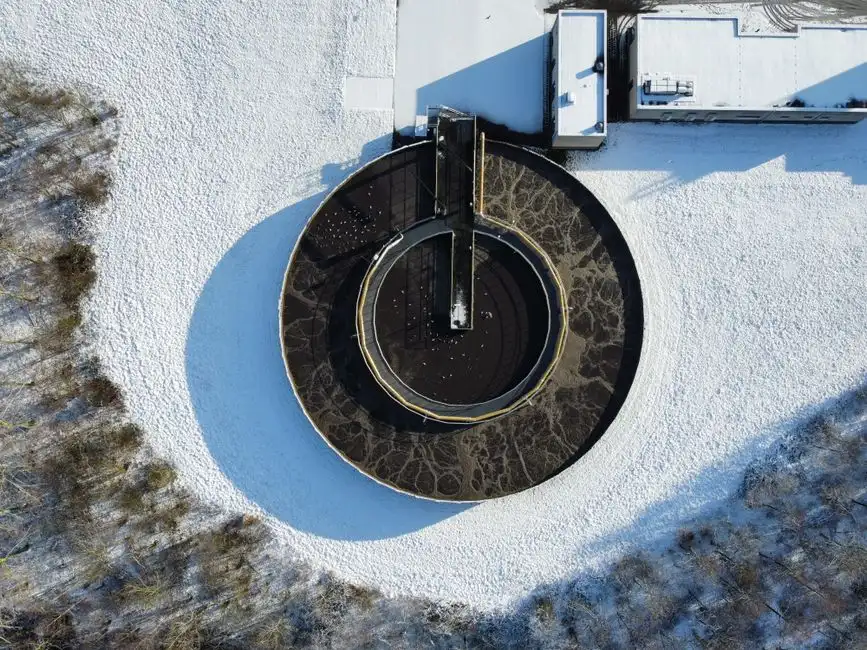
Two biological architectures dominate Indian tannery CETPs: the upflow anaerobic sludge blanket (UASB) reactor in place at Dindigul, and the membrane bioreactor (MBR) in newer export-house and Dindigul-adjacent plants. The choice is governed by influent strength, footprint, downstream reuse intent, and the available sludge-handling line.
| Parameter | UASB (mesophilic, 35–37 °C) | MBR (submerged PVDF, 0.1–0.03 µm) |
|---|---|---|
| Typical COD removal on tannery influent | 60–75% | 85–95% |
| BOD:COD requirement at inlet | ≥0.4 (pre-aeration often needed) | ≥0.3 (MBR more tolerant of low ratios) |
| Effluent TSS | 80–150 mg/L (needs post-clarifier) | <5 mg/L (clarifier-free) |
| Sludge yield vs CAS (conventional activated sludge) | 0.05–0.10 kg TSS/kg COD (granular, dewaterable) | 0.20–0.30 kg TSS/kg COD (30–50% lower than CAS) |
| Footprint vs CAS | ~40% smaller | ~60% smaller |
| Energy intensity | 0.05–0.10 kWh/m³ | 0.40–0.80 kWh/m³ (membrane aeration + permeate suction) |
| Best fit | Existing CETP with biogas use, low energy cost | Land-constrained cluster, downstream RO, water reuse |
UASB at 35–37 °C handles high-strength COD well but the low BOD:COD of raw tannery effluent (0.22–0.41) means a pre-aeration step is almost always needed to lift the ratio above 0.4 before the reactor. Where the cluster already has a biogas holder and gas flare — as Dindigul does — UASB earns its place by producing a dewaterable granular sludge that pairs cleanly with a plate-and-frame filter press.
An MBR membrane bioreactor system with submerged PVDF (polyvinylidene fluoride) modules, configured as an MBR membrane bioreactor module with 0.1–0.03 µm pore size, lifts COD removal to 85–95% and produces a clarifier-free effluent that is already low enough in TSS and colloidal organics to feed a downstream RO system. In dense Tamil Nadu clusters where land inside a notified industrial area costs a premium, MBR's roughly 60% smaller tankage versus CAS is often the deciding factor, and the higher energy intensity is offset by the elimination of a separate secondary clarifier and tertiary sand filter.
Tertiary Polishing: Azo-Dye Biodegradation and Activated Carbon
Secondary stages reliably remove 80–95% of bulk COD and BOD but leak colour, recalcitrant organics, and a fraction of the sulphide. The April 2025 3 Biotech paper from B.S. Abdur Rahman Crescent Institute (Vandalur, Chennai) isolated Aeromonas hydrophila (GenBank OQ690635) from Tamil Nadu tannery effluent and demonstrated 94% azo-dye degradation at 37 °C, pH 7, 10% inoculum concentration, and 60 hours of contact time, with 93% degradation confirmed on real-time tannery effluent and zero sludge disposal (Aarthi et al., 3 Biotech 15(4):105, 2025-04). FT-IR and GC-MS analysis confirmed the treated effluent was detoxified — secondary alcohol, alkyne, alcohol, nitro compounds, isothiocyanate, and amine salt functional groups were removed.
Translating this into a 2026 retrofit, the practical configuration is a tertiary MBBR (moving-bed biofilm reactor) or moving-bed biofilm contactor dosed with the isolated A. hydrophila consortium, sized at 6–10 hours HRT (hydraulic retention time) to hit the 60-hour-equivalent decolourisation at 37 °C. This is a low-energy, low-sludge step compared to Fenton oxidation or ozone, and the zero-sludge-disposal finding is a meaningful OPEX (operating expenditure) lever. For residual colour and refractory COD that the biofilm does not fully remove, a downstream activated-carbon polish (1–3 kg COD removed per kg carbon) closes the loop, with a chlorine dioxide generator or UV sterilizer as the final disinfection barrier to meet TNPCB microbial limits for the receiving stream.
RO and ZLD: Closing the Salt and Chloride Loop
The Pallapatti earthen storage tank at 15,540 mg/L TDS and 9,882 mg/L chloride is the visible failure of biological-only trains; the only durable answer in 2026 is brackish-water RO, optionally followed by evaporation to brine solidification, i.e. ZLD (zero liquid discharge). TNPCB has progressively tightened discharge expectations for tanneries in critically polluted areas, and the 2,100 mg/L CPCB land-irrigation ceiling for TDS is now the de facto design target for any new ETP in the four legacy clusters.
| RO/ZLD stage | Function | Typical 2026 operating envelope |
|---|---|---|
| BWRO (brackish-water RO) pass 1, post-MBR | Cut TDS from ~6,000 mg/L to <500 mg/L permeate; concentrate to ~18,000 mg/L brine | 65–75% recovery; feed pressure 10–15 bar |
| BWRO pass 2 / RO concentrate recycle | Further concentrate the brine; cut evaporator feed volume | 50–60% recovery; feed pressure 20–25 bar |
| MVR (mechanical vapour recompression) or MED (multiple-effect distillation) | Evaporate RO brine to water + salt cake; close the liquid loop | 0.05–0.10 kWh/L evaporated (MVR); brine reduction 95–99% |
| Plate-and-frame filter press | Dewater chemical, biological, and chrome-recovery sludge to 25–35% DS (dry solids) | Cake moisture 65–75%; polymer dose 2–4 kg/tonne DS |
A 70% recovery RO upstream of the evaporator shrinks the brine stream by 60–70%, which is the single biggest CAPEX (capital expenditure) lever on the evaporator itself — evaporator cost scales with evaporation duty, not with feed flow. The full train is built around a industrial RO system with RO/UF membrane elements rated for the high-TDS feed, and a plate-and-frame filter press for the sludge line. ZLD is the right call when (a) the cluster sits inside a TNPCB-notified critically-polluted area, (b) treated-effluent TDS is already above the 2,100 mg/L CPCB land-irrigation ceiling, or (c) the plant wants to recover sodium chloride for re-use in pickling and so convert a waste stream into a process input.
Selecting the Right 2026 Treatment Train: A Decision Framework
Three plant profiles cover the Tamil Nadu procurement landscape. A standalone tannery under 500 KLD (kilolitres per day) typically runs a segregation + chrome recovery + DAF + MBR + RO train with ZLD only if local groundwater is restricted. A CETP-fed cluster above 5 MLD (million litres per day) usually retains UASB for COD and biogas, adds MBBR or MBR for polishing, and pairs with RO + MVR to close the salt loop. An export-house tannery with its own chrome recovery line runs segregation + DAF + MBR + RO + ZLD because water reuse and chromium-recovery economics both demand it.
| Plant profile | Stream segregation | Chrome recovery | Primary | Secondary | Tertiary | RO/ZLD | Indicative 2026 CAPEX (INR/KLD) | Compliance target |
|---|---|---|---|---|---|---|---|---|
| Standalone tannery <500 KLD | Yes (soak/pickle split) | Yes (pH 8–9 precipitation) | DAF + lamella | MBR | MBBR / carbon polish | BWRO, ZLD only on water-stress sites | ₹3.5–5.0 Lakh/KLD | TNPCB inland surface water |
| CETP-fed cluster >5 MLD | Yes | Yes (centralised) | DAF + primary clarifier | UASB (existing) + MBR polish | MBBR with azo-dye biodegradation, carbon polish | BWRO + MVR (full ZLD) | ₹2.8–4.2 Lakh/KLD | ZLD / TNPCB critically-polluted |
| Export-house tannery with chrome recovery | Yes (4-stream split) | Yes (re-use loop) | DAF + high-rate settler | MBR | MBBR + activated carbon | BWRO + MVR (ZLD, NaCl recovery) | ₹4.0–6.0 Lakh/KLD | ZLD + reuse |
For a site-specific 2026 cost sheet, the Chennai ETP buyer's guide walks through CAPEX/OPEX anchoring for similar influent envelopes. Note that the indicative figures above are range anchors only; exact CAPEX requires a site-specific influent characterisation, a ZLD mass balance, and a treated-water reuse target. For sludge-handling OPEX specifically, the decanter centrifuge working principle guide compares the centrifuge against the plate-and-frame press for tannery chemical and biological sludges — the right pick depends on cake dryness target, polymer dose tolerance, and whether the chrome-recovery cake is handled in a separate line.
Frequently Asked Questions
What is the typical TDS and COD of raw tannery effluent in Tamil Nadu?
Raw tannery effluent in Tamil Nadu's Dindigul cluster runs 7,912–11,430 mg/L TDS and 3,571–7,600 mg/L COD, with chloride 3,278–4,199 mg/L and sulphide 51–296 mg/L (Dindigul field data, 2016-02). BOD sits at 1,475–1,686 mg/L, giving the low 0.22–0.41 BOD:COD ratio that dictates the train configuration.
How is chrome recovered from tannery wastewater before biological treatment?
Chrome is precipitated as chromium hydroxide at pH 8–9 using NaOH dosing, thickened in a lamella clarifier or DAF, and the cake is redissolved in sulphuric acid for re-use in the tanning drum. A well-operated loop recovers 70–90% of process chrome and cuts raw wastewater chromium from 5–50 mg/L down to 1–5 mg/L.
Can a UASB alone treat tannery wastewater to TNPCB standards?
No. UASB at 35–37 °C delivers 60–75% COD removal on tannery influent and produces a clarifier-free effluent that still contains 80–150 mg/L TSS, so a post-UASB MBR, MBBR, or activated-sludge step plus tertiary polishing is needed to hit TNPCB's 30 mg/L BOD and 250 mg/L COD inland-surface-water limits. The low BOD:COD of raw tannery effluent (0.22–0.41) is the reason pre-aeration ahead of UASB is essentially mandatory.
What is zero liquid discharge in a tannery and when is it required?
ZLD is a treatment train that produces no liquid discharge by combining RO (typically 65–75% recovery on the secondary effluent) with an MVR or MED evaporator that crystallises the RO brine to a salt cake for disposal or re-use. In 2026, ZLD is the right call when the cluster sits in a TNPCB-notified critically-polluted area, when the secondary effluent TDS already exceeds the 2,100 mg/L CPCB land-irrigation ceiling, or when the plant wants to recover sodium chloride for re-use in pickling.
Which bacterial or microbial process removes azo dyes from tannery effluent?
The April 2025 3 Biotech study from B.S. Abdur Rahman Crescent Institute (Vandalur, Chennai) isolated Aeromonas hydrophila (GenBank OQ690635) from Tamil Nadu tannery effluent and demonstrated 94% azo-dye degradation at 37 °C, pH 7, 10% inoculum, and 60 hours of contact time, with 93% degradation confirmed on real-time tannery effluent and zero sludge disposal (Aarthi et al., 3 Biotech 15(4):105, 2025-04). In a 2026 retrofit this maps to a tertiary MBBR or moving-bed biofilm contactor followed by an activated-carbon polish.