Why Chennai's Industrial Sector Needs Dedicated Effluent Treatment
An effluent treatment plant in Chennai is engineered to meet Tamil Nadu Pollution Control Board (TNPCB) consent limits under the Water (Prevention and Control of Pollution) Act, 1974, with target effluent COD of 100 mg/L, BOD 30 mg/L, TSS 100 mg/L, and TDS 2,100 mg/L for discharge into inland surface water. For tanneries clustered in Pallavaram and Chromepet, the Pallavaram CETP route remains a common alternative to in-house ETP, but capacity constraints during peak production cycles often force units to install primary treatment and pre-treatment skids before discharge. Typical 2026 capex for biological trains runs ₹2.5 lakh to ₹8 lakh per m³/day, and Chennai's ambient temperature of ≥30°C accelerates biological kinetics while also raising BOD in collection tanks — which is why equalisation HRT must be kept short (8–12 h) to avoid septic conditions. Salinity baseline in Chennai tannery CETP influent sits at 1.7% NaCl, ranging 2–6% across beam-house and tanning operations (Microbial Cell Factories, study on Pallavaram and Chromepet streams), pushing designers toward salt-tolerant biomass or MBR configurations instead of conventional activated sludge. Manali's petrochemical belt, Sriperumbudur's automotive and pharma estates, and Ambattur's mixed industrial zones each add distinct effluent signatures — high TDS, recalcitrant COD, FOG, or solvents — that cannot be handled by a single template plant.
What an Effluent Treatment Plant Actually Does in Chennai
An effluent treatment plant is a system engineered to treat industrial wastewater to statutory discharge or reuse quality before environmental release, and it differs from a Sewage Treatment Plant (STP) only in influent character — ETPs handle trade effluent with variable pH, COD, salinity, and toxicants, while STPs handle municipal sewage. A Common Effluent Treatment Plant (CETP) is a shared facility, such as the Pallavaram tannery CETP, where multiple small and mid-sized units pre-treat and discharge for collective polishing. Zero Liquid Discharge (ZLD) is the extreme end of the spectrum where no liquid leaves the site — permeate from RO is reused, and brine is sent to Multiple Effect Evaporators (MEE) followed by an Agitated Thin Film Dryer (ATFD). The standard process train runs screening → flow equalisation → primary clarification or DAF → biological step (UASB, MBBR, SBR, or MBR) → tertiary UF/RO → sludge dewatering. Chennai-specific design drivers are well defined: ambient temperature ≥30°C raises biological reaction rates by roughly 20–30% over temperate-climate designs (per standard activated-sludge kinetic models), saline industrial streams above 2% NaCl suppress nitrification and favour MBR with salt-acclimatised biomass, and space-constrained urban sites favour submerged MBR over conventional activated sludge with secondary clarifiers. If you are sizing a food-and-beverage or hotel STP rather than a true industrial ETP, the design logic shifts — see this hotel and resort STP sizing guide for India for a parallel reference.
TNPCB Discharge Limits Every Chennai ETP Must Hit
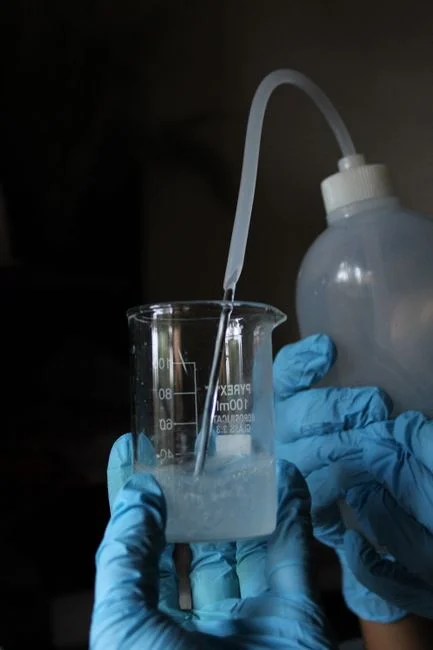
TNPCB enforces discharge standards under the Water Act, 1974, and consent-to-operate (CTO) renewal is now tied to demonstrated compliance via online continuous effluent monitoring for Category-A industries. The table below summarises the typical Schedule-II limits for inland surface water discharge and the additional tannery-specific parameters that drive chromium removal and sulphide scrubbing line items in any Chennai ETP design.
| Parameter | Unit | Inland surface water (TNPCB Schedule-II) | Marine / coastal discharge (TNPCB) | Tannery-specific note |
|---|---|---|---|---|
| pH | — | 6.5–8.5 | 6.5–9.0 | Neutralisation step mandatory |
| BOD (3-day, 27°C) | mg/L | 30 | 100 | — |
| COD | mg/L | 100 | 250 | — |
| TSS | mg/L | 100 | 200 (process industry-specific) | — |
| TDS | mg/L | 2,100 | 3,500 | Drives RO/ZLD decision for inland |
| Oil & grease | mg/L | 10 | 20 | — |
| Total chromium (Cr) | mg/L | 2 | 2 | Precipitation + sand filter polish |
| Sulphide (S²⁻) | mg/L | 1 | 5 | H₂S scrubbing in equalisation |
| Chlorides | mg/L | 1,000 | — | Critical for inland; high in tannery |
Marine discharge relaxes TDS to 3,500 mg/L but tightens the oil-and-grease envelope depending on consent conditions — always confirm the exact consent condition from TNPCB before finalising the process flow, because marine-outfall projects in Ennore and Royapuram have specific volume caps that limit dilution. Chromium is the single most defining parameter for the Pallavaram–Chromepet cluster, and a missed Cr slip on a 24-h composite sample is a typical CTO-renewal rejection trigger.
Matching ETP Technology to Your Industrial Stream
Technology selection is driven by influent character, footprint, and discharge target, not by vendor preference. For Chennai tannery streams with 4,000–8,000 mg/L COD, 2–6% salinity, and chromium, the most defensible train in 2026 is UASB (or upflow filter) for COD reduction, followed by MBBR or MBR polishing using salt-tolerant biomass, and finishing with chromium precipitation and sand/UF polish. The academic benchmark here is well documented: salt-tolerant mixed consortia achieved 80% COD reduction at 8% salinity in batch treatment of Pallavaram CETP feed (Microbial Cell Factories), and 99% phenol removal was reported at 15% salinity in the same study, confirming that biological treatment is viable above the conventional 1% NaCl limit if the biomass is conditioned. For textile and dye-bearing streams, isolated Aeromonas hydrophila (GenBank OQ690635) delivered 93% real-effluent azo-dye degradation at 37°C, pH 7, 10% inoculum, and 60-hour contact time (3 Biotech, April 2025), with 94% colour removal on synthetic dye solution under the same conditions — this is the operating envelope an MBBR or MBR tank must be designed around for textile clients in Tirupur-adjacent and Chennai dyeing units. Food processing streams carry high BOD and FOG; a DAF pre-treatment unit ahead of the biological step typically removes 70–90% FOG and TSS before the biological reactor sees the load, protecting biomass from shock. Pharma and chemical streams with recalcitrant COD and solvent traces generally require Fenton oxidation → UASB → A/O → MBR polishing, and MBR is reserved for tight-footprint sites or reuse targets rather than used as a default.
| Technology | Best-fit Chennai stream | Footprint (relative) | Shock-load tolerance | Typical effluent COD (mg/L) | Capex index (₹/m³/day, 2026) | O&M skill required |
|---|---|---|---|---|---|---|
| UASB + DAF pre-treatment | Tannery, food, brewery | Medium | Moderate | 300–500 | 2.5–4.0 L | Medium |
| MBBR (Moving Bed Biofilm Reactor) | Textile, pharma, mixed industrial | Medium-low | High | 150–250 | 3.5–6.0 L | Medium |
| SBR (Sequencing Batch Reactor) | Food, dairy, intermittent-flow plants | Medium | High | 100–200 | 4.0–6.5 L | Medium-high (timer logic) |
| MBR (Membrane Bioreactor) | Saline, space-constrained, reuse-grade | Low | High | <100 (with UF polish) | 6.0–14.0 L | High (membrane care) |
For most Chennai tannery retrofits in 2026, the highest-confidence configuration pairs an MBR membrane bioreactor for Chennai ETP trains with a DAF pre-treatment unit, because the MBR delivers sub-100 mg/L COD even with saline shock loads, and the DAF protects membranes from FOG and colloidal overload. For a deeper primer on the biological step itself, see the UASB reactor commissioning guide.
Inside a Modern MBR-Based ETP: Equipment Train and Parameters
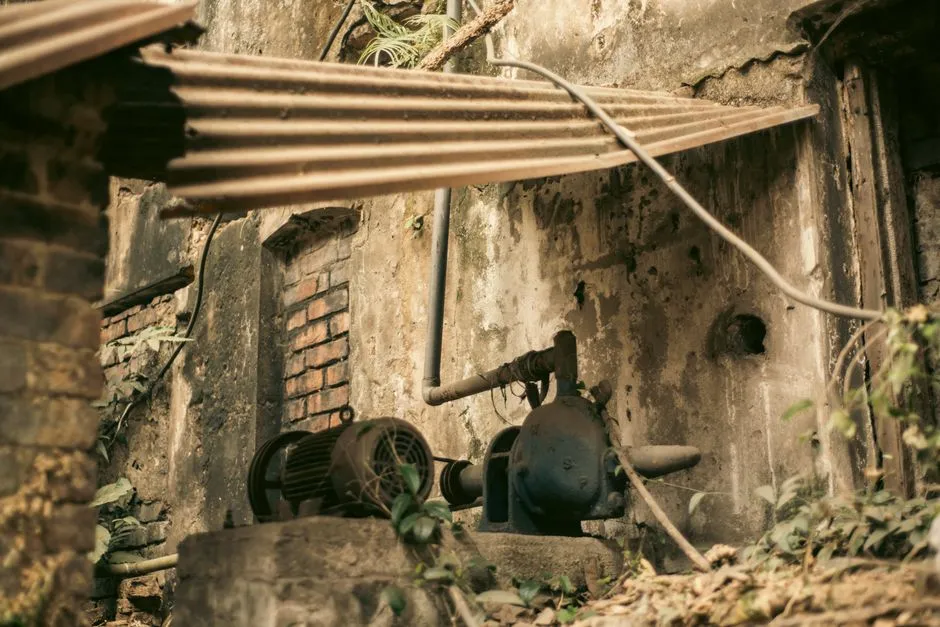
A modern MBR-based ETP train for a 100–500 m³/day Chennai industrial plant starts at the headworks with a rotary mechanical bar screen (3–6 mm aperture) followed by a grit chamber sized at 60–90 s HRT, then flows to an equalisation and neutralisation tank with 8–12 h HRT and a PLC-controlled chemical dosing skid for pH correction (typically H₂SO₄ and NaOH, with H₂S scrubbing in tannery service). Primary separation uses DAF for FOG, TSS, and colloids — air-to-solids ratio of 0.005–0.015, hydraulic loading 5–25 m³/m²·h — and the float sludge is scraped to a holding tank. The biological step is a submerged MBR with PVDF flat-sheet or hollow-fibre modules operated at MLSS 8,000–12,000 mg/L, HRT 6–10 h, and flux 12–20 L/m²·h; the membrane zone keeps mixed liquor at high biomass while the permeate is polished further. Tertiary treatment is a UF polishing system at 0.03 µm nominal pore size delivering TSS <1 mg/L, followed by an RO skid for ZLD/boiler reuse and a UV disinfection unit at 30–40 mJ/cm² for reuse lines. The sludge line runs a lamella thickener into a plate-and-frame sludge filter press producing a 22–28% DS cake for offsite disposal or co-processing in cement kilns. The table below lists the typical design parameters and supplier-checkable specs.
| Equipment | Typical capacity / spec | Design parameter | Chennai-specific note |
|---|---|---|---|
| Rotary mechanical bar screen | 3–6 mm aperture | Screen headloss <0.3 m | Specify SS-304 for tannery service |
| Equalisation tank | 8–12 h HRT | HRT 8–12 h | Short HRT to avoid BOD rise in Chennai heat |
| Chemical dosing skid | 0–100 L/h | pH 6.5–7.5 | Auto-titrating, redundant pumps |
| DAF unit | 4–300 m³/h | Air/solids 0.005–0.015 | Critical for FOG and chromium-bearing sludge |
| MBR module | PVDF, 0.1–0.4 µm | MLSS 8,000–12,000 mg/L | Submerged type for salt tolerance |
| UF polishing | 0.03 µm PVDF | Flux 40–60 L/m²·h | Backwash every 30–60 min |
| UV steriliser | 30–40 mJ/cm² | TSS <1 mg/L upstream | For reuse, not for discharge |
| Filter press | 5–30 m³/h feed | Cake DS 22–28% | Polypropylene plates for Cr service |
2026 ETP Cost in Chennai: Capex, Opex and ROI
2026 capex bands for Chennai ETPs split into three technology tiers, and the band is wide because influent character and discharge target drive most of the variance. A conventional biological ETP with primary, biological, and secondary clarification runs ₹2.5–5 lakh per m³/day. An MBR-based ETP including UF polishing runs ₹6–14 lakh per m³/day, driven by membrane cost and the larger blower load for high MLSS. Tannery-specific ETPs run higher, ₹8–18 lakh per m³/day, because of chromium precipitation, H₂S scrubbing, and salt-tolerant biomass seeding — and the high-COD tannery influent requires larger biological volumes per m³ of flow. Opex for biological systems is typically ₹15–35 per m³ treated, while MBR + RO trains run ₹35–70 per m³ because energy and membrane replacement dominate. The ROI trigger is straightforward: where fresh-water truck-in cost exceeds ₹80/kL, or where TNPCB consent renewal is contingent on ZLD, a closed-loop RO reuse train typically pays back in 18–36 months, and Chennai's water-stress profile makes this a defensible capex case for the management board. For a parallel cost breakdown on a different Indian city, see the 2025 cost-engineering breakdown for Pune — the line items map closely to Chennai.
| Plant type | Capex (₹ lakh per m³/day, 2026) | Opex (₹ per m³ treated) | Typical pay-back | Key cost driver |
|---|---|---|---|---|
| Conventional biological ETP | 2.5–5.0 | 15–35 | 24–48 months | Civil works, blower power |
| MBR-based ETP (with UF) | 6.0–14.0 | 35–70 | 18–36 months (reuse case) | Membrane replacement, energy |
| Tannery-specific ETP | 8.0–18.0 | 45–90 | 30–60 months | Cr removal, salt-tolerant seeding |
| Full ZLD (RO + MEE + ATFD) | 20–40 | 80–150 | 36–72 months | Evaporator energy, brine disposal |
Selecting a Chennai ETP Supplier: 2026 Checklist
Shortlisting a Chennai ETP supplier in 2026 should run on five hard criteria, not on brochure claims. First, verify in-house design and fabrication — a trading agent re-branding Chinese skid assemblies will not survive a TNPCB performance audit — and ask for ISO 9001 plus CE or NSF-61 certifications on the wetted components. Second, request at least three reference ETPs in Tamil Nadu at similar flow and influent type; ideally one running tannery or textile plant you can physically visit. Third, demand guaranteed effluent parameters in the purchase contract with a 12-month performance warranty tied to a TNPCB-accredited lab composite sample, not to in-house jar tests. Fourth, confirm spares availability in Chennai — PVDF membranes, dosing pump diaphragms, ClO₂ precursors, UV lamps — and a 48-hour on-site service SLA. Fifth, check whether the supplier supports TNPCB consent-to-establish (CTE) documentation and online OCEMS (Online Continuous Effluent Monitoring System) integration, because Category-A industries must now upload continuous data to the TNPCB server and the integrator must be willing to be on the hook for that telemetry. For the sludge line, ask the supplier to walk through cake dryness targets with a real filter press test, not a generic curve — see this sludge dewatering selection guide for the engineering background.
Frequently Asked Questions
How much does an ETP cost in Chennai in 2026?
Conventional biological ETP runs ₹2.5–5 lakh per m³/day, MBR-based ETP with UF runs ₹6–14 lakh per m³/day, and tannery-specific ETP with chromium removal and salt-tolerant biomass runs ₹8–18 lakh per m³/day. Opex for MBR + RO trains is typically ₹35–70 per m³ treated, dominated by membrane replacement and energy.
Which ETP is best for a tannery in Chennai?
UASB + MBBR + MBR polishing with salt-tolerant biomass is the most defensible train for Chennai tanneries in 2026, because the salt-tolerant mixed consortia studied on Pallavaram and Chromepet feed achieved 80% COD reduction at 8% salinity (Microbial Cell Factories). Small units (<50 m³/day) should also evaluate the Pallavaram CETP tie-up route, since in-house treatment only becomes economic above that flow threshold.
What are TNPCB norms for industrial effluent?
TNPCB Schedule-II typical limits for inland surface water discharge are pH 6.5–8.5, BOD 30 mg/L, COD 100 mg/L, TSS 100 mg/L, TDS 2,100 mg/L, and oil & grease 10 mg/L. Tannery-specific additions are total chromium 2 mg/L and sulphide 1 mg/L. Marine/coastal discharge relaxes TDS to 3,500 mg/L but BOD and COD are tightened in most consent orders — always confirm against the actual TNPCB consent condition before finalising process design.
Is MBR better than conventional activated sludge for Chennai industries?
For saline, variable, or space-constrained Chennai sites, MBR outperforms conventional activated sludge on effluent quality, footprint, and salt-shock tolerance — but capex is roughly 2–3× higher and the O&M team must be trained on membrane care, CIP cycles, and aeration tuning. For low-salinity food and dairy streams with ample land, conventional activated sludge remains the more economical choice.
Can Chennai ETP treated water be reused?
Yes. MBR permeate followed by UF + RO polish delivers boiler-grade or cooling-tower-makeup water with TDS <50 mg/L and conductivity <10 µS/cm, and Chennai's water-stress profile makes reuse economically attractive. UV or ClO₂ disinfection on the reuse line protects against microbial regrowth in cooling-tower basins, and the closed loop supports TNPCB's ZLD trajectory.