Wastewater Treatment Plant Cost in Pune 2025: Engineering Breakdown with Local Data, Compliance & ROI Calculator
In Pune, a 100 KLD wastewater treatment plant costs ₹4.3–₹7.5 lakhs (ETP) or ₹3.8–₹6.2 lakhs (STP) in 2025, depending on technology and construction material. For example, a prefabricated MBBR system averages ₹4.5 lakhs, while a civil-constructed MBR plant exceeds ₹7 lakhs due to membrane costs. Hidden expenses—like ₹1.2–₹2.5 lakhs for MPCB permits and ₹50,000/year for sludge disposal—can inflate budgets by 30–40%. Use this guide’s capacity-based pricing tables and ROI calculator to avoid cost overruns.
Why Wastewater Treatment Plant Costs in Pune Are Hard to Pin Down
A procurement manager at a textile unit in Chakan recently faced a common dilemma: three different wastewater treatment plant suppliers in Pune provided quotes for a 50 KLD plant ranging from ₹2.5 lakhs to ₹12 lakhs. This 380% variance is not due to arbitrary markups but stems from a lack of standardized specifications in the initial Request for Quotation (RFQ). Without defining the effluent discharge limits or construction material, quotes remain incomparable.
The variability in wastewater treatment plant cost in Pune is primarily driven by three factors. First is the technology selection; a Moving Bed Biofilm Reactor (MBBR) is significantly cheaper upfront than a Membrane Bioreactor (MBR), though the latter offers superior reuse quality. Second is the choice between civil-constructed concrete tanks and prefabricated Mild Steel (MS) or Fiber Reinforced Plastic (FRP) units. Third, vendor scale plays a role, where local boutique fabricators may offer lower prices but lack the engineering depth of national-level providers who factor in long-term reliability.
Pune-specific environmental and economic factors further complicate budgeting. High land costs in industrial zones like Chakan and Hinjewadi often force facilities to opt for underground package STPs for land-constrained sites in Pune, which carry a 20% premium over surface-mounted units. The Maharashtra Pollution Control Board (MPCB) has intensified its scrutiny of "Consent to Establish" (CTE) applications, often requiring additional tertiary treatment stages that are frequently omitted from base quotes. Finally, the seasonal labor shortage during the Pune monsoon (June–September) can delay civil works, leading to indirect cost escalations of 10–15%.
Wastewater Treatment Plant Cost in Pune by Capacity: 2025 Price Table
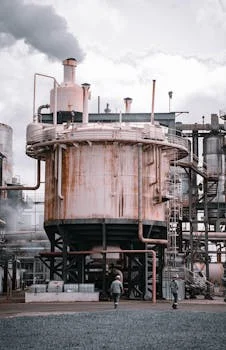
The following table outlines the estimated capital expenditure (CAPEX) for Effluent Treatment Plants (ETP) and Sewage Treatment Plants (STP) across common capacities. This data is synthesized from 2025 market benchmarks and recent project commissions in the Pune metropolitan region.
| Capacity (KLD) | ETP Cost Range (₹ Lakhs) | STP Cost Range (₹ Lakhs) | Typical Construction Material |
|---|---|---|---|
| 10 KLD | 2.5 – 3.8 | 1.8 – 2.8 | Prefabricated (FRP/MS) |
| 25 KLD | 3.5 – 5.2 | 2.8 – 4.2 | Prefabricated or Skid Mounted |
| 50 KLD | 4.2 – 6.5 | 3.5 – 5.5 | Prefabricated / Semi-Civil |
| 100 KLD | 4.3 – 7.5 | 3.8 – 6.2 | Civil Construction / MBBR |
| 200 KLD | 8.5 – 14.0 | 7.5 – 12.0 | Civil Construction |
| 500 KLD | 18.0 – 32.0 | 15.0 – 28.0 | Civil Construction / SBR |
| 1000 KLD | 35.0 – 60.0 | 30.0 – 55.0 | Full Civil / MBR or SBR |
Analysis of this data reveals a clear trend in STP cost per KLD in Pune: economies of scale are significant. While a small 10 KLD plant might cost ₹25,000 per KLD, a 500 KLD plant averages approximately ₹4,000 to ₹6,000 per KLD. This reduction is due to the diminishing marginal cost of pumps, blowers, and control panels as volume increases. These prices exclude GST (18%) and MPCB permit fees, which can range from ₹50,000 to ₹2 lakhs depending on the industrial category (Red/Orange/Green) and capital investment. Pune vendors report that civil construction costs are currently 15–20% higher than prefabricated alternatives due to rising RMC (Ready Mix Concrete) and steel prices in the Maharashtra region.
Hidden Costs That Blow Your Wastewater Treatment Plant Budget in Pune
When evaluating an ETP price list 2025, it is critical to look beyond the equipment price. Approximately 30–40% of the total project cost often resides in "hidden" line items that are not included in a standard equipment quote. In Pune, civil and site work is the largest variable. In the Chakan industrial area, civil construction costs range from ₹500 to ₹1,200 per sq. ft. Prefabricated plants can reduce this by 40%, yet they still require a reinforced concrete foundation (₹20,000–₹50,000) to prevent settling during the heavy monsoon season.
Compliance costs are another significant factor. MPCB permits for a plant under 100 KLD typically cost around ₹50,000, but for 500+ KLD plants, this can escalate to ₹2 lakhs. The timeline for these permits is usually 4–8 weeks; however, many Pune firms allocate an additional ₹30,000 for expedited processing and consultant fees to ensure MPCB wastewater norms Pune are met without delaying plant startup.
Operational expenses (OPEX) are frequently underestimated. Sludge disposal in Pune is strictly regulated. Hazardous sludge from textile or pharma units must be sent to licensed Treatment, Storage, and Disposal Facilities (TSDFs), such as the Maharashtra Enviro Power Ltd (MEPL) in Ranjangaon. Disposal costs range from ₹3,000–₹5,000 per ton for hazardous waste, compared to ₹1,500–₹2,500 for non-hazardous municipal sludge. To mitigate these recurring costs, many facilities are now integrating sludge dewatering solutions to reduce disposal costs in Pune by lowering the moisture content and weight of the waste.
Finally, labor and consumables add up. A full-time skilled operator in Pune’s industrial zones commands ₹15,000–₹25,000 per month. To lower these costs, smart facilities invest in automated dosing systems to reduce O&M costs in Pune’s industrial plants, which ensures precise chemical usage and reduces the need for constant manual intervention.
Technology Comparison: MBBR vs. SBR vs. MBR for Pune’s Wastewater Challenges
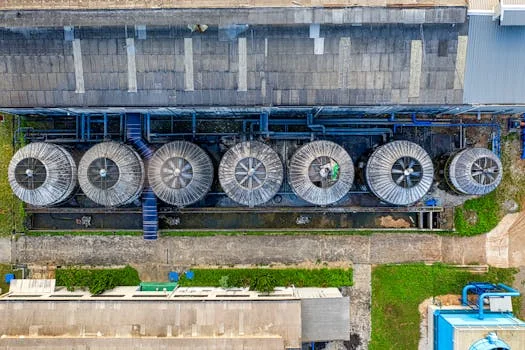
Selecting the right technology is a trade-off between footprint, effluent quality, and hidden costs of wastewater treatment. For Pune’s land-constrained environments, such as IT parks in Hinjewadi or Magarpatta, the footprint is often the deciding factor.
| Technology | CAPEX (₹/KLD) | OPEX (₹/KLD/yr) | Footprint (sq. ft/KLD) | Effluent Quality (BOD) | Best For |
|---|---|---|---|---|---|
| MBBR | ₹4,500 - 5,500 | ₹300 - 450 | 0.8 - 1.0 | <20 mg/L | SMEs, Moderate BOD |
| SBR | ₹5,200 - 6,500 | ₹350 - 500 | 1.2 - 1.5 | <10 mg/L | Residential, Variable loads |
| MBR | ₹7,000 - 9,500 | ₹500 - 750 | 0.4 - 0.6 | <5 mg/L | Pharma, Textile, Reuse |
In the context of Pune industrial effluent treatment, MBBR is the workhorse for budget-conscious SMEs due to its lower OPEX and ease of operation. However, for industries targeting zero liquid discharge (ZLD) or high-quality reuse, MBR systems for high-effluent-quality applications in Pune’s textile/pharma sectors are becoming the standard. While MBR has a higher CAPEX, it offers a 60% smaller footprint and produces effluent that can be sold to neighboring water-scarce industries or reused in cooling towers, significantly impacting the ROI calculator for STP.
A specific technical note for Pune: the monsoon season can lead to temperature drops and increased turbidity in raw sewage. MBR systems must be designed with 30% redundancy because membrane flux rates can decrease by 20–30% during sustained cold, rainy periods. Sequential Batch Reactors (SBR) are highly effective for residential complexes in areas like Baner or Wakad, where flow rates fluctuate wildly between morning peaks and nighttime lows.
How to Calculate ROI for Your Wastewater Treatment Plant in Pune
Justifying the investment in a wastewater plant requires a shift from viewing it as a "compliance cost" to an "asset." Follow this 5-step framework to determine your return on investment.
Step 1: Estimate Water Savings. The cost of industrial water in Pune is approximately ₹50/KL. A 100 KLD plant that reuses 80% of its effluent saves 80 KL per day. Over 300 operational days, this results in annual savings of ₹12,00,000.
Step 2: Calculate Penalty Avoidance. MPCB fines for non-compliance range from ₹1 lakh to ₹5 lakhs per violation in 2025. Avoiding just one major violation and the subsequent "closure notice" risk is a significant financial protection.
Step 3: Factor in Government Incentives. Under Maharashtra’s "Water Conservation Scheme," certain industrial zones offer up to a 30% subsidy on the CAPEX of STPs and ETPs, capped at ₹20 lakhs. This can drastically shorten the payback period.
Step 4: Account for O&M Costs. Subtract the annual operating costs. For a 100 KLD MBBR plant, OPEX (electricity, chemicals, labor) is roughly ₹3 lakhs per year.
Step 5: Apply the ROI Formula. (Annual Savings + Incentives – OPEX) / CAPEX. For a 100 KLD MBBR plant with a ₹4.5 lakh CAPEX, the ROI is typically achieved in