Why Most WWTP Supplier Comparisons Fail Before the RFQ Goes Out
Three bids sit on the desk. They quote different process trains, different scopes of supply, and different warranty terms — so the line-item prices are not comparable until you normalise them. A buyer who picks on catalogue photos or lowest CAPEX usually discovers the gaps in year two, when spares are unavailable and the performance guarantee was written as "best efforts". The fix is not a sharper spreadsheet; it is a weighted, evidence-led framework that scores each supplier on capability before price is ever discussed.
Two 2026 procurement programmes show the bar has moved. Watercare Services' Southwest Water Programme in New Zealand committed NZ$500 million in September 2026 to advanced biological treatment and reuse capacity, and the UK Health Security Agency's PRISM wastewater surveillance roll-out now covers roughly 25 million people across England (industry coverage, 2026-09). Both packages require integrated process equipment plus monitoring and data interfaces — which means the question is no longer "can they build a tank" but "can they deliver a defensible, instrumented process line". A vendor without in-house fabrication, a Factory Acceptance Test (FAT) bay, and membrane-element production capacity will struggle on lead time, spares, and the documentation depth modern tenders demand. That is the contrast buyers should be testing, not the surface gloss of a brochure.
The Seven Criteria That Actually Separate Equipment Suppliers
A defensible shortlist rests on seven weighted criteria, in priority order. (1) Process-line coverage: the vendor must be able to supply headworks screening, primary clarification, the biological reactor, tertiary polishing, and sludge handling as integrated scope or as separate skids, with documented interfaces between stages. (2) In-house manufacturing depth: own fabrication shop, dedicated FAT bay, and membrane-element production versus assembly from bought parts — verifiable on a supplier audit. (3) Third-party certifications: ISO 9001 quality management, ISO 14001 environmental management, CE marking under EU Machinery Directive 2006/42/EC, NSF/ANSI 61 where any stream contacts potable water, and ATEX 2014/34/EU for explosive atmospheres in sludge handling. (4) Documented reference plants: a minimum of three installations in the same influent class (municipal, food-and-beverage, metalworking, etc.), each with operating data older than 24 months so durability — not just commissioning success — is proven. (5) Performance guarantees: BOD, COD, total nitrogen (TN), total phosphorus (TP), and turbidity targets backed by liquidated damages, not "best efforts" wording. (6) Lifecycle cost transparency: energy in kWh/m³, chemical dose in g/m³, membrane life in years and $/m², and labour hours per week, disclosed as a TCO appendix rather than buried in a footnote. (7) Service footprint: regional service engineers, 48-hour spares dispatch, remote-monitoring capability, and a structured operator-training programme.
The weighting is the buyer's call, but a defensible default for a 5,000–50,000 m³/day industrial or municipal plant is 20% on process coverage, 15% on manufacturing depth, 10% on certifications, 15% on references, 15% on guarantees, 15% on TCO transparency, and 10% on service reach. Anything heavier on price and lighter on these seven is a procurement exercise, not an engineering one.
Technology Coverage Matrix: Matching Supplier Scope to Your Influent
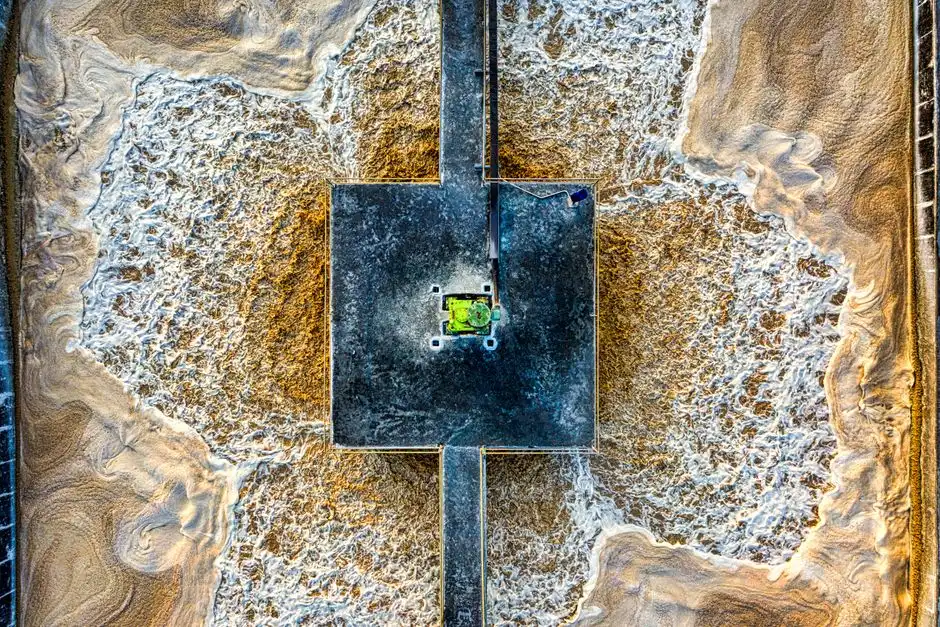
Before scoring vendors, the buyer needs a stage-by-stage map of the process train and which equipment classes each supplier can deliver. The matrix below covers the eight stages from headworks to sludge cake, with the engineering envelope a credible supplier should be able to quote against.
| Process stage | Equipment class | Engineering envelope (2026 benchmark) | What to ask the vendor |
|---|---|---|---|
| Headworks | Bar screens, grit removal | 6–25 mm bar spacing; up to 95% grit capture at 0.2 mm | Daily screenings volume handled without manual intervention |
| Flow equalisation | Equalisation basin + mixers | HRT 4–8 h, peak/mean factor 2.5–4.0 | Mixer turndown ratio and power density (W/m³) |
| Primary clarification | Lamella / settling tank | 20–40 m/h surface loading on a high-efficiency lamella clarifier, cutting civil footprint versus conventional settlers | Surface-loading guarantee and coagulant dose envelope (g/m³) |
| Biological treatment | CAS / SBR / MBR / MABR | MBR delivers sub-1 µm effluent with a footprint roughly 60% smaller than CAS (HydropureWater MBR engineering data, 2026); MABR enables incremental capacity upgrades without draining tanks | Integrated MBR membrane bioreactor flux (LMH) and replacement life; MABR oxygen transfer efficiency (g O₂/m³·h) |
| Tertiary polishing | Denitrifying filter, membrane separation | Mandatory to hit <3 mg/L TN and <0.1 mg/L TP for tightened consents | Backwash cycle time, chemical dose for P precipitation, recovery rate |
| Disinfection | UV / ClO₂ / ozone | UV dose 30–40 mJ/cm² for secondary effluent; UV steriliser lamp life ≥9,000 h | Validated dose at end of lamp life, not at start |
| Sludge thickening | Gravity / DAF / drum thickener | Thickened sludge 4–6% DS | Polymer dose (g/kg DS) and capture rate |
| Sludge dewatering | Plate-and-frame filter press; centrifuge | Filter press cake 22–35% DS via a plate and frame filter press at 1–500 m² filtration area; haulage cost per dry tonne falls materially at higher cake solids | Cake solids guarantee and cycle time per batch |
Any supplier who cannot quote against the full table — even if the application only needs four of the eight stages — is signalling that integration risk will land on the buyer.
Compliance and Certification Scorecard for 2026
Certifications are the cheapest disqualifier in the entire evaluation, and the one most often skipped. A credible 2026 WWTP equipment supplier should hold current ISO 9001 (quality management), ISO 14001 (environmental management), CE marking under EU Machinery Directive 2006/42/EC for the assembled skid, NSF/ANSI 61 for any wetted component in a potable reuse train, and ATEX 2014/34/EU for any equipment in classified zones around sludge digestion or chemical dosing. Where pressure vessels are in scope, the Pressure Equipment Directive 2014/68/EU applies. For reference, a properly documented chlorine dioxide disinfection generator covering 50–20,000 g/h should ship with a declaration of conformity against EPA, EU Drinking Water Directive 98/83/EC, and WHO Guidelines for Drinking-water Quality — that documentation depth is the benchmark.
| Certification / standard | Scope | Why it matters in 2026 |
|---|---|---|
| ISO 9001:2015 | Quality management system | Auditable QA across design, fabrication, FAT, commissioning |
| ISO 14001:2015 | Environmental management | Required by most EPCs and public tenders; documents environmental controls |
| CE / Machinery Directive 2006/42/EC | EU mechanical safety | Mandatory for any skid delivered into the EU; non-negotiable |
| PED 2014/68/EU | Pressure Equipment Directive | Mandatory for pressure vessels, air receivers, RO housings |
| NSF/ANSI 61 | Drinking water contact | Required for any wetted component in reuse or potable applications |
| ATEX 2014/34/EU | Explosive atmospheres | Required around digesters, chemical stores, and biogas zones |
| EPA CWA effluent guidelines | US discharge compliance | Reference for US-based projects and many multinationals |
| EU UWWTD 91/271/EEC | Urban Waste Water Treatment Directive | Defines EU consent envelope and agglomeration thresholds |
Hard rule: any supplier who cannot produce current ISO 9001 and CE certificates at RFQ stage should be eliminated from the shortlist, not negotiated with. The cost of chasing documentation after contract award is higher than the price discount of a non-compliant vendor.
Total Cost of Ownership: The 10-Year Per-Cubic-Metre View

Sticker price is the wrong denominator. The defensible comparison unit is 10-year TCO per cubic metre treated, defined as TCO = (CAPEX + 10-year OPEX) ÷ (annual m³ treated). Run the formula on every bid; the supplier with the lowest line-item price almost never wins once OPEX is loaded.
| OPEX line | Typical band (2026) | What the supplier must disclose |
|---|---|---|
| Aeration energy (CAS baseline) | 0.3–0.6 kWh/m³ | Blower power (kW) at design loading; turndown control; MABR-style bubble-less transfer can cut this materially |
| Coagulant / chemical dose | 50–200 g/m³ for DAF or coagulation | Dose envelope vs raw-water TSS; lamella designs can cut coagulant use by up to 30% |
| Membrane replacement (UF / MBR) | 5–8 year life; $/m² line item required | Replacement cost per m² as an explicit bid line, not a footnote |
| Sludge haulage | Indexed to cake solids and $/tonne·km | Cake solids guarantee; plate-and-frame presses targeting 22–35% DS materially shrink haulage cost per dry tonne |
| Labour | Site-specific | Operator hours/week, automated vs manual task split, alarm load per shift |
| Energy for reuse / ZLD polish | 0.5–2.0 kWh/m³ for RO, plus thermal for ZLD | Specific energy in kWh/m³ at design recovery; recovery rate guarantee |
The same TCO pattern shows up across regions. The Kuwait sludge dewatering equipment 2026 buyer's guide and the Hamburg industrial wastewater 2026 supplier guide both find that sludge-handling decisions — not aeration tank size — drive lifecycle cost in arid and temperate climates respectively. Where reuse is in scope, the ZLD system ROI engineering guide shows the breakeven is sensitive to energy price and recovery rate, both of which the supplier's guarantee should pin down.
From Shortlist to Signed Contract: A 7-Step Vetting Workflow
Criteria without a process produce binders, not decisions. The seven steps below move a buyer from a long list to a signed contract in a defensible sequence.
- Define the influent envelope and discharge consent in writing. Minimum data set: flow (mean and peak), BOD, COD, TSS, TN, TP, pH, temperature, and peak factors. No vendor conversation should start before this exists on paper.
- Issue a two-page pre-qualification questionnaire (PQQ). Score on the seven criteria from Section 2. A passing grade is typically ≥70% weighted, with mandatory passes on certifications and reference plants.
- Run a 90-minute technical interview. Demand a process flow diagram, sample P&ID, control philosophy narrative, and a list of instruments. Ask what the vendor's equipment cannot do — a candid "we don't do X" is more reliable than over-promising.
- Conduct a supplier audit. Walk the fabrication shop, the FAT bay, and the membrane warehouse. The physical evidence — weld quality, inventory depth, calibration records on test instruments — is what brochures cannot fake.
- Run a parallel pilot or skid trial for unfamiliar processes. Acceptance criteria: COD/TN/TP removal over a defined operating window, energy per m³, and chemical dose per m³. Reference activated sludge vs biofilm process comparison guidance when choosing the trial envelope.
- Negotiate performance guarantees with liquidated damages. Tie BOD, COD, TN, and TP to a numeric envelope and a daily-average basis, not monthly averages and not "best efforts". The language matters more than the percentage.
- Lock a 10-year spares and service schedule. Named regional engineer, 48-hour critical-spares dispatch, remote-monitoring option, and a defined operator-training cadence. Stocking of RO and UF membrane elements and treatment plant valves, instruments, and filter media should be confirmed in writing.
Frequently Asked Questions
How many suppliers should be on a defensible shortlist for a WWTP project?
Three to five is the defensible range. Fewer than three removes price tension and leaves no fallback if a preferred vendor fails the FAT; more than five dilutes engineering review and pushes the decision back to price. The Watercare NZ$500M Southwest programme and the UKHSA PRISM roll-out covering 25 million people both ran on three-to-five-supplier shortlists through 2026.
What certifications should a 2026 WWTP equipment supplier hold as a minimum?
Current ISO 9001, CE marking under EU Machinery Directive 2006/42/EC, and ISO 14001 are the floor. Add NSF/ANSI 61 for any potable or reuse contact, ATEX 2014/34/EU for explosive zones, and PED 2014/68/EU for pressure vessels. Any supplier who cannot produce ISO 9001 and CE at RFQ stage should be eliminated, not negotiated with.
Which biological process should a buyer shortlist against for tightened effluent consents?
For consents below roughly 3 mg/L TN and 0.1 mg/L TP, biological treatment alone is insufficient — tertiary polishing is mandatory. MBR delivers sub-1 µm effluent with about 60% smaller footprint than conventional activated sludge, while MABR enables incremental capacity upgrades without draining tanks, as demonstrated at Severn Trent's Minworth WWTP serving 8.5 million UK customers.
What is the single most common hidden cost in WWTP supplier comparisons?
Membrane replacement cost per m², undisclosed as a line item. UF and MBR membranes typically last 5–8 years, and vendors who bury the replacement cost in a footnote transfer the OPEX risk to the buyer. The 10-year TCO per m³ model surfaces this line directly, which is why it almost always reorders the shortlist.
Related Equipment
- skid-mounted treatment plant manufacturer — specifications, capacity range, and technical data