Why Brasília in 2026 Is a Special Case for Fab and Data-Hall Wastewater
Brasília draws its municipal supply from the Descoberto and Paranoá basins on the Cerrado plateau, and both catchments have triggered emergency restrictions during recent dry seasons — a 2026 design must assume a restricted raw-water allocation and push toward aggressive reuse rather than a once-through spec (ADASA-DF basin bulletins, 2024-2025). A reference point for the level of local scrutiny: the RT-One data-center case, where a 2024 letter of intent with the Government of the Federal District projected 100 MW initial capacity scaling to 400 MW, with the company publicly admitting it might draw subsoil water for cooling — a disclosure that put water availability at the center of the licensing debate (per Brazil's data center race ignores environmental impact, 2025-08).
Brazil's energy matrix is among the cleanest in the world, which is precisely why federal policy is using water — not electricity — as the gating variable. The Redata regime (Provisional Measure 1,318/2025) ties PIS/Cofins and import-duty exemptions to three commitments: clean energy, low water usage, and at least 10% of processing capacity reserved for the domestic market. The wastewater and reuse numbers a fab or hall files with the Receita Federal therefore become a financial-control document, not just an environmental one (per Brazil's data center race ignores environmental impact, 2025-08).
This article maps five streams that any new semiconductor fab or hyperscale data hall in Brasília will have to treat in 2026: UPW reject and backwash, CMP slurry, HF/BOE etching, dicing and photoresist, and cooling-tower blowdown. The target compliance frame is CONAMA Resolution 430/2011 for effluent quality, CONAMA 357/2005 for receiving-water body classification, and the ADASA-DF outfall and reuse rules that operationalize both within the Federal District. The design benchmark used throughout is 85-92% closed-loop recovery, with 1,400-1,600 L of municipal feed per 1,000 L of UPW produced (per AXEON Water, 2025).
Fab and Data-Hall Process Wastewater Streams in Brasília
A defensible P&ID starts with a defensible stream inventory. The five streams below cover well over 95% of the liquid effluents a greenfield Brasília fab or co-located data hall will generate, and each one drives a different downstream unit operation.
- UPW reject and backwash. Roughly 20-25% of raw municipal feed exits the UPW train as reject or as RO/EDI backwash, carrying high dissolved silica and salts but very low organics. The polishing-end UPW target is resistivity >18.2 MΩ·cm at 25°C and TOC <1 ppb per SEMI F63 and ASTM D5127 (per AXEON Water, 2025). Reject is the cleanest feed for the RO reuse loop.
- CMP slurry wastewater. Colloidal silica or alumina, surfactants, and residual oxidizers (H₂O₂, KMnO₄) drive TSS into the hundreds to a few thousand mg/L range with high turbidity. The two operational challenges are keeping the colloidal silica from blinding downstream membranes and breaking the oxidizer residuals before any biological stage. A lamella clarifier or DAF ahead of polishing is the standard pretreatment, with secondary treatment of CMP slurry wastewater specifically dependent on getting TSS below ~30 mg/L before MBR or RO.
- Etching wastewater (HF, BOE, HNO₃/H₃PO₄). Fluoride typically runs 100-1,000+ mg/L with pH <2 on the wet-bench drain. Two-stage CaF₂ precipitation at pH 6-8 with a polishing step is the standard route to <10 mg/L fluoride before discharge; full parameters and stoichiometry are laid out in the two-stage CaF₂ precipitation guide.
- Dicing and photoresist wastewater. Low volume, high TSS from silicon kerf, plus spin-coat solvents and developers. Route to DAF then cartridge filtration; recovery targets for the silicon-laden stream now reach 98% in current-generation designs, as detailed in the dicing wastewater RO guide.
- Cooling-tower blowdown and data-hall chilled-water makeup. Dominates by volume. Carries scale inhibitors, biocides, calcium hardness (200-600 mg/L as CaCO₃ typical), and silica. Managed with side-stream softening, DAF for silica and organics, and a chlorination/blowdown regime sized against ADASA-DF catchment limits.
| Stream | Key Pollutants | Typical Concentration | Primary Driver | Pre-RO Target |
|---|---|---|---|---|
| UPW reject | Dissolved silica, salts | 20-25% of feed flow | Recovery to reuse loop | SDI <3, TDS <500 mg/L |
| CMP slurry | Colloidal silica/alumina, surfactants, oxidizers | TSS 200-3,000 mg/L | Particle and TSS load | TSS <30 mg/L |
| HF/BOE etching | Fluoride, low pH | F⁻ 100-1,000+ mg/L | Fluoride ceiling | F⁻ <10 mg/L |
| Dicing / photoresist | Si kerf, solvents, developers | TSS 500-5,000 mg/L (intermittent) | Volume variability, organics | TSS <20 mg/L, COD <100 mg/L |
| Cooling-tower blowdown | Hardness, silica, biocides, inhibitors | Cycles of concentration 4-6 | Volume dominance | Hardness <1 ppm CaCO₃ to RO |
2026 Treatment Train: From Equalization to RO Polishing
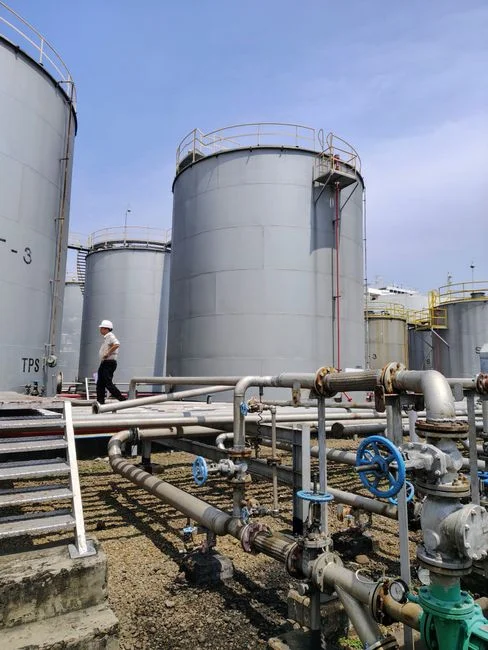
The treatment train below assumes segregated collection of each of the five streams, followed by parallel pretreatment and a shared RO/UV polish where reuse water is generated. It is the configuration most likely to clear both IBRAM/SEGETH licensing in the DF and ADASA-DF outfall review, while keeping the reuse ratio inside Redata's low-water-use envelope (per Brazil's data center race ignores environmental impact, 2025-08).
- Stage 1 — Equalization and pH adjustment. Balance batch dumps from etching and dicing to pH 6-8 via PLC-controlled acid/NaOH dosing, typically with 4-8 hours of hydraulic retention. Use an automatic chemical dosing system with redundant pH probes to keep excursions inside the MBR's tolerable band.
- Stage 2 — Chemical precipitation. Lime or CaCl₂ for fluoride reduction to <10 mg/L ahead of the discharge ceiling set by CONAMA 430. Coagulant (PAC 50-150 mg/L) and flocculant (0.1-1.0 mg/L anionic polyacrylamide) for TSS and metals. Dose at stoichiometric plus 5-10% excess, validated by jar testing on the actual fab drain.
- Stage 3 — Lamella clarification or DAF. Lamella surface loading of 20-40 m/h suits high-flow steady-state UPW reject; a lamella clarifier at this rating handles 50-90% TSS removal in a small footprint. A DAF system (typical hydraulic range 4-300 m³/h) is the better pick for oily or surfactant-laden CMP and etching streams, where buoyant particles dominate.
- Stage 4 — MBR or sand/UF polish. An MBR membrane bioreactor system with PVDF 0.1 µm flat-sheet membranes delivers near-reuse-quality effluent and roughly 60% smaller footprint than conventional activated sludge. Where the stream is already low-COD (cooling-tower side-stream), a sand/UF polish is enough and saves OPEX.
- Stage 5 — RO polishing. An industrial RO system provides 95-99% dissolved-solids rejection, reducing TDS from ~500 ppm feed to 5-25 ppm permeate, with system recovery up to 85-90% when paired with the upstream reuse loop (per AXEON Water, 2025). Energy recovery devices on the concentrate side cut kWh/m³ by 25-35% at Brasília feed pressures.
- Stage 6 — UV 185 nm and/or ClO₂ disinfection. 185 nm lamps strip TOC to <1 ppb for reuse-loop polish; a parallel UV sterilizer at 254 nm and a chlorine dioxide generator for residual control keep the loop microbiologically stable.
Design the system against 85-92% closed-loop recovery and 1,400-1,600 L of municipal feed per 1,000 L of UPW produced — those are the numbers that should appear on the Brasília permit application, because they match the industry direction the ITRS roadmap points to (4.5 L/cm² by 2025) and sit well above the 65-75% recycling average (per AXEON Water, 2025). For broader regional context, the parallel Vienna fab process wastewater guide and the Baku fab and data-hall wastewater guide show how the same train shape maps onto Central European and Caspian permitting regimes.
| Stage | Unit Operation | Design Parameter | Effluent Target |
|---|---|---|---|
| 1 | Equalization + pH control | HRT 4-8 h, pH 6-8 | pH 6-8 to Stage 2 |
| 2 | Chemical precipitation | Ca²⁺ stoichiometric +5-10% | F⁻ <10 mg/L; TSS reduced 50-80% |
| 3 | Lamella / DAF | Lamella 20-40 m/h; DAF 4-300 m³/h | TSS <30 mg/L |
| 4 | MBR (PVDF 0.1 µm) | Flux 10-15 L/m²·h | TSS <5 mg/L; turbidity <1 NTU |
| 5 | RO | Recovery 85-90% | Conductivity <10 µS/cm |
| 6 | UV 185 nm + ClO₂ | 40 mJ/cm² dose | TOC <1 ppb; microbial <1 CFU/100 mL |
Cooling-Water Management for Brasília Data Halls
Cooling is the dominant water consumer in any data hall, and Brasília's tropical climate pushes designs toward hybrid cooling with smaller water-cooled loops rather than the air-cooled-only architectures common in temperate regions. Even a hybrid loop needs scale and biological control to keep heat-exchanger surfaces clean and to avoid carrying silica and hardness into any RO-fed makeup stream.
A practical 2026 cooling-water plan for a DF site runs side-stream filtration at 5-10% of the circulating flow through multi-media and cartridge filters to keep TSS <10 mg/L and SDI low for any makeup RO. Hardness is then polished to below 1 ppm as CaCO₃ on an industrial water softener, which reduces RO fouling and chemical-cleaning frequency by 30-40% and extends element life toward the upper end of the 3-5 year nominal range (per AXEON Water, 2025). Cooling-tower blowdown is the largest reclaimable stream and should be routed through DAF plus softening rather than sent direct to sewer, both to recover water and to stay inside ADASA-DF catchment discharge limits.
For pretreatment, the multi-media filter upstream of the softener handles the bulk TSS load, and any outdoor surface-water intake screening should be fitted with a rotary mechanical bar screen sized to local debris and fish-screen requirements before water enters the plant.
CONAMA, ADASA-DF, and Redata: 2026 Compliance Pathway
The compliance stack a Brasília project must clear has four layers, and the wastewater design touches all of them. CONAMA Resolution 430/2011 is the federal floor on effluent — COD, TSS, oils, fluoride, metals — while CONAMA 357/2005 classifies the receiving-water body and drives the local limits ADASA-DF enforces. ADASA-DF handles outfall and reuse permitting within the Descoberto and Paranoá catchments and sets monitoring frequency for parameters like F⁻, COD, and total phosphorus (per CONAMA 430/2011 effluent schedule).
At the municipal layer, environmental licensing for fabs and large data halls in the Federal District runs through IBRAM/SEGETH, and projects above the relevant power, land-take, or catchment-impact thresholds require an EIA/RIMA. Prior cases in the DF and elsewhere in Brazil show that the most common reason licensing is suspended is inadequate environmental study or missing proof of water availability — a failure mode the MPF and Funai have both acted on in recent data-center licensing disputes (per Brazil's data center race ignores environmental impact, 2025-08). At the tax layer, Redata (MP 1,318/2025) makes water use a financial condition: low usage plus ≥10% domestic capacity plus clean energy are what unlocks PIS/Cofins and import-duty exemption (per Brazil's data center race ignores environmental impact, 2025-08). Operationally, continuous monitoring of TOC, resistivity, particle counts, and F⁻ at the outfall and inside the reuse loop is needed to keep SEMI F63 / ASTM D5127 reuse targets and CONAMA 430 effluent limits in evidence at all times (per AXEON Water, 2025).
| Layer | Instrument | Authority | What the Wastewater Design Must Show |
|---|---|---|---|
| Federal — effluent | CONAMA 430/2011 | CONAMA / MMA | F⁻ <10 mg/L; COD/TSS/oils/metals within limits |
| Federal — receiving water | CONAMA 357/2005 | CONAMA / ANA | Discharge point compatible with Descoberto/Paranoá class |
| State — DF | ADASA-DF outfall and reuse rules | ADASA-DF | Outfall registration, reuse quality, monitoring frequency |
| Local — DF | EIA/RIMA + operational license (LO) | IBRAM / SEGETH | Water-availability proof, catchment impact study |
| Tax | Redata (MP 1,318/2025) | Receita Federal | Low-water-use commitment, ≥10% domestic capacity, clean energy |
| Operational | SEMI F63 / ASTM D5127 reuse | Plant QA | Resistivity >18.2 MΩ·cm; TOC <1 ppb; particles <1/mL |
Costs, Energy, and 2026 ROI for a Brasília Fab or Data-Hall Plant
Energy is the single largest OPEX line. UPW production runs at 3-7 kWh per 1,000 gallons treated, which dominates the electrical OPEX of any fab in Brasília before the reuse loop is even counted (per AXEON Water, 2025). A single fab represents $1B-$4.6B in global capital cost, and a properly sized wastewater and reuse system typically sits at 2-5% of facility capex — the value is in protecting the larger upstream investment from water-quality excursions, not in the absolute spend (per AXEON Water, 2025).
The operational math is straightforward. Raising recycling from the 65-75% industry average to the 85-92% benchmark cuts raw-water purchase in a region where DF tariffs already include drought surcharges, and it is also what Redata's low-water-use condition points to. Membrane-life gains follow the same lever: better pretreatment reduces cleaning frequency 30-40% and extends RO element life from 3 years toward 5 years (per AXEON Water, 2025). The defensible ROI stack for a board paper is: (1) avoided raw-water cost, (2) avoided discharge penalty, (3) Redata tax retention, and (4) protection of fab yield through consistent UPW quality across the 18.2 MΩ·cm target.
Frequently Asked Questions
Which CONAMA resolution governs fab discharge in Brasília?
CONAMA Resolution 430/2011 sets the effluent limits (COD, TSS, oils, fluoride, metals) and CONAMA 357/2005 classifies the receiving-water body. ADASA-DF is the local authority that operationalizes both inside the Federal District, with IBRAM/SEGETH handling the licensing path.
What is the realistic reuse rate for a new fab in 2026?
85-92% closed-loop recovery is achievable with an MBR + RO + UV/ClO₂ train, against a 65-75% industry average for legacy fabs. The design point to file on the Brasília permit is 1,400-1,600 L of municipal feed per 1,000 L of UPW produced (per AXEON Water, 2025).
Do data halls in Brasília need an EIA/RIMA?
Projects that cross the licensing thresholds for power capacity, land take, or catchment impact do. The RT-One case in the DF showed that inadequate environmental studies and missing water-availability proof are the most common reasons licensing is suspended (per Brazil's data center race ignores environmental impact, 2025-08).
How does Redata affect wastewater design?
Redata (MP 1,318/2025) makes the reuse and discharge numbers a tax-eligibility input. The low-water-use condition plus ≥10% domestic processing capacity plus clean energy is what unlocks PIS/Cofins and import-duty exemption, so the engineering numbers have to be on the Receita Federal application alongside the environmental filings (per Brazil's data center race ignores environmental impact, 2025-08).
What fluoride limit applies to etching wastewater in Brazil?
CONAMA 430/2011 sets the discharge ceiling; the practical design target is <10 mg/L F⁻ at the outfall, reached by two-stage CaF₂ precipitation at pH 6-8 followed by a polishing step, as detailed in the two-stage CaF₂ precipitation guide.