Why Transportation Equipment Wastewater in Monticello Is a Special Case
Truck body, railcar, and aerospace component plants in Monticello, United States generate a wastewater mix that does not fit cleanly into either the "food processing" or "heavy metals" categories most DAF-vs-clarifier guides assume. The composite stream carries free oils and drawing compounds from stamping and forming, water-soluble and emulsion machining coolants, phosphate/nitrite cleaning chemistries, weld fume particulates, paint overspray solids, and dense iron and steel grinding swarf. That mix is the reason the primary separation decision is genuinely difficult: it contains both light, buoyant contaminants that want to float and heavy, dense contaminants that want to sink, often in the same discharge line at the same hour.
Framing the choice as "fats/oils/greases versus heavy grit" is the most useful mental model. Drawing compounds and coolants behave like food-grade FOG at the air-water interface, so they respond to dissolved air flotation the way butterfat responds in a dairy DAF. Grinding swarf and shot-blast media behave like mining tailings — they settle under gravity, and a clarifier removes them at lower chemical and energy cost. Most Monticello plants carry both contaminant classes in meaningful concentrations, which is why a single-unit solution is rarely optimal in 2026.
Any Monticello facility discharging to a publicly owned treatment works must meet 40 CFR Part 403 categorical pretreatment standards, and that turns the front-end separation choice into a compliance decision, not only an OPEX decision. In 2026, several regional POTWs serving transportation equipment corridors have tightened surcharge thresholds for oil and grease, zinc, iron, and TSS — the four parameters that drive the most noncompliance risk in this industry. That tightening is pushing more plants toward DAF as the primary unit, with a downstream clarifier or lamella clarifier as polish for the heavy inorganics that DAF does not remove as efficiently.
How DAF and Clarifiers Actually Separate Solids
A dissolved air flotation system pressurizes a recycle stream — typically 20–30% of the main flow — to 60–80 psig in a saturator vessel, then releases that recycle through needle valves or a manifold into the flotation cell. The pressure drop generates 20–30 micron bubbles (per PEWE regenerative turbine specifications), and those micro-bubbles attach to oil droplets, floc, and fine suspended solids. The combined particle-bubble agglomerate has a net specific gravity below 1.0 and rises to the surface in 3–5 minutes, where a rotating skimmer sweeps the float into a hopper. Clarifiers do the opposite: wastewater enters a circular or rectangular basin under quiescent conditions, settleable solids above roughly 100 microns drop to the floor under Stokes' law, and a slowly rotating scraper arm pushes the underflow to a central sump. The EPA Process Design Manual for Suspended Solids Removal (1975) lists typical primary clarifier overflow rates of 1–3 m/h and detention times of 1.5–2.5 hours in Table 7-2, and the same Chapter 7 treats flotation (Section 7.8) and lamella (tube) settlers (Section 7.9) as co-equal primary separation options.
That difference in physical mechanism produces a step-change in footprint. DAF operates at an equivalent surface loading rate of 10–20 m/h versus 1–3 m/h for a conventional clarifier, so a DAF tank is typically 5–10× smaller than a clarifier tank for the same hydraulic throughput. For a Monticello plant with limited floor space inside an existing truck body or railcar fabrication bay, that footprint delta often drives the decision on its own.
Sludge consistency is the other major physical difference. DAF float leaves the unit at 2–4% dry solids and is skimmable, which means it can drop by gravity into a sludge holding tank or feed directly to a dewatering device. Clarifier underflow is 0.5–2% dry solids and must be pumped or scraped, which increases pumping energy and the volume sent to the dewatering step. That downstream effect — not the clarifier's own operating cost — is often the largest line item in a life-cycle comparison, and it is one of the reasons the EPA manual keeps both DAF and clarifier in the same process-selection toolbox rather than declaring a winner.
Head-to-Head Comparison: DAF vs Clarifier for Transportation Equipment Streams
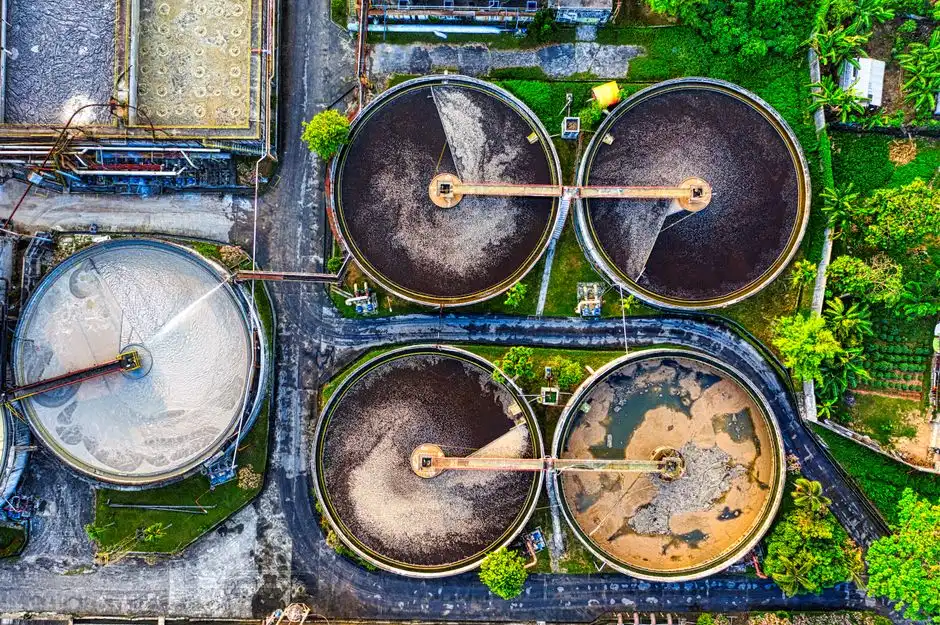
The table below compares the two unit operations on the parameters that drive the front-end separation decision for a Monticello transportation equipment plant. The numbers reflect vendor specifications (DAF Corp FC Maximizer and RC UniMax lines) and Ecologix case data, not laboratory extrapolations. For plants with both light FOG and heavy inorganic loads, a hybrid dissolved air flotation system followed by a HydropureWater high-efficiency lamella clarifier is the standard 2026 configuration.
| Parameter | DAF (FC Maximizer / RC UniMax) | Gravity Clarifier |
|---|---|---|
| Primary target contaminant | Free oil, FOG, drawing compounds, coolants, fine TSS (10–100 µm) | Dense inorganic fines, swarf, shot-blast media, settleable TSS >100 µm |
| TSS removal | 92–98% (FC Maximizer) / 85–90% (RC UniMax), per DAF Corp | 50–70% on mixed streams; 90% on dense mineral fines (Ecologix mining case) |
| Oil & grease removal | 90–95% (Ecologix food-analog case: 95% vs 70% for clarifier) | 60–75% on FOG-dominant streams |
| Footprint per m³/h | ~0.05–0.1 m² (compact, skid-mountable) | ~0.4–1.0 m² for conventional; ~0.15–0.25 m² for lamella |
| Sludge consistency | 2–4% DS float, skimmable | 0.5–2% DS underflow, pumped |
| Typical 2026 OPEX band (50 m³/h) | Polymer + compressed air: ~$0.18–0.32 per m³ treated | Sludge hauling-dominated: ~$0.22–0.40 per m³ treated |
The single most important row for compliance planning is oil and grease removal. Ecologix case data (food-style stream) shows 95% O&G removal with DAF against 70% with a clarifier on the same influent — and that 25-point gap is roughly what a Monticello plant should expect when drawing compounds and coolants are the dominant FOG source. For TSS alone, the FC Maximizer's 92–98% removal band applies to flows from 10 gpm up to 11,000 gpm (DAF Corp), which covers the 50–500 gpm envelope where the majority of mid-size truck body and railcar fabrication plants sit. Clarifiers win decisively on dense mineral fines (90% removal at lower chemical cost, per the Ecologix mining case), which is why a plant with heavy shot-blasting or grinding operations should keep a clarifier — ideally a lamella unit for footprint — in the train even if DAF is the primary.
The Monticello 2026 Decision Tree: Which One Should You Buy?
For a Monticello transportation equipment plant, the choice between DAF and a gravity clarifier collapses to four plant-specific questions. Walk through them in order; the answer usually appears by question three.
- What is the dominant contaminant class? If free oil exceeds 200 mg/L or FOG exceeds 100 mg/L in routine sampling, choose DAF as the primary unit — clarifier O&G removal drops below 75% on those streams. If total suspended solids exceeds 1,500 mg/L with more than 70% inorganic content (grinding swarf, shot-blast media, weld scale), choose a clarifier as primary, with DAF as a polish step if downstream POTW surcharge triggers.
- Is the flow steady or batch? Transportation equipment plants often run a 5-day production week and discharge a large washdown slug on Monday morning. DAF recovers from a hydraulic or load surge in 3–5 minutes; a clarifier slugs for 1.5–2.5 hours (per EPA manual detention times). For batch-dominated operations, DAF is the lower-risk primary.
- How much floor space is available? If the treatment area is below 50 m² for a 100 m³/h (440 gpm) hydraulic load, DAF wins on footprint. A lamella clarifier is the second-best compact option and pairs naturally with DAF in a hybrid train.
- Are both criteria triggered? If the plant carries both heavy FOG and dense inorganic loads above the thresholds in question 1, default to a hybrid dissolved air flotation system followed by a lamella clarifier. The 1975 EPA Process Design Manual lists both DAF (Section 7.8) and lamella/tube settlers (Section 7.9) as co-equal primary separation options, and 2026 plant experience has validated the hybrid as the default for mixed transportation equipment streams.
Most Monticello plants in the truck body and railcar fabrication segments will answer "yes" to question 4, which is why the hybrid is the default recommendation rather than the exception.
2026 Operating Cost Reality for Monticello Plants
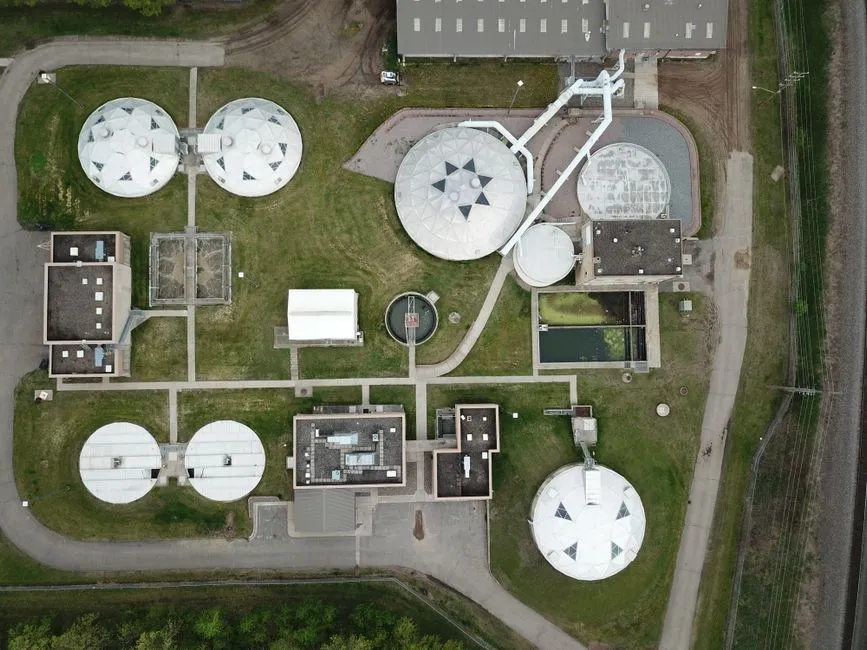
OPEX framing for a DAF-versus-clarifier decision has flipped since 2022. Clarifier OPEX is dominated by sludge hauling — the unit itself is mechanically simple, but its 0.5–2% DS underflow multiplies downstream dewatering and disposal tonnage. DAF OPEX is dominated by polymer (flocculant) and compressed-air energy, both of which rose sharply through 2024–2025. Net effect: the 2026 OPEX gap between the two unit operations is narrower than the older literature suggests, and for many Monticello plants DAF is no longer the more expensive option once sludge hauling is included.
For a 50 m³/h (220 gpm) Monticello plant, the dissolved air flotation system draws 3–5 kW for the recycle pump and saturator, against less than 1 kW for a clarifier drive — an energy delta of roughly 30–40 kWh/day at industrial rates. Polymer dosing on a DAF train typically runs 5–15 mg/L depending on influent TSS and FOG, and 2026 polymer pricing has stabilized after the 2023–2024 spike but remains the single largest consumable line item. The offsetting savings come from sludge volume: DAF float at 2–4% DS is 3–5× more concentrated than clarifier underflow, so the tonnage hauled to landfill or to a sludge dewatering filter press drops sharply. On a transportation equipment plant, sludge hauling is often the single largest annual OPEX line, and the DAF's higher float solids is frequently what flips a 10-year life-cycle cost comparison.
| OPEX line item (50 m³/h plant, 2026) | DAF | Clarifier |
|---|---|---|
| Polymer / flocculant | $0.08–0.14 / m³ | $0.02–0.05 / m³ (low-dose coagulation only) |
| Energy (compressed air, pumps, drive) | $0.04–0.07 / m³ | $0.01–0.02 / m³ |
| Sludge hauling (largest line) | $0.06–0.11 / m³ (2–4% DS float) | $0.18–0.32 / m³ (0.5–2% DS underflow) |
| Maintenance / labor | $0.01–0.03 / m³ | $0.01–0.02 / m³ |
| Total 2026 band | $0.19–0.35 / m³ | $0.22–0.41 / m³ |
For a 50 m³/h plant running two shifts, the annual OPEX difference at mid-band is roughly $30,000–$60,000 in 2026 dollars — small enough that compliance risk and footprint usually decide the project before OPEX does. The hybrid DAF + lamella clarifier train typically lands within 5–10% of the DAF-only total because the lamella stage is mechanically passive.
Frequently Asked Questions
Is a DAF system or a clarifier cheaper to install and operate in 2026?
CAPEX favors DAF when floor space is constrained, because a DAF tank is 5–10× smaller than a conventional clarifier for the same flow; for a 50 m³/h Monticello plant the DAF skid typically costs less once foundation and building work are included. OPEX is site-specific: clarifiers are cheaper on polymer and energy, but their 0.5–2% DS underflow drives 3–5× higher sludge-hauling cost, so the 2026 totals often land within 10–15% of each other.
What removal efficiency can I expect from a DAF on a transportation equipment wastewater stream?
Expect 92–98% TSS removal with a DAF Corp FC Maximizer, 85–90% with the RC UniMax, and 90–95% oil and grease removal on FOG-dominant streams (per the Ecologix food-analog case at 95%). For heavy metal fines, DAF is less efficient than a clarifier, which is the technical justification for hybrid DAF + lamella trains on mixed transportation equipment streams.
Can a DAF and a clarifier be combined in the same treatment train?
Yes, and the combination is the 2026 default for new Monticello transportation equipment plants with mixed FOG and grit streams. DAF handles the light, buoyant fraction first; the downstream lamella or conventional clarifier polishes the dense inorganics the DAF does not capture efficiently. The 1975 EPA Process Design Manual lists both DAF and tube/lamella settlers as co-equal primary options in Chapter 7, which gives the hybrid a defensible design basis for any 40 CFR Part 403 compliance review.
Will a DAF effluent meet 40 CFR Part 403 categorical pretreatment limits?
For most transportation equipment plants, DAF effluent meets 40 CFR Part 403 limits for TSS, O&G, and the regulated metals (zinc, lead, iron) without additional polish, provided polymer dose and saturator pressure are tuned to the influent. Local POTW surcharge thresholds — not the federal categorical limits — are usually what drive the final polish decision, and those surcharges tightened for O&G, zinc, and TSS across the Monticello region through 2025.
What DAF capacity covers a typical small Monticello transportation equipment plant?
The dissolved air flotation system covers 4–300 m³/h, which matches roughly 95% of the truck body, railcar, and aerospace component plants in the Monticello area. Below 50 m³/h the unit is typically skid-mounted and prepackaged; above 300 m³/h the project usually moves to a custom rectangular DAF or to a hybrid DAF + lamella clarifier train sized for the specific flow envelope.
Related Equipment
- automatic polymer dosing system — specifications, capacity range, and technical data