Why Taipei Data Centers Need Dedicated Cooling-Blowdown Treatment
Cooling-tower blowdown is the single largest liquid waste stream at a Taipei data center, and the design numbers for it are set by climate, not by the IT load alone. Taipei's subtropical wet-bulb conditions sit in the 25–35°C range for most of the year, which forces cooling towers to operate at 3–6 cycles of concentration to control scaling and biological fouling while still rejecting the heat load from a hyperscale hall (per the cooling-water engineering principles in the hkbhp.com data-center blowdown guide). At 4 cycles, roughly 25–30% of makeup water leaves the system as concentrate, so a 10 million-gallon-per-month facility discharges 2.5–3 million gallons to drain (per Genesis Water Technologies, 2025).
The source-water profile makes the problem easier in one respect and harder in another. Taipei Water Department (北水處) makeup from the Feitsui (翡翠) and Xindian reservoirs is genuinely soft — low calcium and magnesium, which extends the practical cycles-of-concentration ceiling — but TOC and microbial load swing across the May–October typhoon season, and tropical wet-bulb conditions keep the basin warm enough that biofilm never fully starves. The water itself wants to be cooled efficiently; it just refuses to be discharged without treatment.
Taiwan's data-center build-out is accelerating under the Bureau of Energy's 2024–2027 promotion policy for hyperscale and AI facilities, concentrating new cooling demand in Linkou, Neihu, and the planned Taoyuan Aerotropolis cluster. Against that build-out, Taipei municipal sewer surcharges plus Water Pollution Control Act compliance make uncontrolled discharge uneconomical at scale, and the wet-bulb climate makes air-cooling a poor primary substitute. A purpose-built blowdown train is no longer optional — it is the design constraint that shapes the cooling strategy.
Cooling-Tower Blowdown Chemistry and Taiwan EPA Effluent Limits
Blowdown at 4 cycles is a moderately saline, low-organic stream that is more corrosive than it looks on a datasheet. Typical composition runs 1,200–6,000 mg/L TDS, suspended solids at 10–50 mg/L, elevated chloride and sulfate, concentrated calcium, magnesium and silica, residual oxidizing biocide (chlorine or bromine), phosphonate scale/corrosion inhibitors, and trace metals stripped from the distribution piping (per Genesis Water Technologies, 2025). The same ions that make the stream a scaling risk inside the tower become a discharge-compliance risk at the boundary.
Taiwan's regulatory framework for this stream sits under the Water Pollution Control Act (水污染防治法) and the related Effluent Standards (放流水標準), administered by the Taiwan EPA at the national level and the Taipei City Department of Environmental Protection for sites inside the metro, or the EPA regional office for Linkou and Taoyuan. Numeric limits cover BOD, COD, SS, true color, pH, oil and grease, and a metals list; site-specific permit conditions frequently tighten phosphorus, total nitrogen, and biocide residual below the headline standard. Operators evaluating a 2026 project should pull the latest EPA公告 directly — the limits are updated periodically and any design must be anchored to the current revision, not a cached summary.
Chlorine residual is the parameter that most often trips up first-time submitters. Oxidizing biocide discharge is regulated under Taiwan industrial wastewater rules, and dechlorination with sodium bisulfite (or UV reduction) ahead of the discharge point is standard practice — the hkbhp.com data-center guide flags this as a routine requirement, not an edge case. Scaling ions and chloride are not just compliance issues either; they cap the achievable cycles of concentration because of stainless-steel and concrete-basin corrosion, which means the discharge limits and the cooling-side operating envelope are coupled.
| Parameter | Blowdown at 4 cycles (typical) | Operator action at the boundary |
|---|---|---|
| TDS | 1,200–6,000 mg/L | RO permeate blending or MVC distillate for sewer discharge |
| Suspended solids | 10–50 mg/L | Side-stream filtration + UF polish before RO or discharge |
| Chloride / sulfate | Concentrated vs. makeup | Bound cycles of concentration; cap on stainless wetted parts |
| Silica | Concentrated; scaling risk | Antiscalant program; cap recovery at 50–85% on RO |
| Residual oxidizing biocide | 0.1–1.0 mg/L Cl2 typical | Dechlorination (SBS or UV) before sewer discharge |
| Phosphonate inhibitor | Low mg/L; phosphorus driver | Switch to low-P / non-P program; check permit P limit |
| pH | 7.0–8.5 typical | Adjust before discharge to meet 6.0–9.0 EPA range |
Pretreatment: Side-Stream Filtration, Softening, and UF for Blowdown Reuse
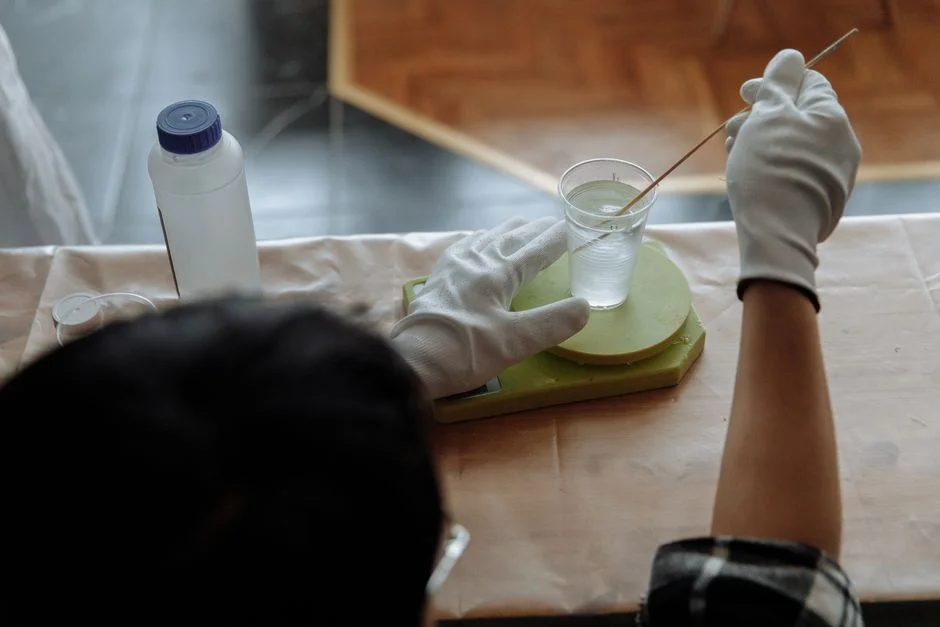
The pretreatment train decides whether the downstream RO or MVC runs reliably, and in Taipei the right combination is side-stream filtration + softening + UF rather than any single unit. Side-stream filtration on 1–5% of the circulation flow removes biofilm fragments, airborne dust, and corrosion byproducts before they concentrate in the blowdown; CAPEX for a typical data-center installation runs $50,000–200,000 depending on flow rate (per Genesis Water Technologies, 2025). The backwash from that filter is intermittent but solids-heavy, so it needs to be routed to the same equalization tank as the blowdown rather than sent direct to drain.
Softening the makeup water is unusually effective in Taipei because Feitsui and Xindian source water is already low in hardness. An industrial water softener for cycles-of-concentration optimization or a nanofiltration step ahead of the cooling loop pushes the practical ceiling from 4 cycles to 6–8 cycles for the same scaling risk, which roughly halves the blowdown volume (per the hkbhp.com data-center guide, applied to Taipei's soft source profile). At hyperscale, that volume cut is the difference between a manageable discharge and a permit headache.
Ultrafiltration is the standard RO pretreatment on blowdown trains, with 0.01–0.1 µm PVDF membranes operating at 10–30 psi and 90–95% recovery. An UF pretreatment skid for blowdown RO protection removes bacteria, colloids, and high-molecular-weight organics that would otherwise foul the RO membranes within weeks, and it does so with a backwash regime that is forgiving of variable feed. A DAF unit ahead of the UF is a common addition when suspended solids run high; a rotary mechanical bar screen protects the head of the train from rag and debris.
Antiscalant injection ahead of the RO is essential on blowdown because the high-TDS, scaling-prone chemistry will foul membranes within weeks without chemical conditioning (per Genesis Water Technologies, 2025). Dosing for pH adjustment, biostabilization, and antiscalant is automated and PLC-integrated; the tablet-based controlled-dissolution approach (Genclean-S and equivalents) reduces biocide accumulation in blowdown and improves membrane compatibility versus legacy liquid programs.
RO and NF: The Workhorse of Blowdown Reuse in Taipei
RO is the unit operation that converts blowdown from a waste problem into a reuse opportunity. It removes 95–99% of dissolved solids at 150–400 psi, and the permeate at 10–50 mg/L TDS can be blended with fresh makeup or returned directly to the cooling tower (per Genesis Water Technologies, 2025). Recovery is limited to 50–85% on blowdown because the concentrate TDS approaches membrane scaling limits; advanced antiscalant programs and periodic clean-in-place extend that envelope but do not eliminate it.
NF is the lower-energy alternative. Operating at 75–150 psi with 70–85% recovery and permeate TDS at 30–50% of feed, NF is well suited to blowdown where hardness rather than total TDS is the discharge driver — which is exactly the Taipei case once the makeup has been softened. A hybrid NF-RO train is often the lowest whole-life-cost option: NF knocks down hardness at high recovery, RO polishes the NF permeate, and the combined concentrate stream is small enough to send to MVC or hauled brine.
A 50,000 GPD RO skid for blowdown reuse installs for $250,000–500,000 with OPEX of $1.50–3.00 per 1,000 gallons including energy, chemicals, and membrane replacement amortized over 3–5 years (per Genesis Water Technologies, 2025). An industrial RO system for cooling-blowdown reuse sized against a 10 MGD makeup at 4 cycles sits in that range, and the membrane elements and housings are the consumables that drive the OPEX band. For hyperscale AI halls with very high heat density and aggressive water-stewardship targets, an EDI polishing for high-recovery blowdown reuse or RW-EDI post-RO can push reuse past 90% without chemicals — the 2024 ACS ES&T Water paper on RW-EDI for cooling-tower blowdown circular reuse is the most current academic evidence and is worth reading for any Taipei project targeting the strictest reuse commitments.
| Membrane | Operating pressure | Recovery | Permeate quality | Best fit in a Taipei blowdown train |
|---|---|---|---|---|
| UF (0.01–0.1 µm) | 10–30 psi | 90–95% | Solids-free, salt-passing | RO/NF pretreatment |
| NF | 75–150 psi | 70–85% | 30–50% of feed TDS; hardness cut | Softening + partial reuse |
| RO (brackish) | 150–400 psi | 50–85% | 10–50 mg/L TDS | Primary reuse for cooling-tower makeup |
| RO + EDI / RW-EDI | 150–400 psi + polishing | 85–95% | <1 mg/L TDS at EDI outlet | Hyperscale, high-stewardship sites |
When Discharge Is Not Enough: Brine Concentration and ZLD in Taiwan
When reuse alone cannot keep a Taipei site in compliance — restricted sewer access, a hyperscale water-stewardship mandate, or a sub-basin under stress — the train extends into brine concentration. Mechanical vapor compression (MVC) recovers 95–98% of RO concentrate as distillate below 10 mg/L TDS at 15–25 kWh per 1,000 gallons, with CAPEX of $1–3M for a 10,000–30,000 GPD unit (per Genesis Water Technologies, 2025). The distillate is clean enough to blend back into the cooling-tower makeup, and the MVC brine is reduced to 20–30% dissolved solids — small enough to haul or feed a crystallizer.
Full ZLD stacks RO (70–80% recovery) + MVC (95% recovery) + crystallizer for an overall 95–99% water recovery with less than 1% of the original volume leaving as solid salt cake. CAPEX runs $3–8M and OPEX $5–15 per 1,000 gallons — economically justified in Taipei only when sewer access is restricted, a corporate water-stewardship commitment mandates it, or the site sits in a stressed sub-basin (per Genesis Water Technologies, 2025). At current Taipei sewer-discharge fees, the payback is 7–10 years under conservative assumptions.
Partial ZLD is the realistic middle path for most Taipei retrofits: concentrate blowdown by 80–90% to cut discharge volume, then route the remaining brine to an approved industrial-waste processor. That avoids the crystallizer CAPEX while still capturing most of the freshwater savings. The structural alternative to ZLD is hybrid cooling — air-cooled for most of the year with evaporative assistance during the high wet-bulb summer — which captures the water savings while limiting the energy penalty to a few hundred peak hours per year (per the hkbhp.com data-center guide, applied to Taiwan wet-bulb).
| Path | Recovery | CAPEX (10 MGD site) | OPEX | Typical Taipei trigger |
|---|---|---|---|---|
| RO reuse to cooling tower | 50–85% | $250K–$500K per 50,000 GPD skid | $1.50–$3.00/kgal | Default new build; freshwater offset |
| RO + MVC (partial ZLD) | 90–95% | $1M–$3M for MVC section | $3–$8/kgal | Restricted sewer; high discharge fees |
| Full ZLD (RO + MVC + crystallizer) | 95–99% | $3M–$8M | $5–$15/kgal | Stewardship mandate; no liquid discharge option |
| Hybrid air/evaporative cooling | Structural | Site-specific, higher chiller CAPEX | Higher kWh, lower water | High wet-bulb penalty; capex-heavy greenfield |
Cost Model: Discharge vs Reuse vs ZLD for a 10 MGD Taipei Hyperscale Site
The reference case is 10 million gallons per month of makeup at 4 cycles, which generates 2.5–3 million gallons of blowdown each month (per Genesis Water Technologies, 2025). That single number — 25–30% of the makeup — drives every cost line that follows.
Sewer-discharge-only. The only treatment is dechlorination ahead of the discharge point. Direct discharge fees in water-stressed regions run $5–15 per 1,000 gallons, so the annualized discharge cost on a 10 MGD site lands at roughly $150,000–$540,000 with zero treatment CAPEX beyond dechlorination. At that OPEX floor, anything that displaces more than ~30% of the discharge starts to look economic.
RO-reuse. A 50,000 GPD RO skid at $250,000–$500,000 installed and OPEX of $1.50–3.00 per 1,000 gallons yields a 2–4 year payback against discharge fees and reduces freshwater draw by 50–85% (per Genesis Water Technologies, 2025). On a 10 MGD site, sizing two parallel 50,000 GPD skids covers the blowdown volume with redundancy; OPEX stays in the $4,500–$9,000/month range per skid at full load.
Full ZLD. CAPEX $3–8M, OPEX $5–15 per 1,000 gallons (per Genesis Water Technologies, 2025). Payback requires either a corporate water-stewardship mandate, restricted sewer access, or projected future water-tariff escalation in the Taipei basin. Frame it as a 7–10 year payback under conservative assumptions, with a defensible internal story once the stewardship benefits are priced in. For a side-by-side view, the industrial RO vs alternatives decision framework is a useful reference, and the edge computing for real-time blowdown monitoring piece covers the controls layer that keeps any of these scenarios operating to spec.
| Scenario | CAPEX | OPEX driver | Freshwater offset | Payback vs. discharge-only |
|---|---|---|---|---|
| Discharge only (+ dechlorination) | Minimal | $5–$15/kgal sewer fee | 0% | Baseline |
| RO reuse (50,000 GPD skid) | $250K–$500K | $1.50–$3.00/kgal | 50–85% | 2–4 years |
| RO + MVC (partial ZLD) | $1M–$3M MVC section | $3–$8/kgal | 90–95% | 4–7 years |
| Full ZLD | $3M–$8M | $5–$15/kgal | 95–99% | 7–10 years (or stewardship-driven) |
Permitting, Seismic Design, and Procurement Checklist for Taiwan
The engineering case does not close until the permit, the seismic design, and the spare-parts plan are written down. File a Water Pollution Control Act permit with the local competent authority — the Taipei City Department of Environmental Protection for sites inside the metro, or the EPA regional office for Linkou and Taoyuan sites. The design must demonstrate compliance with the latest 2025–2026 effluent standards, including site-specific conditions for biocide residual, phosphorus, and any metals flagged in the permit notice.
Equipment skids and tanks must comply with Taiwan seismic design codes (CNS 11399 / 建築物耐震設計規範), and foreign-supplied skids typically pass through the BSMI inspection regime for pressure vessels — standard project-execution items that should be on the bid form, not discovered during commissioning. Operator training, a Chinese-language HMI, and remote telemetry are de-facto requirements for Taipei hyperscale sites; a vendor that cannot support a 24/7 Chinese-language control room will lose the bid. Spare-parts stocking for RO membranes, UF cartridges, and dosing pumps inside Taiwan is critical given supply-chain lead times — confirm the vendor maintains local stock rather than shipping from overseas on each request. An automatic chemical dosing system for antiscalant and biocide, a UV sterilizer for biocide residual trimming, and a chlorine dioxide generator for biofouling control are the chemical-side items most often missed in the first pass at the equipment list.
| Item | Owner / authority | Note for a 2026 Taipei project |
|---|---|---|
| Water Pollution Control Act permit | Taipei City DEP (metro) / EPA regional (Linkou, Taoyuan) | Anchor to latest 2025–2026 EPA 公告 |
| Seismic design compliance | CNS 11399 / 建築物耐震設計規範 | Skid anchoring, tank restraints |
| Pressure-vessel inspection | BSMI | Required for foreign-supplied skids |
| Operator training + Chinese HMI | End user / EPC | 24/7 Chinese-language control room is a bid evaluation item |
| Spare parts inside Taiwan | Vendor | RO membranes, UF cartridges, dosing pumps stocked locally |
Frequently Asked Questions
What is the typical cycles of concentration for a Taipei data center cooling tower?
4–6 cycles is the realistic operating range for a Taipei data center cooling tower given the soft Feitsui/Xindian source water and the chloride tolerance of the stainless and concrete wetted parts. Softening the makeup pushes the practical ceiling to 6–8 cycles (per the hkbhp.com data-center guide, applied to Taipei ambient and source profile).
Can a Taipei data center reuse 90% of its cooling blowdown?
Yes. RO alone reaches 50–85% recovery on blowdown; adding MVC to the RO concentrate pushes overall reuse to 90–95%, and RO + EDI / RW-EDI polishing can reach higher still on a hyperscale AI site (per Genesis Water Technologies, 2025; ACS ES&T Water, 2024).
Does Taiwan EPA allow zero liquid discharge for data centers?
There is no national prohibition on ZLD for data centers, but site-specific permit conditions still apply and ZLD is generally driven by water-stewardship policy or restricted sewer access rather than a regulation that mandates it. The economics and the permit pathway both need to be defensible before the crystallizer PO is cut.
How much does a blowdown RO system cost in Taiwan?
A 50,000 GPD RO skid for blowdown reuse installs for $250,000–$500,000 in Taiwan with OPEX of $1.50–$3.00 per 1,000 gallons including energy, chemicals, and membrane replacement amortized over 3–5 years (per Genesis Water Technologies, 2025). Landed cost is sensitive to seismic anchoring, BSMI inspection, and the size of any local spare-parts stocking the vendor carries.
What is the best pretreatment for high-TDS blowdown before RO?
UF with 0.01–0.1 µm PVDF membranes at 90–95% recovery, paired with antiscalant dosing and pH adjustment, is the standard RO pretreatment on blowdown trains. It removes bacteria, colloids, and high-molecular-weight organics that would otherwise foul the RO within weeks (per Genesis Water Technologies, 2025).