Why Cardiff Sites Need a Purpose-Built Effluent Treatment Plant
An effluent treatment plant in Cardiff in 2026 is sized to meet a Natural Resources Wales (NRW) discharge consent, typically targeting BOD ≤20 mg/L, COD ≤125 mg/L, TSS ≤30 mg/L and pH 6.5–8.5 for trade effluent entering the DCWW sewer, or tighter limits for direct discharge to the Ely or Usk catchments. For 50–500 m³/day industrial flows, an MBR or SBR delivers reuse-quality effluent and is selected over conventional activated sludge where footprint or consent stringency drives the decision. NRW is the environmental regulator for Wales, issuing permits under the Environmental Permitting (England and Wales) Regulations 2016, and it will not issue a consent that depends on an unverified packaged unit. The Cardiff Bay and Ely river catchments are designated waterbodies, so any direct discharge must meet limits set under the EU Water Framework Directive (2000/60/EC) — tighter than the trade-effluent caps Dŵr Cymru Welsh Water (DCWW) typically negotiates for sewer discharges. Off-the-shelf WSZ underground package plant units are sized for domestic-strength sewage (BOD ≈250 mg/L, no FOG, no heavy metals) and almost always underspec for the mixed organic/inorganic loads seen on Cardiff's industrial estates at Tremorfa, Rover Way and Capital Business Park. The first design decision is therefore whether the site discharges to DCWW sewer under a trade-effluent consent or to a watercourse under an NRW permit — the process train, footprint and CAPEX change with the answer.
Cardiff Effluent Compliance Targets for 2026
Trade-effluent discharge to the DCWW sewer is controlled under the DCWW Trade Effluent Consent template, which sets a pH window of 6–10, a temperature ceiling of 43 °C, prohibits flammable or toxic materials, and applies site-specific caps on BOD, COD and suspended solids negotiated with the utility. Direct discharge consents to the Ely or Usk follow NRW's translation of the EU Water Framework Directive and typically target BOD ≤20 mg/L, COD ≤125 mg/L, TSS ≤30 mg/L, total nitrogen 15 mg/L, with heavy-metal ceilings referenced to the EU IED 2010/75/EU BAT reference documents (BREFs). The Wageningen thesis work on constructed-wetland polishing for micropollutants shows that a biological stage alone rarely meets WFD reuse thresholds, so a polishing or tertiary step is increasingly expected for tight consents. The biological stage itself is sensitive to pH outside the 6.5–8.5 window — nitrification collapses below pH 6.0 and above pH 9.0, and floc-forming bacteria lose settleability — so on-line pH control is non-negotiable. Hydraulic retention time (HRT) is set between 6–24 h depending on influent load, per the ETP performance assessment literature, and most 2026 Cardiff ETPs are designed for an average daily flow of 50–500 m³/day with a peak factor of 1.5–2× for storm or wash-down events.
| Parameter | DCWW trade-effluent sewer | NRW direct discharge (Ely/Usk) | 2026 design basis |
|---|---|---|---|
| BOD | Site-specific (typically ≤300 mg/L load) | ≤20 mg/L | Aeration sized for 95% removal |
| COD | Site-specific | ≤125 mg/L | BOD:COD ratio drives biology sizing |
| TSS | Site-specific | ≤30 mg/L | DAF or membrane polish |
| pH | 6–10 | 6.5–8.5 | Biological window |
| Total nitrogen | Site-specific | ≤15 mg/L | Nitrification + denitrification |
| Temperature | ≤43 °C | Site-specific | Quench hot streams |
Choosing the Right Process Train for a Cardiff Site
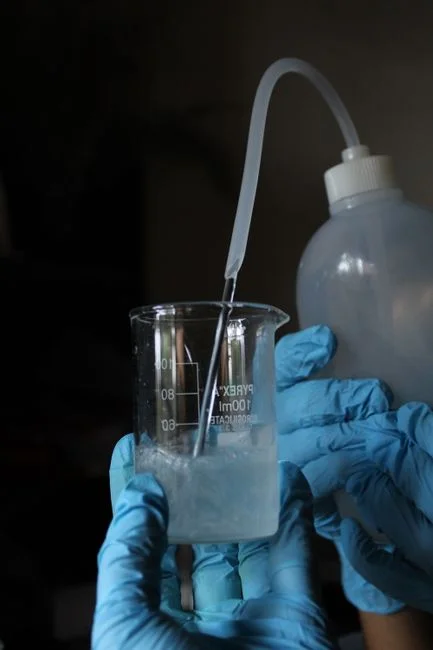
Process selection for a Cardiff ETP follows a five-step logic that links influent character to consent and footprint constraints, not a vendor preference. Step 1 — define the influent: BOD/COD ratio, FOG fraction, heavy-metal load, salinity. Sites with high FOG (food processing, brewing, dairy) almost always need a DAF unit upstream of biology to protect biomass and membranes. Step 2 — match the flow regime: continuous flows above 200 m³/day favour conventional activated sludge or MBR for stable biology, while batch or low-flow sites under 100 m³/day with high variability favour SBR (cyclic activated sludge system) for its buffer capacity. Step 3 — match consent stringency: tight BOD ≤20 mg/L or reuse targets push selection toward the HydropureWater MBR membrane bioreactor (submerged PVDF, <1 μm pore); moderate consents can be met with SBR or DAF + activated sludge at lower CAPEX. Step 4 — match footprint: central Cardiff sites are constrained, and MBR delivers roughly 60% footprint reduction over conventional activated sludge by removing the secondary clarifier. Step 5 — match operator skill: MBR adds membrane integrity testing and clean-in-place cycles every 6–12 months, while SBR is mechanically simpler but demands reliable aeration and decant valve control. Documenting these five steps in a design basis report is also the cleanest way to defend the technology choice to NRW and to a board evaluating CAPEX. The detailed CASS process working principle covers the fill/react/settle/decant sequence that makes SBR a strong fit for variable Cardiff loads.
MBR vs SBR vs Conventional Activated Sludge + DAF
For a Cardiff procurement manager defending a recommendation, the three credible options in 2026 are MBR, SBR (CASS-style) and conventional activated sludge with upstream DAF, each with a defined envelope. MBR uses submerged PVDF hollow-fibre membranes with 0.1–1 μm pore size, is well proven from 10 m³/day up to 2,000 m³/day, occupies roughly 60% less floor area than CAS because the secondary clarifier is replaced by the membrane cassette, costs more in CAPEX, but produces reuse-quality effluent with low sludge yield (0.15–0.35 kg DS per kg BOD removed). SBR performs fill, react, settle and decant in a single tank, eliminates the separate clarifier mechanically, handles variable flows of 50–500 m³/day well, sits in the middle on CAPEX, and depends on reliable decanters and aeration control. Conventional ASP plus DAF is the lowest-CAPEX route for flows above 500 m³/day, needs primary and secondary clarifiers with sludge return, and demands the largest footprint and the most operator attention. The decision matrix below summarises the trade-off.
| Criterion | MBR (PVDF) | SBR (CASS) | Conventional ASP + DAF |
|---|---|---|---|
| Typical flow range | 10–2,000 m³/day | 50–500 m³/day | >200 m³/day |
| Footprint index (m² per m³/day) | ~0.2–0.4 | ~0.4–0.6 | ~0.6–1.0 |
| Target effluent BOD / TSS | ≤5 / ≤5 mg/L | ≤20 / ≤30 mg/L | ≤20 / ≤30 mg/L |
| Membrane / clarifier dependency | Membrane cassette, CIP every 6–12 mo | Decanter + aeration | Primary + secondary clarifier |
| Automation level | High (SCADA + integrity test) | Medium–high (PLC + timers) | Medium (SCADA + operator rounds) |
| Indicative 2026 CAPEX (£/m³/day) | £900–1,800 | £600–1,200 | £450–900 |
| Best-fit Cardiff sector | Pharma, healthcare, electronics, food | Food, beverage, batch chemical | Heavy chemical, large food, dairy |
Front-End Pretreatment: Screening and DAF

Every Cardiff ETP starts with mechanical pretreatment, and skipping it is the most common cause of membrane and biology failure in the first 18 months. A rotary mechanical bar screen from the GX series (see the HydropureWater rotary mechanical bar screen range) protects downstream pumps, blowers and membranes from rags, plastics and fibrous debris and is standard headworks equipment on any site with greater than 10 m³/h flow. For FOG, oil, grease and colloidal solids, a dissolved air flotation system (4–300 m³/h, 13 standard models) is the workhorse on food, metalworking, petrochemical and pulp or paper sites. DAF operating data from industrial installations shows 80–95% TSS removal and 70–90% FOG removal at hydraulic loadings of 5–25 m³/m²·h when supported by coagulant and flocculant dosing. For metal finishing and electroplating sites DAF alone is insufficient and must be paired with chemical precipitation for Cr, Ni, Zn and Cu using lime or caustic dose adjustment to pH 8.5–9.5, followed by lamella or sand filtration. A typical 2026 Cardiff headworks layout sequences screening, flow balancing, pH correction, DAF, and equalisation before the biological stage.
Sludge Handling and Disposal
Consent compliance is only half of an ETP's operating burden; the other half is the sludge stream. For conventional activated sludge, observed yield sits at 0.3–0.6 kg dry solids per kg BOD removed, while MBR systems drop this to 0.15–0.35 kg DS/kg BOD because of the higher SRT and endogenous decay — a meaningful saving on sludge disposal cost. A HydropureWater plate and frame filter press (1–500 m² filtration area) is the default dewatering choice for Cardiff flows of 50–500 m³/day, producing 25–35% dry cake that is suitable for off-site disposal or composting, with cycle times of 2–4 hours per batch. Where a site prefers sedimentation over mechanical dewatering, a HydropureWater lamella clarifier operating at 20–40 m/h surface loading gives a small sedimentation footprint with thickened underflow at 2–4% DS. For sites with biosolids already in the process — food, beverage, pharma — the parallel guidance in beverage wastewater sludge treatment is a useful design reference. Specifying a single control platform for the filter press, lamella and polymer dosing reduces commissioning time and operator training load.
Monitoring, KPIs and Ongoing Compliance
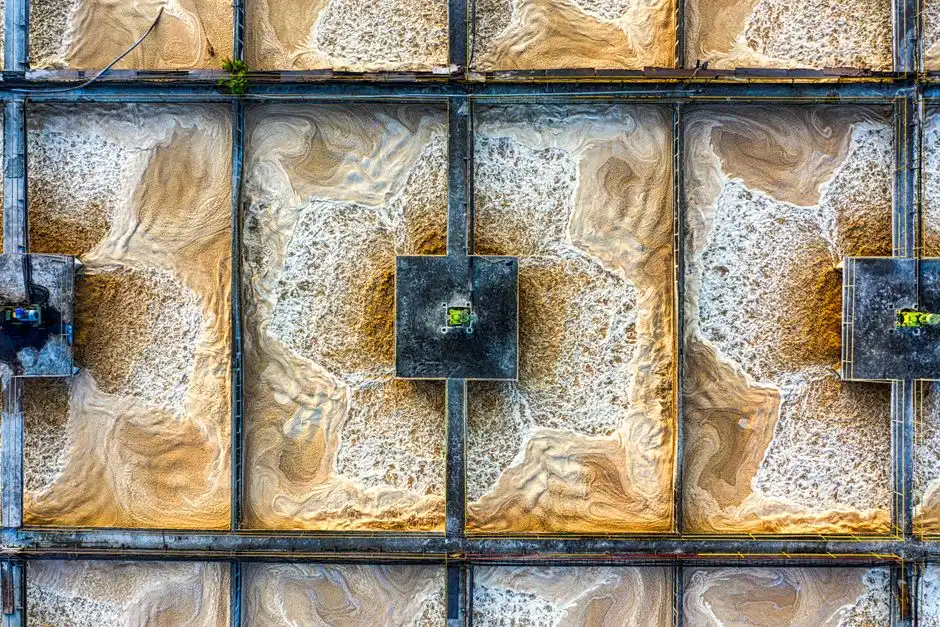
The four biological KPIs that decide whether a Cardiff ETP stays compliant year-on-year are HRT, sludge volume index (SVI), food-to-microorganism ratio (F/M) and dissolved oxygen (DO), each with a defined control window drawn from the ETP performance literature. HRT should be held at 6–24 h depending on load, SVI at 50–150 mL/g for good settleability, F/M at 0.05–0.3 kg BOD per kg MLVSS per day, and DO at 1.5–2.5 mg/L in the aeration tank, with oxygen transfer efficiency (OTE) at 1.2–2.2 kg O₂/kWh for fine-bubble diffusers. Monthly influent and effluent sampling against the DCWW or NRW consent is the minimum, with a quarterly third-party audit against an ISO 17025-accredited laboratory to keep the data trail defensible. PLC and SCADA automation of the HydropureWater equipment range provides the data historian, alarm management and audit log that NRW expects during an incident investigation. For sites handling healthcare or pharmaceutical wastewaters, the compliance approach in hospital wastewater compliance frameworks offers a useful template for chain-of-custody and parameter monitoring.
2026 CAPEX and OPEX Benchmarks for a Cardiff ETP
Indicative 2026 turnkey CAPEX for UK industrial ETPs, civil works excluded, sits in the following ranges per m³/day of design flow: packaged MBR £900–1,800, SBR £600–1,200, and conventional ASP plus DAF £450–900 (HydropureWater field data, 2026). Indicative 2026 OPEX per m³ treated runs £0.55–1.10 for packaged MBR, £0.40–0.80 for SBR and £0.30–0.65 for conventional ASP plus DAF, driven by energy, chemicals, sludge disposal and membrane replacement. The two largest lifecycle-cost risks are membrane replacement — typical UF/MBR membrane life is 5–8 years at £40–80 per m² of membrane area — and aeration energy, where blowers can account for 40–60% of plant electricity on a fine-bubble diffused-air system. A HydropureWater automatic chemical dosing system on the same SCADA platform as the biology cuts chemical overrun and keeps consent compliance tighter on shock loads. Procurement should always require a 10-year whole-life cost comparison rather than a CAPEX-only number; the cheapest turnkey plant is rarely the cheapest over a decade. For a UK benchmark outside south Wales, the parallel effluent treatment plant in Newcastle 2026 buyer's guide uses the same envelope.
| Process train | CAPEX (£/m³/day) | OPEX (£/m³) | Key OPEX driver | 10-year whole-life risk |
|---|---|---|---|---|
| Packaged MBR | 900–1,800 | 0.55–1.10 | Membrane replacement, energy | Membrane life 5–8 years |
| SBR (CASS) | 600–1,200 | 0.40–0.80 | Aeration, sludge | Decanter valve maintenance |
| Conventional ASP + DAF | 450–900 | 0.30–0.65 | Sludge disposal, clarifier ops | Higher sludge volume |
Frequently Asked Questions
How long does an NRW discharge consent take for a Cardiff industrial site in 2026?
NRW permit applications for an effluent treatment plant in Cardiff typically take 3–6 months from formal submission to determination, with pre-application engagement of 4–8 weeks beforehand, and the application must include effluent characterisation, process description and a consent-compliance monitoring plan (NRW guidance, 2026).
When should a Cardiff site select MBR over SBR?
Select MBR when the consent demands BOD ≤20 mg/L with reuse-quality effluent, when footprint is constrained (typical of central Cardiff), or when flows exceed 200 m³/day with stable loading; SBR is the better fit for variable batch flows of 50–500 m³/day and a moderate consent (BOD ≤30 mg/L).
What is the indicative 2026 CAPEX for a 200 m³/day Cardiff ETP?
For a 200 m³/day packaged MBR the turnkey 2026 CAPEX is £180,000–£360,000 civil-works-excluded, an SBR of the same size sits at £120,000–£240,000, and a conventional ASP plus DAF at £90,000–£180,000, with OPEX of £0.30–£1.10 per m³ treated (HydropureWater field data, 2026).
How is a DAF unit sized for an industrial ETP?
Size the DAF on hydraulic loading of 5–25 m³/m²·h, targeting 80–95% TSS removal and 70–90% FOG removal with coagulant plus flocculant conditioning; a 50 m³/h flow typically needs a 4–6 m² flotation cell (HydropureWater, 2026).
How often should an ETP in Cardiff be monitored against its consent?
Sample influent and effluent monthly against the DCWW or NRW consent parameters, conduct a quarterly third-party audit against an ISO 17025-accredited laboratory, and retain the data for at least 6 years to satisfy NRW inspection cycles (per the ETP performance assessment article).