Why Bettles Breaks the Conventional Activated Sludge Playbook
Bettles, Alaska sits at roughly 66.9° N in the Yukon–Koyukuk Census Area, with a resident population near 10 and a winter design ambient that drops below -45 °C, occasionally testing -50 °C during a January inversion. Conventional activated sludge is engineered for a 10–25 °C biology window: aeration basins lose nitrification activity below about 4 °C unless heated and covered, and floc settleability collapses when mixed-liquor viscosity rises in near-freezing water. A CAS basin in Bettles therefore needs full thermal enclosure, glycol heat tracing, and a building — costs the textbook MBR-vs-CAS comparison never prices in.
The supporting infrastructure pushes the answer further toward MBR. Diesel-generated electricity in remote Alaska commonly runs $0.25–0.40/kWh, three to four times the Western US grid tariff used in standard vendor comparisons. Make-up water trucked or flown into interior Alaska can exceed $2–5/m³, which inflates the value of every cubic meter of reuse permeate. Permafrost-active-layer construction typically limits excavation to 1.5–3 m, pushing any CAS aeration basin and clarifier toward above-grade insulated tankage that CAS capital economics do not support. Equipment arrives by air or winter ice road only, so factory-packaged skids with pre-commissioned PLCs land where stick-built concrete basins cannot. Bettles is not a hypothetical site — it is a logistics problem first, a permit problem second, and a biology problem third, and that ordering is what breaks the standard CAS playbook.
40 CFR Part 440 and ADEC: The Compliance Floor That Picks the Process
The binding US standard is 40 CFR Part 440, the Ore Mining and Dressing point source category, which sets daily-maximum and monthly-average effluent limits for the contaminants that drive this technology choice: arsenic, lead, zinc, copper, nickel, cadmium, mercury, and total suspended solids (per 40 CFR Part 440). EPA Region 10 administers the federal NPDES — National Pollutant Discharge Elimination System — permit, while the Alaska Department of Environmental Conservation (ADEC) layers state criteria for residual chlorine, additional metals, and whole-effluent toxicity on top. Pretreatment, in plain language, is the rules a municipality or state imposes on an industrial discharger before its water enters a publicly owned treatment works; Bettles plants are typically direct dischargers under the federal permit, not pretreatment users, but the term comes up in any EPA Region 10 review package.
The EPA Membrane Bioreactor Fact Sheet documents MBR effluent at near-detection-limit BOD and TSS, ammonia-N of 0.10–0.72 mg/L, and turbidity of 0.01–1.31 NTU — comfortably under Part 440 ceilings (per EPA MBR Fact Sheet, Calls Creek and Cauley Creek facilities). CAS effluents track those limits only when biomass stays healthy; after a metal shock the same secondary clarifier typically loses 30–60% of its removal efficiency for 24–72 hours, because the floc itself is the vehicle that carries metals out of solution. For Bettles, where ADEC applies the federal metals ceilings and adds toxicity testing, the compliance argument is that an MBR holds biomass in the tank during the shock window a clarifier cannot survive.
MBR vs CAS Parameter Comparison for a 1,000 m³/day Mining Feed
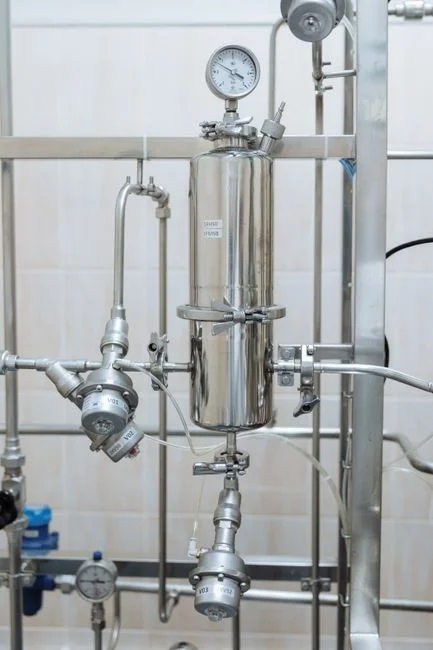
The table below consolidates the parameters a process engineer will copy into a basis-of-design memo. MBR numbers draw on the EPA MBR Fact Sheet and on Jijingi et al. (2024); CAS numbers are typical secondary-clarifier performance for a municipal-style activated sludge basin handling a 1,000 m³/day industrial feed.
| Parameter | MBR | CAS |
|---|---|---|
| MLSS (mixed-liquor suspended solids) | 8,000–12,000 mg/L (some ranges reach 15,000) | 2,000–4,000 mg/L |
| SRT (sludge retention time) | 30–60 days (mining service); 20–40 days typical | 5–15 days non-nitrifying; 1–5 days nitrifying |
| HRT (hydraulic retention time) | 6–12 hours | 8–24 hours |
| Effluent turbidity | <1 NTU routinely | 5–30 NTU (clarifier-dependent) |
| Effluent TSS | <5 mg/L | 10–30 mg/L normal; >50 mg/L during bulking |
| Effluent BOD | <5 mg/L | 15–30 mg/L normal |
| Ammonia-N | 0.10–0.72 mg/L | Variable; loses 30–60% during metal shocks |
| Footprint | ~60% smaller (membrane replaces clarifier + sand filter) | Reference baseline |
| CAPEX delta vs CAS | +20–40% | Baseline |
| OPEX delta vs CAS | +15–30% per m³ (air-scour + CIP chemicals) | Baseline |
| Membrane service life | 5–8 years with proper CIP | N/A (no membrane) |
| Reuse payback (water >$2/m³) | 4–6 years | Not applicable without tertiary step |
The numbers most relevant for Bettles are MLSS, SRT, and footprint. Long SRT protects slow-growing nitrifiers above 5,000 mg/L TDS, which is the regime mining feed lives in, and a 60% smaller footprint means the package fits in a 20- or 40-foot ISO container rather than a poured-in-place concrete basin that the permafrost cannot support.
Why Mining Feed Specifically Fails Conventional Activated Sludge
Mining and metals influent routinely arrives at the secondary stage with BOD/COD ratios below 0.3, hardness in the thousands of mg/L as CaCO₃, and TDS climbing past 5,000 mg/L in districts where fresh make-up water is scarce — the regime that drives filamentous bulking in secondary clarifiers. Heavy metals (As, Pb, Zn, Cu, Ni, Cd) at milligram-per-liter levels shock biomass during upset events, and the floc itself is the removal vehicle, so a stressed floc equals a non-removing clarifier. CAS systems typically lose 30–60% of their removal efficiency for a 24–72 hour window after a metal pulse for exactly that reason.
Cyanide, ammonia, and thiosulfate from cyanidation circuits add an oxygen-demand swing that a clarifier cannot ride out without equalization sized to 12–24 hours of average flow. Salinity above roughly 5,000 mg/L TDS inhibits nitrifiers, and the standard 5–15 day CAS SRT is too short for slow-growing autotrophs to recover. MBR operation at 30–60 day SRT protects the nitrifier population through the recovery curve. The comparison numbers above draw on the EPA MBR Fact Sheet and on the industrial MBR review by Jijingi et al. (2024), both cited in the parallel Eolia US mining comparison. CAS fails on mining feed because the feed violates almost every design assumption the original activated-sludge textbook was written around.
The Bettles Decision Rule in Three Questions
Score the project against three questions before any equipment discussion:
- Is the available footprint under 500 m²? — yes favors MBR; no favors CAS.
- Does the site have a reuse or zero-liquid-discharge driver? — yes favors MBR; no is neutral.
- Is the design flow under 2,000 m³/day? — yes favors MBR; above roughly 5,000 m³/day CAS wins on OPEX.
A Bettles-specific override applies: diesel power above $0.20/kWh and make-up water above $2/m³ each count as an additional "yes" vote for MBR regardless of footprint, because both numbers reframe the OPEX delta. Scoring two out of three "yes" answers means MBR; zero or one means CAS or a hybrid clarifier-plus-MBR polish on the reuse stream. For most Bettles metals plants the answer lands three-out-of-three, which is why a containerized HydropureWater MBR integrated wastewater treatment system is the right procurement path for the 10–2,000 m³/day flow band that defines this market.
Hand procurement a five-line checklist before signing the PO: 7-day composite influent characterization, equalization volume in hours of average flow, fine-screen spec in mm, membrane warranty length in years, and 10-year membrane replacement cost in dollars per m² of membrane area. Rent one MBR cassette for a 60–90 day pilot against the actual feed and verify metals removal at the real influent matrix before committing CAPEX.
Bettles-Specific Engineering: Containerized MBR for Subarctic Service
The 2026 specification for a subarctic Bettles install is a 20- or 40-foot ISO containerized MBR skid with heat-traced and insulated process tanks, glycol heat tracing on permeate and air piping, and a PLC enclosure rated to -40 °C ambient. The biology runs at 8–25 °C inside the insulated envelope while the outside air falls to -50 °C; that thermal separation is the only reason the technology works at this latitude. The membrane module is a submerged PVDF hollow-fiber or flat-sheet cassette at 0.1 µm nominal pore size, and a DF-series 0.1 µm PVDF flat-sheet MBR membrane module pairs well with the variable mining loads typical of remote operations.
Specify 1–3 mm fine screening ahead of the cassettes, sized for mine-water trash loads, with a self-cleaning GX-series rotary mechanical bar screen at the headworks. Add a heated, covered equalization tank sized for 12–24 hours of average flow to dampen metal and cyanide pulses. Include a HydropureWater automatic chemical dosing system for pH 6.5–7.5 control, sodium hypochlorite and citric acid for membrane clean-in-place, and a plate-and-frame filter press to dewater waste sludge to 25–35% dry solids for landfill or backfill.
| Subsystem | Subarctic spec for Bettles |
|---|---|
| Vessel / skid | 20- or 40-foot ISO container; -40 °C PLC enclosure; insulated + heat-traced |
| Membrane module | PVDF flat-sheet or hollow-fiber; 0.1 µm nominal pore size; submerged |
| Fine screening | 1–3 mm rotary bar screen at headworks; self-cleaning |
| Equalization | Heated, covered; 12–24 h of average flow |
| pH control | 6.5–7.5 with lime or caustic; automatic dosing skid |
| Membrane CIP | Sodium hypochlorite (500–1,000 mg/L) + citric acid (1–2 wt%) |
| Sludge dewatering | Plate-and-frame filter press; target 25–35% dry solids |
| Air-scour blower | Duty at $0.25–0.40/kWh diesel power; 0.3–0.5 kWh/m³ typical |
| Pre-commissioning | Factory FAT, then 60–90 day on-site pilot against real feed |
Background on these design values sits in the MBR fundamentals and 2026 cost data walkthrough, and the pretreatment side is covered in the mining pretreatment compliance walkthrough for a related metals district.
Payback Math for a Bettles 1,000 m³/day Plant
Bettles make-up water at $2–5/m³ means a 1,000 m³/day MBR permeate stream is worth $730,000–$1,825,000 per year in avoided purchase cost. At diesel power of $0.25/kWh and air-scour demand of 0.3–0.5 kWh/m³, MBR OPEX runs higher than a Western US install but is still smaller than the avoided water-purchase bill. Net payback lands in the 4–6 year window typical of any site where reused water is valued above $2/m³, with sensitivity to membrane life (5–8 years typical) and chemical cleaning frequency. The aeration energy cost optimization guide walks through how to keep that 0.3–0.5 kWh/m³ number honest in a diesel-power environment.
CAS retrofit only pencils out if an existing aeration basin has 20+ years of useful life and on-site power is below $0.10/kWh. Neither condition holds in Bettles, which is why the 3-question decision rule resolves to MBR for the typical fly-in subarctic metals plant. For a parallel Eolia US case, see the parallel Eolia US mining comparison — the same matrix, a different climate, the same answer.
Frequently Asked Questions
What is the main difference between MBR and conventional activated sludge for mining wastewater?
An MBR replaces the secondary clarifier with a submerged membrane module, holding 8,000–12,000 mg/L MLSS and producing <1 NTU turbidity regardless of sludge settleability. CAS relies on a gravity clarifier at 2,000–4,000 mg/L MLSS, which is why it loses 30–60% of removal efficiency during the metal shocks typical of mining feed.
Does MBR really work in subarctic temperatures like Bettles, Alaska?
Yes, with a containerized, heat-traced, insulated skid. The biology runs at 8–25 °C inside the tank while ambient falls to -50 °C; the membrane itself is unaffected by cold because it never sees the outside air. A PVDF flat-sheet or hollow-fiber module inside a -40 °C-rated PLC enclosure is the standard 2026 subarctic configuration.
How long do MBR membranes last in a mining duty cycle?
Typically 5–8 years with proper pretreatment, pH control, and routine CIP. The two largest swing factors are fine-screen discipline (1–3 mm cut, no exceptions) and CIP frequency; both are operator-controlled, which is why the spec and the O&M manual matter more than the membrane brand.
What is the binding US regulation for mining wastewater discharge?
40 CFR Part 440 — Ore Mining and Dressing — sets daily-maximum and monthly-average effluent limits for the heavy metals and TSS that drive this comparison. EPA Region 10 administers the federal NPDES permit in Alaska, and the Alaska Department of Environmental Conservation layers state criteria for residual chlorine, metals, and whole-effluent toxicity on top of the federal numbers.
Is MBR more expensive than CAS for a small remote mine?
CAPEX runs 20–40% higher because of the membrane cassettes, fine screens, permeate pumps, and PLC upgrade. OPEX runs 15–30% higher per m³ due to air-scour energy and CIP chemicals. The flip side is reuse payback: at $2/m³ make-up water the avoided-purchase line on the ledger typically returns the CAPEX premium inside 4–6 years and flips the 20-year net present value to MBR. For a remote subarctic site that cannot support a stick-built CAS basin, that math is the whole argument.