Why Stanley chemical plants are revisiting the biological step in 2026
Stanley-area chemicals, dye, and specialty organics facilities are entering a 2026 permit cycle bound by two stacked regulatory frames: the NC DEMR NPDES Industrial Permit, which sets site-specific effluent limits and monitoring frequencies on a five-year renewal, and EPA's Effluent Limitations Guidelines at 40 CFR Part 414 for the organic chemicals, plastics, and synthetic fibers subcategory, which establishes the national technology-based floor for BOD, TSS, COD, and toxic pollutants discharged by organic chemicals manufacturers (per EPA 40 CFR Part 414). For a Stanley plant manager, that combination is the binding envelope, and the 2026 renewal letters that began arriving from the Raleigh DEMR office in late 2025 have tightened monthly-average TSS and COD limits for several Gaston/Cleveland County dischargers in the textile and dye sub-sectors.
The local influent profile drives the technology choice more than the discharge limit does. A typical Stanley specialty organics or dye plant runs BOD 200–1,500 mg/L, COD 400–3,000 mg/L, TSS 100–500 mg/L, with pH swings from 4 to 11 between batch reactor dumps and intermittent dye and solvent slugs (HydropureWater field data, 2026). Equalization rarely smooths a multi-product campaign plant enough to look like a steady municipal feed. On top of that, Gaston County Water and the broader Catawba River basin reuse program have raised the bar on effluent quality: pathogen-class water for cooling-tower makeup is no longer aspirational, it is being written into consent orders. That combination of stricter limits, a recalcitrant and unsteady influent, and a labor market where a single wastewater operator may cover two shifts is what is putting biological-step decisions back on the capex agenda in 2026.
How CAS and MBR treat the same chemical influent by different mechanisms
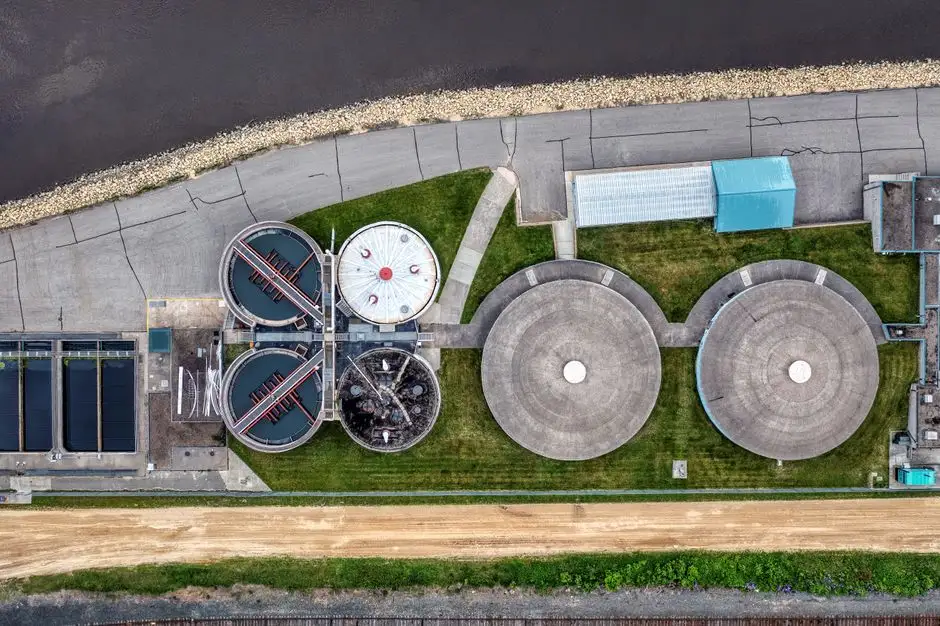
Conventional activated sludge and membrane bioreactor run the same biology; the differentiator sits at the solid/liquid separation step. In CAS, suspended-growth bacteria and protozoa form floc that settles by gravity in a secondary clarifier, and the cleaned water overflows the launder. Effluent quality is set by sludge settleability, which is fragile under the chemical-specific stresses a Stanley plant produces — recalcitrant solvents, intermittent pH swings, and slug discharges from batch reactors routinely trigger bulking, rising sludge, or clarifier washout that pushes TSS and COD straight into the outfall (Mannina et al. 2020 via S4).
MBR uses the same mixed-liquor population but replaces the clarifier with a submerged 0.04–0.2 μm microfiltration/ultrafiltration membrane; biomass and unsettlable colloids are physically retained, so effluent quality is set by membrane pore size rather than by sludge settleability (theses.fr 2012, S4). Because MBR operates at a higher sludge retention time (SRT) and a lower food-to-microorganism (F/M) ratio, it sustains slow-growing populations that can partially degrade the aromatics, amines, and halogenated solvents that CAS passes through unchanged (Mannina et al. 2020, S4). MBR also decouples hydraulic retention time (HRT) from SRT, which lets a shorter HRT absorb campaign or batch discharges without losing biomass (Membranes 2023, S2).
The shock response is where the trade shows. Under a toxic slug, a CAS clarifier can lose the whole sludge blanket and the operator is cleaning up for a week. An MBR keeps the biomass in the tank, but pays for it in membrane fouling when extracellular polymeric substances spike and transmembrane pressure crosses the 0.5 bar threshold reported for MF membranes on high-strength feed (Membranes 2023, S2). That 0.5 bar number is the line item to watch on the SCADA — well before flux decay or permeability collapse make the failure visible in the effluent.
CAS vs MBR for chemicals wastewater: parameter table
The table below compresses the operating envelope an engineer needs when sizing a new biological step or retrofitting an existing basin under NC DEMR NPDES and 40 CFR Part 414 organic chemicals limits. Values are typical industrial ranges drawn from the cited literature and manufacturer specifications, not project-specific guarantees; site-specific jar testing and pilot data should override any number in a table. For the full sizing and lifecycle view, see the MBR system explainer with 2026 cost and sizing data.
| Parameter | CAS (conventional activated sludge) | MBR (membrane bioreactor) |
|---|---|---|
| MLSS | 2,000–4,000 mg/L | 8,000–12,000 mg/L |
| SRT | 5–15 days | 20–60+ days |
| HRT | 6–12 h | 2–6 h |
| Effluent TSS | 10–30 mg/L | <1–5 mg/L (per integrated MBR wastewater treatment system catalog, S6) |
| COD removal on recalcitrant feeds | Marginal; many species pass through | 85–95%+ (Mannina et al. 2020, S4) |
| Footprint | ~0.5 m² per m³/day of design flow (S3) | ~60% smaller than CAS (S6) |
| Sludge yield | Baseline | 30–50% less than CAS (WERF 2019, S5) |
| Aeration energy | Blowers up to 70% of total energy (IWA Publishing 2020, S5) | Higher per m³ (membrane scour air), lower per kg COD removed |
| Membrane life | N/A | PVDF flat-sheet 5–8 yr industrial; 7–10 yr with disciplined CIP (S5–S6) |
| TMP fouling flag | N/A | 0.5 bar for MF on high-strength feed (Membranes 2023, S2) |
Stanley influent self-screen: which technology matches your wastewater
Before reading further, run your plant through the four-question screen below. An all-"no" outcome keeps CAS as the defensible choice under NC DEMR NPDES and 40 CFR Part 414; any "yes" pushes the recommendation toward MBR, and an all-"yes" plant typically sees 20–30% higher capex offset by a 3–5 year breakeven from lower sludge disposal and chemical costs (Morui, S5). Both technologies can meet Part 414 daily-maximum and monthly-average limits, but MBR's <1 μm barrier consistently delivers tighter TSS and COD on the recalcitrant feeds that dominate the Gaston/Cleveland corridor (S4–S6).
| Question | If YES — what it signals | If NO — what it signals |
|---|---|---|
| Q1. Does the influent contain recalcitrant solvents, amines, or aromatics that pass through CAS unchanged? | Higher SRT / lower F/M support slow-grower populations (S4). Favors MBR. | Readily biodegradable feed; CAS biology is sufficient. |
| Q2. Is the hydraulic pattern campaign/batch rather than continuous and steady? | Decoupled SRT/HRT absorbs slug loads (S2). Favors MBR. | Steady hydraulic load; CAS clarifier can handle it. |
| Q3. Is available footprint below ~0.5 m² per m³/day of design flow? | 60% footprint reduction is decisive (S6). Favors MBR. | Ample tankage; footprint is not a binding constraint. |
| Q4. Does the NC DEMR permit or end-use plan require near-reuse quality, low-TSS reuse, or pathogen control? | <1 μm MF retains bacteria and viruses almost completely (S5, S6). Favors MBR. | Standard NPDES discharge; CAS effluent is acceptable. |
Five triggers that flip the call to MBR at a Stanley chemical plant
Use the five triggers below as a defensible checklist in a permit review or capex meeting. Any single trigger is usually enough to justify the MBR premium when paired with the regulatory envelope above.
- Constrained footprint. The 60% footprint reduction versus CAS (S6) is decisive on tight industrial parcels in the Gaston/Cleveland corridor, where a 0.4-acre available footprint is more common than a 2-acre one. A retrofit integrated MBR wastewater treatment system or a submerged submerged PVDF flat-sheet MBR membrane module dropped into an existing aeration basin recovers the parcel without buying land.
- Recalcitrant or slowly biodegradable organics. MBR's higher SRT and lower F/M support partial degradation of aromatics, amines, and halogenated solvents that CAS cannot metabolize (Mannina et al. 2020, S4) — the exact compound classes driving the tighter 2026 COD limits on several Stanley dye and specialty organics permits.
- Campaign or batch discharges from batch reactors. The decoupled SRT/HRT and shorter HRT absorb slug loads without clarifier washout (Membranes 2023, S2). A CAS basin at a multi-product campaign plant will lose sludge two or three times a year; an MBR holds it.
- Reuse or pathogen control. An integrated MBR wastewater treatment system at <1 μm filtration delivers near-reuse quality without a separate UF polish, which matters for plants feeding cooling-tower makeup under a Gaston County Water reuse consent order (S6).
- Recurring toxicity-induced bulking. Solvent or surfactant spills that routinely upset a CAS clarifier are contained inside the MBR tank, where the membrane still holds biomass even when EPS spikes foul the surface. The cost shows up in CIP frequency, not in lost effluent quality.
Pretreatment and operations MBR demands that CAS does not
Selecting MBR shifts the design requirements toward more robust pretreatment and daily operational management. Three realities must be budgeted, or MBR will underperform on a Stanley chemical influent.
First, equalization and pH control upstream of the membrane are non-negotiable for chemical waste streams. Outside the design pH window, transmembrane pressure crosses 0.5 bar and fouling accelerates (Membranes 2023, S2). An automatic pH and coagulant dosing skid ahead of the bioreactor keeps the mixed liquor in the operating envelope; a pH swing from 4 to 11 in a single batch dump is enough to foul a tank of modules in one shift without it.
Second, oil, grease, and solvent carryover must be removed upstream. Solvents and free oil will foul and damage PVDF membranes. DAF pretreatment is the standard answer for high-FOG chemical streams, and a high-efficiency sedimentation tank downstream of DAF protects the membrane from residual solids that would otherwise raise TMP.
Third, cold-weather design and operator workload. Aerobic MBR performance drops below 20 °C (Membranes 2023, S2); Stanley's milder winters make bioreactor covers a recommendation rather than a hard requirement, but covers still pay back in stable biology through cold snaps. MBR also requires daily monitoring of TMP, flux, and air-scour rates, plus a CIP schedule — reserve training time and a 5–8 year PVDF replacement line in the lifecycle budget (S5–S6). When the operations side is the bottleneck, a performance-based wastewater O&M contract structure can move the risk off a thin in-house operator pool.
Economically, MBR systems cost 20–30% more up front than CAS, but a 10-year total-cost-of-ownership view typically shows lower running costs because of less sludge disposal, fewer chemicals, and no secondary clarifier maintenance; break-even usually lands at 3–5 years when all three savings stack (S5). The defensible comparison against a peer Southeast chemicals corridor is laid out in the MBR vs CAS for chemicals wastewater in Lafollette, TN guide, and the pretreatment framing against 40 CFR Part 414 limits is detailed in how chemical plants meet 40 CFR Part 414 pretreatment limits.
Frequently Asked Questions
Can an MBR meet NC DEMR NPDES and 40 CFR Part 414 limits at a Stanley chemicals plant?
Yes. Both CAS and MBR can meet the daily-maximum and monthly-average effluent limits in 40 CFR Part 414 for the organic chemicals subcategory, but MBR's <1 μm membrane barrier consistently delivers lower effluent TSS (<1–5 mg/L vs 10–30 mg/L) and tighter COD on the recalcitrant feeds typical of the Gaston/Cleveland corridor (S4–S6). For Stanley plants facing stricter 2026 NC DEMR renewal limits, MBR provides more headroom on the monthly-average numbers that drive compliance.
How much less sludge does an MBR produce versus CAS at a chemical plant?
MBR generates 30–50% less waste activated sludge than a clarifier-based CAS system at the same organic loading, because the higher SRT (20–60+ days vs 5–15 days) lets biomass work longer before being wasted (WERF 2019, S5). For a Stanley plant, that translates directly into lower hauling and dewatering costs — typically the single largest line item in a chemical-plant O&M budget after energy.
What pretreatment does an MBR require on a chemical wastewater stream?
Equalization with pH control, oil/grease and solvent removal (typically DAF or lamella clarification), and automatic chemical dosing upstream of the membrane are required to keep TMP below the 0.5 bar fouling threshold reported for MF membranes on high-strength feed (Membranes 2023, S2). A DAF pretreatment skid plus an automatic pH and coagulant dosing skid ahead of the membrane is the standard Stanley configuration. See the full sizing and cost view in the MBR system explainer with 2026 cost and sizing data.