Which POTW Controls Your Lakewood Discharge — and Why It Matters
Lakewood, Colorado, industrial facilities must identify their specific Control Authority to determine which pretreatment standards govern their end-of-pipe discharge, as municipal sewer boundaries dictate whether a plant reports to Metro Water Recovery or the Plum Creek Water Reclamation Authority (PCWRA). Understanding these boundaries is the first step in avoiding regulatory penalties and ensuring that your facility’s wastewater management strategy aligns with the specific requirements of the regional authority.
For the majority of the Lakewood–Denver corridor, Metro Water Recovery serves as the primary Control Authority. Facilities located in the southern reaches of the metro area must confirm their service provider by reviewing sewer atlas maps or contacting the local sanitation district, as jurisdiction determines the enforceable local limits. These local limits are derived from the POTW’s NPDES permit (such as Metro’s CO0026638), the quality of the sludge produced, and the specific water quality criteria of the South Platte River (per EPA 40 CFR 403.5(c)). Because these limits are set to protect downstream ecosystem health, they can shift based on seasonal river flow and changes in the POTW's internal treatment capacity.
For facilities within the PCWRA service area, compliance is managed through the authority’s adopted Rules and Regulations. Industrial Users (IUs) can verify current permit requirements by contacting the PCWRA pretreatment staff at (303) 688-1991 or via email at [email protected]. Both authorities are mandated to conduct annual reviews and periodic reevaluations of their local limits. As headworks loading data accumulates or downstream water quality standards tighten, these numeric limits are subject to adjustment, requiring facilities to remain agile in their pretreatment capacity to avoid non-compliance. Facility managers should sign up for regulatory newsletters or periodic updates from these authorities to stay ahead of sudden permit modifications.
Three-Layer Limit Stack: Federal Floor, Categorical Ceiling, Local Binding Constraint
Chemical plants must navigate a three-tier regulatory stack where the most stringent applicable limit at any given time dictates the facility's operational ceiling. Navigating this hierarchy prevents unintended violations, as plants must balance federal compliance with stricter local ordinances.
Layer 1 consists of federal general and specific prohibitions defined in 40 CFR 403.5(a) and (b), which ban any discharge that causes pass-through or interference, including the introduction of ignitable, corrosive, or toxic gases. Layer 2 involves categorical pretreatment standards under 40 CFR Parts 414 (organic chemicals), 415 (inorganic chemicals), and 419 (petroleum refining). These federal floors establish numeric limits for specific pollutants like COD, BOD5, and TSS. Layer 3, the local limits set by Metro Water Recovery or PCWRA, frequently imposes numeric caps 20–50% lower than federal categorical standards to protect the POTW’s specific biological capacity (source: EPA 2026). When evaluating your discharge, apply the "most restrictive rule" principle: if the local limit is 50 mg/L and the federal limit is 100 mg/L, the 50 mg/L threshold is the only one that matters for your permit compliance.
| Regulatory Layer | Scope | Primary Driver |
|---|---|---|
| General Prohibitions | All Industrial Users | Pass-through/Interference (40 CFR 403.5) |
| Categorical Standards | SIUs (40 CFR 414/415/419) | Federal numeric effluent limits |
| Local Limits | Site-specific | POTW NPDES permit & sludge quality |
Any facility subject to categorical standards is automatically classified as a Significant Industrial User (SIU) under 40 CFR 403.3(v)(1). This status triggers mandatory BMR filings at startup, 90-day compliance reports, and the development of a formal slug load control plan per 40 CFR 403.8(f). Maintaining a comprehensive "regulatory binder" that tracks these filings is an essential practice for facility managers to ensure that no reporting deadlines are missed during personnel changes or facility expansions.
Mapping Your Wastewater Profile to the Right Equipment Train
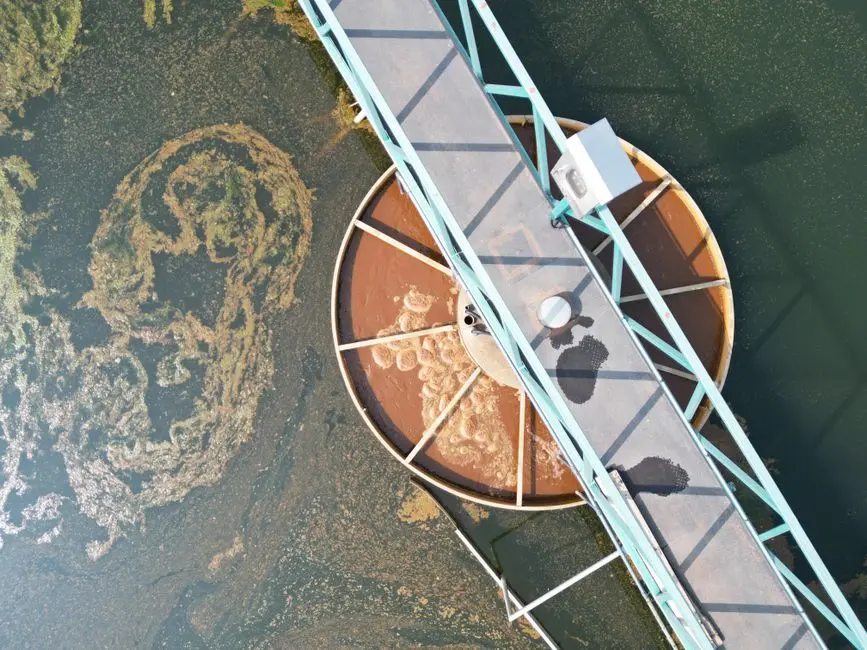
Selecting the optimal pretreatment train requires mapping the facility’s specific wastewater profile against unit operation capabilities and flow dynamics to ensure consistent compliance. Selecting equipment based on peak design capacity rather than average loading prevents the plant from becoming vulnerable during process upsets or batch dumping events.
For organic-heavy or metal-laden streams, the equipment train must be sized for both peak flow and contaminant variability. Engineers should utilize DAF for chemical plant pretreatment when managing TSS, FOG, or colloidal contaminants, typically operating at 4–300 m³/h with a 20–30 minute hydraulic retention time. When dealing with dissolved metals, chemical precipitation followed by a lamella clarifier (20–40 m/h surface loading) is the standard for reliable removal. For facilities facing high BOD/COD or salt concentrations exceeding 5,000 mg/L, integrated MBR for BOD/COD polishing and reuse provides a robust solution that maintains biomass health even under osmotic stress. Before installation, perform bench-scale jar testing to confirm that the selected chemical coagulants and flocculants are effective for your specific wastewater matrix.
| Wastewater Profile | Primary Unit Op | Key Design Parameter |
|---|---|---|
| Oils / TSS / FOG | DAF System | 20–30 min HRT |
| Dissolved Metals | Chemical Precipitation + Lamella | 20–40 m/h surface loading |
| High COD / Salt stress | MBR System | <1 μm membrane pore size |
| Batch pH Swings | Equalization Tank | 24–48 hr capacity |
Equalization serves as a critical insurance policy in the treatment train. Batch operators should size equalization basins for 24–48 hours of retention to dampen pH and concentration spikes. Implementing an PLC-controlled dosing for pH and precipitation chemicals at the head of the process ensures that reagents are added in direct proportion to real-time influent loading, preventing both chemical waste and discharge violations. Integrating a secondary containment system around these dosing skids satisfies the "best management practices" often requested by POTW inspectors during site audits.
Compliance Proof Points: Monitoring, Reporting, and the Slug Load Plan
Compliance is documented through a rigorous reporting schedule that translates equipment performance data into the metrics required by the Control Authority. Accurate data management creates a historical record that protects your facility in the event of an accidental discharge or a contested inspection finding.
The Baseline Monitoring Report (BMR) serves as the foundation, establishing the initial pollutant envelope for the facility. Following the BMR, 90-day compliance reports must provide analytical data from 24-hour composite samples taken at the designated monitoring station. For batch operations, the slug load control plan mandated by 40 CFR 403.8(f) must integrate the equalization basin’s capacity with written procedures for controlled discharge. Proactive compliance relies on online instrumentation—specifically pH, ORP, conductivity, and TSS probes—installed post-equalization and post-DAF. These sensors allow operators to adjust chemical dosing before a violation occurs, directly protecting the POTW from pass-through or interference. POTW inspectors will routinely calibrate these systems against their own grab samples; therefore, maintaining high-precision probe calibration and consistent grab-composite correlation is vital. Establishing a recurring maintenance schedule for these probes, including monthly cleaning and weekly calibration, will significantly reduce the risk of sensor drift and false alarms.
Frequently Asked Questions
What is the difference between pass-through and interference?
Pass-through occurs when pollutants exit the POTW in quantities that cause a violation of the POTW's NPDES permit (40 CFR 403.3(p)). Interference occurs when a discharge inhibits the POTW’s biological or sludge-handling processes, also leading to an NPDES violation (40 CFR 403.3(k)). Both scenarios can result in significant fines and increased oversight for the contributing industrial facility.
Why do local limits often differ from federal categorical standards?
While federal categorical standards provide a national baseline for specific industrial sectors, local limits are derived from the receiving POTW’s specific NPDES permit and sludge disposal constraints. If a POTW has limited hydraulic or biological capacity, it may set local limits more stringent than the federal floor to ensure ongoing compliance (per EPA 2026). These local limits ensure the POTW's own permit remains in good standing with state and federal environmental agencies.
What defines a Significant Industrial User (SIU)?
An SIU is defined at 40 CFR 403.3(v) as any industrial user subject to categorical pretreatment standards, any user discharging more than 25,000 gallons per day of process wastewater, or any user that contributes a waste stream making up 5% or more of the POTW’s hydraulic or organic capacity. If your facility falls into this category, you are subject to more frequent inspection cycles and more stringent reporting requirements than standard minor industrial users.