Why CAS vs MBR Matters for Rensselaer Chemical Plants
The first pilot applications of membrane bioreactor (MBR) technology in the United States were conducted at Rensselaer Polytechnic Institute in Troy and Dorr Oliver Inc. — the same metropolitan area where a specialty chemicals, pharma intermediates, or fine-chemicals engineer is now weighing a biological-step decision (Membranes 2023, S2). This local lineage is relevant because the plant you are designing sits inside a regulatory envelope — NYSDEC SPDES General Permit GP-0-15-001 for industrial wastewater, 6 NYCRR Part 750, and EPA Effluent Limitations Guidelines 40 CFR Part 414 for the organic chemicals subcategory — that defines what the technology has to deliver at the outfall. The two competing technologies treat the same influent by different mechanisms: conventional activated sludge (CAS) relies on biological growth, floc aggregation, and gravity settling in a clarifier, while MBR couples the same activated-sludge biology to solid/liquid separation through a submerged microfiltration/ultrafiltration membrane (Mannina et al. 2020, S4). The question for a Rensselaer chemical facility is not "which is better" but "which is better for this influent, this footprint, and this discharge permit."
How Each Technology Actually Treats Chemical Wastewater
Suspended-growth biology treats chemical wastewater in CAS systems, where floc-forming bacteria and protozoa aggregate the biomass before a downstream clarifier separates the cleaned water from the activated sludge by gravity. That mechanism is well understood and inexpensive, but it is fragile under chemical-specific stresses — recalcitrant solvents, intermittent pH swings, and slug discharges from reactors can trigger sludge bulking, rising sludge, or washout that sends TSS and COD straight into the effluent (Mannina et al. 2020, S4). MBR uses the same biological population but replaces the clarifier with a submerged 0.04–0.2 μm membrane (theses.fr 2012, S5); biomass and unsettlable colloids are physically retained, so effluent quality is set by the membrane pore size rather than by sludge settleability. Because MBR operates at a higher sludge retention time (SRT) and a lower food-to-microorganism (F/M) ratio, it sustains slower-growing populations that can partially degrade the recalcitrant and slowly biodegradable organics — aromatics, amines, halogenated solvents — that pass through CAS unchanged (Mannina et al. 2020, S4). MBR also decouples hydraulic retention time (HRT) from SRT, allowing the treatment of large volumes of effluent within a shorter timeframe than CAS — a useful property for plants running campaign or batch discharges (Membranes 2023, S2). The shock response differs sharply: under a toxic slug, CAS loses the whole clarifier if sludge rises, while MBR retains its biomass in the tank but pays for it in membrane fouling when extracellular polymeric substances spike and transmembrane pressure climbs past the 0.5 bar threshold reported for anaerobic MBRs treating vinasse (Membranes 2023, S2).
Side-by-Side Parameters: CAS vs MBR for Chemical Effluent

The table below compresses the operating envelope an engineer needs when sizing a new biological step or retrofitting an existing basin under SPDES GP-0-15-001 and 40 CFR Part 414 organic chemicals limits. These values are typical ranges drawn from the cited literature and manufacturer specifications — not project-specific guarantees.
| Parameter | CAS | MBR | Source |
|---|---|---|---|
| SRT (days) | 5–15 | 20–60 | Mannina et al. 2020, S4 |
| MLSS (mg/L) | 2,000–4,000 | 8,000–12,000 | Mannina et al. 2020, S4 |
| Membrane pore size | N/A (clarifier) | 0.04–0.2 μm (MF/UF) | theses.fr 2012, S5 |
| Effluent TSS (mg/L) | 10–30 | < 1–5 | HydropureWater product catalog, S6 |
| Effluent COD removal | 85–95% (biodegradable feed) | 85–95%+ on recalcitrant feeds CAS cannot metabolize | Mannina et al. 2020, S4 |
| Direct GHG (kgCO2eq/m³) | 0.85 | 0.91 | Mannina et al. 2020, S4 |
| Effluent microplastics (MP/L) | 1.0 | 0.4 | Lares et al. 2018 via Mannina et al. 2020, S4 |
| Footprint vs CAS | 1.0× (baseline) | ~0.4× (60% smaller) | HydropureWater product catalog, S6 |
| Aerobic operating window | 10–30 °C | 20–30 °C sweet spot | Membranes 2023, S2 |
| Fouling PTM alert | N/A | 0.5 bar for MF on high-strength feed | Membranes 2023, S2 |
Engineers should consider three factors for a Rensselaer plant. First, MBR membranes at 0.04–0.2 μm "retain bacteria and viruses almost completely" (theses.fr 2012, S5) — relevant if your discharge permit or internal reuse target requires pathogen control. Second, the integrated MBR wastewater treatment system in the HydropureWater catalog is rated at <1 μm filtration with a 60% smaller footprint than conventional systems (S6), making it attractive for tight industrial parcels near the Hudson. Third, aerobic MBR performance degrades below 20 °C (Membranes 2023, S2), and Rensselaer winter influent can drop into single-digit °C, so bioreactor covers or heat exchange belong in the capital plan.
When CAS Is Still the Right Answer in Rensselaer
CAS remains a viable option for chemical wastewater in the Capital District. For a large plant with steady, readily biodegradable influent, ample tankage, and no reuse or pathogen requirement, CAS wins on operating cost because it avoids membrane replacement, chemical clean-in-place (CIP) cycles, and the aeration energy needed for membrane scour (Mannina et al. 2020, S4). CAS is also easier to operate, which matters at small facilities with limited operator headcount. The economic crossover is real: Karim and Mark (2017), as cited by Mannina et al. (2020), found that MBR only beats CAS on total cost over horizons of more than ~67 years — a horizon most plant managers do not amortize against. The defensible rule of thumb: if the influent BOD/COD is readily biodegradable, the hydraulic load is continuous and steady, and the available footprint is at least ~0.5 m² per m³/day of design flow, CAS remains the appropriate technology under SPDES GP-0-15-001.
When MBR Becomes the Better Choice for Chemical Wastewater
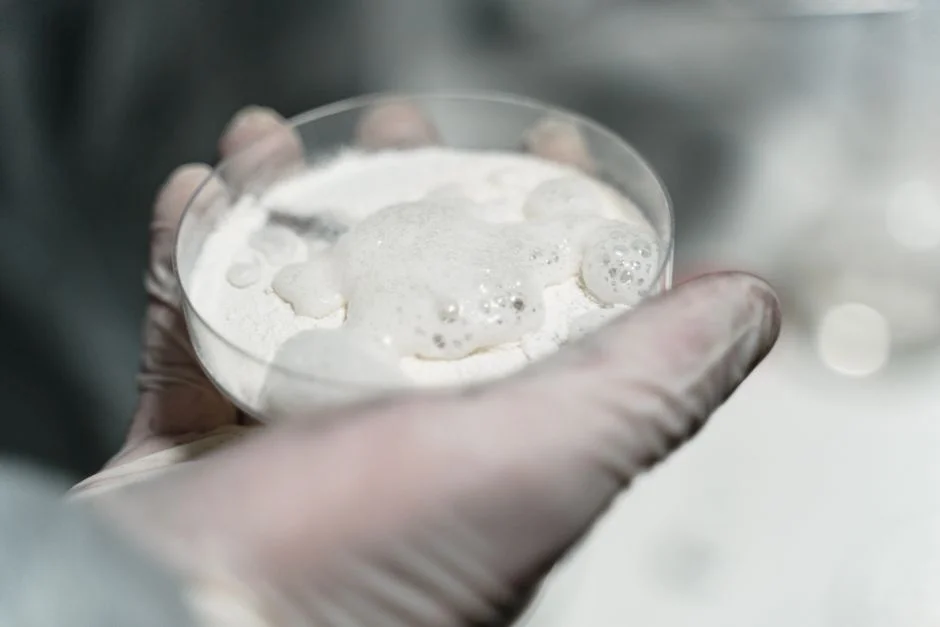
Five triggers should flip the recommendation toward MBR for a Rensselaer chemical plant. Trigger 1 — constrained footprint: the 60% footprint reduction (S6) is decisive on tight industrial parcels near the Hudson or downtown Rensselaer. Trigger 2 — recalcitrant or slowly biodegradable organics: MBR's higher SRT and lower F/M support partial degradation of aromatics, amines, and halogenated solvents that CAS cannot metabolize (S4). Trigger 3 — campaign or batch discharges: the decoupled SRT/HRT and shorter HRT absorb slug loads without clarifier washout (S2). Trigger 4 — reuse or pathogen control: the integrated MBR wastewater treatment system at <1 μm filtration, or a retrofit submerged PVDF flat-sheet MBR membrane module dropped into an existing basin, delivers near-reuse quality without a separate UF polish (S6). Trigger 5 — recurring toxicity-induced bulking: solvent or surfactant spills that routinely upset a CAS clarifier are contained inside the MBR tank, where the membrane still holds biomass even when EPS spikes foul the surface.
Decision Framework: Choosing CAS or MBR for a Rensselaer Retrofit
Use the four questions below as a gate to determine the best path forward. Any "yes" pushes the recommendation toward MBR; an all-"no" outcome keeps CAS as the defensible choice. The framework is intentionally simple so the engineer can defend the call to a plant manager in one page.
| Decision question | If YES → toward | Rationale / source |
|---|---|---|
| Q1. Does the influent contain recalcitrant solvents, amines, or aromatics that pass through CAS unchanged? | MBR | Higher SRT and lower F/M support slow-grower populations (S4) |
| Q2. Is the hydraulic pattern campaign/batch rather than continuous and steady? | MBR | Decoupled SRT/HRT absorbs slug loads (S2) |
| Q3. Is available footprint below ~0.5 m² per m³/day of design flow? | MBR | ~60% smaller footprint (S6) |
| Q4. Does the SPDES permit or end-use plan require near-reuse quality, low-TSS reuse, or pathogen control? | MBR | <1 μm MF retains bacteria and viruses (S5, S6) |
Map the outcome to hardware once the decision is made. For new builds on a tight parcel, specify the integrated MBR wastewater treatment system (S6). For a CAS-to-MBR retrofit inside an existing aeration basin, drop in a submerged PVDF flat-sheet MBR membrane module and reuse the existing tankage. The full operating envelope — energy, CIP, lifecycle — is detailed in the MBR system explainer with 2026 cost and sizing data.
Pretreatment and Operating Realities Rensselaer Plants Should Plan For
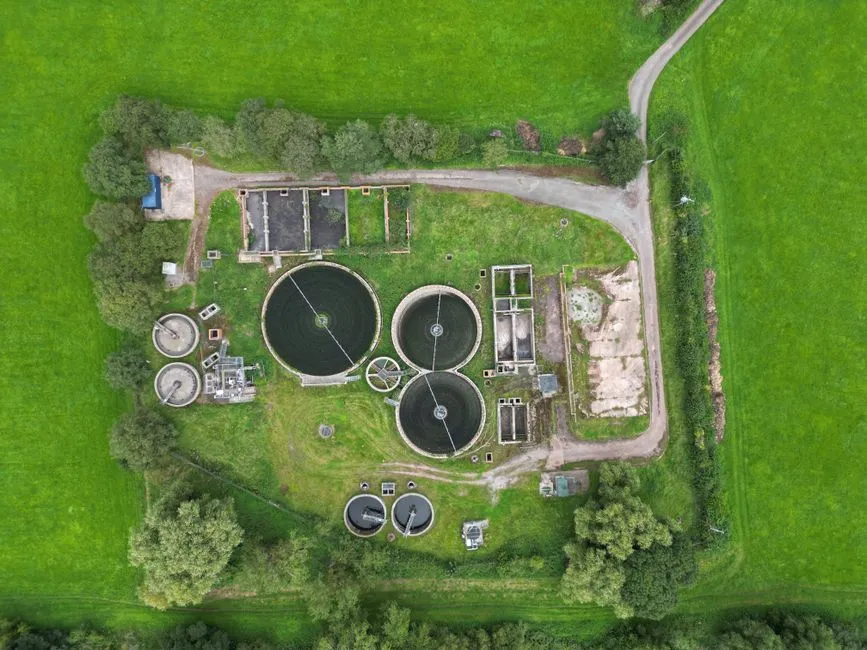
Selecting MBR shifts the design requirements toward more robust pretreatment and daily operational management. Three realities must be budgeted or MBR will underperform. First, equalization and pH control upstream of the membrane are non-negotiable for chemical waste streams; outside the design pH window, transmembrane pressure (PTM) crosses 0.5 bar and fouling accelerates (Membranes 2023, S2). Automatic pH and coagulant dosing ahead of the bioreactor keeps the mixed liquor in the operating envelope. Second, oil, grease, and solvent carryover must be removed upstream — solvents and free oil will foul and damage PVDF membranes. Dissolved air flotation (DAF) pretreatment handles high-FOG streams, and a high-efficiency sedimentation tank downstream of DAF protects the membrane from residual solids. Third, cold-weather design matters: aerobic MBR performance drops below 20 °C (Membranes 2023, S2), so Rensselaer plants should plan covered bioreactors or heat exchange to keep mixed liquor above the 20 °C floor through Capital District winters. MBR also requires daily monitoring of TMP, flux, and air-scour rates, plus a CIP schedule — operator training time is a real line item. PVDF membrane modules typically last 5–8 years before replacement; lifecycle budgeting should reserve for that replacement on a rolling basis.
Frequently Asked Questions
How does MBR vs CAS affect compliance with NYSDEC SPDES GP-0-15-001 and 40 CFR Part 414?
Both technologies can meet SPDES GP-0-15-001 effluent limits for industrial wastewater and the organic chemicals subcategory under 40 CFR Part 414, but MBR's <1 μm membrane barrier consistently produces lower effluent TSS and tighter COD on recalcitrant feeds that CAS leaves partially treated (S4, S5, S6).
Is the MBR premium worth it for a Rensselaer chemical plant?
Economically, Karim and Mark (2017) found MBR only beats CAS over horizons beyond ~67 years; the MBR premium is therefore justified by non-cost drivers — a 60% smaller footprint (S6), tolerance for campaign discharges, pathogen-grade effluent for reuse, and the ability to partially degrade recalcitrant solvents and aromatics (S2, S4).
What pretreatment does an MBR require for chemical wastewater?
Equalization with pH control, oil/grease and solvent removal (typically DAF or lamella clarification), and automatic chemical dosing upstream of the membrane are required to keep PTM below the 0.5 bar fouling threshold reported for MF membranes on high-strength feed (Membranes 2023, S2).
Can MBR be
Related equipment and engineering reading
- MBR Membrane Bioreactor Wastewater Treatment System
- MBR Wastewater Treatment System Explained: How It Works, Costs & When to Choose It (2026 Data)
- MBR vs Conventional Activated Sludge for Mining Wastewater in Crystal Springs, United States: 2026 Engineering Guide
- MBR vs Conventional Activated Sludge for Chemicals Wastewater in Pedricktown, NJ (2026 Guide)
- MBR vs Conventional Activated Sludge for Chemicals Wastewater in Gulfport: 2026 Engineering Comparison