
Why the MBR vs CAS Decision Is Different at a Pedricktown Chemical Plant
For chemicals wastewater in Pedricktown, NJ, an MBR (membrane bioreactor) outperforms conventional activated sludge (CAS) when the stream carries salts, solvents, or refractory organics that would crash a secondary clarifier. MBR operates at 8,000–12,000 mg/L MLSS and 30–60 day SRT versus 2,000–5,000 mg/L and 5–15 day SRT for CAS, delivering TSS <5 mg/L effluent in roughly 40–60% less footprint, at $180–$420 per m³/d CAPEX versus $80–$220 for CAS (HydropureWater 2026 engineering comparison; EPA MBR Fact Sheet, 2008).
Pedricktown sits inside the Logan Township / Delaware River chemical corridor, dominated by DuPont, Chemours, and adjacent specialty chemical operations. The influent envelope at a typical site in this corridor is COD 1,500–8,000 mg/L, salinity 2–20 g/L NaCl equivalent, episodic solvent slugs to 200–500 mg/L, pH 2–12 excursions, and occasional fluoride or organic peroxide residuals. None of those parameters exist in a municipal fact sheet, and each one of them changes which system survives a bad day.
The core decision question is not "which process removes more BOD on a steady stream?" Both do. The question is which process survives your worst slug. CAS depends on a clarifier that can be defeated by bulking, rising sludge, or hydraulic overload. MBR decouples HRT from SRT through a 0.1–0.4 μm PVDF membrane and is therefore the more robust secondary biological process for chemical slugs. Industrial-scale MBR operation is not theoretical: an A2O-MBR reactor was operated stably at 77 LMH flux and high MLSS for 270 days in the Banu et al. (2009) study, demonstrating the high-MLSS long-SRT envelope on real industrial feed.
Regulatory and Discharge Framework: NJDEP, DRBC and Site Limits
Discharge from the Pedricktown chemical corridor typically routes to a Logan Township MUA sewer and ultimately to the Delaware River, triggering NJDEP Industrial Pretreatment Program limits under N.J.A.C. 7:14A, plus Delaware River Basin Commission (DRBC) flow and quality review for any larger allocation that crosses the basin boundary. For surface water discharge rather than a POTW, NJ Surface Water Quality Standards (N.J.A.C. 7:9B) set FW2-NT/SE1 criteria that often force nutrient and low-TSS polishing — the EPA MBR fact sheet flags this as a structural strength of MBR (EPA, 2008).
At the pretreatment point, NJ chemical manufacturers commonly face local limits of BOD ≤250 mg/L, TSS ≤250 mg/L, oil & grease ≤100 mg/L, and pH 6.0–9.0, with tighter site-specific limits for fluoride, sulfide, phenols, and certain SVOCs. Those limits shape the CAS vs MBR decision in two ways. First, a TSS cap below 30 mg/L is structurally easier to meet with MBR permeate at <5 mg/L than with a CAS clarifier at 10–30 mg/L plus a polishing filter. Second, the 250 mg/L BOD cap at the pretreatment point is rarely the binding constraint; the binding constraint downstream is usually a NJ site-specific effluent limit for a specific chemistry (fluoride, ammonia-N, an SVOC), which pushes the design toward an MBR with a long SRT for slow degraders.
DRBC review matters at Pedricktown because any withdrawal or discharge above the docket threshold triggers a project review that examines cumulative loadings across the basin. For a chemical site considering a new biological secondary process, the DRBC docket is usually the controlling document for hydraulic and thermal load, while NJDEP N.J.A.C. 7:14A controls the chemical side. Engineers writing a design basis memo in this corridor should reference both before quoting CAPEX.
How Each System Treats a Chemical Feed: Mechanism Comparison
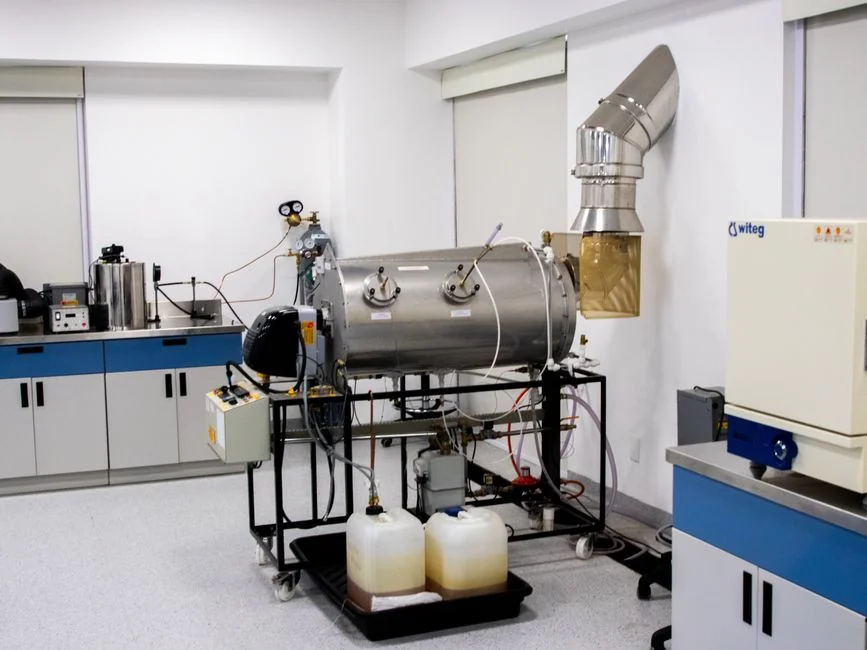
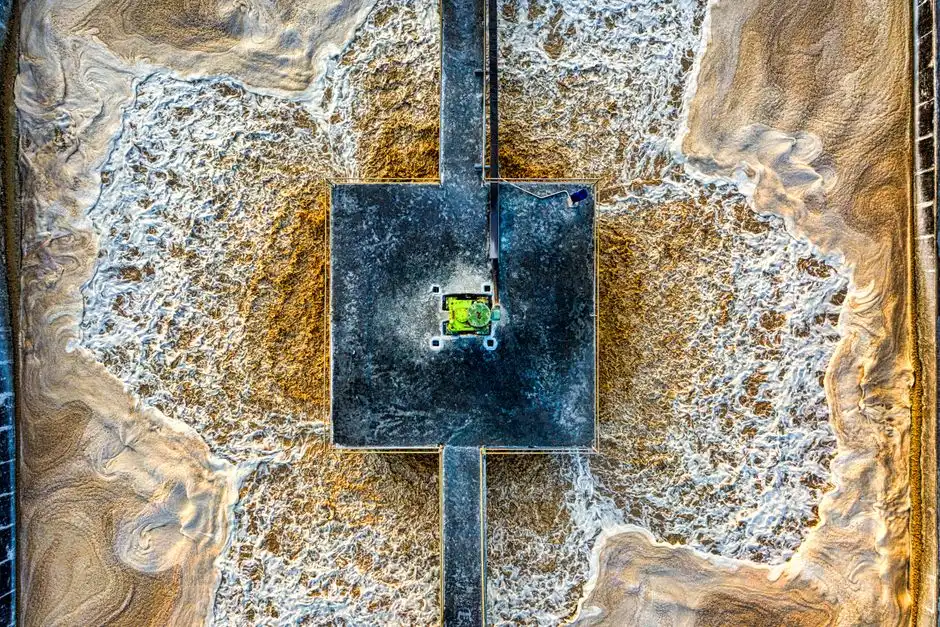
CAS is an aeration tank with heterotrophic biomass at 2,000–5,000 mg/L MLSS and 5–15 day SRT, followed by a secondary clarifier that relies on sludge volume index (SVI) to settle the mixed liquor. The clarifier is the single point of failure: bulking, denitrification in the clarifier, and hydraulic overload are the dominant failure modes, and any of them can collapse the system in hours (HydropureWater 2026 engineering comparison). For a chemical stream with episodic solvent slugs, the clarifier is also the first place you see the failure — the sludge blanket drops and you lose solids to the effluent.
MBR is an aeration basin with 8,000–12,000 mg/L MLSS and 30–60 day SRT, with mixed liquor drawn through 0.1–0.4 μm PVDF submerged membranes at typical flux 15–25 LMH. The membrane replaces the clarifier and a downstream sand filter, and decouples HRT (4–8 h) from SRT (HydropureWater 2026). Because the membrane is a defined pore size rather than a settling process, it does not care about SVI, and the permeate quality is decoupled from sludge settleability. The EPA MBR fact sheet confirms this architectural point: the membrane filtration system "in effect can replace the secondary clarifier and sand filters in a typical activated sludge treatment system" (EPA, 2008).
For chemical streams, the kinetic logic matters more than the hardware. MBR at 30–60 day SRT runs at F/M 0.05–0.15 d⁻¹; CAS at 5–15 day SRT runs at F/M 0.2–0.5 d⁻¹. The long SRT in an MBR selects for slow-growing specialists — halophiles, solvent-degraders, refractory-organic metabolizers — that wash out of a short-SRT CAS. That is why an MBR can absorb a 5 g/L chloride swing that would strip nitrification out of a CAS, and why the same MBR can hold 200–500 mg/L of episodic solvent that would deflocculate a clarifier.
Operating Envelope Side by Side: CAS vs MBR for Chemical Wastewater
For a design basis memo, the table below consolidates the operating envelope an engineer needs to specify either system on a chemical feed. Values are typical 2026 ranges for chemical and light-industrial service; high-strength streams may shift MBR toward the upper MLSS and SRT limits.
| Parameter | CAS | MBR | Source |
|---|---|---|---|
| MLSS (mg/L) | 2,000–5,000 | 8,000–12,000 | HydropureWater 2026 |
| SRT (days) | 5–15 | 30–60 | HydropureWater 2026; EPA MBR Fact Sheet |
| HRT (hours) | 6–12 | 4–8 | HydropureWater 2026 |
| F/M (d⁻¹) | 0.2–0.5 | 0.05–0.15 | HydropureWater 2026 |
| Effluent TSS (mg/L) | 10–30 | <5 | HydropureWater 2026; EPA MBR Fact Sheet |
| Effluent BOD (mg/L) | 10–30 | <5 | HydropureWater 2026; EPA MBR Fact Sheet |
| Turbidity (NTU) | 5–15 | <1 | EPA MBR Fact Sheet (Cauley Creek data) |
| SDI | 5–10 | <3 | HydropureWater 2026 |
| Footprint (relative) | Baseline (1.0×) | 0.4–0.6× (40–60% smaller) | HydropureWater 2026 |
| Sludge yield (WAS, relative) | Baseline | 20–40% less at matched SRT | Banu et al. 2009 |
| Peak flow tolerance (without EQ) | Wider (clarifier-dependent) | ≤1.5–2× average flow | EPA MBR Fact Sheet |
| CAPEX ($/m³/d, 2026 turnkey) | $80–$220 | $180–$420 | HydropureWater 2026 |
| OPEX ($/m³, 2026) | $0.10–$0.22 | $0.18–$0.42 | HydropureWater 2026 |
The membrane replacement line amortizes over 5–8 years, and some vendors offer 10-year guarantees (EPA MBR Fact Sheet, 2008). The MBR OPEX premium is partly offset by elimination of a tertiary sand filter or DAF polishing stage that a CAS baseline would otherwise need to reach reuse quality.
Where MBR Pulls Ahead on Chemical-Stream Failure Modes
Salinity slugs. MBR biomass at 30–60 day SRT adapts to 5–20 g/L Cl⁻ over multiple cycles; short-SRT CAS loses nitrification and triggers bulking when Cl⁻ jumps. In the Pedricktown corridor this matters because chloride swings accompany batch acid neutralization and certain fluoride-bearing chemistries.
Solvent slugs. At 30–60 day SRT, an MBR tolerates 200–500 mg/L episodic solvent loadings that would deflocculate a clarifier; a CAS sludge blanket can be lost within hours. Equalization upstream is still good practice, but the MBR's longer SRT gives operators a wider envelope before they have to dump mixed liquor.
pH swings. The MBR aeration basin volume plus upstream equalization buffers 2–11 excursions that would kill CAS biomass or lift sludge. An automatic chemical dosing system is still typically required to hold the basin inside 6.5–8.5, but the basin volume provides minutes of residence time that a clarifier never does.
Refractory organics and fluorinated compounds. MBR's long SRT enriches slow degraders and the physical barrier retains cell-bound micropollutants; dissolved low-MW polar species still pass both systems (HydropureWater 2026, citing the SimpleTreat micropollutant study). For the DuPont/Chemours-class chemistries common at Logan Township, the long-SRT kinetic argument is usually stronger than the absolute removal argument.
Where CAS Still Wins at a Pedricktown-Scale Plant
Greenfield, large-flow (>5,000 m³/d) plants with ample land, no reuse obligation, and POTW discharge typically favor CAS at $80–$220 per m³/d CAPEX versus $180–$420 for MBR (HydropureWater 2026). At that scale, the MBR OPEX premium outpaces the footprint and reuse savings.
Operators without membrane CIP experience should think twice. CAS can be run with a smaller, less specialized team; MBR adds membrane cleaning, scour-air blower maintenance, and integrity testing. The EPA MBR fact sheet notes that "O&M costs include membrane cleaning and fouling control, and eventual membrane replacement" — those are real line items that need operators who can execute them (EPA, 2008).
Effluents that are highly fibrous or contain undissolved solvents are also a CAS-favoring case. Pre-MBR screening at 1–3 mm — 1–2 mm for hollow fiber, 2–3 mm for plate, per the EPA — becomes a heavy maintenance burden, eroding the MBR OPEX advantage. A well-sized rotary mechanical bar screen in front of the membranes reduces that burden but does not eliminate it on a fibrous feed. High-temperature streams above 40 °C derate many PVDF membranes, while CAS aeration basins tolerate them more easily.
Cost, Footprint and Payback for a Pedricktown Retrofit
2026 turnkey CAPEX for skid-integrated, EPC-scope plants lands at $80–$220 per m³/d for CAS and $180–$420 per m³/d for MBR; OPEX lands at $0.10–$0.22/m³ for CAS and $0.18–$0.42/m³ for MBR (HydropureWater 2026). The gap is wide because CAPEX varies sharply with influent strength and material selection.
At a representative 1,000 m³/d chemical plant, the MBR OPEX premium of roughly $80–$200 per day is offset by 20–40% lower sludge-hauling cost (Banu et al., 2009) and by the elimination of a separate sand filter or DAF polishing stage. A packaged integrated MBR system with paired DF series PVDF flat sheet membrane modules is the typical 2026 procurement path for this size class.
Payback for a CAS to MBR upgrade is typically 3–6 years when any of three conditions hold: (1) reuse water is needed and the CAS baseline includes tertiary filtration; (2) land cost makes the 40–60% footprint saving decisive; (3) the NJ site limit forces TSS <10 mg/L and CAS would need cloth-media disc filters to meet it (HydropureWater 2026). If none of those apply, CAS remains the lower-cost compliant option, and engineers should resist specifying MBR for novelty's sake.
Decision Framework: When to Specify MBR for a Pedricktown Chemical Job
Default to MBR when the site has a reuse obligation, constrained footprint, salt or solvent slugs, or a TSS limit below 10 mg/L. Each of those conditions matches a documented MBR strength from the parameter table: long SRT, high MLSS, <5 mg/L TSS permeate, and 40–60% footprint reduction.
Default to CAS when the plant is greenfield, flow is above 5,000 m³/d, land is ample, discharge is to a robust POTW, and operators have no membrane experience. The CAPEX delta alone is decisive in that envelope.
Retrofit path. An existing CAS aeration basin is often repurposed as the MBR aeration zone by adding submerged cassettes and removing the clarifier; RAS piping, scum removal, and mixed-liquor distribution must be redesigned (HydropureWater 2026). A modular integrated MBR system on a packed skid shortens this conversion from months to weeks on a typical Logan Township brownfield.
Always run a 4–8 week on-site pilot with the actual chemical feed before finalizing an MBR specification. Sustainable flux, CIP interval, and MLSS ceiling cannot be reliably predicted from municipal data or vendor cutsheets. A pilot is also the cheapest place to discover that your stream contains an undissolved solvent that the bar screen cannot catch.
Frequently Asked Questions
What MLSS and SRT does an MBR run at for a chemical feed?
MBR runs at 8,000–12,000 mg/L MLSS and 30–60 day SRT for chemical service, versus 2,000–5,000 mg/L and 5–15 day SRT for CAS (HydropureWater 2026; EPA MBR Fact Sheet). The long SRT selects for halophiles, solvent-degraders, and refractory-organic metabolizers that wash out of a clarifier-based CAS.
What is the typical payback for a CAS-to-MBR upgrade at a chemical plant?
Payback is typically 3–6 years when any of three conditions hold: (1) reuse water is needed and the CAS baseline includes a tertiary filtration train, (2) land cost makes the 40–60% footprint saving decisive, or (3) the NJ site limit forces TSS <10 mg/L and CAS would need cloth-media disc filters to meet it (HydropureWater 2026).
Do I still need a pre-MBR screen on a chemical stream?
Yes. All MBR systems require 1–3 mm fine screens immediately before the membranes — 1–2 mm for hollow fiber, 2–3 mm for plate (EPA MBR Fact Sheet, 2008). A rotary mechanical bar screen at the head of the plant reduces loading on those fine screens, but does not replace them.
How does an MBR behave on a solvent slug versus CAS?
An MBR at 30–60 day SRT tolerates 200–500 mg/L episodic solvent loadings that deflocculate a CAS clarifier; a CAS sludge blanket can be lost within hours (HydropureWater 2026). Upstream equalization is still good practice, but the long SRT provides a wider operating envelope before mixed liquor has to be dumped.
Should I pilot an MBR before specifying one for a Pedricktown chemical job?
Yes. A 4–8 week on-site pilot with the actual chemical feed is the only reliable way to set sustainable flux, CIP interval, and MLSS ceiling before specifying an integrated MBR system. For a broader head-to-head with CAS on a different industrial stream, the MBR vs CAS for pharmaceutical wastewater footprint guide walks through the same parameter table on a pharma feed.