Why Beirut changes the 2026 data center water brief
A 100 MW data center can demand up to 2 million litres of water per day — roughly the daily consumption of thousands of households — with industry analyses pointing to the mid-2020s as the inflection point when water availability, treatment capacity, and regulatory scrutiny will directly determine where hyperscale facilities can be built (IDE 2026). In Beirut, that constraint collides with three hard realities. The Litani basin and the wider LCRP catchment are already under allocation pressure, so high-volume surface discharge is a permit liability rather than a routine disposal path. The binding regulator is the Ministry of Environment (MoE) under Decision 8/1, with MoE Decision 52/1 added when reclamation is involved, and regional directorate oversight of every discharge permit. And EDL's grid delivers 4-8 hours of planned outage per week plus 2-4 hours of unscheduled faults — a derate that translates directly into a 7-day chemical autonomy buffer and a 2-year consumables and spare-parts kit on every data center WWTP (HydropureWater 2026, Lebanon-adapted).
Climate is the fourth variable. Beirut Mediterranean summer ambient runs 32-38°C, which derates biological oxygen transfer and membrane performance, though less severely than the 45-50°C Najaf envelope. Specify aeration equipment oversized 8-12%, or carry a guaranteed SOTE above 6.5 kg O₂/kWh at design temperature, and the MBR stays in stoichiometric range through August. The strategic conclusion for 2026 is unchanged from the regional template: split the site into a data-hall / process train and a cooling-tower blowdown (CTBD) train, design each against the MoE envelope, and push overall site recovery into the 85-90% band so freshwater withdrawal and discharge liability both fall.
The three wastewater streams a Beirut data center actually produces
CTBD is the larger stream by mass and the harder one to treat. It is a brackish concentrate enriched with silica, calcium carbonate, and calcium sulfate, and its volume is governed by the cycles of concentration the tower runs at. A typical data center at 4 cycles loses 25-30% of its makeup water to blowdown — for a facility drawing 10 million gallons per month, that is 2.5-3 million gallons of discharge per month (Genesis Water Technologies 2026). At 4-8 cycles the blowdown TDS climbs from 1,200-6,000 mg/L into a scaling-prone regime, with suspended solids at 10-50 mg/L from corrosion products and biofilm fragments.
Data-hall humidification drains and ancillary process water are the lower-strength stream: TDS 500-1,500 mg/L, silica 5-30 mg/L, suspended solids 10-50 mg/L. They are too clean to sewer at hyperscale volume and too large to ignore, which is why they share a train with the data-hall process flow. RO reject and UPW-loop blowdown form a third, low-TDS high-purity stream that is the prime reuse candidate back to boiler feed or process wash. Ammonia wet-scrubber blowdown from standby generators carries 50-500 mg/L NH₃-N and must be nitrified or air-stripped separately before it enters the main biological train (HydropureWater 2026). Sanitary and cafeteria flows sit on a buried A/O package plant, not the industrial train, and are out of scope.
| Stream | Typical TDS (mg/L) | Key chemistry | Train destination |
|---|---|---|---|
| Cooling tower blowdown (CTBD) | 1,200-6,000 at 4-8 cycles | Silica, CaCO₃, CaSO₄; SS 10-50 mg/L | Side-stream → UF → RO → optional crystallizer/MVC |
| Data-hall humidification & process | 500-1,500 | Silica 5-30 mg/L; SS 10-50 mg/L | DAF → MBR → MMF → RO |
| RO reject / UPW-loop blowdown | <200 | Low-TDS, high-purity | Reuse back to boiler / process wash |
| NH₃ wet-scrubber blowdown | 50-500 mg/L NH₃-N | Ammonia, no TSS | Side-stream nitrification or air-strip |
Beirut 2026 compliance envelope: MoE Decision 8/1 and what it means for the design
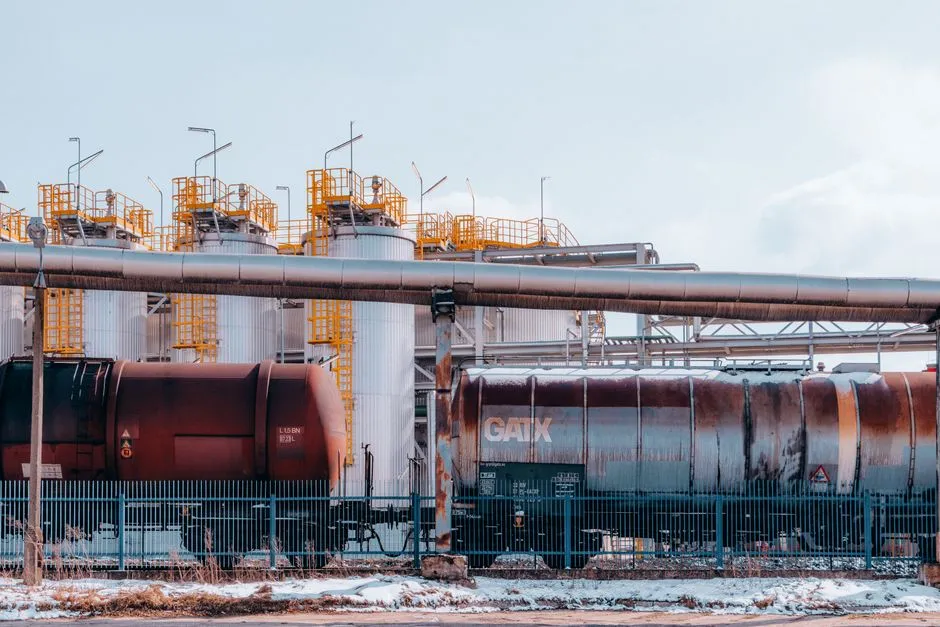
Lebanon does not operate a single codified industrial discharge schedule with a numeric cap for every parameter, but the 2026 working envelope is anchored to MoE Decision 8/1 and the regional benchmark schedule: BOD₅ ≤50 mg/L, COD ≤200 mg/L, TSS ≤50 mg/L, free Cl <1 mg/L, total Cr ≤0.5 mg/L, verified by 24-hour composite sampling on the discharge line (HydropureWater 2026, Lebanon-adapted). The MoE's first response to a failed composite is operational suspension, not a warning letter — 2024-2025 enforcement records show administrative penalties plus stop-work orders as the default path, with regional directorate audits reopening the permit at every renewal.
The penalty arithmetic is what justifies over-design at the redundancy step. On a USD 5M/yr line at 8-12% industrial margin, a two-week stoppage exceeds USD 75,000 in lost contribution margin. That single number drives dual MBR trains, an on-site ClO₂ generator, and the 7-day chemical autonomy buffer for grid-outage periods. Beirut coastal discharge to the Mediterranean is a permit liability even where numeric limits are met, mirroring the closed-basin permit risk that shapes every hyperscale design in the Levant. Use an on-site ClO₂ generator for the <1 mg/L free-Cl discharge limit to avoid the THM formation risk that comes with chlorine dosing at higher ambient temperatures.
Data-hall train: DAF → MBR → multimedia → RO with discharge fallback
The 2026 data-hall train is a four-stage layout sized to the data-hall load rather than the fab load. Stage 1 is a DAF unit for SS and biofilm carryover removal, taking out the 10-50 mg/L SS load of corrosion products and biofilm fragments that would otherwise blind the downstream biology, and buffering hydraulic surges from humidification drain cycles. Surface loading on lamella-style units sits at 20-40 m/h.
Stage 2 is a containerized MBR system for the data-hall biological stage, operating at MLSS 8,000-12,000 mg/L with HRT 8-14 h. Effluent targets are BOD <10 mg/L, COD <60 mg/L, TSS <5 mg/L, achieved in roughly 60% of the footprint of conventional activated sludge (HydropureWater 2026, Lebanon-adapted). Beirut ambient derating means oversizing aeration 8-12% or specifying high-efficiency disc diffusers with a guaranteed SOTE above 6.5 kg O₂/kWh at design temperature.
Stage 3 is a multi-media filter holding SDI below 5 to protect the downstream RO from the biocides and corrosion inhibitors that concentrate in the circulating water. Stage 4 is an industrial RO unit for CTBD and data-hall polishing at 65-75% recovery, returning polished flow to cooling-tower makeup or UPW makeup. The site recovery target stays at 85-90% once CTBD is folded in. The fallback rule for small sites: if total flow is below 200 m³/day and reuse economics are weakest, drop the RO and discharge DAF + MBR + ClO₂ to sewer — the S2 decision rule that consistently holds for low-flow data-hall and back-end rinse streams (HydropureWater 2026).
CTBD reuse ladder: side-stream filtration → UF → RO → crystallizer or MVC
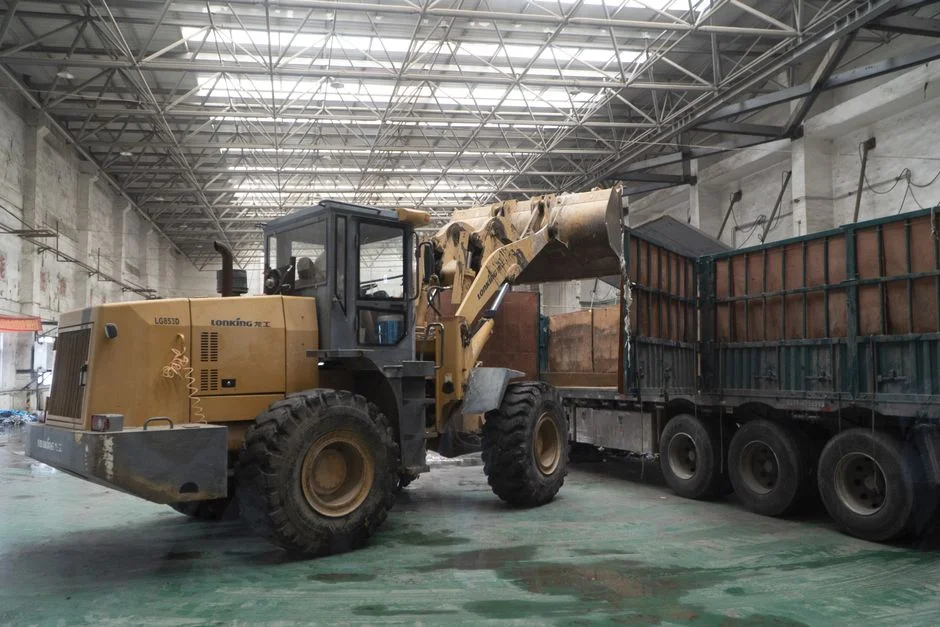
CTBD reuse is a stepped technology ladder, not a single membrane decision. Step 1 is side-stream filtration at 1-5% of circulation flow on 10-25 µm self-cleaning screens — the spiral or scraping units that cut SS in the blowdown to levels the downstream membranes can tolerate. CAPEX sits at $50,000-200,000 for a typical data center installation (Genesis Water Technologies 2026). Step 2 is a UF pretreatment ahead of the CTBD RO at 0.01-0.1 µm PVDF, 10-30 psi, 90-95% recovery, with chemical cleaning every 1-3 months.
Step 3 is the industrial RO unit for CTBD and data-hall polishing at 50-85% recovery, 150-400 psi, permeate 10-50 mg/L TDS, 95-99% salt rejection. A 50,000 GPD unit carries installed CAPEX of $250,000-500,000 and OPEX of $1.50-3.00 per thousand gallons treated, covering energy, chemicals, membrane replacement, and maintenance (Genesis Water Technologies 2026). Where partial softening is the goal rather than full demineralization, nanofiltration at 70-85% recovery and 75-150 psi produces permeate at 30-50% of feed TDS. An automatic antiscalant and biocide dosing skid is mandatory at this scale — without it, the RO concentrate scales within hours on silica, CaCO₃, and CaSO₄-rich feed.
To push past the 75-80% recovery ceiling that conventional BWRO hits, route the RO concentrate to a fluidized-bed crystallizer. The IDE MAXH₂O reference design shows silica, CaCO₃, and CaSO₄ precipitating as compact pellets while the remaining NaCl brine is re-RO'd at roughly 95% overall recovery, with permeate silica falling to about 1 mg/L (IDE 2026). For ZLD finish, an MVC evaporator at 95-98% recovery produces distillate below 10 mg/L TDS at 15-25 kWh per 1,000 USG, with CAPEX of $1-3M for 10,000-30,000 GPD; full ZLD runs $3-8M CAPEX and $5-15/kgal OPEX (Genesis Water Technologies 2026).
| Step | Function | Key parameters | CAPEX band |
|---|---|---|---|
| Side-stream filtration | Continuous bleed SS cut | 1-5% of circ., 10-25 µm | $50,000-200,000 |
| UF pretreatment | SDI <3, colloidal barrier | 0.01-0.1 µm, 90-95% recovery | Included in train |
| Industrial RO | Salt rejection, polishing | 50-85% recovery, 10-50 mg/L TDS permeate | $250,000-500,000 (50,000 GPD) |
| Nanofiltration (alt.) | Partial softening | 70-85% recovery, 75-150 psi | Lower than RO at same flow |
| Fluidized-bed crystallizer | Push past BWRO ceiling | ~95% overall recovery, ~1 mg/L Si permeate | Project-specific |
| MVC evaporator (ZLD) | Final concentrate cut | 95-98% recovery, <10 mg/L TDS distillate | $1-3M (10,000-30,000 GPD) |
Reuse vs discharge decision rule for a Beirut 2026 site
The 2026 decision rule for Beirut data center flows is straightforward. Choose reuse when site water intensity exceeds 200 m³/day, or when the MoE renewal audit flags non-revenue water; choose discharge when project flow is below 200 m³/day and on-site operators are limited (HydropureWater 2026, Lebanon-adapted). For a data center, the threshold almost always trips, because the humidification and CTBD streams together exceed 200 m³/day once the site passes roughly 5 MW of IT load.
Reuse wins on three grounds in Beirut 2026. First, water-stress economics: Lebanon's industrial tariff already rewards on-site recovery because the alternative — buying more freshwater from a constrained supply and paying for a heavily treated sewer outfall — costs more in 2026 than the recovery equipment does. Second, coastal-discharge permit liability: large-volume surface discharge to the Mediterranean is an audit risk even where numeric limits are met. Third, the data-center-specific cycle math: pushing cooling-tower cycles from 4 to 6-8 cuts makeup water demand 30-50%, which is the single largest water lever a data center has (Genesis Water Technologies 2026). For the data-hall humidification drain specifically — low-strength, high-volume — direct RO reuse is preferred over sewer discharge because the stream is too clean to waste and too large to ignore. Protect the membranes during the overland transport debris window with a rotary mechanical bar screen at the head of the train.
Budgeting the 2026 Beirut CAPEX and OPEX envelope
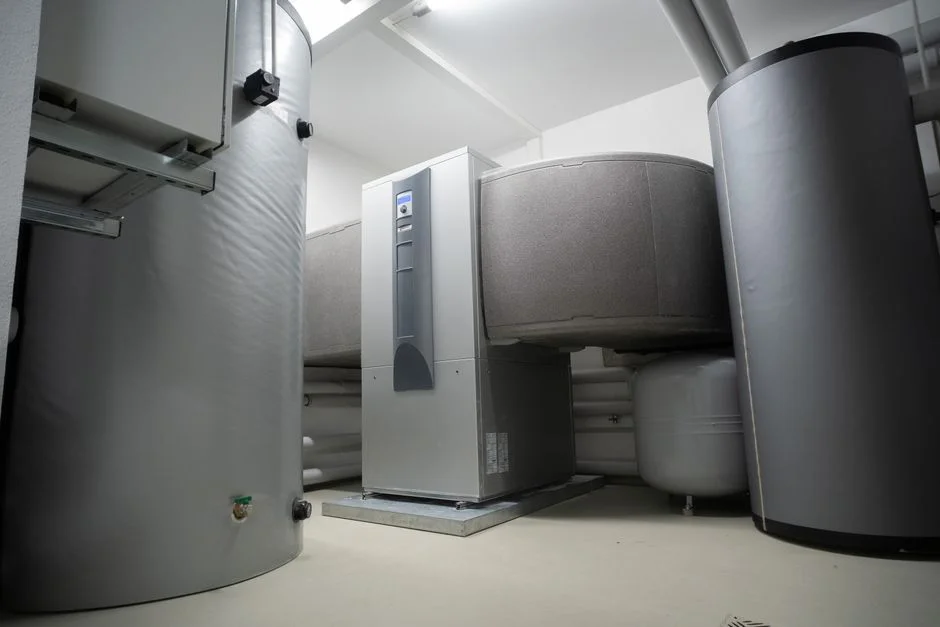
The directional benchmark from a 50,000 GPD US-style RO polishing CTBD is $250,000-500,000 installed CAPEX and $1.50-3.00/kgal OPEX (Genesis Water Technologies 2026). For a Beirut 2026 deployment, uplift that figure by the Beirut-port logistics multiplier, the ambient derating (8-12% aeration oversize), and the energy tariff multiplier (1.5-2× vs lower-tariff markets). An MBR-equipped plant runs 0.8-1.6 kWh/m³; a DAF-only scope runs 0.4-0.9 kWh/m³; at typical Lebanon industrial tariffs, energy alone runs 1.5-2× the unit cost seen in lower-tariff markets (HydropureWater 2026, Lebanon-adapted). Sludge dewatering with a plate-and-frame press for 22-28% dry-solids cake reaches landfill-disposal-grade solids, with tipping fees at Lebanon industrial rates.
Logistics is the second Lebanon-specific cost layer. Standard ISO containerized WWTP skids clear Beirut port in a comparable window to other regional hubs, but the overland transport to industrial-park sites in the Metn, Kesrouane, or Saida corridors adds commissioning-time risk. The 2-year consumables and critical spares kit should ship in the same logistics window to avoid a 6-10 week replacement-part wait from China or Europe — order water-treatment parts, valves, and media alongside the main equipment.
| Tier | Train scope | Best fit |
|---|---|---|
| Small data hall | DAF + MBR + ClO₂ (sewer discharge) | <200 m³/day, limited on-site operators |
| Mid-scale | DAF + MBR + RO (reuse) | 200-2,000 m³/day, 5-25 MW IT load |
| Hyperscale | Full train + MVC or crystallizer (ZLD finish) | >2,000 m³/day, >25 MW IT load, MoE mandates reuse |
Frequently Asked Questions
What are the binding discharge limits for a 2026 data center in Beirut?
The working envelope is anchored to MoE Decision 8/1 and the regional benchmark: BOD₅ ≤50 mg/L, COD ≤200 mg/L, TSS ≤50 mg/L, free Cl <1 mg/L, total Cr ≤0.5 mg/L, verified by 24-hour composite sampling on the discharge line (HydropureWater 2026, Lebanon-adapted). On a USD 5M/yr line at 8-12% margin, a two-week stoppage from non-compliance exceeds USD 75,000 in lost contribution margin.
When does reuse beat discharge for a Beirut data center?
Site flow above 200 m³/day, or any MoE flag on non-revenue water, trips the reuse case. Every data hall above 5 MW IT load crosses that threshold once humidification drain and CTBD are combined. Pushing cycles from 4 to 6-8 cuts makeup water demand 30-50% (Genesis Water Technologies 2026), and Lebanon's industrial tariff rewards on-site recovery over buying constrained freshwater plus a treated sewer outfall.
What is the 2026 CTBD recovery ceiling, and how do you push past it?
Conventional brackish water RO plateaus at 75-80% recovery on CTBD before silica, CaCO₃, and CaSO₄ scaling forces a shutdown. Adding a fluidized-bed crystallizer and a dynamic-mode RO stage pushes the system to roughly 95% overall recovery, with permeate silica at about 1 mg/L (IDE MAXH₂O 2026). MVC finish reaches 95-98% recovery at 15-25 kWh/1,000 USG, with full ZLD at $3-8M CAPEX and $5-15/kgal OPEX.
What is the directional CAPEX for a 50,000 GPD CTBD RO polishing train in Beirut?
The directional US benchmark is $250,000-500,000 installed CAPEX and $1.50-3.00/kgal OPEX (Genesis Water Technologies 2026). Apply the Beirut-port logistics multiplier, the 8-12% aeration oversize for ambient derating, and the 1.5-2× industrial-tariff multiplier on energy to reach a defensible 2026 budget figure for a budget meeting (HydropureWater 2026, Lebanon-adapted). For a comparable 2026 data center water brief covering an African coastal site, see the Mombasa data center CTBD guide; for an extreme-cold, grid-constrained comparison, see the Astana data center CTBD guide.