

Why Budapest Hotels Need a Packaged MBR, Not a Concrete Works
Budapest hotel sites reject conventional activated sludge for three converging reasons: footprint, effluent quality, and reuse economics. Inner-city plots in District V, VII, and the Buda Castle hillside rarely allow the 200–400 m² a clarifier-and-aeration-tank layout demands, and the Budapest–Pest riverside is a heritage zone where below-grade concrete structures trigger archaeological and permitting delays. Hotel wastewater is also among the more variable streams a treatment plant will see — imemflo documents highly variable wastewater composition driven by occupancy swings, FOG from kitchens, lint from on-site laundry, and surfactant loads from housekeeping, with a real-world 200-bed 5-star reference plant running at 250 m³/day (imemflo hotel reference). A submerged MBR collapses the clarifier, removes 99.9999% of bacteria and viruses in a single step (MENA-Water), and produces an effluent clear enough for toilet flushing, landscape irrigation, and laundry make-up water. MENA-Water further notes that 1–2 maintenance cleanings per year is sufficient for its PP flat-plate MBR — a decisive staffing advantage for hotels that do not employ a full-time plant operator. For a 200-room Budapest property looking at 2026 ESG reporting, that is the difference between a CAPEX line item and a verifiable water-cost reduction on the sustainability balance sheet.
Sizing the MBR for a Budapest Hotel: Flows, Loads, and Peak Factors
Start with 200 L per guest per day as the working average flow figure; this covers guest rooms, back-of-house kitchens, and on-site laundry at typical European occupancy. The imemflo 200-bed 5-star reference plant runs at 250 m³/day, which is essentially 200 L/guest/day once staff, restaurant cover-turns, and laundry throughput are folded in. Apply a peak factor of 1.8–2.2× on top of that base flow to cover breakfast surges, banquet events, weekend occupancy peaks, and simultaneous laundry cycles. Submerged flat-sheet MBRs tolerate these hydraulic peaks because membrane flux is governed by installed membrane area, not clarifier surface overflow rate — a 20–30% peak does not require a 20–30% larger tank, only a slightly longer filter cycle or one extra cassette.
For loading, hotel wastewater typically measures 250–400 mg/L BOD and 500–800 mg/L COD at the inlet, with a 60–80% BOD removal target before the membrane stage; the MBR polishes the residual to single-digit mg/L. Mixed-liquor suspended solids (MLSS) in the aeration tank should be held in the 6,000–12,000 mg/L range (Sigmadaf) — this is 2–3× a conventional activated-sludge plant, which is the mechanism that lets the same tank volume handle a much smaller footprint. Below 10°C winter mixed liquor, common in Budapest between December and March, expect flux to drop 20–35% relative to summer design; size the membrane area with a 0.7–0.8 winter temperature correction or oversize by one element per cassette.
| Parameter | Design value for Budapest hotel MBR | Source / note |
|---|---|---|
| Average flow per guest | 200 L/guest/day | Working figure, covers rooms + BOH |
| Peak factor | 1.8–2.2× | Breakfast, banquets, weekend peaks |
| Reference case | 250 m³/day, 200-bed 5-star | imemflo hotel reference |
| Influent BOD | 250–400 mg/L | Typical hotel range |
| Influent COD | 500–800 mg/L | Typical hotel range |
| BOD removal before membrane | 60–80% | Biological stage |
| MLSS operating range | 6,000–12,000 mg/L | Sigmadaf design window |
| Winter temperature correction | 0.7–0.8× summer flux | Budapest Dec–Mar mixed liquor |
Compliance Stack for Hungary and the Danube Basin in 2026
Three instruments govern a packaged MBR discharging in Budapest: Hungary's Government Decree 220/2004 (XI. 21.) on the use and protection of waters, the EU Urban Wastewater Directive 91/271/EEC as transposed through Hungary's National Implementation Programme, and the local discharge consent issued by the water utility (Fővárosi Vízművek for the city network) or the relevant environmental authority for direct discharge. The 91/271/EEC framework sets agglomeration thresholds and effluent quality requirements; Decree 220/2004 layers Hungarian-specific monitoring, self-reporting, and water-protection rules on top. Where the receiving water is designated sensitive — most of the Danube main stem and the Rába catchment downstream of Sárvár carry this designation — tighter nitrogen and phosphorus limits apply, and the standard technical answer is an anoxic pre-chamber ahead of the aerobic MBR stage (Sigmadaf explicit configuration for nitrate-driven sensitive areas). For any reuse end-use — toilet flushing, irrigation, or cooling tower make-up — the EU Drinking Water Directive 98/83/EC applies at the point of use, even if the upstream discharge is not classified as potable, so a disinfection polishing step (UV or chlorination) after the membrane is non-negotiable.
The table below is the envelope a Budapest consultant should design to; confirm exact numbers with the current authority consent before tendering.
| Parameter | Typical Hungarian discharge limit (sensitive area) | Regulatory anchor |
|---|---|---|
| BOD | ≤ 25 mg/L | Decree 220/2004 / 91/271/EEC |
| COD | ≤ 125 mg/L | Decree 220/2004 / 91/271/EEC |
| TSS | ≤ 35 mg/L | Decree 220/2004 / 91/271/EEC |
| Total nitrogen | ≤ 15 mg/L | Sensitive area, 91/271/EEC |
| Total phosphorus | ≤ 2 mg/L | Sensitive area, 91/271/EEC |
Commonly specified limits; verify with the current authority consent.
Flat-Sheet vs Hollow-Fibre MBR vs SBR for Hotel Duty
Three technologies are routinely quoted for a 100–400-room Budapest hotel; the operating environment decides which one wins. PVDF flat-sheet MBRs (DF series) operate at 0.1 µm nominal pore size with an integrated aeration box, individually replaceable elements, and 10–20× lower energy than external cross-flow designs; they tolerate the FOG and lint spikes hotels produce because the flat-plate geometry sheds solids back into the mixed liquor rather than trapping them in a fibre bundle. Hollow-fibre MBRs achieve higher packing density in a smaller cassette, but imemflo's hotel framing acknowledges that hair and lint fouling is the dominant failure mode and demands stricter upstream pre-screening. SBR remains the cheapest CAPEX option for sub-100 m³/day plants, but MENA-Water and imemflo both flag SBR effluent as inferior on TSS and not suitable for unrestricted hotel reuse duty. MENA-Water's standard envelope is a 40-foot ISO container treating up to 1,000 m³/day with internal stainless-steel tanks, which sets the practical upper bound for any single-skid hotel plant in Budapest.
| Criterion | PVDF flat-sheet MBR (DF) | Hollow-fibre MBR | SBR |
|---|---|---|---|
| Nominal pore size | 0.1–0.4 µm | 0.1–0.4 µm | N/A (clarifier) |
| MLSS tolerance | Up to 12,000 mg/L | Up to 10,000 mg/L typical | 3,000–5,000 mg/L |
| Footprint for 250 m³/day | One 40-ft ISO container | Smaller cassette, larger pre-screen | 2–3× larger tankage |
| FOG / lint tolerance | High (flat plate sheds solids) | Moderate (fouling risk) | High (but effluent TSS suffers) |
| Reuse suitability | Yes, with UV | Yes, with UV | Limited |
| Element replacement | Individual cassettes | Bundle-level | No membranes |
| Reference benchmark | PVDF flat-sheet MBR modules; integrated MBR wastewater treatment system | imemflo HF-MBR hotel install | MENA-Water, imemflo note SBR as inferior for reuse |
Package Layout, Footprint, and Integration on a Budapest Site
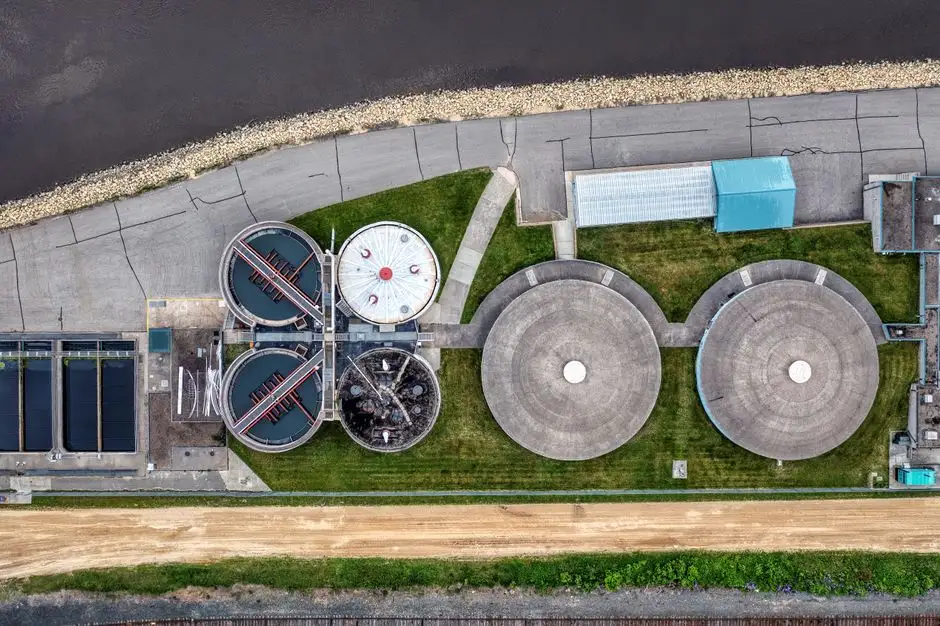
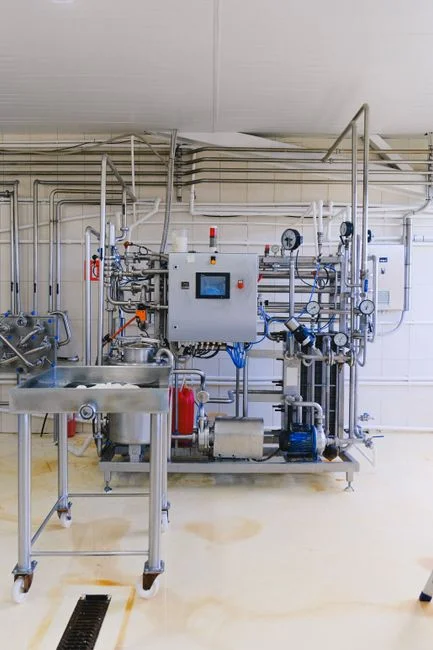
A 100–250 m³/day hotel MBR is typically delivered as a single 40-foot ISO container with internal stainless-steel process tanks, pre-tested at the factory (Sigmadaf confirms full pre-assembly and pre-testing as standard), and lifted into a plant room or a service yard with a 10–15 tonne mobile crane. The container holds the equalisation tank, anoxic pre-chamber, aeration tank, membrane cassette, permeate pump skid, and blowers; chemical dosing skids for CIP and pH correction, plus a small sludge dewatering unit, sit alongside. For a 250 m³/day plant, expect a total plant-room footprint under 200 m² including headworks and sludge handling — an order of magnitude smaller than an equivalent concrete CAS plant. Screening is not optional: Sigmadaf explicitly warns that hair, lint, and FOG must not reach the membranes, so specify a rotary bar screen for hotel headworks at 2–3 mm aperture, and add a DAF for kitchen and laundry FOG upstream if the property runs a high-cover restaurant, a banquet kitchen, or an on-site laundry. Noise from blowers should be specified at ≤ 75 dB(A) at 1 m for heritage-district sites.
Cost, OPEX, and Reuse ROI for a Hotel in Budapest
CAPEX for a European containerised MBR in the 100–500 m³/day range typically falls between €15,000 and €40,000 per m³/day installed (planning estimate only; confirm with vendor RFQ). A 250 m³/day plant therefore lands in the €3.75M–€10M installed envelope before civil works, with the variance driven by effluent polish (UV vs RO), automation scope, and whether the container is heated for Budapest winters. OPEX is dominated by aeration energy at 0.3–0.6 kWh per m³ treated, membrane replacement on an 8–12 year cycle, and chemical cleaning 1–2 times per year (MENA-Water operating profile). The reuse upside changes the financial case: MENA-Water cites up to 40% fresh-water savings from grey-water recycling, and at Budapest 2026 commercial water rates a 200-bed hotel averaging 150 L/guest/day of reuse-eligible demand is looking at a six-figure EUR annual water-bill reduction, plus reduced wastewater discharge fees. Pair the MBR with a small sludge dewatering filter press to drop waste-sludge volume by 80–85% and cut haulage cost accordingly.
| Cost line | Planning value for a 250 m³/day Budapest hotel MBR | Source / note |
|---|---|---|
| CAPEX (installed) | €15,000–40,000 per m³/day | Planning range; vendor RFQ to confirm |
| Aeration energy | 0.3–0.6 kWh/m³ | MBR blower duty |
| Membrane replacement cycle | 8–12 years | PVDF flat-sheet, normal duty |
| Chemical cleaning | 1–2 maintenance cleans/year | MENA-Water PP flat-plate |
| Reuse-driven water savings | Up to 40% fresh-water reduction | MENA-Water grey-water system |
Procurement Checklist: What to Ask the MBR Supplier in 2026
- Membrane specification: nominal pore size (0.1–0.4 µm), material (PVDF, PP, or CPVC), MLSS rating, and per-element replacement cost in EUR. A flat-sheet element should be individually swappable without lifting the cassette.
- Compliance documentation: CE marking, factory test certificate against 91/271/EEC and Decree 220/2004 effluent envelopes, and confirmation the design carries the anoxic pre-chamber option for Danube sensitive-area denitrification. For Budapest sites discharging to the municipal sewer, also request the Fővárosi Vízművek discharge consent pathway.
- Factory acceptance test (FAT) and delivery: pre-tested skid per Sigmadaf and MENA-Water practice, on-site commissioning time in days, and the maximum crane lift weight for site delivery.
- After-sales: guaranteed response time, EU-based spare-membrane inventory (target ≤ 72 h delivery to Budapest), and remote monitoring with trend logging of transmembrane pressure, MLSS, and DO — both of which matter for Hungarian winter flux management.
For comparable German-market scope and lessons learned, the Frankfurt hotel MBR buyer's guide and the Berlin hotel MBR sizing guide cover the DWA-A 131 and Hessen/Berlin authority stacks in parallel. For a moving-bed biofilm alternative on a constrained site, the IFAS for hotel wastewater design guide is a useful counterpoint.
Frequently Asked Questions
How many litres per day per guest for a Budapest hotel MBR?
200 L/guest/day is the working average flow figure for a Budapest hotel MBR, covering guest rooms, back-of-house kitchens, and on-site laundry at typical European occupancy. Apply a peak factor of 1.8–2.2× to cover breakfast surges, banquets, and weekend occupancy spikes. The imemflo 200-bed 5-star reference runs at 250 m³/day, which is essentially 200 L/guest/day once staff and restaurant cover-turns are included.
Does a packaged MBR meet EU and Hungarian rules?
Yes, when sized for 91/271/EEC agglomeration thresholds, fitted with an anoxic pre-chamber for denitrification in Danube sensitive-area catchments, and accepted under Government Decree 220/2004 (XI. 21.). A packaged MBR delivering ≤ 25 mg/L BOD, ≤ 125 mg/L COD, ≤ 35 mg/L TSS, ≤ 15 mg/L total N, and ≤ 2 mg/L total P covers the typical Hungarian sensitive-area envelope — confirm exact numbers with the current authority consent.
Flat-sheet or hollow-fibre MBR for a hotel?
Choose PVDF flat-sheet (DF series) for hotels because the flat-plate geometry tolerates FOG, hair, and lint spikes without irreversible fouling, and individual elements are swappable without lifting the cassette. Hollow-fibre MBR offers a smaller cassette footprint but requires stricter upstream pre-screening and is more vulnerable to fibre bundle fouling from hotel-specific debris.
Can hotel wastewater be reused for flushing and irrigation?
Yes — MBR effluent at 0.1–0.4 µm pore size, disinfected with UV or chlorine, is clear enough for toilet flushing, landscape irrigation, and cooling-tower make-up. MENA-Water documents up to 40% fresh-water savings from grey-water recycling, which for a 200-bed Budapest hotel at ~150 L/guest/day of reuse-eligible demand is a six-figure EUR annual water-bill reduction. EU Drinking Water Directive 98/83/EC applies at the point of reuse.
How much space does a 250 m³/day hotel MBR need?
A 250 m³/day hotel MBR fits in a single 40-foot ISO container plus headworks and sludge handling, with a total plant-room footprint typically under 200 m². MENA-Water's standard 40-foot ISO container envelope treats up to 1,000 m³/day, so a 250 m³/day hotel plant is well inside a single pre-assembled, factory-tested skid.