Why Rivers Nigeria Factories Need Industrial-Grade Sewage Treatment Equipment
In Rivers Nigeria, industrial buyers need sewage treatment equipment that meets NESREA’s 30 mg/L TSS and 50 mg/L BOD discharge limits. Leading suppliers offer DAF systems (95% TSS removal), MBR plants (99% pathogen reduction), and package treatment units (footprint as small as 2 m²/m³/h). Costs range from $15,000 for a 10 m³/h package plant to $250,000+ for a 200 m³/h MBR system, with payback periods of 2–5 years through avoided fines and water reuse savings. This guide compares suppliers, technical specs, and compliance requirements for 2025.
The regulatory environment in Rivers State has shifted toward aggressive enforcement as the Rivers State Environmental Protection Agency (RSEPA) and NESREA synchronize their inspection protocols. According to the NESREA 2023 performance report, 42% of inspected industrial facilities in the South-South region, including Port Harcourt and the Onne Industrial Area, failed to meet basic effluent standards. For a medium-sized factory, these violations are not merely administrative hurdles; they carry immediate financial consequences. Non-compliance fines typically range from ₦2M to ₦10M per violation, often accompanied by mandatory production shutdowns that can cost millions in lost revenue daily.
Operational risks extend beyond fines to the fundamental challenge of water security. Data from the Rivers State Water Board indicates that 60% of industrial water demand in Port Harcourt is currently met by private tankers or high-cost borehole extraction. This makes Nigerian compliance requirements for industrial wastewater a strategic financial move rather than just a legal obligation. By treating sewage to a standard suitable for non-potable reuse, factories can reduce their reliance on external water vendors.
Consider the case of a 50 m³/h textile factory operating in the Trans-Amadi Industrial Layout. Before installing an industrial-grade treatment system, the facility’s effluent frequently exceeded 400 mg/L TSS, leading to annual fines exceeding ₦5M. After implementing a high-efficiency DAF system for industrial wastewater in Nigeria, the factory achieved a 95% reduction in TSS and an 80% reduction in annual regulatory costs. This technical transition allowed the facility to repurpose treated water for floor washing and cooling tower makeup, significantly lowering its operational overhead.
Sewage Treatment Equipment Options for Rivers Nigeria: Technical Specs & Use Cases
Selecting the correct technology depends on the specific influent characteristics of the factory—whether the primary challenge is organic load (BOD), suspended solids (TSS), or fats, oils, and grease (FOG). In the Nigerian industrial sector, three primary systems dominate the market due to their reliability and performance benchmarks.
Dissolved Air Flotation (DAF) Systems are the industry standard for wastewater high in suspended solids and oils. DAF technology works by dissolving air in water under pressure and then releasing it at atmospheric pressure in a flotation tank. The resulting micro-bubbles attach to particles, causing them to float to the surface for mechanical skimming. Technical benchmarks show that how DAF systems remove 95%+ TSS and FOG makes them indispensable for food processing, petrochemical plants, and refineries in Rivers State. These systems handle influent BOD ranges of 50–500 mg/L with high stability.
Membrane Bioreactor (MBR) Systems represent the high-performance tier of sewage treatment. By combining biological treatment with membrane filtration, MBRs eliminate the need for secondary clarifiers. An MBR membrane bioreactor for near-reuse-quality effluent typically achieves 99% pathogen removal and 90% BOD reduction. This technology is particularly favored in Port Harcourt’s urban industrial zones because its footprint is approximately 60% smaller than conventional activated sludge systems, making it ideal for sites with limited land availability.
Package Sewage Treatment Plants, such as the WSZ series, are pre-fabricated, skid-mounted units designed for rapid deployment. A compact package sewage treatment plant for variable flows integrates anaerobic/oxic (A/O) biological processes, sedimentation, and disinfection into a single steel or FRP tank. These are the preferred choice for industrial estates, staff housing complexes, and hospitals, handling flows from 10 to 200 m³/h with minimal onsite civil work.
| Equipment Type | TSS Removal | BOD Reduction | Footprint Requirement | Primary Use Case |
|---|---|---|---|---|
| DAF System | 90–95% | 50–60% | Moderate | Food, Oil & Gas, Textiles |
| MBR System | >99% | 90–95% | Very Low | Water Reuse, High-Strength Bio-waste |
| Package Plant (WSZ) | 85–90% | 80–90% | Low (Underground) | Hospitals, Estates, Small Factories |
| Filter Press | 70% Volume Red. | N/A | Small | Sludge Dewatering & Disposal |
For factories managing high sludge volumes, plate-and-frame filter presses are critical. These units reduce sludge volume by up to 70%, significantly lowering the cost of waste transport and disposal. disinfection via chlorine dioxide generators ensures a 99.99% kill rate for pathogens, meeting the strict microbial standards required for food-grade industrial discharge.
Top 5 Sewage Treatment Equipment Suppliers in Rivers Nigeria: Technical Comparison
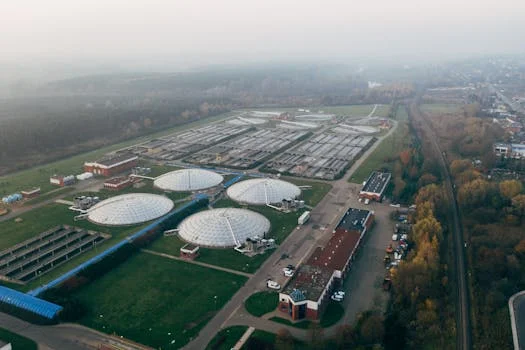
Procurement managers in Rivers State must evaluate suppliers not just on equipment price, but on technical specifications, local support infrastructure, and compliance track records. The following table compares the leading providers active in the 2025 Nigerian market.
| Supplier | Core Technology | Energy Use (kWh/m³) | Local Support | Compliance Rating |
|---|---|---|---|---|
| Sewatech Nigeria | MBR, DAF, Solar | 0.5–0.8 | High (Lagos/Dubai) | ISO 9001:2015 |
| Macjames Global | DAF, Chemical Dosing | 0.4–0.6 | Excellent (Etche LGA) | NESREA Certified |
| Al Kafaah | Containerized RO/DAF | 0.6–0.9 | Moderate (Skid-based) | EU/International |
| GreenFlow Environmental | Package Plants, MBR | 0.5–0.7 | High (Industrial focus) | RSEPA Compliant |
| HydropureWater | DAF, MBR, Dewatering | 0.3–0.6 | Via Partners | EU/CN/NESREA |
Sewatech Nigeria is recognized for its turnkey MBR and DAF solutions, often integrating solar power to offset Nigeria's high energy costs. Their strength lies in large-scale industrial projects, though their sludge dewatering options are less specialized than dedicated manufacturers.
Macjames Global offers a distinct advantage with its manufacturing base in Etche LGA, Rivers State. They specialize in DAF systems and specialized chemical dosing, providing 24/7 technical support which is vital for continuous process industries. However, they currently lack a proprietary MBR line.
Al Kafaah focuses on "plug-and-play" containerized units. These are ideal for remote oil and gas sites in the Niger Delta where onsite civil construction is difficult. While highly mobile, these units often carry a higher CAPEX compared to local builds.
GreenFlow Environmental Solutions caters specifically to the industrial sector with custom-engineered package plants. They are known for high-quality engineering but often have longer lead times due to the custom nature of their builds.
HydropureWater provides high-performance components including DAF units, MBR membranes, and sludge dewatering equipment through Nigerian technical partners. With over 20 years of manufacturing experience, their equipment meets both European and Chinese industrial standards, offering a balance of high TSS removal efficiency and low energy consumption (0.3–0.6 kWh/m³).
2025 Cost Benchmarks for Sewage Treatment Equipment in Rivers Nigeria
Budgeting for sewage treatment requires a clear distinction between initial capital expenditure (CAPEX) and ongoing operational expenditure (OPEX). In the Nigerian market, equipment costs are often quoted in USD due to the import components, while installation and civil works are priced in Naira.
For a standard 10–200 m³/h capacity range, CAPEX benchmarks are as follows:
- DAF Systems: $20,000 to $150,000 depending on automation levels and material (SS304 vs SS316).
- MBR Systems: $50,000 to $300,000, reflecting the high cost of membrane modules and sophisticated control systems.
- Package Plants: $15,000 to $100,000, offering the most cost-effective solution for standard domestic-strength industrial sewage.
Operational costs are driven by energy consumption (0.3–0.8 kWh/m³), chemical coagulants/flocculants ($0.10–$0.50/m³), and routine maintenance (budgeted at 2–5% of CAPEX annually). According to cost benchmarks for package plants in Nigeria, civil works—including excavation, tank bedding, and piping—typically add 30% to 50% to the base equipment cost.
| System Capacity | Estimated CAPEX (USD) | Civil Works (NGN Est.) | Annual OPEX (USD) |
|---|---|---|---|
| 10 m³/h (Package) | $15,000 – $25,000 | ₦3M – ₦5M | $1,500 – $3,000 |
| 50 m³/h (DAF) | $60,000 – $90,000 | ₦8M – ₦12M | $5,000 – $8,000 |
| 100 m³/h (MBR) | $120,000 – $180,000 | ₦15M – ₦25M | $12,000 – $18,000 |
| 200 m³/h (MBR) | $250,000+ | ₦35M+ | $25,000+ |
The Return on Investment (ROI) for these systems is increasingly attractive. A factory processing 50 m³/h can save approximately ₦2M annually by reusing treated water for non-critical processes and avoid ₦5M+ in potential fines. This results in a typical payback period of 2 to 5 years. Financing options are also expanding, with suppliers like Sewatech offering 3-year payment plans and firms like Al Kafaah providing Build-Own-Operate-Transfer (BOOT) models for mobile units.
Compliance Checklist: Meeting Rivers State and NESREA Standards
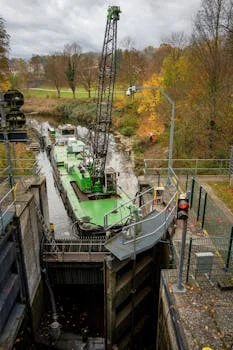
Ensuring that sewage treatment equipment meets local regulations is the most critical step in the procurement process. In Rivers State, factories must comply with both national NESREA standards and local RSEPA directives. Failure to do so can result in project delays or the decommissioning of newly installed equipment.
Key Effluent Limits for Industrial Discharge:
- Total Suspended Solids (TSS): ≤ 30 mg/L
- Biochemical Oxygen Demand (BOD): ≤ 50 mg/L
- Chemical Oxygen Demand (COD): ≤ 90 mg/L
- pH Level: 6.0 – 9.0
- Oil & Grease: ≤ 10 mg/L
The permitting process in Rivers State typically takes 3 to 6 months. It begins with an Environmental Impact Assessment (EIA) for any system exceeding 50 m³/h capacity. Procurement officers must ensure the supplier provides detailed technical drawings, wastewater analysis reports, and NESREA certification letters for the specific equipment models being proposed.
Common compliance pitfalls include undersizing systems to save on CAPEX, which leads to "breakthrough" where untreated effluent bypasses the system during peak flows. Additionally, many factories fail to include a robust sludge management plan. NESREA 2023 enforcement reports highlight that "inadequate sludge disposal" is a leading cause of secondary pollution fines, even when the liquid effluent meets standards.
How to Select the Right Sewage Treatment Equipment for Your Rivers Factory
Selecting industrial equipment in the Port Harcourt market requires a structured decision framework to avoid costly engineering errors. Follow these six steps to ensure a successful installation.
Step 1: Characterize Your Wastewater. Do not rely on generic data. Conduct laboratory testing for TSS, BOD, COD, FOG, and pH over a 7-day production cycle. In Nigeria, certified labs like those in the University of Port Harcourt or private ISO-certified facilities can provide these analyses for ₦150,000–₦300,000.
Step 2: Match Technology to Influent. If your wastewater has high oil content (e.g., food or mechanical parts washing), a DAF system is mandatory as a primary stage. If you require high-quality water for reuse in cooling towers, an MBR system is the technically superior choice due to its ultrafiltration capabilities.
Step 3: Evaluate Site Constraints. Rivers State factories often face space limitations. Compare the footprint of an underground WSZ package plant (which allows the surface to be used for parking or storage) against a containerized MBR system. Also, evaluate power stability; if the grid is unreliable, ensure the equipment is compatible with VFDs (Variable Frequency Drives) for solar or generator integration.
Step 4: Compare Supplier Support. Use the comparison table provided earlier. Prioritize suppliers with a physical presence or a proven technical partner in Rivers State to minimize downtime during equipment failures.
Step 5: Conduct a Pilot Test. For complex industrial effluents, consider renting a mobile or pilot-scale DAF/MBR unit for 1–3 months. This validates the removal efficiency under real-world conditions before committing to a full-scale CAPEX investment.
Step 6: Finalize the Compliance and Maintenance Plan. Ensure your budget includes RSEPA permitting fees, operator training (typically ₦200,000–₦500,000), and a contract for scheduled maintenance. A well-maintained system from a reliable manufacturer can operate for 15–20 years.
Frequently Asked Questions
What is the cost of a 50 m³/h sewage treatment plant in Rivers Nigeria?
A high-efficiency DAF system typically costs between $60,000 and $90,000, while a high-performance MBR system ranges from $120,000 to $180,000. Buyers should also budget ₦8M–₦15M for civil works and permitting.
How long does it take to install a sewage treatment plant in Port Harcourt?
Package plants can be installed in 4–8 weeks. Custom-engineered MBR or DAF systems usually require 12–16 weeks for manufacturing and shipping. Permitting through RSEPA and NESREA should be started 3–6 months in advance.
What are the NESREA requirements for industrial wastewater discharge in Rivers State?
The primary limits are TSS ≤ 30 mg/L, BOD ≤ 50 mg/L, pH 6–9, and Oil & Grease ≤ 10 mg/L. Mandatory quarterly effluent testing and reporting to NESREA are required for all industrial facilities.
Can sewage treatment equipment be financed in Nigeria?
Yes, several suppliers offer 3-year lease-to-own payment plans. Additionally, BOOT (Build-Own-Operate-Transfer) models are available for containerized systems, allowing factories to pay per cubic meter of treated water.
What maintenance is required for a DAF system?
Routine maintenance includes weekly inspection of the surface skimmer, monthly calibration of chemical dosing pumps, and quarterly cleaning of the air saturation vessel. Annual costs are typically 2–5% of the initial equipment price.