

Why semiconductor wastewater breaks the conventional clarifier
For semiconductor fab wastewater in Sturbridge, dissolved air flotation (DAF) is generally the correct primary clarifier in 2026 because CMP slurry, photoresist, and fluoride-bearing streams contain sub-10 µm particles and density-neutral colloids that settle poorly. A lamella clarifier remains viable only as a polish step or where flow is steady, solids are heavier than water, and space is unconstrained.
Three fab streams drive the problem. CMP polishing generates silica, ceria, and alumina slurry with particle sizes from roughly 0.05 to 10 µm and specific gravities between 1.05 and 1.20 — close to water. HF and NH4F fluoride-bearing rinses carry low-solids, high-ionic-strength liquor that destabilizes floc if pH drifts. Photoresist and TMAH developer streams contribute sticky organic colloids, and trace metals (Cu, Ni, Co, W) partition onto those colloids. The combined effect is a feed that is mostly sub-10 µm, near-buoyant, and only weakly amenable to Stokes-law settling.
Sub-10 µm particles resist gravity for three physical reasons: specific gravity near 1.0 leaves little net downward force, surface charge (typically negative at fab pH 6–8) keeps particles dispersed through electrostatic repulsion, and Brownian motion dominates over sedimentation for particles below about 1 µm. The HydropureWater product catalog benchmarks lamella clarifier surface loading at 20–40 m/h; pushed to the high end of that range, plate packs shed fine particles through the effluent, so a unit correctly sized for fab duty often needs an oversized footprint to hold overflow rate near the 20 m/h lower bound. The HydropureWater DAF line, in contrast, is offered across 4–300 m³/h in 13 standard models (per the verified product catalog), which maps cleanly to individual tool-cluster side-streams and to centralized fab treatment trains. DAF also absorbs the load swings that come with variable wafer starts; a saturator running at 5–7 bar saturates recycle on demand, whereas a fixed-geometry clarifier has no mechanism to compensate for a 2× flow pulse during a batch dump.
The practical answer: a DAF primary step, such as the HydropureWater DAF system, is the realistic starting point for most fab chemistries, with a lamella reserved for cases where the upstream load is heavy particulate, not light colloid. For related framing outside the fab context, the DAF vs clarifier for petroleum wastewater comparison covers analogous light-vs-heavy separation trade-offs.
DAF vs lamella clarifier: head-to-head engineering comparison
DAF and lamella clarifiers both remove suspended solids, but they solve different particle problems and the wrong choice shows up as either carryover (clarifier on light colloids) or a 2× to 3× tank footprint (clarifier on a low-overflow-rate light-colloid duty). The table below is the engineering reference an engineer can paste into a P&ID review.
| Parameter | DAF | Lamella clarifier |
|---|---|---|
| Separation mechanism | Micro-bubbles (typically 10–100 µm) attach to floc and lift to surface | Gravity settling between inclined plates at 55–60° |
| Effective particle size | ~1 µm to several hundred µm; excels on light/colloidal matter | ~10 µm and larger; weak on near-neutral buoyancy particles |
| Surface / hydraulic loading | Hydraulic 5–25 m/h; air-to-solids ratio controls flux more than overflow rate | 20–40 m/h (per HydropureWater lamella clarifier catalog); pushed higher, fine particles wash through |
| Footprint per m³/h (light colloid duty) | Typically 1/3 to 1/2 the clarifier footprint for the same flow | Reference baseline; plate pack adds 1.5–2 m tank height |
| Influent swing tolerance | Recycle ratio and saturator pressure absorb 2–3× load swings | Fixed geometry; sensitive to hydraulic and solids surges |
| Typical chemical demand | Aluminum sulfate, ferric chloride, or PAC coagulants plus polymer flocculant (per ProChem DAF operations guidance) | Same coagulant/flocculant suite; higher polymer dose often needed to compensate for slow settling |
| Sludge solids content | Float typically 2–5% dry solids (DS) | Underflow typically 0.5–2% DS |
| Sludge handling implication | Higher DS simplifies downstream dewatering; less volume to haul | Lower DS means larger thickening/dewatering train |
| Typical downstream polish | Sand filter → RO / ion exchange for water reuse | DAF polish, multimedia filter, or membrane |
| Mechanical complexity | Saturator, recycle pump, air compressor, skimmer drive | Low — pumps, sludge scraper, plate packs |
| Civil / space intensity | Lower — compact rectangular tank | Higher — deeper basin, larger footprint, often below grade |
| Best-fit application | CMP slurry, photoresist, fluoride co-precipitate, light colloids, variable load | Heavy mineral particulate, steady flow, unconstrained site, primary roughing |
Mechanism contrast is the cleanest way to read the table: a HydropureWater DAF system releases pressurized recycle at 5–7 bar to form micro-bubbles that attach to conditioned floc, lifting solids to the surface where a skimmer removes them. A lamella clarifier stacks inclined plates inside a basin and lets gravity pull particles down the plate face into a hopper — efficient for fast-settling grit and metals, inefficient for the sub-10 µm CMP colloids that dominate a fab effluent. The 2–5% DS float from DAF versus 0.5–2% underflow from a clarifier (typical industrial operating ranges) also shifts the dewatering selection downstream: DAF float feeds a small filter press or decanter, while clarifier underflow usually needs a thickener first.
CapEx/OpEx framing, kept qualitative because site labor and power costs move the answer: DAF carries higher mechanical cost (saturator, recycle pump, skimmer) but lower civil cost (smaller, shallower tank). A lamella clarifier is mechanically simpler but its plate packs need periodic cleaning — typically annually on a chemical service — and the larger civil footprint is a real constraint in a 2026 retrofit where clean-room expansion is competing for the same square meters. For context on a different industry framing, the DAF vs clarifier for food and beverage wastewater guide reaches a similar conclusion on variable-load duty.
Matching semiconductor effluent character to the right primary clarifier
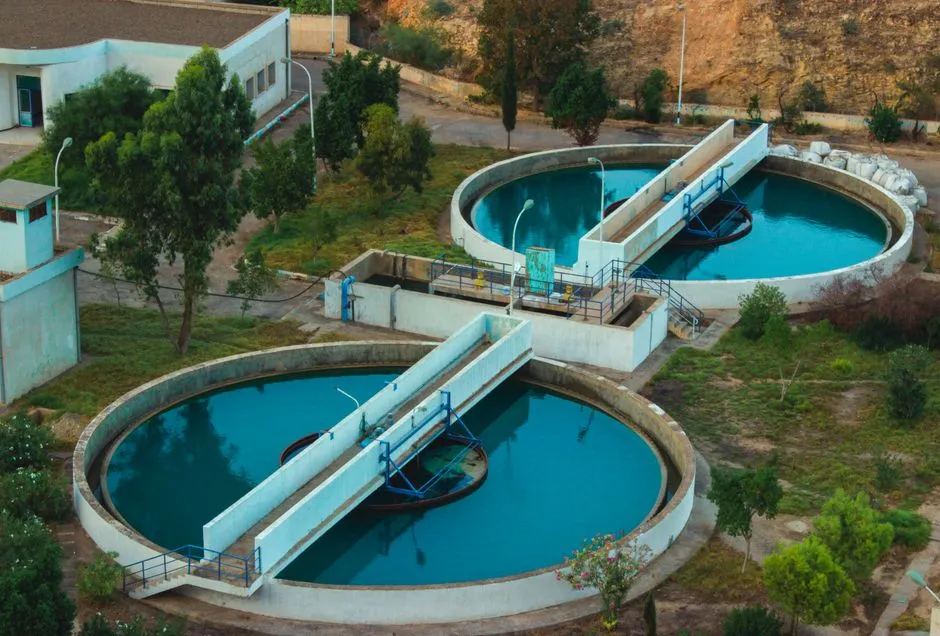
Choosing between DAF and a lamella in 2026 is a stream-by-stream decision, not a one-size rule. The matrix below maps the four most common fab effluent characters to the preferred primary unit, with a hybrid column for retrofits where existing civil work constrains the new equipment.
| Dominant effluent character | Typical particle profile | Preferred primary | Notes / 2026 design notes |
|---|---|---|---|
| CMP silica/ceria slurry + photoresist | Sub-10 µm, 1.05–1.20 SG, often near-neutral buoyancy | DAF | Condition with cationic polymer; saturator at 6 bar typical |
| Spent rinse with dissolved species and occasional back-grinding swarf | Mixed: dissolved plus heavy SiC/Al2O3 particles | Lamella primary → DAF polish | Lamella drops the heavy fraction cheaply; DAF polishes the light fraction to reuse TSS targets |
| Fluoride-bearing stream (HF, NH4F) | Fine CaF2 precipitate after lime conditioning; low-density | DAF | Fluoride interferes with floc settling kinetics; conditioned CaF2 is light and DAF-friendly |
| Mixed fab effluent targeting >70% water reuse | Variable; flows typically 10–150 m³/h per cluster | DAF primary, multimedia filter + RO polish | DAF effluent TSS <30 mg/L (typical industrial DAF performance) protects RO polish train from fouling |
| Constrained retrofit, mixed load | Variable | Hybrid: lamella roughing → DAF polish | Defensible 2026 configuration when civil space is fixed; lamella protects DAF from heavy slugs |
Three rules of thumb make this matrix easier to defend in a review. First, if the dominant load is CMP silica/ceria slurry and photoresist — fine, light, often near-neutral buoyancy — choose DAF. Second, if the stream is spent rinse water with mostly dissolved species and the only particulates are occasional heavy swarf from back-grinding, a lamella clarifier is a defensible primary, with DAF as a polish for the light fraction that will inevitably escape the plate pack. Third, if fluoride is co-present — common in etch tool discharge — DAF is preferred because fluoride interferes with floc settling kinetics, and conditioning with calcium to precipitate CaF2 produces a fine, low-density precipitate that the DAF micro-bubbles lift readily. For a fab targeting >70% water reuse, the DAF effluent is what protects a downstream RO polish train; pushing TSS to <30 mg/L on the front end is what keeps membrane fouling manageable over a multi-year operating cycle.
2026 Sturbridge and Massachusetts compliance context
The technology choice has to clear two regulators: the Town of Sturbridge sewer-use ordinance and the Massachusetts DEP sewer-use rules at 314 CMR 7.00, with EPA's 40 CFR Part 469 categorical pretreatment standards for the electronics subcategory sitting on top as the federal floor. Industrial users discharging to the local POTW must meet local limits on flow, pH, TSS, and metals, with fluoride specifically tracked in the Sturbridge sewer-use ordinance alongside the categorical standard.
Under 40 CFR Part 469, semiconductor fabs report and limit total suspended solids, copper, nickel, chromium, lead, zinc, fluoride, and pH for the electronics subcategory. The practical 2026 implication is that the primary clarifier's effluent TSS and metals partitioning set the load that fluoride removal (typically calcium precipitation or ion exchange) and trace-metal polishing have to finish. A DAF primary step that holds TSS to <30 mg/L with >80% Cu and Ni removal onto floc (typical DAF performance on conditioned metal-bearing colloids) makes the downstream train easier to permit and to operate, because the fluoride precipitation step sees a more consistent feed and the ion-exchange/RO polish is not chasing fine solids. The defensible 2026 process train for a Sturbridge fab is therefore: DAF primary → equalization → fluoride removal (calcium precipitation or selective IX) → physical/biological polish → RO and reuse or POTW discharge.
Sizing, footprint, and CapEx framing for a 50 m³/h fab stream
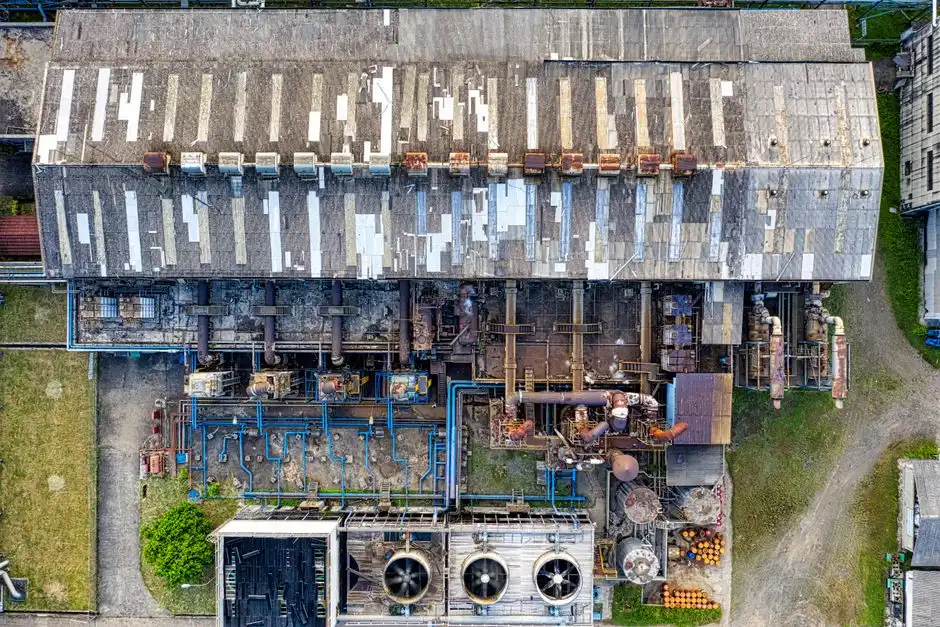
A 50 m³/h fab stream sits in the middle of the HydropureWater DAF catalog band of 4–300 m³/h, well within a single standard model and an easy fit for a retrofit skid. The lamella 20–40 m/h surface loading benchmark sets the clarifier sizing: at 25 m/h sustainable loading, a 50 m³/h stream needs roughly 2 m² of projected plate area, which translates to a tank footprint of 8–12 m² plus plate-pack height — and that footprint roughly doubles when sloped-plate geometry, inlet distribution, and sludge hopper are added. A single DAF unit in the same flow band typically replaces 2–3 conventional clarifier basins and frees floor space for tool expansion, which is a real value in a 2026 retrofit where clean-room square meters are the most expensive real estate in the building.
CapEx framing, kept qualitative to avoid invented dollar figures: the HydropureWater DAF system adds mechanical cost (saturator, recycle pump, skimmer drive, control panel) and the clarifier adds civil cost (larger basin, deeper excavation, plate packs). On fab retrofits, civil savings from a smaller DAF tank usually offset the mechanical premium; on greenfield sites with unconstrained land, the comparison is closer and comes down to chemistry — if the upstream stream is light colloids and fluoride, DAF wins on process grounds regardless of footprint. OpEx on the DAF side is dominated by saturator power (typically 5–7 bar compressed air at 10–30% recycle) and polymer dose; on the clarifier side, plate-pack cleaning (annually on chemical service) and sludge pumping are the main recurring costs, and both are sensitive to upstream chemical conditioning quality. For a wider OpEx view, the how to reduce COD in industrial wastewater methods guide covers the chemical-conditioning side that drives both technologies.
Frequently Asked Questions
Is DAF or a lamella clarifier better for CMP slurry wastewater?
DAF is the correct primary for CMP silica, ceria, and alumina slurry because the particles are typically 0.05–10 µm with specific gravity 1.05–1.20, near-neutral buoyancy that defeats Stokes-law settling. A lamella clarifier surface-loaded at the catalog 20–40 m/h range will shed fines through the plate pack and carry over TSS. The HydropureWater DAF line covers 4–300 m³/h (per the verified product catalog), which is the realistic sizing band for a fab side-stream or centralized train.
How does fluoride change the DAF vs clarifier choice?
Fluoride from HF and NH4F streams interferes with floc settling kinetics, and conditioning with calcium produces a fine CaF2 precipitate that is itself light and DAF-friendly. A lamella clarifier on a fluoride-precipitated feed tends to carry fine CaF2 through the plate pack; DAF lifts it cleanly. This is one of the practical reasons a 2026 fab permit review favors DAF as the primary under 40 CFR Part 469 categorical standards and 314 CMR 7.00.
What effluent TSS should the primary clarifier deliver to a downstream RO reuse train?
A well-operated DAF primary typically delivers <30 mg/L TSS on conditioned fab feed, which is the working ceiling for protecting a downstream RO or ion-exchange polish from particulate fouling. Targeting >70% water reuse in a Sturbridge fab is realistic with DAF → multimedia filter → RO, but is hard to sustain with a lamella primary because the light-colloid carryover forces the RO pretreatment to do clarifier work it was not designed for. Local limits under the Town of Sturbridge sewer-use ordinance and 314 CMR 7.00 still control the final discharge, even when reuse is the primary goal.