Why Waldron Food and Beverage Factories Are Rethinking Primary Treatment in 2026
Waldron-area food and beverage plants — small dairies, meat and poultry processors, vegetable lines, and craft breweries discharging to the Waldron POTW — are facing high-strength, high-FOG influent that must meet strict Indiana Industrial Pretreatment Program (IPP) limits under 327 IAC 5, which sets daily maximums of 100 mg/L FOG and 200 mg/L TSS. Kato and Kansha's 2024 review in Environmental Science and Pollution Research (DOI 10.1007/s11356-024-34584-0) confirms that food industry effluent is consistently high-BOD, high-FOG, and variable in solids load. Clinton and Wabash watershed nutrient limits and rising POTW surcharges in Indiana are pushing factories toward tighter primary treatment rather than paying for off-site hauling or pass-through penalties. Globally, industrial wastewater generation is projected to climb 51% by 2050 from a 2020 baseline of roughly 380 billion m³/yr, keeping capital investment timing favorable for U.S. food and beverage processors. For plants that already pretreat with an aging circular clarifier, the question is whether the next unit is a DAF, a lamella clarifier, or a hybrid of the two — a decision covered in detail in this UF vs DAF for F&B process water comparison.
How DAF and Clarifiers Actually Treat Food and Beverage Wastewater
A dissolved air flotation (DAF) system saturates a pressurized recycle stream with air at 4–6 bar, then releases it into the flotation tank through needle valves or a micro-bubble generator. The pressure drop nucleates 20–40 micron bubbles (per DAF Corporation's published micro-bubble generator spec) that attach to oil droplets, emulsified FOG, and fine floc, lifting them to the surface in 3–5 minutes where a rotating scoop skims the float layer. A sedimentation clarifier — whether conventional rectangular, circular, or inclined-plate (lamella) — relies on gravity: settleable solids drop to a bottom hopper over 1–3 hours of hydraulic residence, while floatables either skim over a baffle or are trapped behind an inlet stilling wall. These technologies are listed as primary treatment options in the standard WWTP flow sheet in Kato and Kansha 2024, sitting between preliminary screening and biological secondary treatment.
The two technologies diverge significantly on FOG removal. Free and emulsified oil droplets in dairy, slaughterhouse, and fryer effluent have near-neutral buoyancy — they are too light to settle reliably but too heavy to float without an attachment mechanism. A lamella clarifier can capture some floatables behind the inlet baffle, but a 2026 dairy or meat stream with 300–1,500 mg/L FOG will routinely exceed 100 mg/L in clarifier overflow, failing the Indiana IPP limit. DAF, by attaching micro-bubbles directly to oil droplets, lifts them mechanically and delivers sub-20 ppm filterable solids in the underflow — a level a clarifier cannot match without very high coagulant doses that increase OPEX. A stand-alone HydropureWater DAF system is the default primary unit for high-FOG food processors, while a HydropureWater lamella clarifier is the right choice for low-FOG, settleable-solids streams such as brewery and vegetable wash water.
Side-by-Side Comparison: DAF vs Clarifier for Food and Beverage Primary Treatment
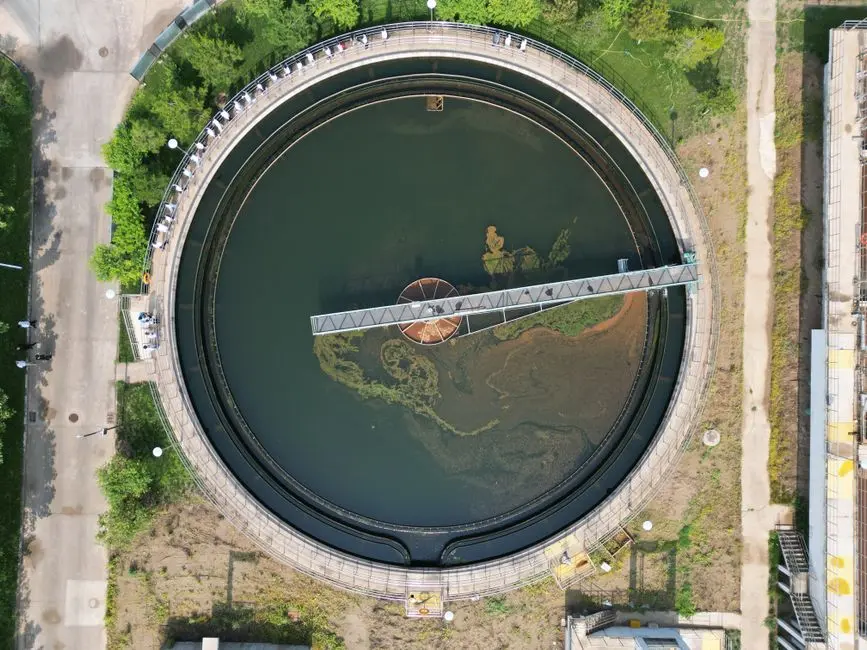
The table below consolidates the operating envelope a Waldron plant engineer needs to size a primary unit against their influent data.
| Parameter | DAF (FC Maximizer / RC UniMax) | Conventional Clarifier | Lamella Clarifier |
|---|---|---|---|
| TSS removal % | 85–98% (FC Maximizer 92–98%, RC UniMax 85–90%) | 50–70% without coagulant; up to 80% with polymer | 60–75% without coagulant; up to 85% with polymer |
| FOG removal % | 90–98% typical on food streams | 40–60% on high-FOG streams | 50–70% with inlet baffle, lower on emulsified oil |
| Influent range handled | Up to ~5,000 mg/L TSS, FOG >200 mg/L | TSS <1,500 mg/L, FOG <150 mg/L | TSS <2,500 mg/L, FOG <200 mg/L |
| Hydraulic loading rate | 5–25 m/h (high-rate) | 0.5–1.5 m/h | 2–5 m/h (plate area basis) |
| Footprint per m³/h | ~0.10–0.15 m² (skid unit) | ~0.30–0.50 m² (circular basin) | ~0.12–0.18 m² (inclined plate pack) |
| Polymer + coagulant demand | 5–15 mg/L polymer + 50–150 mg/L FeCl₃ or PAC | 10–25 mg/L polymer for TSS; minimal FOG coagulant effect | 10–25 mg/L polymer; limited FOG removal even at high dose |
| Sludge solids %DS | 2–4% DS float (dewaterable on plate press) | 0.5–1.5% DS underflow (needs thickening) | 1.0–2.0% DS underflow |
| CAPEX band 2026 (USD, 50 m³/h) | $80K–$180K skid (DAF reference) | $40K–$90K concrete basin + equipment | $60K–$130K packaged unit |
| Best-fit F&B stream | Dairy, meat, poultry, ready-meal, vegetable fryer lines | Low-FOG, high-mineral settleables (rare in F&B) | Brewery, beverage, vegetable wash, low-FOG grain solids |
DAF excels in FOG removal, sludge dryness, hydraulic loading, and effluent polish, at the cost of higher polymer/coagulant demand and a recycle pump that draws 1–2 kWh/m³. The lamella clarifier recovers 60–80% of the footprint advantage of a DAF skid while staying simpler and cheaper, but it cannot match DAF FOG removal and produces thin underflow that requires a thickener or plate press before hauling. The conventional circular clarifier is uneconomical for 2026 high-FOG food and beverage duty due to its large floor area and poor FOG/sludge performance. If you are weighing a turnkey skid against a cast-in-place basin, this packaged vs cast-in-place STP for high-BOD FOG guide extends the same logic downstream.
Matching the Technology to Your Waldron Factory Profile
Waldron dairy and meat processors typically discharge FOG in the 300–1,500 mg/L range and TSS at 800–2,500 mg/L with diurnal swings tied to CIP cycles. For these streams, a DAF is the appropriate standalone primary, sized to handle peak hourly FOG with an optional lamella pre-thickener if grit or blood solids approach 3,000 mg/L. Brewery and craft beverage plants around Waldron run a milder profile, so a lamella clarifier wins on CAPEX and operational simplicity; DAF only enters the picture if the plant plans water reuse through RO or a membrane bioreactor, where the DAF's sub-20 ppm effluent protects downstream membranes. Vegetable processing and ready-meal lines with emulsified cooking oil fall between these two, and the 2026 default is DAF as primary with a small lamella as a sludge thickener. For tight retrofits, skid-mounted DAF units replace older clarifier basins and free floor space for downstream treatment. The reuse-driven polish configuration is covered in more detail in the DAF system for vegetable processing wastewater engineering guide.
2026 OPEX, Sludge Handling, and Compliance Trade-offs in Indiana
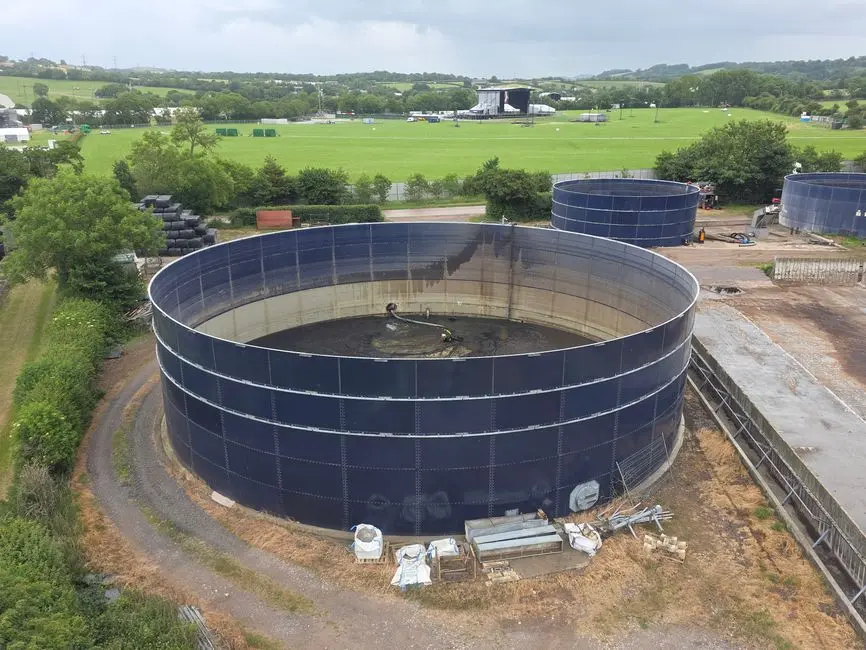
On a 50 m³/h food stream, 2026 chemical OPEX for DAF runs roughly $0.04–0.10/m³ treated (polymer plus FeCl₃ or PAC); a lamella clarifier on the same stream sits at $0.03–0.07/m³ when FOG stays below 150 mg/L, but that figure rises if the operator increases coagulant dose to improve FOG removal. Energy usage is comparable for small plants, as DAF needs 1–2 kWh/m³ for the recycle pump and saturator, while a lamella clarifier's main draw is the sludge rake torque. The primary difference is downstream sludge handling. DAF float at 2–4% DS dewaters directly on a small plate and frame press, producing 22–28% DS cake at 3–5 g polymer per kg DS — a layout that pairs naturally with a HydropureWater plate and frame filter press. Clarifier underflow at 0.5–1.5% DS needs a separate thickener or DAF-style float step before dewatering is economic. A well-operated DAF delivers below 30 mg/L FOG routinely, while a lamella clarifier typically lands at 60–120 mg/L FOG on a real food stream. For a high-FOG Waldron plant, this margin makes DAF the lower-risk compliance path, and dosing consistency is best handled with a HydropureWater automatic chemical dosing system. Plants looking further downstream at brine minimization should also read the ZLD vs high-recovery RO for F&B brine guide.
Frequently Asked Questions About DAF and Clarifiers for Food and Beverage Wastewater
When should a Waldron food plant choose DAF over a clarifier?
Choose DAF whenever the influent FOG exceeds roughly 200 mg/L or the plant needs primary effluent below 50 mg/L TSS — typical of dairy, meat, poultry, and ready-meal lines. A clarifier is acceptable only when FOG stays under about 150 mg/L and the TSS is mostly settleable, which fits brewery, beverage, and some vegetable wash streams.
Can a lamella clarifier replace a DAF for a small dairy?
Yes, but only if FOG stays below 150 mg/L and the downstream process does not include membrane reuse or a strict TSS polish. For a true dairy or meat stream hitting 300+ mg/L FOG, a lamella alone will breach Indiana IPP limits; a DAF, or a lamella followed by a DAF polish, is required.
What CAPEX and footprint should a 50 m³/h DAF carry in 2026?
A 50 m³/h (roughly 220 gpm) packaged DAF skid in 2026 lands at $80,000–$180,000 USD depending on materials of construction and automation, with a 6–8 m² footprint. The reference point is the HydropureWater skid range and DAF Corporation's published 48–450 gpm skid catalog.
What are the relevant Indiana discharge limits and IPP permit triggers?
Under 32
Frequently Asked Questions
DAF vs clarifier for food and beverage wastewater — which is better in 2026?
In 2026, Dissolved Air Flotation (DAF) is considered superior for most food and beverage applications due to its ability to handle high-strength, low-density organic contaminants that do not settle readily. While gravity-based sedimentation clarifiers remain effective for inorganic solids or heavy grit, DAF systems provide superior removal efficiencies for emulsified fats, oils, and grease (FOG) by using micro-bubbles to float particles to the surface for mechanical skimming.
Modern DAF units are increasingly preferred for their smaller footprint, which is critical for space-constrained facilities in industrial zones like Waldron. They also offer faster startup times and more consistent effluent quality compared to traditional clarifiers, which require longer hydraulic retention times and are more susceptible to shock loads common in food processing cycles.
When should a food processing plant choose DAF over a sedimentation clarifier?
A plant should choose DAF when the wastewater stream contains high concentrations of lighter-than-water solids, such as animal fats, vegetable oils, or proteins. If the target contaminants have a specific gravity close to or less than 1.0, they will not settle in a clarifier and will instead cause surface scum issues, making a DAF system the only viable mechanical primary treatment choice.
DAF is also the preferred choice when the facility needs to achieve high-rate solids removal in a compact area. Because DAF systems operate with higher surface loading rates—often 5 to 10 times higher than conventional clarifiers—they are essential for plants expanding production without the ability to construct large-scale concrete settling basins.
What FOG level requires DAF instead of a lamella clarifier?
While specific requirements depend on the downstream biological treatment process, a FOG concentration exceeding 150 mg/L typically necessitates a DAF system. Lamella clarifiers are designed primarily for settleable solids and can easily clog or experience surface blinding when FOG levels exceed this threshold, leading to poor effluent quality and increased maintenance.
For food processing plants with FOG levels reaching 500 mg/L or higher, DAF is mandatory to prevent grease build-up in downstream piping and to avoid toxicity issues in aerobic or anaerobic biological reactors. DAF systems can reliably reduce high-concentration FOG influent down to levels below 50 mg/L, which is often required to meet municipal discharge permits.
How much does a 50 m3/h DAF system cost for a small dairy in Indiana?
A turnkey 50 m3/h DAF system for a dairy facility in Indiana typically ranges from $180,000 to $320,000, depending on the level of automation, metallurgy (304 vs. 316 stainless steel), and the complexity of the chemical dosing system. This cost estimate generally covers the DAF tank, saturation system, air compressor, scraper mechanism, and control panel.
Additional costs for installation, site preparation, concrete pads, and connection to existing plant piping can add 30% to 50% to the total project budget. Dairy wastewater often requires robust pH adjustment and coagulation/flocculation stages prior to the DAF unit, which must be factored into the final capital expenditure.
What are Indiana industrial pretreatment limits for FOG and TSS from food and beverage factories?
Industrial pretreatment limits in Indiana are primarily set by local Publicly Owned Treatment Works (POTWs) through local sewer use ordinances, rather than a single statewide mandate. However, most Indiana municipalities typically enforce a FOG limit between 100 mg/L and 200 mg/L to prevent sewer blockages and damage to municipal infrastructure.
Total Suspended Solids (TSS) limits usually range from 250 mg/L to 400 mg/L for standard industrial discharge. Facilities exceeding these limits are subject to surcharges or must implement pretreatment to avoid fines. It is essential to consult the specific Waldron or county-level discharge permit, as local limits may be more stringent depending on the capacity of the receiving wastewater treatment plant.