
What 'Packaged STP' and 'Cast-in-Place Concrete STP' Actually Mean for an F&B Plant
A packaged sewage treatment plant is a factory-built skid or modular unit that arrives on site with internal MBBR, MBR, clarifier, and UV stages pre-assembled and pre-piped. Standard capacity in 2026 is 1–500 m³/h, with footprints as small as 0.5 m²/m³/h (per the HydropureWater 2026 prefabricated WWTP specifications guide). A cast-in-place (RCC) concrete STP is a reinforced concrete tank poured on site, with mechanical equipment retrofitted after a 28-day cure; build time runs 4–8 months for 50–500 m³/day plants because rebar, formwork, and weather windows dictate progress.
An F&B factory must treat two streams in one plant: process wastewater at 1,500–10,000 mg/L BOD with periodic FOG spikes from cooking and CIP, plus domestic sewage at roughly 100–250 mg/L BOD. The packaged technologies dominant in 2026 are FRP/MBBR units, epoxy-coated carbon steel MBBR or MBR systems, and 5,000 PSI precast concrete modules. The WSZ underground integrated packaged STP serves as the buried option for sites with zero visible yard.
Why High-BOD FOG Process Water Is the Real Selection Driver
Fats, oils, and grease (FOG) entering an STP congeal on tank walls, partially block screens and trickling filters, clog sludge pumps, and in large volumes inhibit the micro-organisms that digest sludge (per Enva's FOG mechanism). FOG also drives excessive foaming and Nocardia bulking, which can trigger a filamentous foaming crash requiring 4–6 weeks to recover. The biological risk is concrete, not theoretical.
Quantitatively, FOG above 50 mg/L in raw influent mandates a DAF pretreatment stage before any biological STP, packaged or cast-in-place (per HydropureWater 2026 guidance). The domestic sewage side-stream is the easy work: at 100–250 mg/L BOD it sits well inside any MBBR/MBR design range and can be merged into a common equalization tank. The hydraulic shock risk is the real driver of plant size — 6–10 hours of equalization is required for an F&B process stream, which favors compact packaged designs with built-in EQ chambers over poured concrete basins retrofitted with mixers. The canonical pretreatment is the DAF for FOG pretreatment.
Side-by-Side Comparison: Packaged vs Cast-in-Place Concrete STP
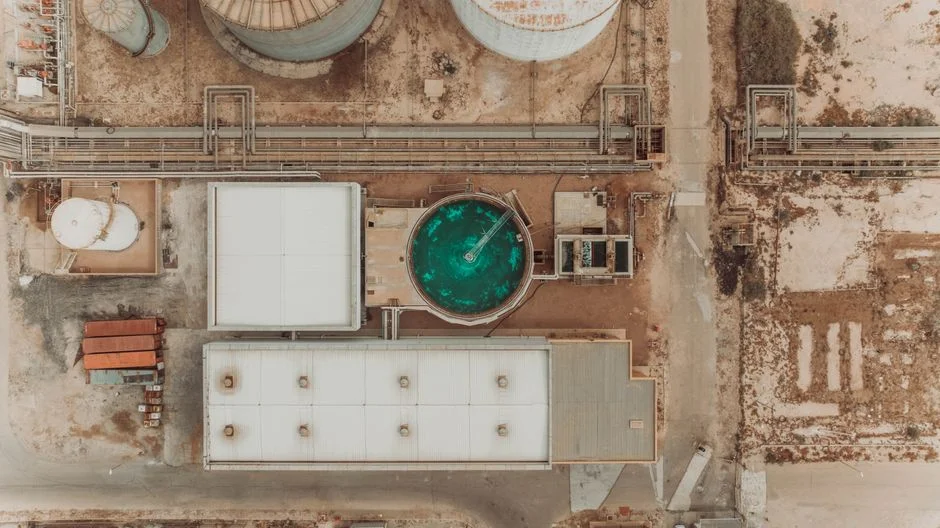
The table below provides the figures for procurement planning, based on 2026 vendor-band data.
| Parameter | Packaged STP (FRP / MBBR / MBR) | Cast-in-Place Concrete (RCC) STP |
|---|---|---|
| Capacity range | 1–500 m³/h | 50 m³/day to >10,000 m³/day |
| Footprint | 0.5–2.0 m²/m³/h | 1.5–3.0 m²/m³/h incl. access roads |
| Install lead time (site) | 7–10 days on site after delivery | 4–8 months on site (cure + fit-out) |
| Factory lead time | 8–12 wk steel; 12–16 wk precast (expedite +20–30%) | N/A — civil-led |
| BOD/COD removal | 90–98% | 85–95% (conventional AS) |
| FOG tolerance (post-DAF) | Up to ~50 mg/L; MBR sensitive >30 mg/L | Up to ~50 mg/L; needs DAF pretreatment |
| Sludge wasting | Once every 18–24 months (per Arvind FRP-PSTP data) | Typically monthly |
| O&M skill required | PLC-automated; weekly inspections | Skilled operator per shift |
| 20-yr TCO band (100 m³/h) | $0.8M–$1.6M | $1.6M–$3.0M |
| Design life | 20–25 years (steel); recoat every 7–10 yr | 50 years (5,000 PSI precast-grade) |
| Scalability | Add parallel trains | Fixed civil structure |
| Relocation | Yes | No |
| Weather/build sensitivity | Low (factory QA) | High (rain, cold pour, rebar delays) |
Cast-in-place wins on 50-year design life for permanent municipal-scale assets and on chemical/buoyancy resistance of 5,000 PSI precast-grade concrete in high-groundwater or coastal sites. The HydropureWater packaged MBR system covers the high-end packaged band, including the membrane modules and integrated controls that drive that 90–98% removal ceiling.
FOG and BOD Tolerance: Which System Actually Survives Food Plant Conditions
Both STP types biologically fail above roughly 50 mg/L FOG without DAF pretreatment — this is a hard process limit, not a brand-specific weakness (per HydropureWater 2026). Packaged MBBR tolerates organic shock better than conventional cast-in-place activated sludge because the biofilm attached to the MBBR carrier media is protected from washout and from FOG coating.
Packaged MBR adds an absolute barrier: 0.1–0.4 µm PVDF membranes retain biomass even under FOG spikes, though the trade-off is more frequent cleaning when post-DAF FOG creeps above 30 mg/L. Cast-in-place concrete is chemically more tolerant of low-pH clean-in-place (CIP) discharges than epoxy-coated steel, which matters when CIP pH swings below 4.5. Either way, 6–10 hours of average-flow equalization is mandatory to buffer batch discharges from cooking, CIP, and shift-end cleaning. For membrane-based packaged plants, specify the DF-series MBR membrane module rated for the post-DAF FOG ceiling you actually operate to, not the optimistic 5 mg/L brochure number.
Footprint, Civil Works, and Site Constraints at a Food Factory
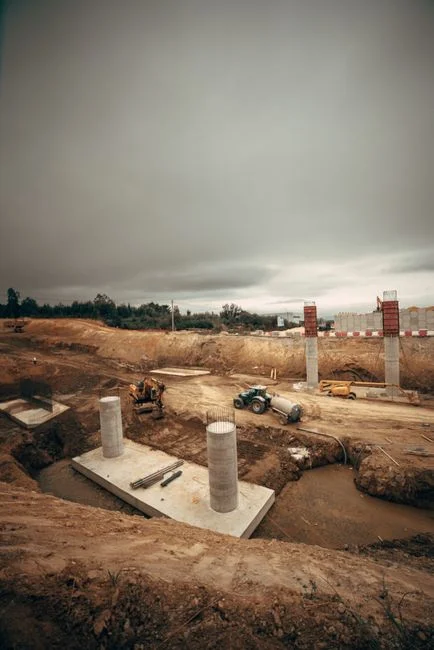
At 100 m³/h, a packaged plant needs 50–200 m² of pad including tanks, OSHA 1.5 m walkways, and 3 m crane clearance (per HydropureWater 2026). A cast-in-place plant of the same duty typically needs 200–400 m² because the larger clarifier footprint, access roads, and property-line setbacks consume available yard space. The WSZ underground integrated packaged STP cuts visible footprint by roughly 60% using 2 m+ burial depth, which is decisive when the food plant's yard is already full of chillers, truck docks, and fire-truck turn radii.
For high-groundwater or coastal sites, 5,000 PSI precast concrete (whether packaged module or cast-in-place) is preferred over steel for buoyancy and chloride resistance. Most jurisdictions require a 10 m setback from property lines for noise and odor, which is easier to meet with buried packaged units than with above-grade aeration basins. Headworks sizing should also be reviewed — a GX series rotary bar screen with 6 mm aperture is the right first guard for F&B streams carrying packaging film, fruit stones, and CIP solids that would otherwise blind a fixed bar screen within a week.
20-Year Cost Reality: A 100 m³/h F&B Factory Case Study
For a 100 m³/h F&B plant with combined process + domestic load, the 2026 capex band is:
| Cost line | Packaged MBBR / MBR | Cast-in-Place Concrete |
|---|---|---|
| Core STP (50–200 m³/h) | $150K–$450K (steel MBBR); $300K–$900K (precast MBR) | $500K–$1.5M (incl. civil, rebar, fit-out) |
| DAF pretreatment | $80K–$250K | $80K–$250K (same scope) |
| Site prep, permitting, training | $17K–$80K combined | $50K–$200K (longer schedule) |
| Annual O&M | $30K–$70K | $80K–$150K |
| 20-year cumulative (incl. O&M) | $0.8M–$1.6M | $1.6M–$3.0M |
| Payback vs offsite hauling | 3–5 years | 6–9 years |
Annual offset from avoiding offsite disposal is $50K–$120K for a 100 m³/h factory (per HydropureWater 2026). Packaged MBBR typically pays back in 3–5 years; cast-in-place usually 6–9 years at this flow band, and that is before counting the indirect cost of 4–8 months of delayed production while civil works run. The packaged MBBR's 70% O&M reduction vs conventional activated sludge (per Arvind FRP-PSTP data) is the largest line-item driver across the 20-year horizon. Sludge handling is its own budget line — for a packaged plant wasting sludge every 18–24 months, budget a plate-frame filter press sized to dewater the full batch in one shift.
Decision Framework: When to Pick Each STP Type
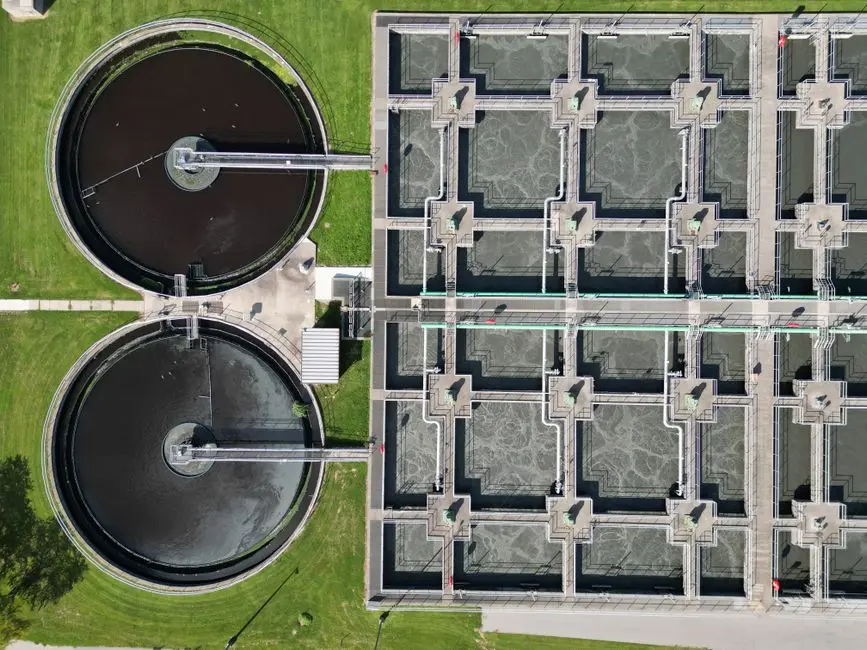
Choose packaged STP if any of these apply: flow ≤500 m³/h, project timeline ≤6 months, FOG-laden process stream present, footprint constrained, relocation plausible, PLC automation desired, or no deep civil contractor base on site. Choose cast-in-place concrete STP if: flow >500 m³/h, the site is permanent and you need 50-year asset life, raw FOG stays under 30 mg/L after source control, CIP chemical exposure routinely drops pH below 4.5, or local soil/groundwater rules demand 5,000 PSI precast-grade concrete for buoyancy.
For either choice, specify DAF pretreatment sized to your measured FOG peak (not the brochure 50 mg/L), 6–10 hours of equalization, third-party EPA ETV or ISO performance data, and a sludge management plan before signing the PO. Red flags in vendor proposals include vague aeration rates not tied to lbs BOD/day, missing P&ID, no mass balance, no FOG specification, and electrical panels without UL/CE marking. Vendor chemical dosing should be specified with the automatic chemical dosing system sized for your actual phosphorus and pH correction loads.
Frequently Asked Questions
Which wins for a food factory with combined process and domestic sewage, packaged or cast-in-place concrete STP?
Packaged MBBR or MBR wins for F&B plants with flows up to 500 m³/h, as it handles FOG spikes, installs in 7–10 days, and cuts 20-year O&M by ~70% (per Arvind FRP-PSTP data).
What FOG level forces DAF pretreatment before any biological STP?
Frequently Asked Questions
Packaged STP vs cast-in-place concrete STP — which is better for food and beverage factories?
Packaged STPs are generally superior for food and beverage facilities due to their modularity, factory-tested quality, and rapid deployment capabilities. While cast-in-place concrete structures offer high durability for large-scale municipal applications, they often suffer from long construction timelines, susceptibility to concrete corrosion from acidic fermentation byproducts, and lack of flexibility if production capacity needs to scale.
Can a packaged STP handle high-BOD FOG process wastewater from a food factory?
Yes, provided the system is configured with robust biological treatment technologies such as Moving Bed Biofilm Reactors (MBBR) or Membrane Bioreactors (MBR). These systems can handle high organic loading rates, often exceeding 3,000 mg/L BOD, by utilizing specialized media or membranes that prevent biomass washout and maintain high microbial concentrations despite fluctuating influent compositions.
How much FOG can an MBBR or MBR packaged STP treat before DAF pretreatment is required?
Dissolved Air Flotation (DAF) pretreatment is typically required when FOG concentrations exceed 150–200 mg/L. While specialized bioreactors can tolerate higher levels, raw influent exceeding this threshold often leads to surface scum formation, membrane fouling in MBR systems, or media clogging in MBBRs, which significantly reduces oxygen transfer efficiency and biological degradation rates.
How much is the typical footprint and install time of a packaged STP for a 100 m³/h food plant?
A packaged STP designed for 100 m³/h typically requires a footprint of approximately 250–400 square meters, depending on the treatment technology and tank depth. Installation time is significantly reduced compared to concrete alternatives, usually ranging from 4 to 8 weeks on-site, as the majority of the mechanical, electrical, and piping systems are pre-assembled and skidded at the manufacturing facility.
Is a cast-in-place concrete STP cheaper than a packaged STP over 20 years for a food factory?
While cast-in-place concrete often presents lower initial capital expenditure (CAPEX), the total cost of ownership (TCO) over 20 years frequently favors packaged systems. Packaged STPs mitigate long-term costs associated with concrete degradation from aggressive wastewater, offer easier equipment upgrades to meet tightening discharge standards, and minimize operational downtime through standardized, replaceable modular components.