Why Vegetable Processing Wastewater Needs DAF Before Anything Else
A typical fruit or vegetable line generates four waste streams that, once combined, overwhelm anything but a properly designed flotation step. Wash water carries 500–3,500 mg/L TSS of field soil, starch granules, and peel fragments. Peeling and blanching add 100–800 mg/L FOG from seed coats, waxy skins, and condensate carryover. Sorting and floater overflows contribute dissolved sugars and color bodies (anthocyanin, carotenoid) that resist biodegradation. Clean-in-place (CIP) discharge spikes pH from 3.5 (citric wash) to 11 (caustic peelers) and drives BOD into the 800–4,000 mg/L range. Screening and grit removal only strip >2 mm material; colloidal soils in the 1–100 µm range, emulsified oils, and suspended cell-wall fragments pass through and become the engineer's compliance problem.
The 2010 Springer reference on seafood processing and the "Fruit and Vegetable Processing Wastewater Treatment Systems" excerpt both confirm that dissolved air flotation sits alongside screening as the accepted primary treatment for this effluent class, with coagulant addition (Al₂(SO₄)₃, FeSO₄, or FeCl₃) used to enhance separation. In 2026 the business pressure is sharper: municipal POTWs in the U.S., EU, and China's GB 8978-1996 frameworks have tightened FOG limits and BOD/TSS surcharges, and water-stressed basins (California, Andalusia, Shandong, Maharashtra) are pushing zero-liquid-discharge rules that make uncontrolled discharge uneconomic. A DAF sized to strip 70–90% of TSS and 60–85% of FOG up front is now the cheapest compliance insurance a plant can buy.
How a DAF Unit Actually Works in a Vegetable Plant
A dissolved air flotation unit separates suspended matter by attaching 40–80 µm micro-bubbles to chemically conditioned flocs and floating the agglomerate to the surface, where a skimmer scrapes it off. The unit has four functional zones, and each one has a 2026 design number worth memorizing.
The saturator is a pressure vessel fed with clarified effluent and compressed air at 4–6 bar(g); at this pressure dissolved-air saturation efficiency runs 60–90% depending on temperature and residence time. The pressurized recycle stream then flashes back to atmospheric pressure in the contact zone, liberating a dense cloud of micro-bubbles whose diameter is controlled by the pressure drop and nozzle design. The recycle loop typically returns 30–50% of clarified flow — a higher recycle boosts air delivery but also dilutes influent BOD, so the trade-off matters on high-strength blanching streams. In the contact zone, micro-bubbles collide with conditioned floc; a 40–80 µm bubble population gives the best attachment ratio for the low-density organic floc typical of vegetable streams, because bubbles larger than 100 µm rise too fast to capture colloids and bubbles smaller than 20 µm demand uneconomic air volumes. The flotation zone holds the mixture for 3–5 minutes; bubble-floc aggregates rise at 0.5–1.5 m/s and form a 3–6% dry-solids sludge blanket that an automatic skimmer removes at 0.5–2 m/min.
Two pressurization philosophies exist. Full-flow pressurization (every drop of influent passes through the saturator) is reserved for high-FOG streams where shearing of the floc is acceptable. Recycle pressurization — the 2026 default for vegetable plants — only pressurizes 30–50% of clarified flow, leaving the flocculation tube's gentle 20–40 rpm paddle to build undisturbed flocs that the recycle stream then nucleates with bubbles.
2026 DAF Design Parameters for Vegetable Processing Streams
Engineers sizing a DAF in 2026 should work from the following parameter envelope, then match it to a packaged unit such as the dissolved air flotation system (4–300 m³/h across 13 standard models). Hydraulic loading sits between 5 and 25 m³/m²·h on the flotation surface: pick the low end (5–10 m³/m²·h) for high-TSS pea or corn wash where the sludge blanket builds fast, and the high end (15–25 m³/m²·h) for dilute rinse streams under 500 mg/L TSS. Recycle ratio is 30–50% of forward flow — lower for colloidal starch where dilution hurts biology downstream, higher for emulsified oil that needs more bubble surface area. Air-to-solids ratio runs 0.02–0.05 kg air per kg TSS for vegetable streams, distinctly below the 0.05–0.10 used in industrial DAF because the organic floc is already buoyant. Flocculation-tube retention ahead of the DAF is 10–20 minutes at 20–40 rpm to grow dense, shear-resistant flocs.
| Parameter | 2026 design range (vegetable streams) | Selection rule |
|---|---|---|
| Hydraulic loading (m³/m²·h) | 5–25 | 5–10 for pea/corn wash; 15–25 for dilute rinse |
| Recycle ratio (%) | 30–50 | Higher for emulsified oil, lower for colloidal starch |
| Air-to-solids ratio (kg air/kg TSS) | 0.02–0.05 | Below industrial DAF band because floc is light |
| Saturator pressure (bar g) | 4–6 | Higher pressure → smaller bubbles, more dissolution |
| Saturation efficiency (%) | 60–90 | Drops at high temperature or short retention |
| Micro-bubble size (µm) | 40–80 | Outside this band capture efficiency collapses |
| Flocculation retention (min) | 10–20 | 20–40 rpm gentle paddle to avoid floc break-up |
| Flotation zone retention (min) | 3–5 | Longer for high-FOG or cold wastewater |
| Skimmer speed (m/min) | 0.5–2 | Match to sludge blanket thickness |
| Floated sludge DS (%) | 3–6 | Below 3% indicates poor floc; above 6% indicates under-skimming |
Coagulant and Polymer Chemistry: What Actually Works on Vegetable Streams
Wrong coagulant selection is the single most common DAF commissioning failure. The matrix below covers the four reagents that actually work on vegetable streams; everything else is academic. Ferric chloride (FeCl₃) at 30–150 mg/L and pH 5.0–9.0 is the 2026 default for vegetable plants because it tolerates the wild pH swings caused by caustic peelers and acidic fruit wash, and it removes the orange and purple color bodies from carrot and beet effluent better than alum. Aluminium sulphate (alum) at 50–250 mg/L and pH 6.0–7.5 works on streams that stay in the near-neutral band, but its narrow pH window makes it a poor choice for facilities with caustic peeling lines. Ferrous sulphate (FeSO₄) at 50–200 mg/L and pH 7.0–9.0 needs pre-oxidation (chlorine or H₂O₂) to convert Fe²⁺ to Fe³⁺, so it only pays off where an oxidant is already in the water train. The finishing polymer in all four cases is a cationic polyacrylamide (PAM) at 1–5 mg/L, which bridges the micro-floc into the 0.5–2 mm aggregates the micro-bubbles can lift.
Two operating cautions belong on the P&ID. First, overdosing FeCl₃ above 300 mg/L or alum above 400 mg/L raises TDS, fouls downstream MBR membranes inside days, and inflates sludge mass by 20–40% — a direct hit on hauling cost. Second, blanching condensate can drop pH to 3.5; that stream needs NaOH dosing before the DAF to keep coagulant in its active species window, otherwise FeCl₃ reverts to soluble Fe(OH)²⁺ and removal crashes. Dosing accuracy is the second piece of the chemistry chain, and an automatic coagulant and polymer dosing skid with flow-paced control typically pays back in 4–7 months by eliminating the 15–25% chemical over-dosing that manual systems deliver.
| Coagulant | Dose (mg/L) | Active pH window | Best-fit vegetable stream | Watch-out |
|---|---|---|---|---|
| FeCl₃ | 30–150 | 5.0–9.0 | Carrot, beet, mixed peel/blanch | Residual chloride can corrode 304 SS piping |
| Al₂(SO₄)₃ (alum) | 50–250 | 6.0–7.5 | Rinse water with stable near-neutral pH | Narrow pH window; sulfate in effluent |
| FeSO₄ | 50–200 | 7.0–9.0 (with oxidation) | High-organic blanching condensate | Needs Cl₂ or H₂O₂ pre-oxidation |
| Cationic PAM (finishing) | 1–5 | 4.0–9.0 | All vegetable streams | Overdose (>8 mg/L) re-stabilizes colloids |
DAF vs Lamella Clarifier vs IAF: Which Pre-Treatment Wins in 2026?
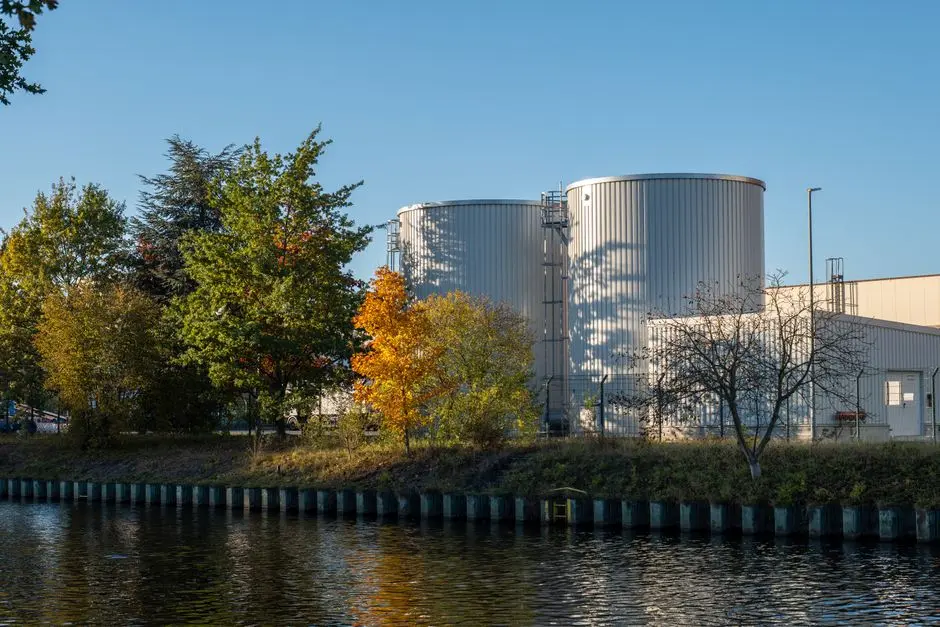
The three unit operations competing for the primary-clarifier slot in a vegetable plant differ in ways that map directly onto the contaminant profile. Dissolved air flotation removes 70–90% TSS and 60–85% FOG, handles emulsified oil and the sub-100 µm colloidal fraction, and occupies 3–5× less floor space than a comparable gravity lamella — but it draws 0.04–0.11 USD/m³ in coagulant, polymer, and air energy OPEX (see cost section). A lamella clarifier, including the lamella clarifier alternative we offer, has near-zero chemical OPEX and tolerates settleable solids at >100 mg/L influent TSS, but it physically cannot lift emulsified oils or starch colloids, so it fails on blanching condensate and CIP effluent. Induced air flotation (IAF) sits between the two: lower CAPEX than DAF because it uses an induction eductor instead of a pressure vessel, but its 200–500 µm bubble population is too coarse to capture the <50 µm colloidal fraction that drives POTW surcharges.
The decision rule is short: if the stream contains >100 mg/L FOG or starch-driven colloidal BOD, install a DAF. If the stream is settleable with <100 mg/L FOG and the plant can tolerate a larger footprint, a lamella saves OPEX. IAF is a budget option for dilute streams where POTW surcharge risk is low. For deeper context on lamella economics in food plants, the field data in our lamella clarifier economics in food plants write-up confirms the 60–75% chemical-OPEX saving for settleable streams but the same FOG limitation.
| Axis (25 m³/h vegetable plant) | DAF | Lamella clarifier | IAF (induced air flotation) |
|---|---|---|---|
| TSS removal | 70–90% | 50–70% | 55–75% |
| FOG removal | 60–85% | <20% (only floatables) | 30–50% |
| Footprint (m²) | 4–8 | 15–30 | 6–10 |
| Emulsion handling | Excellent | Poor | Marginal |
| CAPEX (USD) | $25K–$45K | $18K–$32K | $15K–$28K |
| OPEX (USD/m³) | $0.04–$0.11 | $0.01–$0.03 | $0.03–$0.07 |
What a Vegetable Plant DAF Actually Costs in 2026
Procurement teams need a defensible number, so the matrix below is built from packaged-skid pricing observed across 2025 and Q1 2026. A 5 m³/h packaged skid runs $8,000–$15,000 USD; a 25 m³/h skid sits at $25,000–$45,000 USD; a 50 m³/h system at $40,000–$70,000 USD; a 100 m³/h unit at $80,000–$140,000 USD; and 200 m³/h and above is custom-engineered at $180,000–$350,000 USD. The OPEX stack is dominated by sludge hauling rather than chemistry: coagulant $0.012–$0.035 per m³, polymer $0.008–$0.020 per m³, energy $0.006–$0.015 per m³, sludge hauling $0.015–$0.040 per m³, for a total of $0.04–$0.11 per m³ treated (HydropureWater field data, 2026).
A worked example ties the numbers together. A 30 m³/h frozen-pea plant running three shifts treats 720 m³/day, hits 75% TSS removal and 65% BOD reduction, pays $0.07/m³ OPEX, and amortizes a $55,000 CAPEX in roughly 14 months from avoided POTW surcharges alone. The hidden line item is sludge hauling, which frequently exceeds the chemical OPEX. A plate-and-frame filter press for floated sludge dewatering the DAF float to 22–28% DS cuts hauling mass by 60–75% and typically returns its own CAPEX inside 8–12 months on any plant above 20 m³/h. The PLC and instrumentation layer is the third place 2026 budgets are quietly climbing; the PLC control architecture for a DAF + biology train guide covers the modern Ethernet/IP backbone, but for now expect to allocate 8–12% of the DAF skid price for instrumentation and controls.
| Flow range | CAPEX (USD, 2026) | OPEX (USD/m³) | Typical payback from avoided surcharges |
|---|---|---|---|
| 5 m³/h packaged skid | $8,000–$15,000 | $0.05–$0.11 | 10–18 months |
| 25 m³/h | $25,000–$45,000 | $0.04–$0.09 | 12–20 months |
| 50 m³/h | $40,000–$70,000 | $0.04–$0.08 | 14–22 months |
| 100 m³/h | $80,000–$140,000 | $0.04–$0.07 | 15–24 months |
| 200 m³/h+ custom | $180,000–$350,000 | $0.04–$0.07 | 16–30 months |
Integrating the DAF Into the Rest of the Treatment Train
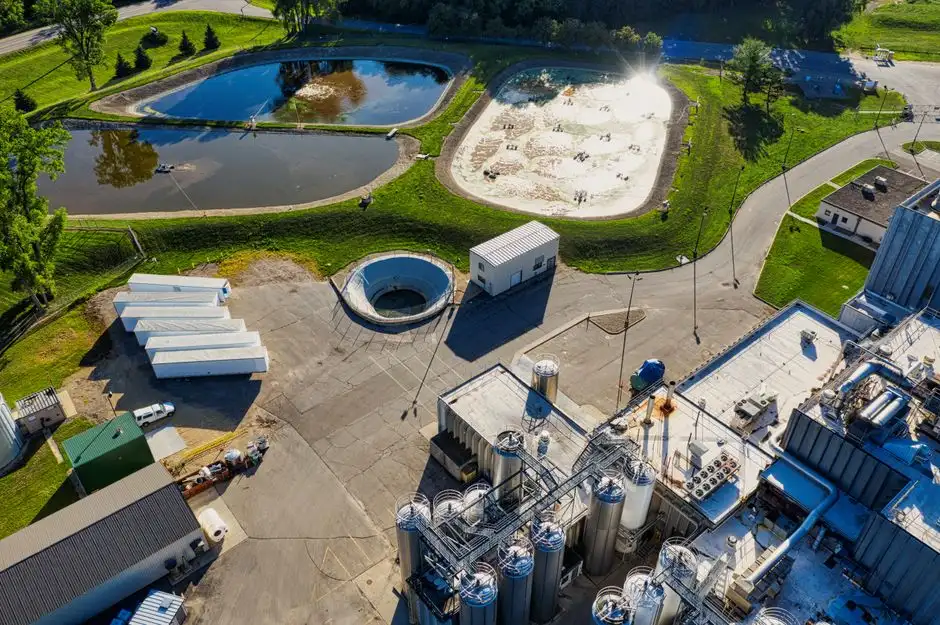
A DAF is the front end of a five-step train, and undersizing the upstream or downstream equipment is the second most common vegetable-plant mistake (the first is wrong coagulant chemistry). The 2026 standard train runs: a rotary bar screen upstream of DAF with 2–5 mm openings → flow equalization sized at 1.0–1.5× the largest single batch flow (typically one CIP discharge) → DAF → biological step (MBR or SBR) → disinfection → reuse or discharge. The DAF's job in that chain is to protect the biology by stripping 60–85% of FOG; FOG breakthrough into an MBR fouls membranes in 3–7 days and is the single most expensive unplanned event in a vegetable plant's water room.
Equalization deserves special attention because a DAF performs best on a steady 20–50 m³/h, while a frozen-pea line can slug 100+ m³/h for 15 minutes during a blancher drain. Sizing the EQ tank at 1.0–1.5× the largest batch smooths those peaks and lets the DAF saturator run at a stable 4–6 bar(g) without pressure cycling that would change bubble size. On the back end, DAF effluent polishing through a multimedia filter or a sidestream MBR lets 60–80% of the water return to non-food-contact reuse (conveyor wash, boiler feed, irrigation) — a path that turns a compliance cost into a freshwater offset, especially in water-stressed regions where reclaimed water is worth $1.50–$3.00 per m³. For plants already running or planning biological treatment, the MBR pairing is covered in detail for the DAF design for bakery wastewater reference, which carries over 80% of its process logic to vegetable streams.
Frequently Asked Questions
What removal efficiencies should a vegetable-plant DAF actually hit in 2026? A correctly sized and dosed DAF achieves 70–90% TSS removal, 60–85% FOG removal, and 30–50% BOD reduction on vegetable streams; FOG removal above 60% is the single best indicator that the chemistry and hydraulics are right.
Which coagulant is the safest default for a high-starch stream like corn or pea wash? Ferric chloride at 30–150 mg/L with a cationic polyacrylamide finishing polymer at 1–5 mg/L, operated inside pH 5.0–9.0; starch colloids re-stabilize above 8 mg/L polymer, so jar testing is non-negotiable.
Can a DAF sit downstream of an MBR, or must it always come first? It must come first. FOG breakthrough into an MBR fouls the membranes within days and is the leading cause of unplanned membrane replacement in food plants; a DAF ahead of the MBR cuts cleaning frequency by 60–80%.
Will a DAF alone meet 2026 direct-discharge BOD <30 mg/L? No. DAF effluent typically meets POTW pretreatment limits and 100–250 mg/L BOD, but reaching the <30 mg/L direct-discharge band requires the downstream biological step (MBR or SBR).
What is the realistic 2026 maintenance cadence for a vegetable-plant DAF? Daily skimmer and effluent-turbidity check, weekly saturator-pump and pressure-gauge inspection, quarterly nozzle and pressure-vessel certification per local PED/ASME rules, and an annual chemical-system calibration; the float cell itself typically runs 5–8 years between overhauls.