
Why Santiago Hotel WWTP Decisions Start With Three Chilean Instruments, Not Equipment
Three Chilean regulatory instruments sit above the equipment line on every 2026 Santiago hotel WWTP procurement, and they must be sequenced in this order: D.S. 609/1998 (MOP) for discharges to surface water bodies, D.S. 90/2000 for discharges to the public sewer under SISS oversight (Aguas Andinas in greater Santiago), and NCh 1.333.Of87 for the four-tier reuse envelope (1.30 through 1.33). Equipment selection flows downstream from this hierarchy — pick the effluent envelope the regulator will accept, then size the plant to it.
D.S. 609 is the strictest envelope, typically applied to coastal or lake-district resort outfalls: BOD₅ ≤35 mg/L, TSS ≤80 mg/L, fecal coliforms <1,000 NMP/100 mL, pH 6.0–8.5, with oils and greases capped. D.S. 90 governs sewer discharges to Aguas Andinas and is more lenient on organics — BOD₅ ≤300 mg/L, TSS ≤300 mg/L — but stricter on heavy metals, temperature (≤30 °C), and pH 5.5–9.0. Urban Santiago hotels in Las Condes, Providencia, and Vitacura almost always discharge to the sewer and answer to D.S. 90.
Where reuse is in scope, NCh 1.333 governs. Most Santiago hotel landscaping maps to Category 1.32 (ornamental lawns, public-access landscape), which requires fecal coliforms <1,000 NMP/100 mL, nematodes <1 egg/L, and turbidity <2 NTU. Category 1.31 covers resort golf courses; Categories 1.33 and 1.30 sit above and below. Above this mandatory layer sits Sello S — Distincion en Turismo Sustentable, a SERNATUR-administered voluntary certification already held by the Ritz-Carlton Santiago, which publishes a 959.12 L/room-night water footprint and 25.72 kg CO₂/room-night benchmark (Ritz-Carlton Santiago, 2026). A defensible 2026 procurement plan treats Sello S as a CAPEX line item, not a marketing add-on, and ties the equipment envelope back to the same benchmarks — for the full Chilean context, see the Hotel & Resort Wastewater Treatment in Santiago, Chile (2026 Guide).
Step 1 — Size the Design Flow From Guest-Nights, Not Room Count
Hotel design flow is calculated from guest-nights, not room count, because occupancy and per-guest water use are the dominant variables. Apply the 959.12 L/room-night benchmark (Ritz-Carlton Santiago, 2026) and a 0.85–0.90 return factor to estimate sewage reaching the plant: roughly 815–865 L/room-night as wastewater. Apply a 1.5× peaking factor for hotel diurnal swings (breakfast peak, banquet turnover, weekend surge) and a 10–15% tourism uplift for resorts with pool backwash, on-site laundry, and F&B waste streams.
Worked example: a 120-room Santiago urban hotel at 75% occupancy × 1.7 guests × 200 L/guest-night gives an average dry-weather flow around 77 m³/day (≈3.2 m³/h). With 1.5× peaking plus a 20–30% tourism uplift, the design flow rises to ~5–6 m³/h — well inside the WSZ underground A/O envelope of 1–80 m³/h and small enough to be served by a single packaged skid. A 200-room resort at 85% occupancy × 1.7 guests lands at ~57.8 m³/day average and ~115 m³/day peak, which maps directly to a single DF-series flat-sheet MBR skid in the 32–135 m³/day per-unit capacity band. Hotel sewage is medium-strength: COD 400–800 mg/L, BOD 200–400 mg/L, TSS 200–350 mg/L, oil and grease 200–800 mg/L from kitchens, and NH₃-N 20–50 mg/L (HydropureWater field data, 2026).
| Parameter | 120-room urban hotel (75% occ.) | 200-room resort (+12% F&B uplift) |
|---|---|---|
| Water footprint (L/room-night) | 959.12 | 959.12 |
| Return-to-sewer factor | 0.85 | 0.85 |
| Average dry-weather flow | ~77 m³/day (≈3.2 m³/h) | ~115 m³/day peak (≈4.8 m³/h avg) |
| Peaking factor applied | 1.5× | 2.0× |
| Tourism / F&B uplift | 20–30% | +12% |
| Design flow (m³/h) | ~5–6 | ~8–10 |
| Target equipment envelope | WSZ underground A/O package plant (1–80 m³/h) | Integrated MBR membrane bioreactor system with DF-series PVDF flat-sheet MBR module (32–135 m³/day) |
The m³/day number, not the room count, is what travels to the SEREMI de Salud application and the P&ID. Defend it with the Ritz-Carlton benchmark and a peaking calculation — for the full engineering derivation, see the MBR for Hotel Wastewater Design: 2026 Engineering Specs & Cost Guide.
Step 2 — Lock the Unit-Operation Train for a 2026 Santiago Plant
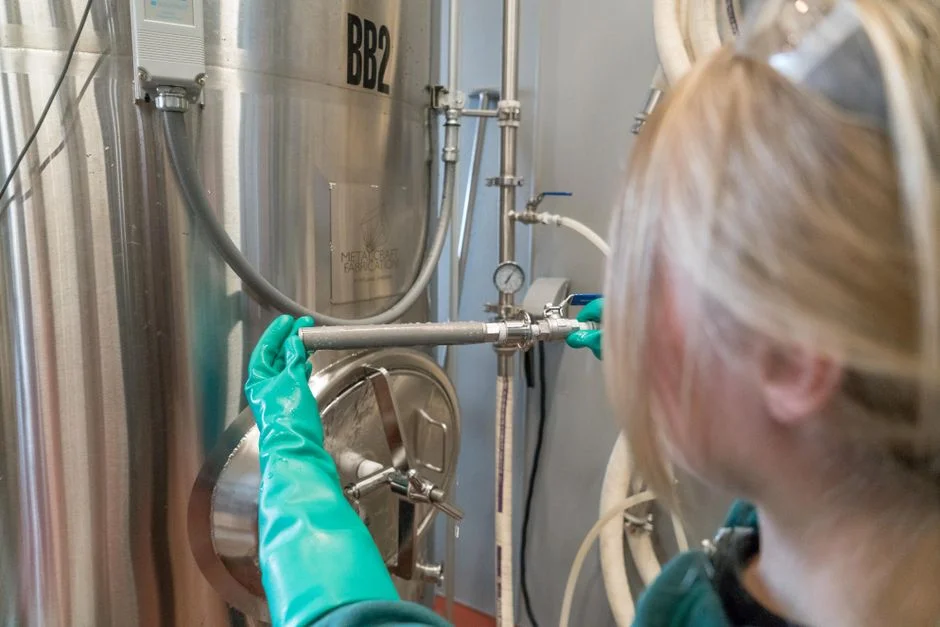
For a 2026 Santiago hotel, the unit-operation train runs: headworks → FOG pre-treatment → biological stage (WSZ A/O or submerged flat-sheet MBR) → disinfection → sludge handling. Each link is sized by the design flow from Step 1.
Headworks. Specify a rotary mechanical bar screen at 3 mm aperture if the downstream stage is an MBR, or 6 mm if it is a WSZ A/O clarifier train. Rags, hair, and fibrous cleaning wipes blind membrane modules far faster than they blind clarifiers, so the tighter aperture pays back in CIP interval.
F&B pre-treatment. Hotel kitchens generate 200–800 mg/L of oil and grease in the raw stream. A dissolved air flotation unit (4–300 m³/h capacity, micro-bubble, auto-skim) removes 60–90% of FOG before the biological stage, protecting membrane surfaces and preventing scum-blanket carryover in clarifier trains.
Biological stage. Two options for a 2026 Santiago hotel: a WSZ underground A/O package plant with HRT 6–10 h, MLSS 3,000–5,000 mg/L, and BOD₅/TSS ≤20 mg/L effluent, or a submerged flat-sheet integrated MBR membrane bioreactor system with HRT 8–14 h, MLSS 8,000–12,000 mg/L, flux 15–25 LMH, SRT 20–40 days, and permeate at BOD₅ <5 mg/L, TSS <1 mg/L. The MBR permeate is reuse-ready without further filtration.
Disinfection. A chlorine dioxide generator dosing 1–3 mg/L with 30–60 min contact time produces no THMs, requires no cylinder handling on a guest-occupied site, and hits D.S. 609 fecal-coliform targets. UV at 40 mJ/cm² is the chlorine-free alternative for MBR permeate with low TSS.
Sludge handling. A plate-and-frame filter press dewastes waste-activated sludge directly to 18–22% DS, with a volumetric yield of 1.5–2.5% of influent flow — no separate thickener required.
| Stage | Equipment | Key 2026 spec | Function |
|---|---|---|---|
| Headworks | Rotary mechanical bar screen | 3 mm (MBR) / 6 mm (WSZ) | Capture >90% of aperture solids |
| FOG removal | DAF unit | 4–300 m³/h, 60–90% FOG removal | Protect membranes and clarifiers |
| Biology (WSZ) | WSZ A/O package plant | HRT 6–10 h; MLSS 3,000–5,000 mg/L | BOD₅/TSS ≤20 mg/L effluent |
| Biology (MBR) | Integrated MBR + DF-series flat-sheet module | HRT 8–14 h; MLSS 8,000–12,000 mg/L; flux 15–25 LMH | BOD₅ <5 mg/L, TSS <1 mg/L permeate |
| Disinfection | ClO₂ generator | 1–3 mg/L, 30–60 min CT | Fecal coliform <1,000 NMP/100 mL, no THMs |
| Sludge | Plate-and-frame filter press | 18–22% DS, 1.5–2.5% volumetric yield | Direct dewatering, no thickener |
Step 3 — Pick MBR or WSZ With This Decision Matrix
The decision is rarely technical in isolation — it is driven by footprint, reuse intent, and lifecycle cost. The matrix below is what a Santiago chief engineer would copy into a board memo for a 150+ room property.
Footprint and aesthetics. The WSZ is fully buried with landscaping recoverable above grade, which is decisive on tight Las Condes, Providencia, and Vitacura parcels where surface area cannot be surrendered. The MBR needs a surface skid plus tankage and is harder to hide in a tight urban setting, but it consolidates biology and tertiary filtration into a single footprint roughly 60% of a CAS train.
Effluent quality. WSZ delivers BOD₅ ≤20 mg/L and TSS ≤20 mg/L — sufficient for D.S. 90 sewer discharge and for D.S. 609 with a polishing step. MBR permeate clears NCh 1.333 Cat. 1.32 reuse directly, no further filtration required.
Reuse economics. A 150+ room hotel with landscape-irrigation and toilet-flushing reuse pays back the MBR CAPEX premium in 4–7 years at current Santiago potable tariffs. Below ~100 rooms, the WSZ-only path is almost always the lower-NPV option because the reuse volume cannot amortize the MBR skid.
Operational complexity. WSZ runs unattended and fully automated — the right call for smaller properties. MBR requires CIP every 3–6 months and disciplined aeration management; submerged flat-sheet geometry uses 10–20× less energy than external cross-flow, which is the cost-control lever for any operator worried about lifetime OPEX.
2026 decision rule. Specify flat-sheet MBR for 10–200 m³/day (boutique to mid-scale, the majority of Santiago hotel stock). Consider hollow-fiber only for >500 m³/day resort clusters where packing density per m² outweighs fouling tolerance. Geometry choice matters more in hospitality than in municipal work because hotel sewage carries hair, lint, fibrous cleaning wipes, and food particles that foul hollow-fiber capillaries aggressively.
| Driver | WSZ underground A/O | Submerged flat-sheet MBR |
|---|---|---|
| Footprint | Buried, landscaping recoverable | Surface skid + tankage, ~60% of CAS train |
| Effluent (BOD₅ / TSS) | ≤20 / ≤20 mg/L | <5 / <1 mg/L |
| Regulatory envelope | D.S. 90 sewer; D.S. 609 with polishing | D.S. 90, D.S. 609, and NCh 1.333 Cat. 1.32 reuse |
| Reuse payback (150+ rooms) | Limited — typically not reuse-grade | 4–7 years on the MBR CAPEX premium |
| Operational complexity | Unattended, fully automated | CIP every 3–6 months; flat-sheet scour keeps fouling low |
| Best fit (2026) | Urban <100 rooms, sewer discharge | 10–200 m³/day boutique to mid-scale, 150+ rooms with reuse |
For the equipment sizing question, the DF-series PVDF flat-sheet MBR membrane module (32–135 m³/day per unit) and the WSZ underground A/O package plant (1–80 m³/h) cover the full Santiago hospitality envelope from boutique to mid-scale resort.
Step 4 — Build the Resilience Case: Equalization, Reuse, and the Sello S Payback

Santiago's supply fragility is no longer hypothetical. The January 2013 Maipo contamination event cut water to ~600,000 families across 21 districts for roughly 10 hours (BMJ, 2013-01-24), and structural urban stress on the Mapocho/Maipo system has not eased. For a 2026 hotel, on-site reuse plus a 6–8 hour equalization buffer is a defensible resilience investment, not an environmental indulgence.
Specify a 6–8 hour equalization/buffer tank ahead of the biological stage to ride out supply shocks and keep the biology fed during a utility interruption. Layer the reuse on the MBR effluent path: permeate → NCh 1.333 Cat. 1.32 storage pond → landscape irrigation + toilet flushing. A 200-room hotel reusing 40% of its treated effluent can offset ~80 m³/day of potable demand — a meaningful hedge against a 10-hour supply cut and a measurable line item on the Sello S water-footprint scorecard.
That hedge lines up directly with the Sello S benchmark. The Ritz-Carlton Santiago publishes 959.12 L/room-night water footprint and 25.72 kg CO₂/room-night (Ritz-Carlton Santiago, 2026). A reuse-equipped MBR attacks both metrics at once: less potable water drawn, less pumping energy, lower carbon per occupied night. Pair the MBR with a plate-and-frame filter press for sludge dewatering and an automatic chemical dosing system for membrane CIP and pH control to close the loop on operational reliability.
For the board pro forma, the flat 2026 CAPEX benchmark is $35–$75 per guest-night turnkey, with OPEX at $0.18–$0.32 per m³ treated (energy 45%, membrane replacement amortized over 8–10 years 25%, chemicals 12%, labor 18%). The mid-scale 80–250 room band lands at $220K–$650K USD turnkey. At $2–$4 per m³ avoided potable purchase, 60% reuse on 100 m³/day saves $44K–$88K annually — see the MBR for Hotel Wastewater Design: 2026 Engineering Specs & Cost Guide for the full CAPEX/OPEX build-up.
Step 5 — The Two Permits You Must Lock Before the PO
Two permits gate a Santiago hotel WWTP procurement and they are the most common late-stage failure point. Lock both in before the purchase order, not after.
Permit 1 — SEREMI de Salud water-reuse agreement. Required wherever NCh 1.333 Cat. 1.31 or 1.32 reuse is in scope. The dossier must include the design flow, the unit-operation train, and the DAF pre-treatment details — the agency audits FOG handling, not just effluent numbers.
Permit 2 — Utility discharge permit. From the SISS-regulated utility: Aguas Andinas in greater Santiago, ESSAL in regions, ESSBIO in southern regions. For D.S. 609 surface-water outfalls, add the MOP outfall concession and any regional environmental impact review.
Sequence rule. No PO issued until both permits are at least in formal review. Rework after procurement is the most expensive line item on a hotel WWTP project — for the Chilean permitting context, see the Hotel & Resort Wastewater Treatment in Santiago, Chile (2026 Guide).
Frequently Asked Questions
Which Chilean regulation applies to a Santiago hotel WWTP — D.S. 609 or D.S. 90?
It depends on the outfall. D.S. 609/1998 (MOP) applies to discharges to surface water — rivers, lakes, the Pacific — and is the stricter envelope at BOD₅ ≤35 mg/L and TSS ≤80 mg/L. D.S. 90/2000 applies to discharges to the public sewer operated by Aguas Andinas under SISS oversight and runs BOD₅ ≤300 mg/L, TSS ≤300 mg/L. Most urban Santiago hotels discharge to sewer under D.S. 90; coastal and lake-district resorts usually face D.S. 609.
What design flow should I size a 100-room Santiago hotel MBR for?
Apply the Ritz-Carlton Santiago 959.12 L/room-night benchmark (2026) with a 0.85–0.90 return factor. A 100-room business hotel at 85% occupancy × 1.7 guests × 200 L yields ~29 m³/day average and ~58 m³/day at 2.0× peak. A single DF-series PVDF flat-sheet MBR membrane module (32–135 m³/day per unit, 80–225 m² per stack) covers this with redundancy — see the MBR for Hotel Wastewater Design: 2026 Engineering Specs & Cost Guide.
Can a packaged WWTP reuse treated effluent for hotel landscaping under Chilean rules?
Yes, under NCh 1.333.Of87. Most hotel landscaping maps to Category 1.32 (ornamental lawns, public-access landscape) at fecal coliforms <1,000 NMP/100 mL, nematodes <1 egg/L, turbidity <2 NTU. An MBR producing BOD₅ <5 mg/L and TSS <1 mg/L meets these limits directly, no further filtration required.
What is the payback on MBR reuse for a 150+ room hotel in Santiago?
At current Santiago potable-water tariffs of $2–$4 per m³, a 60% reuse rate on 100 m³/day saves $44K–$88K annually. Against the MBR CAPEX premium over a WSZ-only path, that yields a 4–7 year payback for a 150+ room property with landscape-irrigation and toilet-flushing reuse, and a Sello S line item that ties directly to the Ritz-Carlton 959.12 L/room-night and 25.72 kg CO₂/room-night benchmark.
Which permits must be locked before issuing the packaged WWTP purchase order?
Two permits: a water-reuse agreement with the SEREMI de Salud for any NCh 1.333 Cat. 1.31 or 1.32 reuse scheme, and a discharge permit from the SISS-regulated utility (Aguas Andinas in greater Santiago, ESSAL or ESSBIO in regions). For D.S. 609 surface-water outfalls, add the MOP outfall concession. Both should be in formal review before the PO is issued — the Hotel & Resort Wastewater Treatment in Santiago, Chile (2026 Guide) sequences this in detail.
Related Equipment
- rotary mechanical bar screen — specifications, capacity range, and technical data