Why Munich's source water changes the blowdown calculation
Munich's drinking water comes from alpine-karst catchment in the Mangfall and Loisach valleys, treated at the city-of-Munich waterworks and distributed by Stadtwerke München (SWM) at a stable 350–450 µS/cm conductivity, 12–14 °dH hardness (≈215–250 mg/L CaCO₃), 4–8 mg/L SiO₂ silica, and chloride below 10 mg/L (per the 2025 Stadtwerke München Trinkwasseranalyse). That is materially different from the dry-edge US sites where most published blowdown guides were developed: a Munich AI-class hall does not need to apologise for its source water in a permit narrative, and it can push cycles of concentration (CoC) harder before silica or gypsum limit recovery.
The scale anchor is straightforward. A 100 MW facility drawing up to 2 ML/day is the published industry benchmark (IDE-Tech, 2025-11). A 20 MW AI-class hall at PUE 1.3 and WUE 1.5 L/kWh draws roughly 95 m³/h of makeup, producing about 0.6–0.8 m³/h of blowdown at 6 cycles — comfortably inside the lower third of a packaged UF + RO envelope. The water-economics recovery band of 60–85% of blowdown (Genesis, 2025-10) is realistic on a conventional BWRO skid, with 75–80% as the Munich design baseline.
The 1/(CoC − 1) blowdown ratio is the conversion the design team should memorise. At 4 CoC, blowdown is 25% of makeup; at 6 CoC, it drops to 20%; at 8 CoC, it falls to 12.5%. TDS rises as blowdown shrinks: from roughly 1,200 mg/L at 4 cycles to the 3,000–4,000 mg/L band at 6 cycles, which is still well inside the operating envelope of a brackish-water RO with antiscalant. The seasonal caveat is the Danube and Isar mixing zones, where TOC and ammonia can spike; a 12-month sampling campaign during detailed design is non-negotiable.
| Parameter | Typical value, Munich SWM (2025) | Effect on blowdown design |
|---|---|---|
| Total hardness | 12–14 °dH (215–250 mg/L CaCO₃) | Allows 6–8 CoC without gypsum scaling |
| Silica (SiO₂) | 4–8 mg/L | Silica-limited feeds are easier to RO than calcium-limited |
| Chloride | < 10 mg/L | Stainless 304/316L sufficient for balance-of-plant |
| Conductivity | 350–450 µS/cm | Permeate-quality target stays simple (10–50 mg/L TDS) |
| TOC (winter mixing) | 0.5–2.0 mg/L | 12-month sampling required; UF handles seasonal swings |
The German compliance stack for a Munich data-center discharge
Three regulatory layers govern a Munich data-center blowdown stream, and the design team must satisfy all of them before commissioning. The Wasserhaushaltsgesetz (WHG) §57 sets the indirect-discharge duty: any operator sending wastewater to a public sewer must hold an indirect-discharge permit and respect the Abwasserverordnung (AbwV). The 2024 AbwV rewrite tightened metals and AOX reporting in Annex 22 (cooling-water chemistry) and reshaped Annex 31 and 45 monitoring frequency.
The Bayern-specific layer is the Indirekteinleiter-Vereinbarung — the site-specific agreement signed between the operator and Stadtwerke München / Münchner Stadtentwässerung (MSE) as the Kanalnetzbetreiber, reviewed by the Lokalbaukommission / Referat für Klima und Umwelt. Limits are anchored to DWA-A 198 and the AbwV parameter families: pH 6.5–9.5, temperature ≤ 35 °C, conductivity (site-specific, typically < 5,000 µS/cm), AOX, hydrocarbons, and Cu/Zn/Ni/Pb/Cr. Treat MSE's published values as the binding number; expect the Referat für Klima und Umwelt to apply them strictly during commissioning review.
The EU layer completes the stack. EU Industrial Emissions Directive 2010/75/EU plus BAT-AEL ranges from Implementing Decision 2018/1147 (Waste Treatment) layer on once on-site wastewater treatment exceeds the IED capacity threshold — relevant for AI-class halls bundling multiple streams or exceeding the throughput threshold. EU Drinking Water Directive 2020/2184 acts indirectly by tightening the social-licence narrative around large municipal-water withdrawals, even though Munich's supply is secure. The February 2026 TNFD case study on data-center water-quality disclosure formalises the question for finance-facing reporting (Water Utility Report, 2026-04).
| Layer | Instrument | Parameter families | Owner / enforcer |
|---|---|---|---|
| Federal water law | WHG §57 | Indirect-discharge duty, permit framework | Landratsamt / Referat für Klima und Umwelt |
| Federal wastewater ordinance | AbwV 2024 Annex 22/31/45 | Cooling-water chemistry, metals, AOX, monitoring | Same authority, periodic review |
| Munich / Bayern | Indirekteinleitungs-Vereinbarung | Site-specific limits per DWA-A 198 | Stadtwerke München / MSE |
| EU IED | 2010/75/EU + 2018/1147 BAT-AEL | Capacity-threshold trigger; AEL ranges | Layered on for IED-scope sites |
| EU social licence | Drinking Water Directive 2020/2184 + TNFD Feb 2026 | Disclosure narrative, finance-facing | Operator + reporting body |
The defensible Munich blowdown treatment train
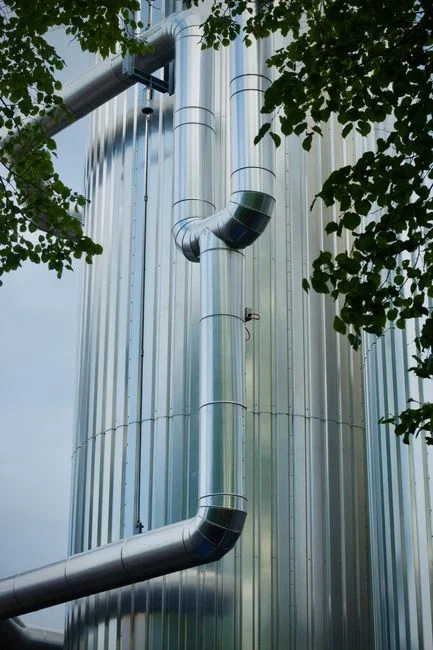
The defensible 2026 train for a Munich AI-class hall is a packaged ultrafiltration (UF) + brackish-water reverse osmosis (BWRO) skid, sized at 75–80% recovery, with optional MVC only when a hyperscaler water-positive mandate forces the conversation. The design philosophy is to push recovery higher by managing chemistry at the system level, not by adding RO stages — the same approach IDE-Tech's MAXH₂O framing articulates, but on a Munich feed where silica sits below 10 mg/L and hardness stays under 14 °dH, a conventional two-stage layout is sufficient. A hollow-fiber UF skid paired with an industrial BWRO skid covers the full 0.6–1.6 m³/h blowdown envelope of a 20 MW hall without a fluidised-bed reactor or multi-stage RO cascade.
- Side-stream mechanical filtration. Self-cleaning spiral filters at 10–25 µm, sized at 1–5% of circulation flow; installed CAPEX in the USD $50,000–200,000 band (Genesis, 2025-10). Purpose is membrane protection, not blowdown polishing.
- Ultrafiltration. Hollow-fiber PVDF at 0.01–0.1 µm, 10–30 psi, 90–95% recovery, air-scour automatic backwash, chemical cleaning every 1–3 months. A hollow-fiber UF skid in the 2,000–40,000 L/h band covers the full 0.6–1.6 m³/h envelope.
- Brackish-water reverse osmosis. 150–400 psi, 75–80% recovery, 95–99% dissolved-solids rejection, permeate TDS 10–50 mg/L suitable for direct cooling-tower makeup. An industrial BWRO skid paired with PLC-controlled antiscalant and biocide dosing holds membrane life on a 3–5 year curve.
- Optional MVC for partial ZLD. 95–98% concentrate recovery, distillate < 10 mg/L TDS. Justify only when a hyperscaler has committed to a water-positive KPI and the avoided-freshwater cost exceeds incremental MVC CAPEX.
| Step | Equipment | Operating envelope | CAPEX band (USD) |
|---|---|---|---|
| 1. Mechanical filtration | Self-cleaning spiral, 10–25 µm | 1–5% of circulation flow | $50,000–200,000 |
| 2. UF | Hollow-fiber PVDF, 0.01–0.1 µm | 10–30 psi, 90–95% rec. | (within skid) |
| 3. BWRO | Brackish RO, 150–400 psi | 75–80% rec., permeate 10–50 mg/L TDS | $250,000–500,000 (50 m³/day skid) |
| 4. MVC (optional) | Mechanical vapor compression | 95–98% rec., distillate < 10 mg/L TDS | Add on hyperscaler mandate |
CAPEX, OPEX and the three recovery strategies compared
Three recovery strategies are defensible on a Munich feed, and the cost bands sit in a tight cluster. Strategy A — RO permeate to cooling-tower makeup — is the 2026 default for any colocation, enterprise, or hyperscale hall that is not under a water-positive mandate. Strategy B — partial ZLD with MVC — enters the conversation when MSE discharge fees climb, when a hyperscaler commits to a water-positive KPI, or when evaporation is restricted. Strategy C — full ZLD (RO + MVC + crystallizer) at USD $3,000,000–8,000,000 installed (Genesis, 2025-10) — is rarely justified in Munich because the alpine supply is secure and combined-sewer discharge is available through MSE.
OPEX scales linearly with permeate volume. At EU industrial tariffs of €0.18–0.25/kWh, BWRO energy alone runs €0.20–0.35/m³ permeate; antiscalant, CIP chemicals, and RO membrane replacement schedule items add another €0.10–0.20/m³. A 1 m³/h BWRO train therefore costs roughly €0.30–0.55/m³ treated, comfortably below MSE's combined-sewer discharge tariff for high-TDS industrial streams. Pair the train with PLC-controlled antiscalant and biocide dosing to keep membrane life on the predictable 3–5 year curve. The operator-side evidence that RO-to-makeup is the 2026 default is the AWS benchmark: expanding recycled-water use from 24 to 120+ U.S. sites, expected to preserve over 530 million gallons of drinking water annually (Water Utility Report, 2026-04).
| Strategy | CAPEX band (USD) | OPEX (€/m³) | Recovery | When to choose |
|---|---|---|---|---|
| A — RO-to-cooling-tower makeup | $250,000–500,000 | €0.30–0.55 | 60–85% | Default for Munich 2026 builds |
| B — Partial ZLD (RO + MVC) | $1,200,000–3,000,000 | €0.80–1.40 | 95–98% | Hyperscaler water-positive mandate; high MSE fees |
| C — Full ZLD (RO + MVC + crystallizer) | $3,000,000–8,000,000 | €1.50–2.50 | 95–99% | Discharge prohibited; rare in Munich |
Sizing a 20 MW Munich case from cycles of concentration to skid selection
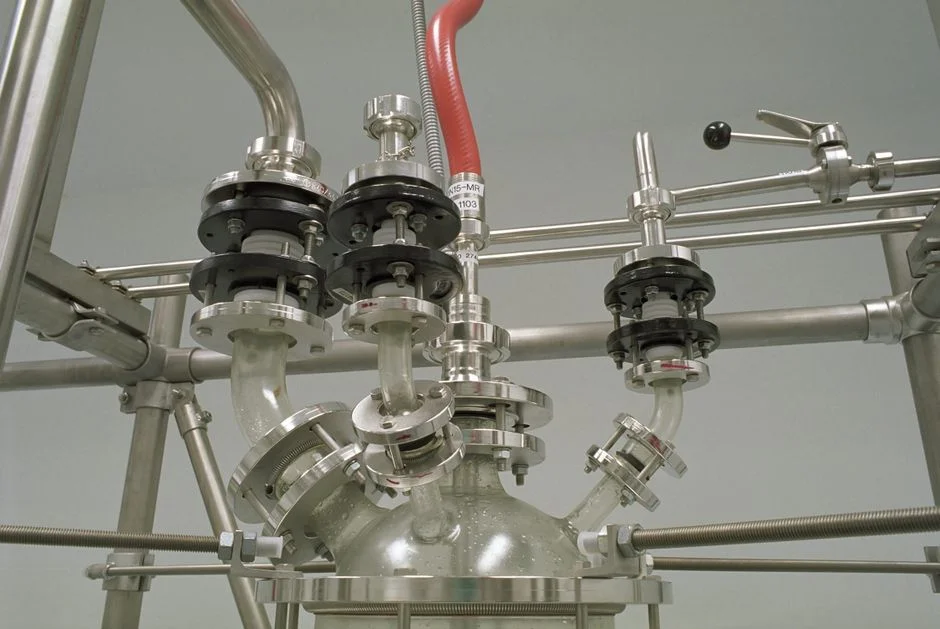
The worked example anchors the article. Inputs: 20 MW IT load, PUE 1.3, WUE 1.5 L/kWh, 6 cycles of concentration on Munich SWM makeup. At 6 cycles, blowdown equals 17% of makeup, or roughly 0.6–0.8 m³/h steady, peaking near 1.6 m³/h when the cooling-tower control loop opens. That envelope sits in the lower third of any packaged UF + RO skid sized to 2,000–40,000 L/h. Blending the RO permeate back to the cooling tower pushes effective cycles toward 8, cutting makeup by another 15–20% on top of the blowdown-recovery benefit (Genesis, 2025-10).
For a 20 MW site, the combination is the difference between drawing 130 m³/h from SWM and drawing 95 m³/h — a meaningful number in a permit narrative when the design team is explaining freshwater withdrawal to the Referat für Klima und Umwelt. Size the RO skid for the post-expansion blowdown and run it at 50% nameplate in year one; skids are cheap to turn down, expensive to upsize. Anchor the residuals side with a plate-and-frame filter press sized for the UF CIP waste and RO CIP volumes, and finish with UV-C sterilisation on the permeate side if the cooling-tower chemistry program shifts toward non-oxidising biocides.
Frequently Asked Questions
What is the right cycles-of-concentration target for a Munich data center on Stadtwerke München makeup?
6–8 CoC is realistic because Munich hardness is ~12–14 °dH and silica < 10 mg/L — against the 4–5 CoC ceiling at arid-edge sites where gypsum and silica limit recovery. A 6-cycle Munich tower sees blowdown in the 3,000–4,000 mg/L TDS band, well inside a conventional BWRO envelope.
Is full zero-liquid discharge ever justified for a Munich data center?
Only when MSE discharge is restricted and a hyperscaler has committed to a water-positive KPI. The default is a packaged UF + BWRO train with combined-sewer discharge via the Indirekteinleiter-Vereinbarung; full ZLD CAPEX of USD $3–8 million is reserved for arid-edge sites where discharge is not permitted under any condition.
What permit pathway applies to a Munich data center discharging blowdown to the public sewer?
WHG §57 indirect-discharge permit plus the Indirekteinleiter-Vereinbarung with Stadtwerke München / MSE. EU IED 2010/75/EU and BAT-AEL 2018/1147 layer on for sites above the IED capacity threshold; the February 2026 TNFD case study formalises the disclosure question for finance-facing reporting.
How much does a packaged UF + BWRO blowdown treatment skid cost for a 20 MW Munich hall?
USD $250,000–500,000 installed for a 50 m³/day skid, with OPEX €0.30–0.55/m³ treated at EU industrial electricity tariffs of €0.18–0.25/kWh. OPEX is dominated by BWRO energy and antiscalant; membrane replacement is on a 3–5 year cycle.
Does Munich's low-silica supply change the antiscalant selection?
Yes. Silica-limited alpine feeds tolerate different antiscalant chemistry than gypsum-limited US Southwest feeds, and the 12-month sampling campaign during detailed design should drive the final dosing curve rather than a generic vendor default. Pair the system with PLC-controlled antiscalant and biocide dosing to keep membrane life predictable.
Related Equipment
- industrial BWRO skid — specifications, capacity range, and technical data